Ongoing crises of urban insecurity in Central America have spurred novel forms of state engagement in high-risk neighbourhoods. In 2012, the Guatemalan government deployed new urban security task forces in some of the capital’s most notorious ‘red zones’, the poor neighbourhoods where gangs, violence, and delinquency are seen to be concentrated. While officials trumpeted their success in pacifying these sectors, their gangs (maras) continued to operate much as they previously had under the new military occupations.
Based on sixteen months of ethnographic fieldwork in one red zone neighbourhood, this paper examines both gang violence and state power from the perspective of residents struggling to secure a measure of order in a dangerous and volatile environment. I argue that situations of chronic urban insecurity can create opportunities for the state to tighten its relationship with marginal communities, but that they do so in a way that may raise further impediments to substantively improving democratic governance.
Speaker Bio:
Image
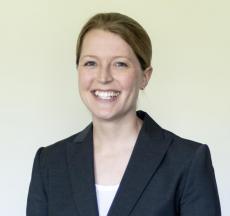
Katherine Saunders-Hastings is a postdoctoral fellow at Stanford’s Center on Democracy, Development, and the Rule of Law. She employs ethnographic methods to study the impact of violence and insecurity on the social and political life of vulnerable urban neighbourhoods, focusing particularly on the changing gang cultures and criminal economies of Central America. Katherine earned her DPhil from the University of Oxford in 2015 and also holds degrees from McGill University and the University of Cambridge. Her research has been supported by fellowships from the Social Sciences and Humanities Research Council of Canada, the Clarendon Fund, and the Harry Frank Guggenheim Foundation. She has worked with the International Centre for the Prevention of Crime (Montreal, Canada) and the Asociación para el Avance de las Ciencias Sociales (Guatemala City, Guatemala).
About the Topic: Despite massive research and public policy efforts aimed at diversification, gender segregation of science, technology, engineering and mathematics remains extreme in affluent democracies. More surprising is evidence that women’s representation in many “STEM” fields is weaker in advanced industrial societies than in poorer, reputably gender traditional ones. The most obvious explanation is that broad-based existential security frees more women to realize aspirations for (less lucrative) non-STEM pursuits. I will discuss another piece of the puzzle by focusing on the aspirations themselves and how these vary with societal affluence. Over-time data on eighth-grade boys and girls in 32 countries provide strong evidence that the gender gap in aspirations for mathematically-related jobs increases with societal affluence, controlling for traits of individual students (parental education, affinity for school, mathematics test scores). This affluence effect is not attributable to cross-national differences in the gender-labeling of science, Internet access, or women’s educational or economic integration. Results are consistent with arguments suggesting that gender beliefs more strongly influence career aspirations in affluent, “postmaterialist” societies.
About the Speaker: Maria Charles is Professor and Chair of Sociology, Area Director for Sex and Gender Research, and an Affiliate Professor of Feminist Studies at U.S. Santa Barbara. She specializes in the international comparative study of social inequalities, particularly cross-national differences in women's economic, educational, and family roles. She has published extensively on gender segregation, most recently on the ideological and organizational factors that contribute to woman's underrepresentation in science, technology, engineering, and mathematics ("STEM") fields around the world. She has a Ph.D. in Sociology from Stanford University, and Bachelor’s degrees from UCSB in Environmental Studies and Political Science.
Philippines Conference Room
Encina Hall Central, 3rd floor
616 Serra St.
Stanford, CA 94305
Maria Charles
Professor and Chair of Sociology, Area Director for Sex and Gender Research, Affiliate Professor of Feminist Studies
U.C. Santa Barbara
The recent rise in mass popular protests – many with regional spillover effects and some with far-reaching consequences for international peace and security – has raised the question of how the international community should respond to these events, and to what end. For the United Nations, the question becomes acute in protest situations in which there is a tangible risk of large-scale violence and human rights violations. Yet mounting a rapid and effective response is a particular challenge in these contexts. Drawing on case studies, practitioner interviews, and the author’s UN experience, this presentation will examine five variables that are critical to success: timing, access, leverage, the ability to propose solutions for non-violent change, and finding the right mix of principle and pragmatism. It will argue that these variables are not static, but dynamic and inter-independent. Getting them ‘right’ in an unfolding crisis is difficult, but it is possible to draw some preliminary lessons from the cases reviewed.
Speaker Bio:
Image
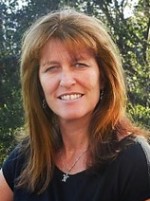
Alexandra Pichler Fong is visiting CDDRL on leave from the United Nations, where she headed the Policy Planning Unit of the Department of Political Affairs in New York. Her work focuses on cross-cutting peace and security issues, such as conflict prevention, preventive diplomacy and peacemaking, as well as policy matters pertaining to UN peace operations in a rapidly changing international security environment. She recently completed an assignment reporting to the Special Representative of the Secretary-General for West Africa, based in Dakar, Senegal, to advance the implementation of the UN’s regional strategy for the Sahel. She joined the UN in 2002 as political affairs officer and has served as adviser in the cabinet of three successive Under-Secretaries-General for Political Affairs, focusing on the regions of Europe, Latin America and Asia-Pacific as well as thematic issues such as UN reform. Before entering the UN, Alexandra worked at the International Crisis Group; a European network of development NGOs; and the European Commission. She holds a B.A. Hons. degree in Modern History and Literature from Oxford University and a Master’s degree in International Relations from the London School of Economics.
The threat of a pandemic claiming millions of lives and devastating economies around the world is as serious as the potential perils of global climate change, renowned economist Larry Summers told a Stanford audience during a recent visit to campus.
The world is taking dramatic and costly steps to prevent the calamitous impact of climate change on the economies and national security of most countries. Yet preparations for a worldwide pandemic on the scale of the 1918 flu are vastly underfunded and ill-formed.
“My biggest fear is that the world is way short of focus on all the issues associated with pandemic,” said Summers, former treasury secretary in the Clinton administration and Harvard president emeritus, who in recent years has focused on the economics of global health care.
“We are talking about something that could kill surely tens of millions and perhaps 100 million people, and the Stanford football program is substantially more expensive than the WHO budget for pandemic flu,” he said. “It’s just crazy that we are so underinvested and underprepared.”
Summers, the Charles W. Eliot University Professor at Harvard, also served as director of the White House National Economic Council in the Obama administration. He was in conversation with Stanford Health Policy’sPaul Wise for the March 8 event co-sponsored by the Stanford Institute of Economic Policy Research for faculty and students.
The World Health Organization budget for outbreaks and crisis response has been reduced by nearly 50 percent from 2012 to 2015. Some global health experts blame these cuts in part for its slow response to the Ebola outbreak in West Africa and the ongoing Zika crisis in Brazil.
In Brazil, Zika has been linked to a spike in cases of microcephaly, a birth defect marked by small head size and underdeveloped brains. Brazil has confirmed more than 640 cases of microcephaly and is investigating an additional 4,200 suspected cases. Puerto Rico is now preparing for an expected outbreak there.
Summers said the mortality rate from the great flu pandemic was far greater than the recent Ebola outbreak in West Africa, which killed some 11,300 people mostly in Sierra Leone, Liberia and Guinea. Some 50 million people died worldwide during the 1918-1919 flu pandemic.
‘I don’t want to minimize in any way the significance of Ebola, but there are things to worry about that are vastly larger,” said Summers, who gave the keynote address for the January unveiling of the National Academy of Medicine’s report on global health risks.
That report by the Commission on a Global Health Risks Framework for the Future found that, compared with other major threats to global security, the world has “grossly underinvested” in efforts to prevent and prepare for the spread of infectious diseases. The commissioners — some 250 independent experts in health, governance and research and development — estimate $60 billion in annualized expected losses from pandemics.
“Pandemics cause devastation to human lives and livelihoods much as do wars, financial crises and climate change,” the report said. “Pandemic prevention and response, therefore, should be treated as an essential tenet of both national and global security — not just a matter of health.”
Summers estimates that pandemic flu risk is in the same range of global climate change in terms of expected costs over the next century. Yet a potential pandemic is getting only 2 percent of the attention and resources that global climate change has today.
Image
Summers also chaired the Lancet Commission on Investing in Health, an independent group of 25 leading economists and global health experts from around the world. Their landmark report, Global Health 2035, provides a specific roadmap for this achieving “a grand convergence” in health within our lifetimes. Ahead of the U.N. General Assembly last fall, Summers led a joint declaration together with economists from 44 countries calling on world leaders to prioritize investments in health.
Wise, in the Department of Pediatrics at Stanford and senior fellow at the Freeman Spogli Institute for International Studies, asked Summers how one plans for pandemics when faced with so many failed governments and conflicts around the world.
“One of the central challenges that I worry about a lot in the deliberations of pandemic control is that many of the (regions) of greatest concern are characterized by chronic political instability, conflict and very weak governance,” said Wise, who for more than 30 years has been traveling to rural Guatemala to provide medical care to children there for his Children in Crisis project.
Summers said the world has been fortunate that there are so many brave and devoted medical workers who are trained to go into these conflict regions to try and contain outbreaks.
“But I think it would be disingenuous of me to say that you can solve these problems without in some way containing the failed state,” he said.
Wise then asked Summers what sort of advice he would give to the Stanford students who were trying to decide between a career in which one might use economics to make a fortune on Wall Street, or use economics for the greater good.
“I have always believed that you can count — and you can care,” Summers said. “There is nothing about counting and using numbers and analyzing the math that means you don’t care in a moral way.”
When a physician works with a patient and saves her life, he said, that has a profound and direct impact on both the patient and physician. But working on a vaccination program that has the potential of saving thousands of lives one day comes with delayed gratification.
“But the impact of making the world a better place and enabling people to survive and avoid grieving the loss of of a family member is as great — or greater,” he said.
My daughter, Emily, was teaching English at a middle school in Asahi City, Chiba Prefecture, on the Japan Exchange and Teaching (JET) Program when the 2011 Tohoku earthquake struck on March 11, 2011. Tohoku is a region in the northeast portion of the island of Honshu, the largest island in Japan. Though Asahi City, a coastal city, is not in the Tohoku region, it was still heavily damaged by the resulting tsunami. Several of Emily’s students lost their homes. She was emotionally shaken, of course, but was fortunate not to sustain any injuries.
With the fifth anniversary of the 2011 Tohoku earthquake and tsunami approaching, I have been reflecting upon the tremendous anxiety that I felt that day about Emily’s safety, my wife’s family in Tohoku, and the people of Japan in general. My reflections deepened last week while observing the interaction of SPICE’s Reischauer Scholars Program (RSP) students (American high school students studying about Japan) with SPICE’s Stanford e-Japan students (Japanese high school students studying about the United States) in an informal online “social hour.” The RSP and Stanford e-Japan are distance-learning courses that are offered by SPICE.
Stanford e-Japan instructor Waka Brown and RSP instructor Naomi Funahashi organized the social hour to help to build bridges between youth in Japan and the United States. During the latter part of the social hour, RSP student, David Jaffe (Mesa, Arizona), posed the question, “How is 3.11 remembered today?” Among the many Stanford e-Japan students who spoke was Minoru Takeuchi (Sakura City, Chiba Prefecture), who stated, “When the earthquake happened, I was an elementary school student (12 years old). I still remember very well… at that time, I was in school. Some students were very afraid and crying… Maybe after the earthquake, many Japanese noticed the importance of working together, the preciousness that they could meet their friends…” The Japanese students’ sharing of their experiences related to 3.11 extended the social hour far beyond the hour, and the gratitude expressed by the American students to their counterparts in Japan flowed for many minutes in a text-chat box.
Observing the students was one of the most rewarding experiences of my career at SPICE. The Japanese students’ remembrances of 3.11 brought back poignant and difficult memories for me but also provided me with hopeful thoughts on the future of the U.S.–Japan relationship as I witnessed students from across the Pacific forming budding friendships and discussing topics of mutual relevance.
Resources for the classroom
My hope is that teachers will carve out some time in their curriculum to engage their students in a study of 3.11 as well as its legacies. The study of natural hazards ought to be a core part of school curriculum. SPICE has undertaken many curricular projects related to 3.11. I would recommend that teachers show the film, After the Darkness, which was produced by Risa Morimoto and Funahashi. After the Darkness is a documentary film that touches upon the events of the disaster itself but also focuses on the experiences of two survivors in particular. It is accompanied with free curricular lessons that are accessible to students of various ages. I also recommend a lecture by Professor Emeritus Daniel Okimoto, Stanford University, on “Japan’s Geological Factors,” which is accompanied by a free lesson plan. Another recommended curricular unit is SPICE’s Examining Long-term Radiation Effects, which was produced prior to 3.11 but can help students understand the radiation-related concerns following the Fukushima Daiichi nuclear disaster. In addition, the film, Live Your Dream: The Taylor Anderson Story, is about one of two American JET Program teachers who lost their lives during 3.11. SPICE developed a teacher’s guide for the film that can be freely downloaded from the Live Your Dream: The Taylor Anderson Story website. Lastly, I recommend the use of the films from the 113 Project in classrooms. Earlier this week, I moderated a panel discussion that included Wesley Julian (director of the 113 Project), Andy Anderson (father of Taylor Anderson and board member of the Taylor Anderson Memorial Fund) as well as other Americans and Japanese who continue to contribute to relief efforts in the Tohoku region.
Hero Image
A distraught woman carries an elderly woman on her back, away from the piles of debris that are the flattened remnants of what was once a city in the Tohoku region of Japan. This scene comes from a photo taken the day after a 9.0 magnitude earthquake struck Japan on March 11, 2011, triggering a destructive tsunami.
Why do some former authoritarian elites face punishment for their misdeeds after democratic transition whereas others remain untouched or even end up being re-elected to political office, re-appointed in government, or on the boards of state-owned or major private enterprises? Drawing on a new dataset on the upper echelon of outgoing authoritarian elites in countries across Latin America over the last century, this project investigates for the first time why new democracies punish selected former authoritarian elites whereas others elide punishment entirely and even flourish under democracy.
Speaker Bio:
Image
Michael Albertus is the 2015-16 W. Glenn Campbell and Rita Ricardo-Campbell National Fellow and the William C. Bark National Fellow. He is an assistant professor in the Department of Political Science at the University of Chicago. His main research focus is on the political conditions under which governments implement egalitarian reforms.
His first book, Autocracy and Redistribution: The Politics of Land Reform, published by Cambridge University Press, examines why and when land reform programs are implemented. His second book project, Flawed by Design: Authoritarian Legacies Under Democracy, explores the role of outgoing authoritarian elite-designed institutions on democratic functioning. Other research interests include political regime transitions and stability, politics under dictatorship, clientelism, and civil conflict. Albertus' work has been published in the British Journal of Political Science, Comparative Political Studies, the Journal of Conflict Resolution, Economics & Politics, Comparative Politics, World Development, International Studies Quarterly, and Latin American Research Review.
Michael Albertus
Assistant Professor in the Department of Political Science at the University of Chicago
The Varieties of Democracy (V-Dem) project is a large-scale data collection effort focused on the construction of a wide-ranging database different understandings of what democracy is (e.g., electoral democracy, liberal democracy, deliberative democracy, and egalitarian democracy). The V-Dem dataset is highly disaggregated (350 specific indicators), and it extends back to 1900 and covers virtually all sovereign and semi-sovereign polities of the world. In the talk, Skaaning will present the different features of the dataset, including the use of expert surveys, the employment of a sophisticated measurement model to take different levels of reliability and bias into account, and the challenge of establishing cross-country equivalence in the scores. The V-Dem dataset will be compared with the well-known democracy measures provided by Freedom House and Polity, and the analytical leverage will be illustrated with a few examples from ongoing research.
Speaker Bio:
Image
Svend-Erik Skaaning is professor of political science at Aarhus University, Denmark, and he is co-principal investigator of the Varieties of Democracy (V-Dem) and Conflict and Democratization (CODE) projects. He has published numerous articles on democratization, civil liberties, and the rule of law in international journal, such as Journal of Democracy, Democratization, Perspectives on Politics, and Political Research Quarterly. Skaaning has also published a number of books on these issues, including Requisites of Democracy (Routledge), Democracy and Democratization in Comparative Perspective (Routledge), and The Rule of Law: Definition, Measures, Patterns, and Causes (Palgrave). Skaaning is currently working on a book manuscript on democracy and dictatorship in the interwar years and papers on relationship between democracy on the one hand and conflict and human development on the other.
Svend-Erik Skaaning
Professor of Political Science, Aarhus University, Denmark
Since the early 1990s, efforts to promote democracy throughout the world have proliferated, yet as many scholars and policy-makers lament, the effects of these democracy promotion programs are poorly understood. This article presents a randomized field experiment of a “real” democracy promotion program undertaken by a prominent international nongovernmental organization in Cambodia. We show that exposure to multi-party town hall meetings has positive effects on citizen knowledge about politics, attitudes towards democracy, and reported political behavior, but has null effects on citizen confidence in the political process. Several months after each intervention, qualitative evidence suggests that problem issues in treatment villages were more likely to be addressed than in control villages. Additionally, results from an election more than a year after the final intervention suggest longer term changes in voting behavior.
Speaker Bio:
Image
Susan D. Hyde is a Professor of Political Science and International Affairs at Yale University. Her research examines attempts by international actors to change politics or policies within sovereign states, particularly in the developing world. She earned her Ph.D. from the University of California, San Diego in 2006. She has held residential fellowships at the Brookings Institution in Washington, D.C. and Princeton University's Niehaus Center for Globalization and Governance.
Her first book, The Pseudo-Democrat's Dilemma: Why Election Observation Became an International Norm, was published by Cornell University Press in 2011, and has received the Chadwick F. Alger Prize for the best book on the subject of international organization and multilateralism, the best book award from the Comparative Democratization section of the American Political Science Association, and Yale’s 2012 Gustav Ranis International Book Prize. Her articles have appeared in the American Journal of Political Science, the ANNALS of the American Academy of Political and Social Sciences, the British Journal of Political Science, Comparative Political Studies, International Organization, The Journal of Politics, Perspectives on Politics, Political Analysis, and World Politics. She is the Executive Director of the EGAP (Evidence in Governance and Politics) research network.
Susan D. Hyde
Professor of Political Science and International Affairs, Yale University
The robots are coming, but whether they will be working on behalf of society or a small cadre of the super-rich is very much in doubt. Driverless cars, robotic helpers, and intelligent agents that promote our interests have the potential to usher in a new age of affluence and leisure — but the transition may be protracted and brutal unless we address the two great scourges of the modern developed world: volatile labor markets and income inequality. Innovative, free-market adjustments to our economic system and social policies are likely to be necessary to avoid an extended period of social turmoil.
Speaker Bio:
Image
Jerry Kaplan is widely known as an artificial intelligence expert, technical innovator, bestselling author, and futurist. He is currently a Fellow at the Center for Legal Informatics at Stanford University Law School and teaches philosophy, ethics, and impact of artificial intelligence as a visiting lecturer in the Computer Science department. His latest book, “Humans Need Not Apply: A Guide to Wealth and Work in the Age of Artificial Intelligence,” (Yale University Press) was selected by The Economist magazine as one of the top ten science and technology books of 2015, and is available in Chinese and Korean. His non-fiction narrative “Startup: A Silicon Valley Adventure” was named one of the top ten business books by Business Week, is available in Chinese, Japanese, and Portuguese, and was optioned to Sony Pictures.
Kaplan is the co-founder of four Silicon Valley startups, two of which became publicly traded companies. As an inventor and entrepreneur, Kaplan was a key contributor to the creation of numerous familiar technologies including tablet computers, smart phones, online auctions, and social computer games.
Kaplan holds an MSE and PhD in Computer and Information Science, specializing in Artificial Intelligence, from the University of Pennsylvania, and a BA in History and Philosophy of Science from the University of Chicago.
Jerry Kaplan
Fellow at the Center for Legal Informatics, Stanford University