-

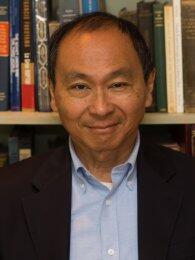
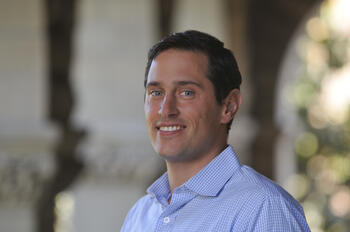
Join us for a conversation with FSI Director, Michael McFaul, as he showcases all the ways to get involved in student programs at FSI.

Light refreshments will be served. RSVP by 10/28 here.


Encina Hall
616 Jane Stanford Way
Stanford, CA 94305-6055

0
Senior Fellow, Freeman Spogli Institute for International Studies
Ken Olivier and Angela Nomellini Professor of International Studies, Department of Political Science
Peter and Helen Bing Senior Fellow, Hoover Institution
mcfaul_headshot_2025.jpg PhD

Michael McFaul is the Ken Olivier and Angela Nomellini Professor of International Studies in Political Science, Senior Fellow at the Freeman Spogli Institute for International Studies, and the Peter and Helen Bing Senior Fellow at the Hoover Institution, all at Stanford University. He joined the Stanford faculty in 1995 and served as FSI Director from 2015 to 2025. He is also an international affairs analyst for MSNOW.

McFaul served for five years in the Obama administration, first as Special Assistant to the President and Senior Director for Russian and Eurasian Affairs at the National Security Council at the White House (2009-2012), and then as U.S. Ambassador to the Russian Federation (2012-2014).

McFaul has authored ten books and edited several others, including, most recently, Autocrats vs. Democrats: China, Russia, America, and the New Global Disorder, as well as From Cold War to Hot Peace: An American Ambassador in Putin’s Russia, (a New York Times bestseller) Advancing Democracy Abroad: Why We Should, How We Can; and Russia’s Unfinished Revolution: Political Change from Gorbachev to Putin.

He is a recipient of numerous awards, including an honorary PhD from Montana State University; the Order for Merits to Lithuania from President Gitanas Nausea of Lithuania; Order of Merit of Third Degree from President Volodymyr Zelenskyy of Ukraine, and the Dean’s Award for Distinguished Teaching at Stanford University. In 2015, he was the Distinguished Mingde Faculty Fellow at the Stanford Center at Peking University.

McFaul was born and raised in Montana. He received his B.A. in International Relations and Slavic Languages and his M.A. in Soviet and East European Studies from Stanford University in 1986. As a Rhodes Scholar, he completed his D. Phil. in International Relations at Oxford University in 1991. 

CV
Date Label
Seminars
Authors
News Type
News
Date
Paragraphs

As health-care costs climb ever upward, controlling expenses without sacrificing high-quality care becomes increasingly important. Payment systems based on the value of care are emerging as a way to combat rising costs.

Many researchers like Jason Wang, an associate professor of pediatrics and a Stanford Health Policy core faculty member, have found that bundled payment systems may help health-care institutions achieve better value of care.

In a new study in the Journal of the American Medical Association Oncology, Wang and his co-authors show that a value-based bundled payment system is associated with cost containment and improvement in care, even improving chances for survival.

The study examined Taiwan’s bundled pay-for-performance (PFP) system for breast cancer. Instead of the traditional fee-for-service (FFS) system that is typical in the United States — in which every test, surgery and exam is billed individually — this system includes all aspects of treatment in a single established cost, or bundled payment.

Based on guidelines set by Taiwan’s National Health Insurance Administration (NHIA), the pilot program reimbursed health-care institutions’ costs for breast cancer treatment based on the patient’s cancer stage, 0 to IV. Institutions that exceeded the NHIA’s standards received a financial bonus as an incentive for better performance.

The study followed 4,215 patients in the bundled-care system over a five-year period, comparing the quality of their care, the cost of their treatment and the outcomes of their treatment to 12,506 similar patients in the traditional FFS system.

The authors found that patients in the bundled-payment system received better care throughout treatment, were more likely to survive, and contained medical costs over time, compared to their peers in the FFS system.

Costs for patients in the bundled payment system remained about the same throughout the study. However, the cost of treatment for those in the FFS system steadily increased throughout the study period. By the end, even health-care institutions receiving the maximum bonus incentive would incur lower costs than those in the FFS system.

Yet even though their treatment was cheaper, patients in the bundled system experienced better results. Patients using the bundled system had significantly higher survival rates for cancer stages 0 to III, and they were more likely to receive higher quality care based on quality indicators.

This is largely due to the better coordination of care made necessary by the bundled system, according to Wang.

“When you play in an orchestra, the whole group needs to play together, so it plays the right tune,” said Wang. “Focusing on value for the patient and the health-care system forces people to play the same tune.”

Wang believes the lessons learned from Taiwan’s program could be applied in other parts of the world, including the United States, which is currently moving toward bundled cancer care.

Though the U.S. already bundles care for conditions like appendicitis and chemotherapy — in which costs are fairly predictable — many hospital administrators fear that broadening the use of bundled payments for more complex conditions is too risky, financially.

Wang does not share their misgivings.

“People say, ‘We can’t do this for a very complex disease.’ It’s not true,” he said. “When we went outside of the U.S., we started to find systems that work.”

Wang found that when institutions can coordinate care for patients — that is, when a single institution manages all aspects of a patient’s care — the patient is more likely to have better outcomes.

“If institutions take the leadership of providing the infrastructure to coordinate care, they can really deliver better care with the same or lower costs.”

There are benefits for the institutions, too. Right now, because health insurance providers may accept or reject particular costs in an unpredictable way, care institutions never know how much they’re going to get paid for a service. But in a bundled payment system, costs are much more stable and revenue easier to predict.

Considering the benefits, Wang hopes the Taiwan breast cancer study will show institutions in the United States and around the world that bundled payments for cancer can be done on a broad scale.

The value, he said, is worth the risk.

Hero Image
istock 37075566 xlarge
Daoleduc
All News button
1
-

Do startups learn from their own past experiences? What about observing other entrepreneurs' experiences? Using the results of her recent study on tech ventures on Kickstarter, Jaclyn Selby will share the circumstances under which startups do - and do NOT - learn from previous success and failure. She will also explore whether startups learn best from prior experience in related or in unrelated industries.

Speaker Bio

Image
Jaclyn Selby's research is at the intersection of technology, management and policy. She focuses on competitive dynamics in high tech and media industries, emphasizing innovation, startups, and intellectual property. She joins Stanford from a postdoctoral fellowship at the Tuck School of Business at Dartmouth. Her work has been published in Communications & Strategies, Foreign Policy Digest, and Intellibridge Asia.  Jaclyn holds a PhD from the University of Southern California, an MA from Georgetown University, and a BA from Sarah Lawrence College.

Prior to PhD life, Jaclyn was a Senior Researcher heading federally-funded tech strategy projects at Project Argus, a leader in disease and disaster intelligence. Her group worked with partners at the Defense Threat Reduction Agency, the Open Source Center, the University of Iowa Avian Flu prediction market, and the Al Fornace molecular biology lab. Prior to Argus, she was Research & Marketing Director of the Style and Image Network, a boutique consultancy, and a geopolitical analyst (Intellibridge, Castle Asia, Courage Services). A U.S. citizen, Jaclyn was raised overseas in Indonesia, Thailand and Singapore.


Agenda

4:15pm: Doors open
4:30pm-5:30pm: Talk and Discussion
5:30pm-6:00pm: Networking

RSVP Required

 
For more information about the Silicon Valley-New Japan Project please visit: http://www.stanford-svnj.org/
Seminars
-

**We are no longer accepting RSVPs. This event is at capacity. Please join us via Facebook Live.**


The Presidential Election of 2016 has been unlike any in modern American history. How will voters decide between Donald J. Trump and Hillary Clinton on Election Day? What issues dominated the election in the final days of each campaign, and what consequences will this campaign have on the Republican and Democratic parties? What does this election mean for political polarization, campaign finance reform, and the rise of social media? 

Join a panel discussion with Larry Diamond, Francis Fukuyama, Bruce Cain, and Nate Persily of the Program on American Democracy in Comparative Perspective at Stanford's Center on Democracy, Development, and the Rule of Law after the election. The panel will discuss  the candidates, the campaigns, and the implications for American democracy. 

And join the conversation on Twitter: @StanfordCDDRL #CDDRLrecap

Speaker(s) Bio:

Image
francis fukuyama

Francis Fukuyama is the Olivier Nomellini Senior Fellow at the Freeman Spogli Institute for International Studies (FSI) and the Mosbacher Director of FSI's Center on Democracy, Development, and the Rule of Law (CDDRL).  He is also a professor by courtesy in the Department of Political Science. He was previously at the Paul H. Nitze School of Advanced International Studies (SAIS) of Johns Hopkins University, where he was the Bernard L. Schwartz Professor of International Political Economy and director of SAIS' International Development program.


Image
diamond larry smile

Larry Diamond is a senior fellow at the Hoover Institution and at the Freeman Spogli Institute for International Studies. He also serves as the Peter E. Haas Faculty Director of the Haas Center for Public Service at Stanford. For more than six years, he directed FSI’s Center on Democracy, Development, and the Rule of Law, and he continues to lead its programs on Liberation Technology, Arab Reform and Democracy, and Democracy in Taiwan.  He is the founding co-editor of the Journal of Democracy and also serves as Senior Consultant at the International Forum for Democratic Studies of the National Endowment for Democracy.


Image
bruce cain

Bruce E. Cain is a Professor of Political Science at Stanford University and Director of the Bill Lane Center for the American West. He received a BA from Bowdoin College (1970), a B Phil. from Oxford University (1972) as a Rhodes Scholar, and a Ph D from Harvard University (1976). He taught at Caltech (1976-89) and UC Berkeley (1989-2012) before coming to Stanford. Professor Cain was Director of the Institute of Governmental Studies at UC Berkeley from 1990-2007 and Executive Director of the UC Washington Center from 2005-2012.


Image
nate persily


Nathaniel Persily is a James B. McClatchy Professor and Professor, by courtesy, of Political Science and of Communication at Stanford Law School.  He received J.D. from Stanford Law School in 1998 and M.A. in 1994; PhD in Political Science in 2002 from U.C. Berkeley.  He served as Senior Research Director at the Presidential Commission on Election Administration June 2013-2014.


CDDRL
Stanford University
Encina Hall, C147
616 Jane Stanford Way
Stanford, CA 94305-6055

(650) 724-6448 (650) 723-1928
0
Mosbacher Senior Fellow in Global Democracy at the Freeman Spogli Institute for International Studies
William L. Clayton Senior Fellow at the Hoover Institution
Professor, by courtesy, of Political Science and Sociology
diamond_encina_hall.png MA, PhD

Larry Diamond is the William L. Clayton Senior Fellow at the Hoover Institution, the Mosbacher Senior Fellow in Global Democracy at the Freeman Spogli Institute for International Studies (FSI), and a Bass University Fellow in Undergraduate Education at Stanford University. He is also professor by courtesy of Political Science and Sociology at Stanford, where he lectures and teaches courses on democracy (including an online course on EdX). At the Hoover Institution, he co-leads the Project on Taiwan in the Indo-Pacific Region and participates in the Project on the U.S., China, and the World. At FSI, he is among the core faculty of the Center on Democracy, Development and the Rule of Law, which he directed for six and a half years. He leads FSI’s Israel Studies Program and is a member of the Program on Arab Reform and Development. He also co-leads the Global Digital Policy Incubator, based at FSI’s Cyber Policy Center. He served for 32 years as founding co-editor of the Journal of Democracy.

Diamond’s research focuses on global trends affecting freedom and democracy and on U.S. and international policies to defend and advance democracy. His book, Ill Winds: Saving Democracy from Russian Rage, Chinese Ambition, and American Complacency, analyzes the challenges confronting liberal democracy in the United States and around the world at this potential “hinge in history,” and offers an agenda for strengthening and defending democracy at home and abroad.  A paperback edition with a new preface was released by Penguin in April 2020. His other books include: In Search of Democracy (2016), The Spirit of Democracy (2008), Developing Democracy: Toward Consolidation (1999), Promoting Democracy in the 1990s (1995), and Class, Ethnicity, and Democracy in Nigeria (1989). He has edited or coedited more than fifty books, including China’s Influence and American Interests (2019, with Orville Schell), Silicon Triangle: The United States, China, Taiwan the Global Semiconductor Security (2023, with James O. Ellis Jr. and Orville Schell), and The Troubling State of India’s Democracy (2024, with Sumit Ganguly and Dinsha Mistree).

During 2002–03, Diamond served as a consultant to the US Agency for International Development (USAID) and was a contributing author of its report, Foreign Aid in the National Interest. He has advised and lectured to universities and think tanks around the world, and to the World Bank, the United Nations, the State Department, and other organizations dealing with governance and development. During the first three months of 2004, Diamond served as a senior adviser on governance to the Coalition Provisional Authority in Baghdad. His 2005 book, Squandered Victory: The American Occupation and the Bungled Effort to Bring Democracy to Iraq, was one of the first books to critically analyze America's postwar engagement in Iraq.

Among Diamond’s other edited books are Democracy in Decline?; Democratization and Authoritarianism in the Arab WorldWill China Democratize?; and Liberation Technology: Social Media and the Struggle for Democracy, all edited with Marc F. Plattner; and Politics and Culture in Contemporary Iran, with Abbas Milani. With Juan J. Linz and Seymour Martin Lipset, he edited the series, Democracy in Developing Countries, which helped to shape a new generation of comparative study of democratic development.

Download full-resolution headshot; photo credit: Rod Searcey.

Former Director of the Center on Democracy, Development and the Rule of Law
Faculty Chair, Jan Koum Israel Studies Program
Date Label
Senior Fellow Hoover Institution

Encina Hall, C148
616 Jane Stanford Way
Stanford, CA 94305

0
Olivier Nomellini Senior Fellow at the Freeman Spogli Institute for International Studies
Director of the Ford Dorsey Master's in International Policy
Research Affiliate at The Europe Center
Professor by Courtesy, Department of Political Science
yff-2021-14290_6500x4500_square.jpg

Francis Fukuyama is the Olivier Nomellini Senior Fellow at Stanford University's Freeman Spogli Institute for International Studies (FSI), and a faculty member of FSI's Center on Democracy, Development and the Rule of Law (CDDRL). He is also Director of Stanford's Ford Dorsey Master's in International Policy, and a professor (by courtesy) of Political Science.

Dr. Fukuyama has written widely on issues in development and international politics. His 1992 book, The End of History and the Last Man, has appeared in over twenty foreign editions. His book In the Realm of the Last Man: A Memoir will be published in fall 2026.

Francis Fukuyama received his B.A. from Cornell University in classics, and his Ph.D. from Harvard in Political Science. He was a member of the Political Science Department of the RAND Corporation, and of the Policy Planning Staff of the US Department of State. From 1996-2000 he was Omer L. and Nancy Hirst Professor of Public Policy at the School of Public Policy at George Mason University, and from 2001-2010 he was Bernard L. Schwartz Professor of International Political Economy at the Paul H. Nitze School of Advanced International Studies, Johns Hopkins University. He served as a member of the President’s Council on Bioethics from 2001-2004. He is editor-in-chief of American Purpose, an online journal.

Dr. Fukuyama holds honorary doctorates from Connecticut College, Doane College, Doshisha University (Japan), Kansai University (Japan), Aarhus University (Denmark), the Pardee Rand Graduate School, and Adam Mickiewicz University (Poland). He is a non-resident fellow at the Carnegie Endowment for International Peace. He is a member of the Board of Trustees of the Rand Corporation, the Board of Trustees of Freedom House, and the Board of the Volcker Alliance. He is a fellow of the National Academy for Public Administration, a member of the American Political Science Association, and of the Council on Foreign Relations. He is married to Laura Holmgren and has three children.

(October 2025)

CV
Date Label
Director Center on Democracy, Development, and the Rule of Law
Director Bill Lane Center for the American West
Nathaniel Persily Professor of Law Stanford Law School
Panel Discussions
Authors
News Type
News
Date
Paragraphs

Jeff Decker knows what war can do to a person. He lived it for four deployments, as an Army special operations squad leader in Iraq and Afghanistan who twice earned the Army Commendation Medal for valorous conduct in combat.

Decker, who now serves as a research assistant in Stanford’s Center for International Security and Cooperation under Joe Felter, is the founder of March on Veteran, an organization that supports veterans suffering from mental health issues, such as post-traumatic stress disorder, or PTSD. March on Veteran is a free, online program available to any former member of the military.

Decker joined CISAC in September, about a year after he launched March on Veteran. Felter, a special forces veteran, is a senior research scholar who studies counterinsurgencies, terrorism and political violence for CISAC.

Decker, after his military service, struggled with the transition to civilian life due to the anger, anxiety, chronic pain, and sleeplessness that PTSD caused. On top of this, he did not have access to a Veteran Affairs treatment facility. That’s when the native of Buffalo, N.Y. turned to self-educating himself on mental health treatments available to veterans.

“When I studied for my doctorate in Australia, I cobbled together a mental health program to help myself. Now I’m sharing that and making those resources available to other veterans with the same needs,” said Decker, who earned his doctorate in international relations from Bond University, where he wrote his dissertation “Enhancing the Effectiveness of Private Military Contractors.”

So far, about 83 veterans have begun March on Veteran’s pilot program, which is a web-based and self-directed study. Decker handles almost all of the human contact. He is currently expanding the program to incorporate the veteran-to-veteran peer element with the help of other veteran volunteers.

Image
jeff decker

March on Veteran is, as Decker calls it, “support for veterans by veterans.” It is a recovery program personalized to one’s particular needs and is provided by people who have lived experience. It is not affiliated with any government organization like the VA or Department of Defense to maintain the veteran’s confidentiality. Veterans can access the program or sign-up to meet other veterans online.

“This program focuses on trying to help veterans reach their personal goals instead of focusing on ‘fixing’ them,” Decker said. “We are all about improving veteran quality of life, and a big part of that is connecting with other veterans.”

With Felter, Decker will be mostly working on his Hacking for Defense class project, which uses startup methodology to innovate and find solutions for critical challenges facing America’s defense and intelligence agencies.

Before arriving on campus, Decker conducted national security and international affairs research as a RAND Corporation summer associate for two summers in Washington, D.C.

Hero Image
gettyimages 124644169
U.S. Army soldiers salute during the national anthem during the an anniversary ceremony of the 9/11 terrorist attacks on Sept. 11, 2011 at Bagram Air Field, Afghanistan. CISAC research associate Jeff Decker, a former Army veteran, has launched a support group for veterans suffering from mental health issues, such as post-traumatic stress disorder, or PTSD. | John Moore/Getty Images
All News button
1
News Type
Commentary
Date
Paragraphs

CDDRL Mosbacher Director Francis Fukuyama participated the screening of the Children of Men, the 2006 film adaptation of PD James’ dystopian novel, at the event organized by the Future Tense - “My Favorite Movie” series, in which thought leaders host screenings and discussions on their favorite movies with science and technology themes. Children of Men is set in the year 2027, 18 years after the last child was born, due to worldwide infertility. In the video at the top of this post, filmed Sept. 21, Fukuyama expanded on the thoughts he shared at the screening. Watch here

Hero Image
screen shot 2016 10 09 at 19 45 00 copy
Future Tense/ Slate.com
All News button
1
Authors
News Type
News
Date
Paragraphs

The consequences of state collapse anywhere in the world can be devastating and destabilizing for neighboring and even distant countries.

The complexity of each situation demands a tailored response, according to Stanford scholars embarking on a new American Academy Arts & Sciences project to identify the best policy responses to failing states embroiled in civil wars.

A failed state is that whose political or economic system has become so weak that the government is no longer in control. Such instability has already threatened or affected Syria, Libya, Yemen and other polities.

The project, Civil Wars, Violence and International Responses, is led by Stanford’s Karl Eikenberry and Stephen Krasner. Eikenberry is a faculty affiliate at Stanford’s Center for International Security and Cooperation (CISAC) and the former U.S. ambassador to Afghanistan. Krasner is a faculty member in the political science department and a senior fellow at the Freeman Spogli Institute for International Relations and Hoover Institution.

Other Stanford scholars involved include Francis Fukuyama and Steve Stedman of the Center on Democracy, Development, and the Rule of Law; CISAC's Martha Crenshaw, political scientist James Fearon; Paul Wise of the Center for Health Policy and the Center for Health Policy and the Center for Primary Care and Outcomes Research; and Michele Barry, the senior associate dean for global health at the medical school.

The effort will culminate in a two-volume issue in AAAS’s journal Dædalus. On Nov. 2-4, the academy will hold an authors’ workshop in Cambridge, Mass., to discuss journal content.

Different approaches

In an interview, Eikenberry said the problematic U.S. interventions in Iraq and Afghanistan make it clear that different approaches must be used for different countries.

“The robust counterinsurgency campaign that the U.S. employed for periods of time in both Afghanistan and Iraq was premised on the viability of the standard development model that aims to put countries on the path to economic well-being and consolidated democracy,” he said.

However, such an approach assumes that decision makers in those states have the same objectives as the intervening states, which typically seek to improve the lives of people in those countries, said Eikenbery. Prior to serving as the U.S. ambassador to Afghanistan from 2009 until 2011, Eikenberry had a 35-year career in the U.S. Army, retiring in 2009 with the rank of lieutenant general.

As Krasner points out, when intervention occurs, the hope is that improvements in one area – such as the quality of elections, rule of law, economic growth, or military recognition of civilian authority – would lead to improvements in other areas, according to Eikenberry.

But opposition and a constrained sense of “limited opportunities” can arise to thwart a well-meaning intervention, Eikenberry said.

He added, “Information asymmetries and the absence of mutually compatible interests between national and external elites, make it impossible to put target countries on a rapid path to prosperity and consolidated democracy. External actors must have much more modest goals.”

Syrian consequences

As for the case of Syria, Eikenberry noted that such civil wars can actually become more lethal and dangerous to global order than inter-state conflicts.

These types of conflicts like that in Syria tend to escalate into high levels of violence because of the costs that the losing parties believe they will incur, he said.

“This in turn leads to state fragmentation and the possibility of transnational groups with international ambitions getting involved,” he said. “Civil wars can result in an enormous number of civilian casualties, which generates large scale refugee flows” and puts huge pressure on neighboring states.

Eikenberry said Syria is being “internationalized by entangling regional and great powers in proxy wars,” which is exacerbating that conflict beyond Syria and throughout the greater Middle East. As for the immediate, direct threat to the U.S., that debate still continues, he added. 

On that note, one project goal is to assess risks to other countries that may emanate from civil wars and protracted intrastate violence like that in Syria, Eikenberry said. He and his colleagues will examine the effects of  international terrorism, massive displacements of people, proxy wars that escalate to interstate warfare, criminal organizations that displace governments, and pandemics. 

Policy implications

Eikenberry is hopeful the project influences policy and practice toward countries experiencing civil war and violence.

“Facilitating dialogue among a variety of constituencies with knowledge on the dynamics and impact of civil wars that might not normally or directly interact, including government and military officials, human rights organizations, academic and scholarly experts, and the media, will be one outcome of the project,” he said.

The idea is to allow “new ideas to emerge” regarding how to handle such states, as well as methods of applying such findings, he said.

“Exploring ways to create stability and more lasting peace, taking into consideration voices from academic and practical fields, should prove valuable to the policy community,” Eikenberry said.

Following publication of the volumes, the project will convene international workshops aimed at developing better regional perspectives. Such outreach activities will provide the feedback for the publication of another AAAS paper aimed at informing U.S. and international policy and research on the subject. A series of roundtable discussions in Washington is also planned.



Hero Image
Policy responses to failed states, civil war
Syrians walk amid the rubble of destroyed buildings following air strikes in Douma, Syria, in 2015. Stanford scholars Karl Eikenberry and Stephen Krasner are leading an American Academy Arts & Sciences project that seeks to understand the consequences of civil wars and state collapses and how best to respond to them through policy. | ABD DOUMANY/AFP/Getty Images
All News button
1
616 Serra StreetEncina Hall E301Stanford, CA94305-6055
(650) 725-2507 (650) 723-6530
0
ke_wang.jpg Ph.D.

Dr. Ke Wang is visiting APARC for the fall semester in 2016-2017 school year during her sabbatical leave from her current post at the Federal Reserve Board of Governors in Washington D.C. where she serves as a Senior Economist in the Division of Banking Supervision and Regulation.

At the Fed, Dr. Wang is responsible for policy analysis and regulation oversight of U.S. bank holding companies as well as conducting academic research in economics and finance fields. In her five-year tenure as a Fed staff economist, she participated in international Basel framework of capital regulation, quantitative credit model assessment for U.S. Stress Testing practice, and policy initiatives on liquidity regulation for Systemically Important Financial Institutions.

Dr. Wang’s research interests span from credit analysis to monetary policy. She has published in top academic journals such as Journal of Financial Economics and has wide citations for her previous works which covered topics such as corporate bond default prediction, impact of banking structure on monetary policy, and relationship banking in pre-war Japan.

Her current working papers focus on how liquidity in Over-The-Counter market is impacted by broker-dealers’ funding costs and information asymmetry. She provides empirical evidence using comprehensive bond transaction data that broker-dealers’ own financial health will quantitatively impact the liquidity and price discovery process of distressed assets. At Stanford, Dr. Wang will collaborate with other APARC research fellows on studies about both U.S. and Japan banking regulations, particularly the impact of regulation on systemic risk of financial institutions. 

Dr. Wang holds a Ph.D. in Economics from Stanford University and a B.A. in International Economics from Peking University. She once worked as an Assistant Professor in Finance in the Faculty of Economics at the University of Tokyo, teaching graduate courses on Money and Banking as well as Corporate Finance. 

Visiting Scholar
Date Label
Subscribe to The Americas