-

Abstract:

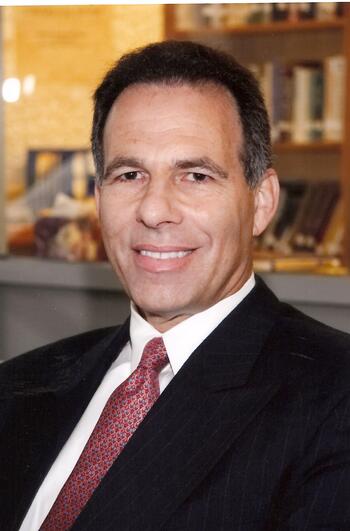
Join Professor Larry Diamond and the winners of the 10x10K Cuba competition for a talk on the emerging entrepreneurial scene in Cuba. The 10x10K Cuba is an international competition seeking to help talented programmers and entrepreneurs in Cuba. This event will feature Janse Lazo Valdes and Victor Manuel Moratón, the entrepreneurs leading the startups MiKMa and NinjaCuba.


Speaker(s) Bio:

Janse Lazo Valdes is a Computer Science engineer from the Havana University of Technologies José Antonio Echeverría. Valdes and his team Sírvete participated in Havana’s first Startup Weekend, coming in 2nd place. At Stanford, he is hoping to learn more about business opportunities, marketing, human resources, and leadership to promote entrepreneurship and development in Cuba. Valdes is representing the startup MiKMa.

MiKMa is a startup that will guarantee the advertising of houses for rent in national currency in Cuba and hopes to revolutionize the way in which the user makes the reservations of these properties.


Victor Manuel Moratón is a Computer Science engineer from the Havana University of Technologies José Antonio Echevarría. He specializes in software development and is the product developer of Ninjas Cuba. At Stanford, he wants to represent the emerging entrepreneurial Cuban community and meet leaders in the sector of entrepreneurship and development. Moratón is representing the startup NinjaCuba.

NinjaCuba is a website oriented to the search of talents of computer science in Cuba thought for the thousands of computer engineers, cybernetics, designers, companies and groups of development. NinjaCuba hopes to connect people in the technology space with employment opportunities.


Image
development and entrepreneurship in cuba

Janse Lazo Valdes Computer Science Engineer, Havana University of Technologies José Antonio Echeverría
Victor Manuel Moratón Computer Science Engineer, Havana University of Technologies José Antonio Echevarría.
Seminars
News Type
Commentary
Date
Paragraphs

"One mistake was to discount Russia’s importance in international affairs. The U.S. became engrossed in wars in Iraq and Afghanistan, thinking that Russia was weak, and generally unimportant. Under President George W. Bush, the U.S. assumed that the world was unipolar after the Cold War, and that it would always be so," writes Kathryn Stoner, a senior fellow at the Freeman Spogli Institute for International Studies and faculty director of the Ford Dorsey Program on International Policy Studies at Stanford for the New York Times "Room for Debate". Read the article here.

Hero Image
gettyimages 472411866
ALEXANDER NEMENOV/AFP/Getty Images
All News button
1
Authors
News Type
News
Date
Paragraphs

Why is terrorism such a vexing problem for policy makers to solve?

The details – and not sloganeering – are important in grappling with the terrorist threat against the U.S. and West, a Stanford scholar suggests. One reason is that the study of terrorism is often confused and contentious, and the study of counterterrorism can be even more frustrating, says Martha Crenshaw, a Stanford terrorism expert and senior fellow at the Center for International Security and Cooperation.

“The conceptual and empirical requirements of defining, classifying, explaining, and responding to terrorist attacks are more complex than is usually acknowledged by politicians and academics, which complicates the task of crafting effective counterterrorism policy,” wrote Crenshaw in a new book, Countering Terrorism, with her co-author Gary LaFree, a criminal justice professor at the University of Maryland.

The researchers examined about 157,000 terrorist attacks that have occurred around the world since 1970. These are catalogued in the Global Terrorism Database at the University of Maryland. Crenshaw founded the Mapping Militant Organizations project at Stanford to identify militant organizations globally and trace how they arise, their root causes and their connections. Understanding the nature of terrorism, the diverse groups and ever-changing aspect of how they adapt is a key theme in her research.

Crenshaw said the stakes in fighting terrorism today are especially high since the consequences of missteps and miscalculations can be catastrophic. While research in what is now known as terrorism studies has made significant strides, more progress is needed on the analytical and academic fronts.

“Terrorist attacks are rare, yet they encourage immediate and far-reaching responses that are not easily rolled back. Most attempts actually fail or are foiled, so that examining only successful terrorist attacks gives an incomplete picture,” the scholars wrote.

Obstacles and hindrances

After 9/11, the U.S. reshaped its policies and institutions to deal with terrorism. Fifteen years later, Crenshaw and LaFree analyzed the lessons learned from 9/11 and how governments responded. Both authors are participating in a Jan. 25 panel discussion at Stanford on the subject of their book. Crenshaw and Lafree suggest three key principles emerge from their research. Countries like the U.S. should prepare for change, disruption, and surprise from terrorist groups.

Second, countries should resist the temptation to magnify the image of the destructive power of terrorism as well as the vulnerability of its targets. Finally, the U.S. needs to accept limits to its ability to totally manage and control the jihadist threat. As Crenshaw and LaFree noted, “Even superpowers cannot completely control their environments. Terrorist threats are constantly evolving, never static.”

A realistic understanding of the actual extent of terrorist capacity to harm national security interests is the best approach, she said. “Governments, especially the American government, should avoid both overreacting and promising or threatening overreaction, which means entertaining modest expectations about what can be accomplished in an extremely complex and uncertain threat environment that requires constant adaptation and adjustment,” they wrote.

Counterterrorism policy should be reasonable, practical, and balanced – in a word, sensible, Crenshaw said.

“There is no perfect solution,” she and LaFree said.

The top priority of the U.S. government is to prevent attacks on American soil, she said. While this is a clear goal, no one in political leadership can guarantee the public absolute security. “If the goal is set as the complete absence of terrorist attacks, then policymakers become so anxious that a terrorist will slip through the preventive security net that they risk panic or overreaction. Fear of being blamed in the aftermath of an attack starts to take precedence over all other considerations,” they wrote.

Policy paradoxes

Crenshaw and Lafree’s research revealed some policy paradoxes. One involved counterterrorism: policymakers tend to set overly ambitious policies to eradicate terrorism completely, rather than risk being called “reactive” rather than “proactive.” But Crenshaw said such goals lack clarity and realism, and can lead to unwise and unattainable objectives. For example, in the wake of 9/11, the U.S. government believed that overthrowing authoritarian regimes in countries like Afghanistan, Iraq, Syria, Libya and Yemen in favor of “democratic change” would serve as the antidote to terrorism.

However, the change did not take place, and the U.S. has since had to intervene militarily to restore or establish security and stability for weak and embattled allies facing terrorism. One aim for American policy should be greater precision about the strategic goals of military action abroad and that connection to security at home, said Crenshaw and LaFree.

“If the contradictions behind the paradox cannot be resolved, policymakers must find a middle ground between the tactical and strategic,” they wrote.

Another problem is measuring progress against terrorism, Crenshaw and LaFree said. Significant skepticism exists about what the metrics mean in regard to drone strikes, bombs dropped, targets struck, arrests made and cases prosecuted, convictions secured, territory seized or regained, plots foiled, websites taken down, Facebook postings and Twitter accounts deleted, and so on.

“Are these measures of success against terrorism or measures of the extent of the government’s efforts? These metrics calculate what government has done, not necessarily the effect of its actions on adversaries’ calculations and capabilities,” the researchers said, adding that government measures may be taken before a specific adversary exists.

Finally, the real agents behind terrorism are extremely difficult to identify, Crenshaw and LaFree said, because there is no standard “terrorist organization,” and groups evolve, mutate and adapt. Meanwhile, governments and researchers often struggle to establish responsibility for specific attacks. 

Follow CISAC at @StanfordCISAC or  www.facebook.com/StanfordCISAC

MEDIA CONTACTS

Martha Crenshaw, Freeman Spogli Institute for International Studies: (650) 723-0126, crenshaw@stanford.edu

Clifton B. Parker, Center for International Security and Cooperation: (650) 725-6488, cbparker@stanford.edu



Hero Image
gettyimages 484710528
The study of terrorism is often confused and contentious, and the study of counterterrorism can be even more frustrating, says Martha Crenshaw, a Stanford terrorism expert and senior fellow at the Center for International Security and Cooperation. | Zabelin/Getty Images
All News button
1
-

This paper investigates the impact of human barriers on international trade using data on common ancestry. Using data on 172 countries covering the near universe of international trade, our analysis documents that country pairs with a large ancestral distance are less likely to trade with each other (extensive margin) and, if they do trade, they trade fewer goods (intensive margin). The results are robust to including a vast array of micro-geographic and political control variables. We explore the role of several proximate determinants that lead to this negative relationship, including differences in values, preferences, technology, as well as migration patterns. Our findings offer a partial explanation to the distance puzzle, the observation that estimates of geographic distance have remained persistently high despite substantial decreases in transportation costs in recent years.

Image
Lukas Schmid pic


Lukas Schmid is an Assistant Professor at the University of Lucerne -- where he teaches empirical methods. His research interests include political economy, labor economics, and international economics. On-going projects explore the interaction between institutions and political and economic behavior, the impact of language and common ancestry on economic outcomes as well as the long-term consequences of education. His articles have been published in American Journal of Political Science, Review of Economics and Statistics, Economic Journal, and elsewhere.


Lukas Schmid Assistant Professor speaker University of Lucerne
Lectures
-

Abstract:

In Revolution and Rebellion in the Early Modern World, I showed that turning points in global population trends have been driving waves of political stability or crisis for at least the last 500 years. We are currently seeing a new turning point, as rich countries enter a period of workforce decline and emerging markets divide into those with falling fertility vs. stable and still-high fertility. Drawing on experience from previous centuries in Europe and Asia, we can forecast political trends; these include a new wave of revolutions in Africa and the Middle East and a surge in populist and protectionist politics in Europe and the U.S., but also eventual peaceful transitions to democracy in Russia and China.


Speaker Bio:

Image
jack goldstone
Jack A. Goldstone (PhD Harvard) is the Virginia E. and John T. Hazel, Jr. Professor of Public Policy at George Mason University. Previously, Dr. Goldstone was on the faculty of Northwestern University and the University of California, and has been a visiting scholar at Cambridge University and the California Institute of Technology. He is the author of Revolution and Rebellion in the Early Modern World, awarded the 1993 Distinguished Scholarly Research Award of the American Sociological Association; Why Europe? The Rise of the West in World History; and co-editor of Political Demography: How Population Changes are Reshaping International Security and National Politics. He has been a Fellow at the Center for Advanced Study at Stanford University, and won Fellowships from the Guggenheim Foundation, the MacArthur Foundation and the American Council of Learned Societies. He has also won the Arnoldo Momigliano Award of the Historical Society, the Myron Weiner award of the International Studies Association, and been Holbrooke lecturer at the American Academy in Berlin. His current research focuses on conditions for building democracy and stability in developing nations, the impact of population change on the global economy and international security, and the cultural origins of modern economic growth.

Jack A. Goldstone Virginia E. and John T. Hazel, Jr. Professor of Public Policy at George Mason University
Seminars
Paragraphs

Temperature data are commonly used to estimate the sensitivity of many societally relevant outcomes, including crop yields, mortality, and economic output, to ongoing climate changes. In many tropical regions, however, temperature measures are often very sparse and unreliable, limiting our ability to understand climate change impacts. Here we evaluate satellite measures of near-surface temperature (Ts) as an alternative to traditional air temperatures (Ta) from weather stations, and in particular their ability to replace Ta in econometric estimation of climate response functions. We show that for maize yields in Africa and the United States, and for economic output in the United States, regressions that use Ts produce very similar results to those using Ta, despite the fact that daily correlation between the two temperature measures is often low. Moreover, for regions such as Africa with poor station coverage, we find that models with Ts outperform models with Ta, as measured by both R 2 values and out-of-sample prediction error. The results indicate that Ts can be used to study climate impacts in areas with limited station data, and should enable faster progress in assessing risks and adaptation needs in these regions.

All Publications button
1
Publication Type
Journal Articles
Publication Date
Journal Publisher
Environmental Research Letters
Authors
Sam Heft-Neal
David Lobell
Authors
News Type
News
Date
Paragraphs

Improving the U.S.-China relationship is a focus at the Center for International Security and Cooperation.

CISAC continued this tradition in co-sponsoring the 8th Sino-U.S. Security Relations and Cooperation Conference in Beijing from Dec. 14-15, 2016. The conference was hosted and co-sponsored by the Foreign Ministry's China Institute of International Studies (CIIS).

Ambassador Su Ge, president of CIIS, attended the conference and delivered an opening remark. FSI’s Thomas Fingar and Teng Jianqun from CIIS chaired the conference.

Fingar said, “Although held at a time of uncertainty about the future of U.S.-China relations, the conference included constructive exchanges on strategic stability, obstacles to cooperation in space, and other sensitive topics.”

He added, “The exchanges were frank and constructive because they built on the foundation of understanding and trust developed through years-long exchanges between CISAC and CIIS. In the next phase, small teams of American and Chinese experts will develop joint blueprints to enhance understanding of issues critical for nuclear stability and space cooperation.”

CISAC co-founder John W. Lewis has been active for many years encouraging and supporting better ties between the U.S. and China. He is an expert on Chinese politics, U.S.-China relations, China's nuclear weapons program, U.S. policy toward Korea and health security issues in northeast Asia.

During this most recent Beijing conference, scholars and security experts from both the U.S. and China held in-depth discussions on topics including cybersecurity, outer space cooperation, maritime dispute management, missile defense, grey zone cooperation, and China-U.S. nuclear issues.

The American attendees included scholars from CISAC (Fingar, Brad Roberts, and Joseph Torigian); Brad Roberts, director, Center for Global Security Research, Lawrence Livermore National Laboratory; Major General Roger W. Burg, former commander, 20th Air Force; Vice Admiral Michael Connor (retired), U.S. Navy; Lieutenant General Susan J. Helms (retired), U.S. Air Force general and former NASA astronaut; Lieutenant General James M. Kowalski (retired), U.S. Air Force general; Steven M. Benner,chief, Strategy and Campaign Division, U.S. Strategic Command, among others.

The Chinese experts came from a variety of institutions – CIIS, China Academy of Engineering Physics, the People’s Liberation Army (PLA) Rocket Force, Rocket Force College, China Defense Science and Technology Information Center, PLA Navy Academy of Military Science, PLA South Command, Chinese Academy of Social Science, Renmin University of China, National Defense University, Tsinghua University, etc. 

Follow CISAC at @StanfordCISAC and on Facebook at www.facebook.com/StanfordCISAC

Hero Image
gettyimages 466265033
Getty Images
All News button
1
Authors
News Type
News
Date
Paragraphs

Siegfried Hecker wrote the following op-ed for the Jan. 12 edition of The New York Times:

Since my first visit to North Korea’s Yongbyon nuclear complex in 2004, I have witnessed the country’s nuclear weapons program grow from a handful of primitive bombs to a formidable nuclear arsenal that represents one of America’s greatest security threats. After decades of broken policies toward Pyongyang, talking to the North Koreans is the best option for the Trump administration at this late date to limit the growing threat.

North Korea broke out to build the bomb because President George W. Bush was determined to kill President Bill Clinton’s 1994 “Agreed Framework,” a bilateral agreement with the North to freeze and eventually dismantle the North’s nuclear program. Hard-liners in the Bush administration viewed it as appeasement. Mr. Bush labeled the North, along with Iran and Iraq, part of an “axis of evil” in January 2002.

At the first bilateral meeting with Kim Jong-il’s regime in Pyongyang in October 2002, Bush administration officials accused North Korea of violating the Clinton pact by clandestinely pursuing the uranium path to the bomb. Washington had already detected this effort in the late 1990s, but it was deemed an insufficient threat not worthy of jeopardizing the gains made by the plutonium freeze.

For the Bush administration, the clandestine uranium effort was all it needed to walk away from the Agreed Framework. Yet Mr. Bush’s team proved unprepared for the consequences and stood by as North Korea resumed its plutonium program and built the bomb.

During six visits between 2004 and 2009, I watched the North continue to try to engage Washington, while the Bush administration preferred the six-party talks led by China, believing that the North would have greater difficulty cheating in the context of multilateral diplomacy. In a 2004 visit, I was even allowed to hold a piece of plutonium — in a sealed glass jar — to convince me and Washington that North Korea had the bomb.

In September 2005, China orchestrated a six-party joint statement calling for a nuclear-weapon-free Korean Peninsula. When the Bush administration concurrently slapped financial sanctions on Pyongyang, the North Koreans walked out of the six-party talks and responded with their first nuclear test in October 2006.

I was in Pyongyang three weeks later and found that although the test was only partly successful, it marked a turning point in the North’s nuclear program. North Korea became a nuclear weapon state and insisted that all future negotiations proceed from that reality. Mr. Bush left office with the North most likely possessing up to five plutonium-fueled nuclear weapons and an expanding uranium program.

North Korea greeted the Obama administration with a long-range rocket launch, followed by a second nuclear test in May 2009 — this one, successful. Unlike the Bush administration, which faced the prospect of the North’s violating the Nuclear Nonproliferation Treaty, the Obama administration faced the North’s steady march to an expanding arsenal.

Mr. Obama was also unwilling to engage directly with Pyongyang, insisting instead that the North denuclearize before starting talks. It appears the Obama administration also viewed the regimes of Kim Jong-il and his son and successor, Kim Jong-un, as repugnant and hoped for their collapse, while also staying in step with two conservative South Korean administrations. Mr. Obama’s preferred path has been to tighten United Nations and United States sanctions and to pressure Beijing to rein in Pyongyang. Neither strategy has stopped the Kim regime from expanding its nuclear program.

Pyongyang upped the ante on its nuclear program with a remarkable revelation during my seventh and last visit in November 2010: the existence of a modern uranium centrifuge facility in Yongbyon. That facility served notice that the North was now capable of pursuing the second path to the bomb. No outsiders are known to have been in Yongbyon since my 2010 visit.

Satellite imagery of the Yongbyon complex combined with official North Korean propaganda photos and three additional successful nuclear tests point to a robust and rapidly expanding nuclear arsenal. My best estimate, admittedly highly uncertain, is that North Korea has sufficient plutonium and highly enriched uranium to build 20 to 25 nuclear weapons.

The North also launched some two dozen missiles in 2016, including partly successful road-mobile and submarine-based missiles that could potentially carry nuclear warheads.

President-elect Donald J. Trump faces a much graver threat from the North than his two predecessors. Pyongyang can most likely already reach all of South Korea, Japan and possibly even some United States targets in the Pacific.

The crisis is here. The nuclear clock keeps ticking. Every six to seven weeks North Korea may be able to add another nuclear weapon to its arsenal. All in the hands of Kim Jong-un, a young leader about whom we know little, and a military about which we know less. Both are potentially prone to overconfidence and miscalculations.

These sensitive nuclear issues require focused discussions in a small, closed setting. This cannot be achieved at a multilateral negotiating table, such as the six-party talks.

Mr. Trump should send a presidential envoy to North Korea. Talking is not a reward or a concession to Pyongyang and should not be construed as signaling acceptance of a nuclear-armed North Korea. Talking is a necessary step to re-establishing critical links of communication to avoid a nuclear catastrophe.

Mr. Trump has little to lose by talking. He can risk the domestic political downside of appearing to appease the North. He would most likely get China’s support, which is crucial because Beijing prefers talking to more sanctions. He would also probably get support for bilateral talks from Seoul, Tokyo and Moscow.

By talking, and especially by listening, the Trump administration may learn more about the North’s security concerns. It would allow Washington to signal the strength of its resolve to protect its allies and express its concerns about human rights abuses, as well as to demonstrate its openness to pragmatic, balanced progress.

Talking will help inform a better negotiating strategy that may eventually convince the young leader that his country and his regime are better off without nuclear weapons.

Siegfried S. Hecker, emeritus director of the Los Alamos National Laboratory, is a senior fellow at the Center for International Security and Cooperation at Stanford University. 

Click here to read this story on The New York Times web site. A version of this op-ed appears in print on Jan. 13, 2017, on Page A9 of the New York edition with the headline: The U.S. must talk to North Korea. 


Hero Image
gettyimages 626949140
Pedestrians walk before the portraits of former North Korean leaders Kim Il-Sung, left, and Kim Jong-Il, right, in Pyongyang in 2016. Siegfried Hecker says that bilateral talks between the U.S. and North Korea may eventually convince that country's leadership that their regime is better off without nuclear weapons. | Ed Jones/AFP/Getty Images
All News button
1
0
Former Research Scholar, Japan Program
-jselby1.png

Jaclyn Selby was a Research Scholar at the Walter H. Shorenstein Asia-Pacific Research Center's Japan Program through June 2020. She joined Stanford from a postdoctoral fellowship at the Tuck School of Business at Dartmouth, where she was affiliated with the Center for Digital Strategies and the Strategy and Management Faculty Group. Selby's research is at the intersection of strategic management and technology policy for high tech and media industries. Her main areas of focus are the digital platform economy, innovation management, startups, and intellectual property. Her work has been published in Communications & Strategies, Foreign Policy Digest, and Intellibridge Asia.
 
Selby holds a PhD from the University of Southern California, an MA from Georgetown University, and a BA from Sarah Lawrence College. Prior to pursuing her doctorate, she was a Senior Researcher at Project Argus, a global leader in federally-funded disease and disaster intelligence, where she headed three operations research and tech strategy projects. Her background also includes experience in boutique consulting, as Research & Marketing Director for the Style and Image Network, and in geopolitical consulting (Intellibridge, Courage Services, CastleAsia).

Authors
News Type
News
Date
Paragraphs

The following, "Dropped Into History," appeared in the January 2017 edition of Stanford Magazine. The sophomore seminar, led by CISAC's Scott Sagan and Joe Felter, gives students an intimate view of the people and places surrounding the Battle of Little Bighorn in 1876.


Hero Image
19taqkc6rqlgkocqjagnl6w
Stanford theater scholar Tom Freeland coached students in the Face of Battle seminar on how to portray their characters during battlefield soliloquies on site in Montana. | Dan Armstrong, Stanford Magazine
All News button
1
Subscribe to The Americas