This paper provides an account of the strategies of extortion and co-optation used by drug trafficking organizations (DTOs) toward civil society in Mexico. Our theoretical approach focuses on levels of territorial contestation among armed actors, as well as state capture by DTOs, to explain variation in co-opting or coercing civil society. Through the use of list experiments in a nationally representative survey, the paper measures extortion and assistance by DTOs in Mexico. We find that territorial contestation among rival DTOs increases predation on civil society while reducing DTOs assistance, which is found to occur in uncontested municipalities. Additionally, we find that extortion is higher in municipalities where DTOs have captured the state. These results suggest that territorial contestation and state capture are important in determining the strategy toward civil society during drug wars.
Speaker Bio:
Image
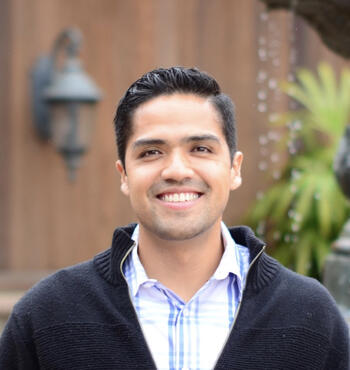
Gustavo Robles is a Research Scholar for the Program on Poverty and Governance (POVGOV) at CDDRL. He finished his PhD in Political Science at Stanford University in 2017 with specialization in Political Methodology and Comparative Politics. His PhD dissertation focused on the dynamics and consequences of drug-related violence in Mexico. His research interests include the economics of crime and violence in Latin America, political economy of development, and legislative studies. He is involved in POVGOV’s projects on police accountability and use of force, crime and security, and violence prevention in Brazil and Mexico. He holds a M.A. in Economics from Stanford University and a BA in Economics and Political Science from ITAM.
Research Scholar for the Program on Poverty and Governance (POVGOV) at CDDRL
Rodney Ewing was elected to the National Academy of Engineering this week.
Ewing, a senior fellow at the Center for International Security and Cooperation, was recognized for his research on “the long-term behavior of complex ceramic materials to assess their suitability for engineered nuclear waste sequestration.” He is a professor of geological sciences at Stanford.
Membership in the academy is one of the highest academic distinctions in the field of engineering. It honors outstanding contributions to “engineering research, practice or education, including, where appropriate, significant contributions to engineering literature” and “the pioneering of new and developing fields of technology, making major advancements in traditional fields of engineering or developing/implementing innovative approaches to engineering education," according to the NAE.
The academy also honored two other Stanford professors: Andrea Goldsmith, professor of engineering, and Leonidas Guibas, professor of computer science. The three Stanford scholars among 84 new members joining NAE this year. In total, the academy has 2,281 members including 249 foreign members. The newly elected class will be formally inducted during a ceremony at the academy's annual meeting in Washington, D.C., on Oct. 8, 2017.
Click here to read a Stanford News Service story on the selections of Ewing and his colleagues to the National Academy of Engineering.
As the number of migrants in Europe has risen in recent years, far right parties have fuelled voters’ fears concerning what the influx will mean for their nations. This project utilizes paired pre-election polls and actual vote shares across state and regional elections pre- and postmigrant crisis to provide evidence that far right sympathists often practiced preference falsification prior to this legitimizing shock, but that the crisis reshaped the political conversation such that far right identification is no longer deemed politically shameful. Although the theoretical framework surrounding preference falsification is well developed in the social movement literature as well as in American politics, Laura Jakli argues that it has untapped parallels in the study of Europe's far right. She also embeds priming and list experiments in a Facebook survey to determine whether there is a significant difference between subjects' willingness to identify with the far right using explicit versus implicit measurement approaches.
Speaker Bio:
Image
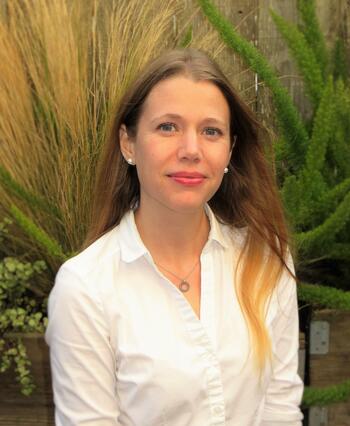
Laura Jakli is a PhD student and FLAS fellow at UC Berkeley. Her research focuses on the intersection of modern European politics and political behavior. She has designed and implemented field experiments, internet-based survey experiments, and interview-based research in the US, Greece, and Hungary. Her dissertation examines the relationship between digital media polarization and individual-level attitude strength as well as aggregate-level electoral mobilization. The overall goal of her dissertation is to explain why recent far right voter turnout has been remarkably high relative to the underlying distribution of ideological adherents across the West. She holds a BA from Cornell University and an MA from UC Berkeley.
Laura Jakli
PhD student and FLAS fellow at UC Berkeley
The Allied occupation of Japan is remembered as the "good occupation." An American-led coalition successfully turned a militaristic enemy into a stable and democratic ally. Of course, the story was more complicated, but the occupation did forge one of the most enduring relationships in the postwar world. Recent events, from the occupations of Iraq and Afghanistan to protests over American bases in Japan to increasingly aggressive territorial disputes between Asian nations over islands in the Pacific, have brought attention back to the subject of the occupation of Japan. But where did occupation policy come from? This talk considers the role of presidents, bureaucrats, think tanks, the media, and Congress as part of an informal policy network created to manage the postwar world during World War II.
Speaker Bio:
Image
Dr. Dayna Barnes is a specialist in 20th century international history, American foreign policy, and East Asia. She is a visiting scholar at Stanford University's Center on Democracy, Development and Rule of Law, and is an incoming assistant professor of history at City, University of London. Her book, Architects of Occupation: American Experts and the Planning for Postwar Japan, was published in Cornell University Press in March 2017.
On February 23, 1992, less than two months after the dissolution of the Soviet Union, I landed on the tarmac in Sarov, a city the government had removed from maps to keep secret its status as a nuclear weapons center. I was then director of the Los Alamos National Laboratory and accompanied by two senior scientists from my own lab plus three colleagues from the Lawrence Livermore National Laboratory. The six of us were about to walk through the birthplace of the Soviet nuclear bomb, the technological and intellectual powerhouse behind the sophisticated arsenal that had been pointed at our country for the previous 40 years.
Shockingly, after an hour-long flight from Moscow, we stepped out of the Aeroflot turboprop into the open arms of our Russian hosts: Yuli Borisovich Khariton, the scientific leader of the Soviet nuclear program, and other senior lab staff who had waited in the chilly wind to welcome us. Just as remarkable was the fact that this wasn’t the first time we met our Russian counterparts. Two weeks earlier, directors of the Russian nuclear weapons labs, VNIIEF in Sarov and VNIITF in Snezhinsk, had for the first time in history set foot in our labs in Livermore and Los Alamos. This exchange of visits a quarter century ago marked a new turn in relations between the world’s two nuclear weapons superpowers.
The road to Sarov
Our first meeting on Russian soil would have been deemed improbable just a few months earlier. The encounter on the Sarov tarmac grew out of both persistence by determined individuals and larger historical forces. As the Soviet Union scrambled to adjust domestic and international policy in the face of mounting economic and social challenges in the late 1980s, Soviet leader Mikhail Gorbachev reached across the political divide to US President Ronald Reagan to take steps toward nuclear disarmament. One such step was the Joint Verification Experiment of 1988, in which the Soviet Union and the United States asked their nuclear weapons scientists to conduct parallel nuclear-explosion yield measurements at testing grounds in Nevada and Semipalatinsk, located in what is now Kazakhstan. The experiment helped overcome a stumbling block related to verification procedures needed to ratify the 1974 Threshold Test Ban Treaty (TTBT). The 1988 nuclear tests enabled the two sides to sign a new ratification protocol in Geneva in June 1990, and the TTBT entered into force in December 1990.
As history would have it, an unintended outcome of the TTBT ratification effort proved to be the most momentous. Viktor Mikhailov, head of the Soviet team that took part in the Joint Verification Experiment and later Russian minister of atomic energy, was right when he said that “the main result of the Joint Verification Experiment was not the development of procedures and extent of nuclear test monitoring of the joint development of technical verification means, but the chance for interpersonal communications with the American nuclear physicists.”
Indeed, it was working side by side at each other’s test sites that gave rise to deep-rooted affinity and built trust. Over the years, we had only caught glimpses of our Soviet nuclear scientist counterparts at a few international conferences where they disguised their institutional affiliations, saying they were part of the Soviet Academy of Sciences. It was through months of collaboration at our test sites that the contours of their true home institutions—the nuclear weapons labs VNIIEF and VNIITF—began to emerge. As we would discover eventually, these Soviet labs were remarkably similar to our own. We realized that in addition to nuclear weapons work, they were conducting outstanding fundamental science. We became consumed with curiosity to learn more about it first-hand. The Russians were curious about our work as well.
We were all interested in cooperation, but the Russians even more so because they sensed before we did just how dramatically the Soviet Union was changing. Lev D. Ryabev, who headed the atomic ministry at the time, told me years later that Russian nuclear weapons scientists were so eager to work with their American counterparts because “we arrived in the nuclear century all in one boat—movement by any one will affect everyone. We were doomed to work together.”
It was during a 1990 trip to Moscow by Los Alamos and Lawrence Livermore lab scientists for technical discussions supporting the Geneva test ban talks that Mikhailov extended an impromptu invitation to visit the USSR’s secret nuclear city Sarov (then called Arzamas-16) for the first time.
The American scientists returned with specific proposals from the VNIIEF director and his senior scientists for collaboration with the US labs, along with an invitation to Lawrence Livermore Director John Nuckolls and me to visit the secret Russian cities.
Convinced by my Los Alamos colleagues that this was a great opportunity to collaborate scientifically in important areas of research, I tried a number of avenues in Washington to get approval for exploring potential cooperation. I got little traction until the second half of 1991, after the Soviet Union had begun to disintegrate. As it did so, President George H.W. Bush became concerned that brain drain from the Soviet nuclear complex could lead to the spread of knowledge about how to build these weapons of mass destruction.
Driven by that concern, US Energy Secretary James D. Watkins approved my request for the laboratory directors’ exchange visits, and two months after Gorbachev’s formal dissolution of the Soviet Union on December 25, 1991, we entered the surreal world of the Soviet Los Alamos.
A tradition worth sustaining
Our visits to Sarov and Snezhinsk shattered our Cold War preconceptions of the Soviet nuclear program. We were particularly impressed by the depth of scientific talent. Although they lacked modern computers and electronics, their computational achievements were remarkable, and their experimental facilities were innovative and functional. We found the scientists’ dedication to their mission deeply patriotic, and their attention to nuclear weapons safety reassuring. During our briefings and tours, Russian scientists described leading-edge research in the fundamental science that underpinned their nuclear weapons program. The visits convinced me that our US nuclear labs should collaborate with their Russian counterparts, not only to help solve immediate problems like proliferation and loose nukes, but also because in doing so we would benefit scientifically.
Our Russian colleagues were prepared with proposals for cooperation in a surprisingly broad range of areas. During a daylong session in Chief Weapon Designer Boris Litvinov’s office in Snezhinsk, watched by portraits of Lenin and Igor Kurchatov, one of the fathers of the Soviet Bomb, we hammered out a protocol for cooperation that we would take back to our governments. We came up with a long list problems we wanted to work on together. It included enhancing the security and safety of nuclear weapons during reduction and dismantlement; preventing the proliferation of nuclear weapons knowledge; promoting the conversion and diversification of nuclear facilities; preventing non-nuclear states and terrorists from obtaining nuclear weapons; developing joint mechanisms for emergency response; enhancing the safety of nuclear arsenals; preventing unauthorized use of remaining weapons; and promoting protection and cleanup of the environment at nuclear weapons facilities.
It turned out that we scientists were far ahead of what the US government was prepared to authorize at the time. We heard that when members of the National Security Council staff, which coordinated interagency government issues with Russia, received a copy of the protocol, they declared it did not exist and threw it in the waste paper basket. However, Nuckolls and I presented the protocol to Watkins and received approval to proceed, though only in fundamental science cooperation.
By May 1992, even though the US Energy and State Departments had only agreed to general principles, the former had provided us with the necessary financial support and the latter with the required permissions for travel to Russia. Just as importantly, we had defined what we wanted to do first in the collaboration we called lab-to-lab. We planned for joint experiments in high-energy-density physics and conferences on computer modeling and simulation.
In spite of the initial US government concerns, we would eventually end up cooperating in almost all the areas outlined in the initial protocol. A spirit of collaboration prevailed for nearly a quarter century, and was essential to successfully mitigating the dangers resulting from the dissolution of the Soviet Union. Unfortunately, that cooperation has all but come to an end during the past few years as relations between Moscow and Washington have soured. But the benefits of future cooperation are potentially enormous, as a new report from the Nuclear Threat Initiative makes clear. The US and Russian governments, as well as the two countries’ scientists, should seize any opportunities that arise to rekindle nuclear cooperation.
Hero Image
This picture shows the 1992 visit of U.S. nuclear weapon labs directors to the Russian nuclear weapons institutes in Sarov and Snezhinsk. On the left, in a white sweater is the Russian physicist Alexander Pavlovsky. Next to him is "Russia’s Oppenheimer" Yuly Khariton, almost 88 at that time. The second and third persons on the right are Sig Hecker, director of the Los Alamos National Laboratory, and John Nuckolls, director of the Lawrence Livermore National Laboratory. | Courtesy of Siegfried Hecker
Jaemin Jung, a writer for the South Korean publication known as “SisaIn,” recently interviewed CISAC's Siegfried Hecker on the issue of North Korea’s nuclear weapons:
Jung: In your recent op-ed piece in The New York Times, you said talking to North Korea is the best option for the Trump administration. Do you still believe so even when the current North Korean regime repeatedly declared to the world that it would never give up its nuclear program as a nuclear power state?
Hecker: Well, I still believe that talking directly, someone from the Trump administration to North Korea, is essential today. However, what I mean by talking is talk to the regime to make sure that we do not have a nuclear catastrophe. The main reason for talking is to eliminate a potential nuclear confrontation. The issue of whether or not North Korea should have nuclear weapons or will ever give up nuclear weapons has to be a much longer-term issue. The immediate issue, I believe, is that we have a nuclear crisis on our hands now, and we must talk in order to make sure that such a confrontation does not happen. So, that’s the reason for talking.
Jung: In other words, direct talk is essential to avoid any misunderstanding or miscalculation on the part of North Korea?
Hecker: Precisely. The reason for direct talking is to make sure there be no such misunderstanding, potential accidents, or potential escalations to the nuclear arena. Making sure that does not happen, that is the reason for talking now.
Jung: Does it mean that after you build trust from such talking, you then move on to real agenda such as denuclearization?
Hecker: Yes. So, what I recommend is not only talking but also listening. I think it’s important for the new administration to listen to what the Kim Jong Un regime has to say. By listening we could learn enough to understand how to forge better negotiations, or the long term issue of getting rid of nuclear weapons.
Jung: Regarding the now suspended nuclear talks, many people blame the North for breaking its nuclear agreements with the U.S. or cheating repeatedly. In other words, whether we can trust North Korea is a big issue here. What is your take?
Hecker: Well, we don’t have a relationship that provides the underpinning or foundation for trust: trust by America about North Korea or trust by North Korea about the United States. When it comes to negotiations, an agreement could be signed pretty quickly but trust can take years and years to develop. So, as you look back, North Korea has indeed violated many of the agreements that they signed. In some cases, we can say that it was to develop a hedge in case the United States dropped out of the agreement. For example, in the Agreed Framework signed in 1994, the United States did not follow its end as quickly and as fully as it promised to do. North Koreans developed a hedge. They cheated by developing an enriched uranium program. Over the years, the Agreed Framework may have been able to build trust by building two modern light water reactors there. But the Bush administration did not trust North Korea and killed the agreement. Now, 15 years later, there is still no trust. It would have to be developed. I think this would take at least a decade.
Jung: In that respect, trust is something not only North Korea but the United States should care about, right?
Hecker: That should be one of the main objectives of whatever next round of negotiations are.
Jung: In your article, you suggested direct talks between the US and North Korea instead of a multilateral talks like the 6-party talks. In the past, the US tried many times talking directly with the North in Geneva or other places, but failed. Why now?
Hecker: The Geneva talks in 1994 were successful. They led to the Agreed Framework. The main reason that I proposed direct talks between the U.S. and North Korea now is, as I mentioned in the beginning, to avoid a nuclear catastrophe. We have to better understand what North Korea’s nuclear intentions are. What do they expect to get from their nuclear weapons, what are their nuclear policies, what do they have in place to avoid nuclear accidents, what do they have in place to make certain their nuclear weapons are safe and secure? Those kinds of discussions cannot be held in a multilateral forum. The only country that has the opportunity to have those kind of talks with North Korea is the United States. So, talk to avoid a nuclear catastrophe should be bilateral. Eventually negotiations have to include South Korea, they have to include China, and the 6-Party Talks members Japan and Russia should be involved. So, negotiations will have to be multilateral affair. However, to get to the point of meaningful negotiations, to avoid nuclear catastrophe, there should be bilateral talks. The sooner, the better.
Jung: Can you specify what you mean by ‘nuclear catastrophe’?
Hecker: What I’m concerned about is that in the past 10 years North Korea has developed, as best we know because nobody knows for sure, a really threatening nuclear arsenal, perhaps having enough nuclear material of 20-25 nuclear weapons. They continue to try and make those weapons more sophisticated and to be able to mount them on missiles. So, with that level of nuclear firepower, the reason that I worry about nuclear catastrophe is that one could have an accident, there is concern about security and safety of their nuclear weapons, there could be miscalculation on the part of the regime, there could be confrontation and escalation of military activities that could lead to nuclear use. Any use of nuclear devices of any sort on the Korean peninsula is what I call nuclear catastrophe. Today the most important part is to avoid the use or detonation of nuclear device on the Korean peninsula. That has to be the first objective of the Trump administration.
Jung: If the direct talks with the North go well, you said Trump should send a presidential envoy to Pyongyang. Don’t you think Trump must get North Korea’s commitment to denuclearization before sending such an envoy?
Hecker: That approach misunderstands what my concerns are. My most immediate concerns are to avoid the use of nuclear weapons. The issue of denuclearization comes down the road. In other words, it’s a longer-term issue. The concerns I have about the use of nuclear weapons are so great that they require talks now without preconditions. Any future negotiations, of course, must be aimed at eventual denuclearization of North Korea. However, in my opinion, that’s much of a long-term issue. It will not happen over the next few years. I am not talking about negotiations now. I’m talking about talking, talking to avoid a nuclear catastrophe.
Jung: Do you prefer the U.S. talking with North Korea about it in formal or informal setting?
Hecker: I am saying at this point a presidential envoy should bring up the topic in a quiet, informal setting, but it has to have the imprimatur of the Trump administration.
Jung: In op-ed, you said the nuclear clock keeps ticking, and every six to seven weeks, the North may be able to add another nuclear weapon to its arsenal. Is the nuclear bomb based on plutonium only, or does it include uranium-based bomb, too?
Hecker: My estimate is not based on plutonium alone. It’s based on both plutonium and highly enriched uranium. North Korea cannot produce more than one bomb’s worth of plutonium per year. With highly enriched uranium we have great uncertainties. We simply do not know enough about highly enriched uranium program. My best estimates are perhaps as many as six nuclear weapons out of highly enriched uranium per year. So, it’s possible that North Korea could make 6-8 nuclear weapons per year. But let me stress the fact again that’s my best estimate, and we don’t know for certain. It’s important to realize that the nuclear crisis is here now. We don’t need to wait until North K. can reach mainland U.S. with a nuclear-tipped missile.
Jung: So, how many nuclear weapons do you think North Korea has now?
Hecker: Again, all we can do is estimate, and my own estimate is North Korea may have enough plutonium and highly enriched uranium for perhaps 20-25 nuclear weapons as of the end of 2016.
Jung: Some experts believe freeze on North Korea’s nuclear capabilities, not denuclearization, is the best realistic option at this point to break the long stalled nuclear talks. What do you think?
Hecker: I’ve been promoting for the last eight years or so that we proceed in the following manner: First, halt the program, then roll it back, and then eventually eliminate it. To me, freeze is the same as halt. So, the most important part is to stop the problem from getting worse. However, there are many aspects to what we call halt or freeze. I stated it in the following manner - I call it “Three Nos.” We would like North Korea to make no more bombs (that means, no more plutonium or highly enriched uranium), no better bombs (no more nuclear tests or long-range missile test), and no export of bombs or nuclear material. So, that would be the essence of a freeze or halt.)
Jung: I see many North Korea experts agree with your proposal as a realistic option to break the current bottleneck in the nuclear talks. Did you get any reaction from the U.S. government?
Hecker: Well, I wish the American government had supported that eight years ago, because then we’d be in a much better position today. Unfortunately, for a number of reasons we didn’t get there, and now we have to deal with the way things are. Now, the Trump administration comes in, and its challenge is to avoid a nuclear detonation on the Korean peninsula. That’s the challenge, and because of that, it’s a completely different challenge than the Obama administration or the Bush administration faced, and the Trump administration must address that challenge differently.
Jung: So, what is your advice to the Trump administration?
Hecker: At this point, talk to the North Koreans to prevent any sort of potential nuclear catastrophe, and then try to listen to the North Koreans. And make sure they understand our strong commitment to our allies, South Korea and Japan, and that we care about human rights in North Korea, and we are committed to the eventual denuclearization of North Korea. Finally, it will be to North Korea’s advantage to get back to serious negotiations to eventually denuclearize the Korean peninsula. That’s my advice.
Hero Image
People watch a television screen showing a breaking news on North Korea's long-range rocket launch at Seoul Station on Feb. 7, 2016 in Seoul, South Korea. CISAC's Siegfried Hecker urges direct talks between the U.S. and North Korea to resolve an increasingly dangerous situation in the latter country. | Han Myung-Gu/Getty Images
When governments and scholars work together on data security, society benefits from better safeguards and protections, a U.S. intelligence expert said Wednesday.
The difficulty is keeping up with technology and societal trends, Admiral Bobby R. Inman said at the Center for International Security and Cooperation's annual Drell Lecture for 2017. His talk was titled, “The Challenges of Providing Data Security.”
Inman, whose U.S. Navy career spanned 31 years, served as the director of the National Security Agency, deputy director of the Central Intelligence Agency, and held other influential positions in the U.S. intelligence community. After retiring from the Navy, Inman worked on start-ups in the private sector, in higher education, and as chairman of the Federal Reserve Bank of Dallas. He is currently the Lyndon B. Johnson Centennial Chair in National Policy at the University of Texas, Austin.
'9/11 changed everything'
During his talk, Inman recounted the early days of cryptography and the dialogue between government officials like himself and scholars at universities such as Stanford and UC Berkeley. Cryptography or cryptology is the practice and study of techniques for secure communication in the presence of third parties typically known as adversaries.
Inman was a key driver behind establishing the United States Foreign Intelligence Surveillance Court in 1978. The purpose of the “FISA” court was to oversee requests for surveillance warrants against foreign spies inside the United States by federal law enforcement and intelligence agencies.
Today, technology has overwhelmed many issues regarding how the government tracks the communications of foreign entities, Inman said. And events have ushered in a different orientation on what type of information and from whom is sought by U.S. intelligence. “9/11 changed everything,” he added.
After 9/11, U.S. intelligence began to focus on foreign individuals in addition to the traditional foreign state actors, Inman said. He pointed out the value of such data collection, as penetrating small groups with human agents is extraordinarily difficult and dangerous.
“The only way you’re likely to get a lead on them (terrorists or narcotic traffickers) is through their communications,” he said.
The Internet, especially social media, has exploded in usage and made data security efforts even more complex, Inman said. “A vastly different world.” As a result, serious privacy, commercial usages and intellectual property issues need to be resolved more than ever. He noted that the rule of law is important to follow when the governmnt or other entities collect and examine communications data.
Inman is particularly worried about how “basic issues of ethics and morality” have eroded in society, which results in people scheming to sell private data for profit that puts others at risk. Another issue involves how to prevent terrorist groups from preying upon mentally weak people and recruiting them over the Internet.
A key reason Inman was invited to be the Drell speaker this year was his connection to Martin Hellman and Whitfield Diffie, two pioneering cryptographers from CISAC who drew Inman’s attention in the mid-1970s when they wrote a groundbreaking paper in their field of study. The three later established long-running friendships that produced strong cryptography frameworks.
Inman said, “We were privileged to start the dialogue. That’s where you begin to solve problems,” as fears and misperceptions can be resolved through discussions and openness. “I think what we need is a repeat of pulling together people” from academia and government to deal with today’s security threats. “We need to assess where we are.”
His concern is who would convene such a dialogue. “We’re in a pretty bumpy time, nationally,” said Inman, who urges a neutral party to be such a convener. On broader security fronts, Inman said he is most apprehensive about a possible nuclear exchange between Pakistan and India.
Legacy of Drell
The event included a tribute to Sidney Drell, who passed away last December at the age of 90. Drell co-founded CISAC, and jointly directed it from 1983 to 1989. The Drell Lecture, which is named after him, is an annual public event sponsored by CISAC. By tradition, the lecturer addresses a current and critical national or international security issue that has important scientific or technical dimensions.
In her opening remarks, Amy Zegart, co-director of CISAC, described Drell as a “true giant in the field of theoretical physics” who devoted his life’s work to reducing the threat of nuclear catastrophe. One trademarks of the Drell lecture was that its namesake had the opportunity to ask the first question of the speaker. “He had a unique way of asking penetrating questions" with gentle decency and fairness, she added.
CISAC’s William Perry, also on hand to discuss Drell’s legacy, said, “Sid Drell was truly a man for all seasons” who excelled in various fields of academic and policy. Perry first met Drell 55 years ago when he was beginning his own career in nuclear arms control. “Sid’s deep interest in arms control led to him teaming up with John Lewis” to launch CISAC, he noted.
“He was an extraordinary man,” Perry said, “and we shall never see his like again.”
Drell was a fan of classical music, especially the St. Lawrence String Quartet, a chamber music group whose music was piped in to the Bechtel Conference Room before the event began.
The populist backlash against globalization is being felt acutely across Europe as well as here in the US. And yet whether you look at it from an economic, political or military perspective, transnational cooperation has become an integral part of our global landscape. Hear CDDRL Mosbacher Director Francis Fukuyama on the future of globalization for World Affairs.
Kathryn Stoner, CDDRL/FSI Senior Fellow, discusses the integrity of the new administration together with David Sanger, national security correspondent, and John Rizzo, former CIA chief legal officer. Listen here.
In a shack that now sits below sea level, a mother in Bangladesh struggles to grow vegetables in soil inundated by salt water. In Malawi, a toddler joins thousands of other children perishing from drought-induced malnutrition. And in China, more than one million people died from air pollution in 2012 alone.
Around the world, climate change is already having an effect on human health.
In a recent paper, Katherine Burke and Michele Barry from the Stanford Center for Innovation in Global Health, along with former Wellesley College President Diana Walsh, described climate change as “the ultimate global health crisis.” They offered recommendations to the new United States president to address the urgently arising health risks associated with climate change.
Bangladeshi children make their way through flood waters.
The authors, along with Stanford researchers Marshall Burke, Eran Bendavid and Amy Pickering who also study climate change, are concerned by how little has been done to mitigate its effects on health.
There is still time to ease — though not eliminate — the worst effects on health, but as the average global temperature continues to creep upward, time appears to be running short.
“I think we are at a critical point right now in terms of mitigating the effects of climate change on health,” said Amy Pickering, a research engineer at the Woods Institute for the Environment. “And I don’t think that’s a priority of the new administration at all.”
Health effects of climate change
Even in countries like the United States that are well-equipped to adapt to climate change, health impacts will be significant.
“Extremes of temperature have a very observable direct effect,” said Eran Bendavid, an assistant professor of medicine and Stanford Health Policy core faculty member.
“We see mortality rates increase when temperatures are very low, and especially when they are very high.”
Bendavid also has seen air pollutants cause respiratory problems in people from Beijing to Los Angeles to villages in Sub-Saharan Africa.
“Hotter temperatures make it such that particulate matter and dust and pollutants stick around longer,” he said.
In addition to respiratory issues, air pollution can have long-term cognitive effects. A study in Chile found that children who are exposed to high amounts of air pollution in utero score lower on math tests by the fourth grade.
“I think we’re only starting to understand the true costs of dirty air,” said Marshall Burke. “Even short-term exposure to low levels can have life-long effects.”
Low-income countries like Bangladesh already suffer widespread, direct health effects from rising sea levels. Salt water flooding has crept through homes and crops, threatening food sources and drinking water for millions of people.
“I think that flooding is one of the most pressing issues in low-income and densely populated countries,” said Pickering. “There’s no infrastructure there to handle it.”
Standing water left over from flooding is also a breeding ground for diseases like cholera, diarrhea and mosquito-borne illnesses, all of which are likely to become more prevalent as the planet warms.
On the flip side, many regions of Sub-Saharan Africa — where clean water is already hard to access — are likely to experience severe droughts. The United Nations warned last year that more than 36 million people across southern and eastern Africa face hunger due to drought and record-high temperatures.
Residents may have to walk farther to find water, and local sources could become contaminated more easily. Pickering fears that losing access to nearby, clean water will make maintaining proper hygiene and growing nutritious foods a challenge.
Climate change will affect health in all sectors of society.
All of these effects and more can also damage mental health, said Katherine Burke and her colleagues in their paper. The aftermath of extreme weather events and the hardships of living in long-term drought or flood can cause anxiety, depression, grief and trauma.
Climate change will affect health in every sector of society, but as Katherine Burke and her colleagues said, “….climate disruption is inflicting the greatest suffering on those least responsible for causing it, least equipped to adapt, least able to resist the powerful forces of the status quo.
“If we fail to act now,” they said, “the survival of our species may hang in the balance.”
What can the new administration do to ease health effects?
If the Paris Agreement’s emissions standards are met, scientists predict that the world’s temperature will increase about 2.7 degrees Celsius – still significant but less hazardous than the 4-degree increase projected from current emissions.
The United States plays a critical role in the Paris Agreement. Apart from the significance of cutting its own emissions, failing to live up to its end of the bargain — as the Trump administration has suggested — could have a significant impact on the morale of the other countries involved.
“The reason that Paris is going to work is because we’re in this together,” said Marshall Burke. “If you don’t meet your target, you’re going to be publicly shamed.”
The Trump administration has also discussed repealing the Clean Power Plan, Obama-era legislation to decrease the use of coal, which has been shown to contribute to respiratory disease.
“Withdrawing from either of those will likely have negative short- and long-run health impacts, both in the U.S. and abroad,” said Marshall Burke.
Scott Pruitt, who was confirmed today as the head of the Environmental Protection Agency (EPA), is expected to carry out Trump’s promise to dismantle environment regulations.
Despite the Trump administration’s apparent doubts about climate change, a few prominent Republicans do support addressing its effects.
Secretary of State Rex Tillerson, the former chairman and CEO of Exxon Mobile, supports a carbon tax, which would create a financial incentive to turn to renewable energy sources. He also has expressed support for the Paris Agreement. It is possible that as secretary of state, Tillerson could help maintain U.S. obligations from the Paris Agreement, though it is far from certain whether he would choose to do so or how Trump would react.
More promising is a recent proposal from the Climate Leadership Council. Authored by eight leading Republicans — including two former secretaries of state, two former secretaries of the treasury and Rob Walton, Walmart’s former chairman of the board — the plan seeks to reduce emissions considerably through a carbon dividends plan.
Already an issue, malnutrition will increase with droughts in Sub-Saharan Africa.
Their proposal would gradually increase taxes on carbon emissions but would return the proceeds directly to the American people. Americans would receive a regular check with their portion of the proceeds, similar to receiving a social security check. According to the authors, 70 percent of Americans would come out ahead financially, keeping the tax from being a burden on low- and middle-income Americans while still incentivizing lower emissions.
“A tax on carbon is exactly what we need to provide the right incentives and induce the sort of technological and infrastructure change needed to reduce long-term emissions,” said Marshall Burke.
Pickering added, “This policy is a ray of hope for meaningful action on climate.”
It remains to be seen whether the new administration and congress would consider such a program.
What can academics do to help?
Meanwhile, academics can promote health by researching the effects of climate change and finding ways to adapt to them.
“I think it’s fascinating that there’s just so little data right now on how climate change is going to impact health,” said Pickering.
Studying the effects of warming on the world challenges traditional methods of research.
“You can’t create any sort of experiment,” said Bendavid. “There’s only one climate and one planet.”
The scholars agree that interdisciplinary study is a critical part of adapting to climate change and that more research is needed.
“If ever there was an issue worthy of a leader’s best effort, this is the moment, this is the issue,” said Katherine Burke and her colleagues. “Time is short, but it may not be too late to make all the difference.”





 Bangladeshi children make their way through flood waters.
 Climate change will affect health in all sectors of society.
 Already an issue, malnutrition will increase with droughts in Sub-Saharan Africa.
