-

Abstract:

Within the last fifteen years, nine multilateral development banks (MDBs) have established internal accountability offices (IAOs).  These IAOs, the most well-known of which is the World Bank Inspection Panel, allow communities within borrowing states to bring complaints against MDBs if loan programs cause them harm and violate MDB policies.  The IAOs have been touted as effective fire-alarm mechanisms and remedies to the democratic deficit problem; they have also been criticized as broadly ineffective and toothless.  What explains the variation in IAO impact and efficacy?  I argue that borrowing states significantly constrain the impact of MDB IAOs and that borrowing state influence varies depending on regime type.  Democratic borrowing states will be more willing to absorb the potential costs associated with MDB IAOs—including program changes and possible program termination—than will autocratic states.  The argument is supported with quantitative evidence from a new dataset of all complaints filed through 2015.

Speaker Bio:

Image
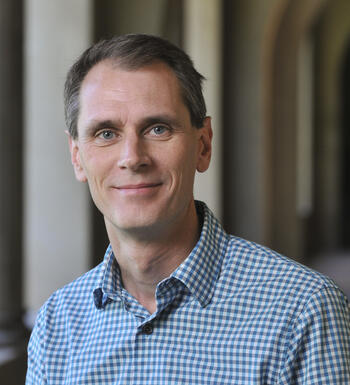
erica gould
Erica Gould is the Director of the International Relations Honors Program at Stanford University. She teaches courses on honors thesis writing, international political economy and international organizations.  She has taught previously at the University of Virginia and Johns Hopkins University.  Dr. Gould’s research has centered mainly around the question of how international organizations are controlled.  She is currently working on a project concerning international organizational decision-making rules and also one on the accountability mechanisms associated with international organizations.  Her publications include Money Talks: The International Monetary Fund, Conditionality and Supplementary Financiers (Stanford University Press, 2006), as well as articles in academic journals and several edited volumes. In addition to her research and teaching, Dr. Gould serves on the Board of Accountability Counsel, an international NGO based in San Francisco.  She received her PhD in Political Science from Stanford University and her BA from Cornell University.

Erica Gould Director of the International Honors Program at Stanford University
Seminars
Authors
News Type
News
Date
Paragraphs

When a state is “shamed” by outsiders for perceived injustices, it often proves counterproductive, resulting in worse behavior and civil rights violations, a Stanford researcher has found.

Rochelle Terman, a political scientist and postdoctoral fellow at Stanford’s Center for International Security and Cooperation (CISAC), recently spoke about how countries criticized by outsiders on issues like human rights typically respond -- and it's contrary to conventional wisdom. Terman has published findings, “The Relational Politics of Shame: Evidence from the Universal Periodic Review,” on this topic in the Review of International Organizations. She discussed her research in the interview below:

What does your research show about state "shaming"?

Shaming is a ubiquitous strategy to promote international human rights. A key contention in the literature on international norms is that transnational advocacy networks can pressure states into adopting international norms by shaming them – condemning violations and urging reform. The idea is that shaming undermines a state’s legitimacy, which then incentivizes elites into complying with international norms.

In contrast, my work shows that shaming can be counterproductive, encouraging leaders in the target state to persist or “double down” on violations. That is because shaming is seen as illegitimate foreign intervention that threatens a state’s sovereignty and independence.  When viewed in this light, leaders are rewarded for standing up to such pressure and defending the nation against perceived domination. Meanwhile, leaders who “give in” have their political legitimacy undermined at home. The result is that violations tend to persist or even exacerbate.

When and where does it work better to directly confront a country’s leadership about such injustices?

At least two factors moderate the effects of international shaming. The first is the degree to which the norm being promoted is shared between the “shamer” and the target. For instance, the West may shame Uganda or Nigeria for violating LGBT rights. But if Uganda and Nigeria do not accept the “LGBT rights” norm, and refuse to accept that homophobia constitutes bad behavior, then shaming will fail. In this case, it is more likely that shaming will be viewed as illegitimate meddling by foreign powers, and will be met with indignation and defiance.

Second, shaming is quintessentially a relational process. Insofar as it is successful, shaming persuades actors to voluntary change their behavior in order to maintain valued social relationships. In the absence of such relationship, shaming will fail. This is especially so when pressure emanates from a current or historical geopolitical adversary. In this later scenario, not only will shaming fail to work, it will likely provoke defensive hostility and defiance, having a counterproductive effect.

Combing these insights, we can say that shaming is most likely to work under two conditions: when the target is a strong ally, and the norm is shared.

What are some well-known cases where "shaming" backfired?

The main example I use in my forthcoming paper is on the infamous “anti-homosexuality bill” in Uganda. When Uganda introduced the legislation in 2009 (which in some versions applied capital punishment to offenders) it provoked harsh condemnation among its foreign allies, especially in the West. Western donor countries even suspended aid in attempt to push Yoweri Musaveni’s government to abandon the bill. According to conventional accounts, the onslaught of foreign shaming, coupled with the threat of aid cuts and other material sanctions, should have worked best in the Uganda case.

And yet what we saw was the opposite. The wave of international attention provoked an outraged and defiant reaction among the Ugandan population, turning the bill into a symbol of national sovereignty and self-determination in the face of abusive Western bullying. This reaction energized Ugandan elites to champion the bill in order to reap the political rewards at home. Indeed, the bill was the first to pass unanimously in the Ugandan legislature since the end of military rule in 1999. Museveni – who by all accounts preferred a more moderate solution to the crisis – was backed into a corner.

A Foreign Policy story quoted Ugandan journalist Andrew Mwenda as saying, “the mere fact that Obama threatened Museveni publicly is the very reason he chose to go ahead and sign the bill.” And Museveni did so in a particularly defiant fashion, “with the full witness of the international media to demonstrate Uganda’s independence in the face of Western pressure and provocation.”

Uganda anti-homosexuality law was finally quashed by its constitutional court, which ruled the act invalid because it was not passed with the required quorum. By dismissing the law on procedural grounds, Museveni – widely thought to have control over the court – was able to kill the legislation “without appearing to cave in to foreign pressure.” But by that time, defiance had already transformed Uganda’s normative order, entrenching homophobia into its national identity.

Does this 'doubling down' effect vary in domestic or international contexts?

Probably. States with a significant populist contingent, for instance, are especially hostile to international pressure, especially when it emanates from a historical adversary, like a former colonial power. Ironically, democracies may also be more susceptible to defiance, because elites are more beholden to their constituents, and thus are less able to “give in” to foreign pressure without undermining their own political power. 

The international context matters a great deal as well. States are more likely to resist certain norms if they have allies who feel the same way. For instance, we see significant polarization around LGBT rights at the international level, with most states in Africa and the Muslim world voting against resolutions that push LGBT rights forward. South Africa – originally a pioneer for LGBT rights – has changed its position following criticism from its regional neighbors. 

Does elite reaction drive this response to state "shaming?"

To be quite honest, this is a question I’m still exploring and I don’t have a very clear answer. My hunch at the moment is no. The “defiant” reaction occurs mainly at the level of public audiences, which then incentives elites to violate norms for political gain.  These audiences can be at either the domestic or international level. For instance, if domestic constituents are indignant by foreign shaming, elites are incentivized to “double down,” or at least remain silent, lest they undermine their own political legitimacy.

That said, elites can also strategize and manipulate these expected public reactions for their own political purposes. For instance, if Vladimir Putin knows that the Russian public will grow indignant following Western shaming, he might strategically promote a law that he knows will provoke such a reaction in order to benefit from the ensuing conflict. This is what likely occurred with Russia’s “anti-gay propaganda” law, which (unsurprisingly) provoked harsh condemnation from the West and probably bolstered Putin’s domestic popularity.

Any other important points to highlight?

One important point I’d like to highlight is the long-term effects of defiance. In an effort to resist international pressure, states take action that, in the long term, work to internalize oppositional norms in their national identity. In this way, shaming actually produces deviance, not the other way around.

Follow CISAC at @StanfordCISAC and  www.facebook.com/StanfordCISAC

MEDIA CONTACTS:

Rochelle Terman, Center for International Security and Cooperation: (650) 721-1378, rterman@stanford.edu,

Clifton B. Parker, Center for International Security and Cooperation: (650) 725-6488, cbparker@stanford.edu

 
Hero Image
gettyimages 158093568
Protestors march to the United Nations building during International Human Rights Day in 2012 in New York City. Activists then called for immediate action by the UN and world governments to pressure China to loosen its control over Tibet -- a form of "state shaming," as examined by CISAC fellow Rochelle Terman in her research.
Steve Platt/Getty Images
All News button
1
-

Speaker Bio:

Image
zeynep tufekci1
Zeynep Tufekci, a contributing opinion writer for The New York Times, writes about the social impacts of technology. She is an assistant professor in the School of Information and Library Science at the University of North Carolina, a faculty associate at the Berkman Center for Internet and Society at Harvard, and a former fellow at the Center for Internet Technology Policy at Princeton. Her research revolves around politics, civics, movements, privacy and surveillance, as well as data and algorithms. Originally from Turkey, Ms. Tufekci was a computer programmer by profession and academic training before turning her focus to the impact of technology on society and social change. She switched to social science, and started calling herself a “technosociologist.” She has been published widely on the interaction of new technologies with society, politics and culture. Her forthcoming book from Yale University Press is tentatively titled “Beautiful Tear Gas: The Ecstatic, Fragile Politics of Networked Protest in the 21st Century.”

Zeynep Tufekci Writer for The New York Times
Seminars
-

Abstract: 

How do autocrats manipulate the beliefs of their citizens during political crises? We argue that they cultivate a reputation for neutrality so that, during moments of crisis, their pro-regime arguments have some measure of credibility. To test the argument, we employ a corpus of 24 state-affiliated newspapers from Africa and Asia. Using a differences-in-differences estimation strategy, we find that propaganda in autocracies is generally indistinguishable from state-affiliated newspapers in democracies, save for the 15 days prior to an election, when positive coverage of the autocrat and the ruling party triples. This increase, we show, is driven not by more effusive articles, but an increase in the share of articles about the regime. Consequently, the aggregate volume of pro-regime coverage increases, but per article positive coverage does not. We find no evidence that autocrats employ propaganda to issue threats of repression during election seasons, and that their propaganda apparatuses generally avoid defaming the opposition. State-affiliated newspapers in democracies -- much like their autocratic counterparts outside of election seasons -- exhibit generally neutral coverage.

Speaker Bio:

Image
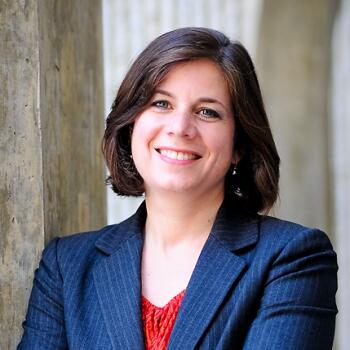
carter brett
Dr. Brett Carter is an Assistant Professor at the School of International Relations at the University of Southern California and co-PI of the Lab on Non-Democratic Politics. He holds a Ph.D. from Harvard University, where he was a Graduate Fellow at the Harvard Academy for International and Area Studies. He was previously a fellow at Stanford University's Center on Democracy, Development, and the Rule of Law, as well as the Hoover Institution. His research focuses on autocratic politics in the Information Age. He is currently working on three book projects: one on autocratic survival in Post-Cold War Africa, one on autocratic propaganda, and one that exploits the Foreign Agents Registration Act to explore the role of autocratic money in American politics.
 
0
brett_carter_2025.jpg

Brett Carter is an Associate Professor in the Department of Political Science and International Relations at the University of Southern California, a Hoover Fellow at Stanford University's Hoover Institution, and a Faculty Affiliate at Stanford's Center on Democracy, Development and the Rule of Law. He received a Ph.D. from Harvard University, where he was a fellow at the Harvard Academy for International and Area Studies.

Carter studies politics in the world's autocracies. His first book, Propaganda in Autocracies: Institutions, Information, and the Politics of Belief (Cambridge University Press), draws on the largest archive of state propaganda ever assembled — encompassing over eight million newspaper articles in six languages from nearly 60 countries around the world — to show how political institutions shape the propaganda strategies of repressive governments. It received the William Riker Prize for the Best Book in Political Economy, the International Journal of Press/Politics Hazel Gaudet-Erskine Best Book Award, Honorable Mention for the Gregory Luebbert Award for the Best Book in Comparative Politics, and Honorable Mention for the APSA Democracy & Autocracy Section's Best Book Award.

His second book, in progress, shows how politics in Africa’s autocracies changed after the fall of the Berlin Wall and how a new era of geopolitical competition — marked by the rise of China and the resurgence of Russia — is changing them again.

Carter’s other work has appeared in the Journal of Politics, British Journal of Political Science, Perspectives on Politics, Journal of Conflict Resolution, Security Studies, China Quarterly, Journal of Democracy, and Foreign Affairs, among others. His work has been featured by The New York Times, The Economist, The National Interest, and NPR’s Radiolab.

Hoover Fellow
CDDRL Affiliated Scholar
CDDRL Visiting Scholar, 2020-2021
Date Label
Assistant Professor at the School of International Relations at the University of Southern California
Seminars
-

Expected dramatic shifts of foreign policy by leading democracies, including the U.S. and U.K., would shake a future of liberal international order, which has underpinned the stability even after the end of the Cold War. Since Mr. Donald Trump was elected as the 45th President of the U.S., abovementioned discourse is heard everywhere in Europe and Asia today.

It is not clear, if American leadership and military presence would in fact retreat, how American allies behave and whether they can work together to sustain the order. Among others, Japan has been the exceptionally strong believer of such postwar American leadership. It is doubtful that all American allies and friends share same views, having their own historical context with the U.S. and own ideas on order and principles. Hence, naturally they shall differ in losing the confidence on the durability of American leadership.

A new order will be shaped by many factors, but American allies’ perspectives should not be overlooked. Hegemon’s own reluctance for ruling is surely significant. So is other great power’s revisionism, making use of such strategic opportunities. However, American allies has the potential to shape the fate of the order: if they succeed in acting collectively, it shall underpin the global governance for a while, and ensue the order transformation process in rather slow and peaceful pace. 

Image
unknown

If they fail, it shall not only accelerate the U.S. retrenchment, but invite an emergence of divisive and competitive order. Sahashi shares the findings from the international study project which he leads, and argues the difficulty for US allies to unite themselves and the potential order transformation in the long term.

Ryo Sahashi is Associate Professor of International Politics and Director, Faculty of Law, Kanagawa University, Yokohama, and is leading the newly-launched international joint study “Worldviews on the United States.” From 2014-2015, he served as Visiting Associate Professor, Shorenstein APARC, Stanford University.


Ryo Sahashi Associate Professor, Kanagawa University
Seminars
-

Image
dsc 0004 bai jing sayuri
Dr. Sayuri SHIRAI is currently a professor of Keio University and is also a visiting scholar at the Asian Development Bank Institute. She was a Member of the Policy Board of the Bank of Japan (BOJ) from April 2011 to March 2016, who is responsible for making policy decisions. She also taught at Sciences Po in Paris in 2007–2008 and was an economist at the International Monetary Fund (IMF) from 1993 to 1998.

She is the author of numerous books on a variety of subjects including the People’s Republic of China’s exchange rate system, Japan’s macroeconomic policy, IMF policy, and the European debt crisis. Her most recent book (translated title: Unwinding Super-Easy Monetary Policy), published in August 2016, is about the monetary policies of the BOJ, the European Central Bank, and the Federal Reserve System. She regularly appears on CNBC, Bloomberg, Reuters, BBC, and features in many Japanese TV programs and newspapers, commenting on the Japanese economy and monetary policy. URL: http://www.sayurishirai.jp

Her most recent book in English is Mission Incomplete: Reflating Japan’s Economy published by the Asian Development Bank Institute in February 2017. It is a complete analysis of BOJ’s unconventional monetary easing from the late 1990s to the present. Free Download is available at https://www.adb.org/publications/mission-incomplete-reflating-japan-economy.

Sayuri Shirai Professor at Keio University and Visiting Scholar at Asian Development Bank Institute
Seminars
-

Abstract:

One policy option for countries reliant on natural resources is to share part of the revenues directly with citizens, an idea known as oil to cash. Technological innovation, such as biometric identification and mobile money, now allow direct payments to people on a massive scale. Additional changes in the global marketplace, experiments in India and Kenya, and shifting political views of cash transfers have all affected the potential of cash to boost governance.


Speaker Bio:

Image
todd moss
Todd Moss is senior fellow at the Center for Global Development in Washington DC and nonresident scholar at the Center for Energy Studies at Rice University’s Baker Institute. A former Deputy Assistant Secretary of State, Moss is the author of Oil to Cash: Fighting the Resource Curse with Cash Transfers and The Golden Hour, a diplomatic thriller set in West Africa.

Todd Moss Senior fellow at the Center for Global Development in Washington DC
Seminars
Authors
News Type
News
Date
Paragraphs

Whether it’s WikiLeaks and CIA documents or nuclear thieves, the danger from insiders in high-security organizations is escalating in our Internet age.

But many threats from within go unrecognized or misunderstood, according to Stanford professor Scott Sagan, who co-edited a new book Insider Threats with Matthew Bunn, a professor of practice at Harvard University. Their work analyzes the challenges that high-security organizations face in protecting themselves from employees who might betray them. Sagan, a core faculty member in Stanford's Center for International Security and Cooperation, and Bunn recently participated in an online discussion of the book’s key arguments. They will hold a talk and book signing at 3:30 p.m. on May 16 in the CISAC Central Conference Room.

Sagan and Bunn wrote, “Perhaps the most striking lesson we learned in working with scholars and officials who have dealt with this problem was the sheer scale of the red flags – from explicit statements of support for Osama bin Laden to behavior leading other staff to fear for their lives – that organizations are able to ignore.”

They found that organizations tend to have biases that cause them to downplay insider threats. In particular, organizations with high-security needs face significant risks from trusted employees with access to sensitive information, facilities, and materials. 

The researchers highlight "worst practices" from these past mistakes, suggesting lessons and insights that could improve the security situations at many workplaces. Amy Zegart, co-director of CISAC, has a chapter in Insider Threats that provides a detailed account of the organizational dysfunction that allowed Nidal Hasan to carry out his massacre at Fort Hood.

Other chapters include the following topics and authors:

  • An analysis of the similar problems that led Bruce Ivins, who probably carried out the anthrax attacks in 2001, to continue to have access to deadly pathogens (by Jessica Stern, then of Harvard and now at Boston University, and Ron Schouten, of Massachusetts General Hospital and Harvard Medical School);
  • An analysis of the rapid rise and subsequent fall of “green-on-blue” attacks in Afghanistan – that is, Afghan soldiers and police officers attacking Americans there to help them (by Austin Long of Columbia University); and 
  • An assessment of how casinos and pharmaceutical plants, with a profit incentive to protect against insiders, cope with the problem (by Bunn and Kathryn Glynn, then of IBM Global Business Services and now at the National Nuclear Security Administration). 

Another chapter examines the potential terrorist use of nuclear insiders, offering new data that shows that jihadist writings and postings contain only a modest emphasis on possible nuclear plots, and essentially no mention of the possibility of using nuclear insiders. However, the authors warn this is no reason for complacency – insiders have been largely responsible for past nuclear theft incidents.

MEDIA CONTACTS

Scott Sagan, Center for International Security and Cooperation: (650) 725-2715, ssagan@stanford.edu

Clifton B. Parker, Center for International Security and Cooperation: (650) 725-6488, cbparker@stanford.edu


Hero Image
gettyimages 540849924
CISAC's Scott Sagan writes in a new book that organizations tend to ignore the many red flags typically associated with insider threats.
xijian/Getty Images
All News button
1
Authors
News Type
News
Date
Paragraphs

The Center for International Security and Cooperation is educating the next generation of thought leaders and policy makers in international security. Toward this, fellows produce policy-relevant research on topics they are studying. One way they connect research with the policy arena is through journal articles, op-eds and essays. Three recent publications by CISAC pre- and post-doctoral fellows on the subject of nuclear risks include:

Sayuri Romei’s op-ed The Hidden Costs of our Nuclear World appeared March 10 in the Monkey Cage blog that's published by the Washignton Post. Her research with Japanese people who have survived radioactive exposure in World War II and Fukushima suggests that they long endure discrimination and shame, as well as a government and society relecutant to come to grips with the human effects. "For a long time after the Hiroshima and Nagasaki bombings, Japanese citizens had no clear and reliable information on the health effects of the bomb. That opacity continues in the secretive and contradictory way information is coming out about the Fukushima nuclear accident," she wrote.

Jooeun Kim’s op-ed ‘Actions speak louder than words’: Rhetoric and nuclear policy realities’ was published in the Freeman Spogli Institute's Medium site on March 7. She explored why it is so important for the U.S. to be viewed by its Asian allies as a dependable nuclear and military power that can help them during a crisis. She notes that "the greater the number of nuclear states, the higher the risk of nuclear war by miscalculation or accident." She concludes that if the Trump administration provides support to allies when they are in need, the president's "rhetoric from the campaign trail can be forgotten amid the policy realities of the international order."

Anna Péczeli’s journal article Russia, NATO and the INF Treaty was featured in the Strategic Studies Quarterly on Feb. 28. She noted that Russia’s leadership must understand that continued noncompliance with the Intermediate-Range Nuclear Forces Treaty will yield no political or military gains for them – a message that must be communicated to the Kremlin by the U.S. government. She wrote, "The INF treaty, long a cornerstone of European security, is in acute danger of collapse since the United States and Russia are operating on the basis of different, indeed contrasting, logic."  

CISAC has had 399 fellows since its founding more than 30 years ago. They conduct research, write about their findings, and spur informed public discussions about policy. To learn how to apply to the CISAC fellowship program, click here.


Hero Image
gettyimages 513176790
Workers stand outside the embattled Fukushima Daiichi nuclear power plant in 2016 in Japan. As CISAC fellow Sayuri Romei writes, the struggles of Japanese survivors from nuclear events like Fukushima are often neglected – thereby hiding some of the costs of our nuclear world.
Christopher Furlong/Getty Images
All News button
1
-

Image
Martin Kenney is a Distinguished Professor of Community and Regional Development at the University of California, Davis; a Senior Project Director at the Berkeley Roundtable on the International Economy; and Senior Fellow at the Research Institute for the Finnish Economy.  He has been a visiting scholar at the Copenhagen Business School, Cambridge, Hitotsubashi, Kobe, Stanford, Tokyo Universities, and UC San Diego. His scholarly interests are in entrepreneurial high-technology regions, technology transfer, the venture capital industry, and the impacts of online platforms on corporate strategy, industrial structures and labor relations. He co-authored or edited seven books and 150 scholarly articles. His first book Biotechnology: The University-Industrial Complex was published by Yale University Press. His most recent edited books Public Universities and Regional Growth, Understanding Silicon Valley, and Locating Global Advantage were published by Stanford University Press where he edits the book series Innovation and Technological Change in the Global Economy.  His co-edited book Building Innovation Capacity in China was published by Cambridge University Press in 2016 and has been translated into Chinese. He is a receiving editor at the world’s premier innovation research journal, Research Policy and edits a Stanford University book series.  In 2015, he was awarded University of California Office of the President’s Award for Outstanding Faculty Leadership in Presidential Initiatives.  His research has been funded by the NSF, the Kauffman, Sloan, and Matsushita Foundations, among others.  He has given over 500 talks at universities, government agencies, and corporations in Europe, Asia, and North and South America.

Agenda

4:15pm: Doors open
4:30pm-5:30pm: Talk and Discussion
5:30pm-6:00pm: Networking


Martin Kenney, Professor of Community and Regional Development, University of California, Davis and Senior Project Director, Berkeley Roundtable on the International Economy
Seminars
Subscribe to The Americas