News Type
News
Date
Paragraphs

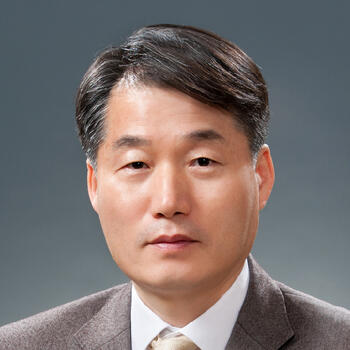
At an event co-sponsored by the Shorenstein Asia-Pacific Research Center, The Center on Democracy, Development and the Rule of Law (CDDRL) and the Hoover Institution, "former Taiwanese president Ma Ying-jeou addressed a crowd of 400 University faculty, students and local community members in his Wednesday talk on democracy, cross-strait relations and future challenges facing Taiwan." Read The Stanford Daily's full coverage of President Ma's visit here

Hero Image
new 041318 presidentma 660x330
All News button
1
-

The format of this presentation is each of the three speakers will have approximately 15 minutes to present their research.  This will be followed by a short period of 5-10 minutes for any questions or comments from the audience.

In this session of the Corporate Affiliates Research Presentations, the following will be presented:


Hong Cao, PetroChina, "The Role of Large Enterprises in China's Innovation Economy"

Image
China's economy has made tremendous achievements in the past 20 years, and the number of patent applications has also ranked first since 2011.  China is now trying to change its economic growth mode from investment-led infrastructure construction and manufacturing to an innovation-driven one.  It is widely accepted that large enterprises should be main actors in this process of economic transformation.  However, can Chinese large enterprises take on such responsibilities?  In his research, Cao shows there is still a big gap between Chinese and international innovative enterprises both in innovation quality and transformation, and state-owned enterprises still have the problem of insufficient innovation capacity.  In this presentation, Cao argues that increasing the R&D investment to double the current level, establishing innovation accelerators, and implementing institutional reforms are the top priorities for creating an innovative China.


Kazumasa Ito, Mitsubishi Electric, "How Can Mitsubishi Electric Play a Role in Urban Air Transportation Business?"

New disruptors that change the way of traveling may be arising from airspace, in addition to existing ride- and car-sharing, that have changed people's minds and will have an effect on car sales.  Many start-ups and aircraft manufacturers are tackling the challenge to realize the urban air transportation business and have begun to improve the level of technology.  In his research, Ito focused on the technologies used in the urban air transportation ecosystem and concluded that Mitsubishi Electric could provide some of these technologies.  He suggests that Mitsubishi Electric should find the partners by leveraging its U.S. offices and other group companies, which could become a lesson for other Japanese companies.  


Yoshihiro Kato, Future Architect, Inc., "How Can Companies Adopt Artificial Intelligence in Business?"

Deep learning has received a great deal of attention since it broke a conventional method at an image recognition competition in 2012.  Since then, almost every industry is exploring the use of Artificial Intelligence (AI) to improve productivity and make innovation.  Tech giants such as Google, Microsoft, Amazon, Baidu and others that have invested large amounts of resources to AI have become far more advanced than other companies.  How can ordinary companies adopt AI in their business?  In his presentation, Kato shares insights into the essential factors for companies to implement AI in business.

Hong Cao PetroChina
Kazumasa Ito Mitsubishi Electric
Yoshihiro Kato Future Architect, Inc.
Seminars
-

The format of this presentation is each of the three speakers will have approximately 15 minutes to present their research.  This will be followed by a short period of 5-10 minutes for any questions or comments from the audience.

In this session of the Corporate Affiliates Research Presentations, the following will be presented:


Kazushi Nomura, Japan Patent Office, "Does the Supreme Court Decision Regarding Patent Eligibility Stifle Innovation in Artificial Intelligence?"

In the United States, the standard of patent eligibility of software-related inventions has been significantly raised and complicated since a Supreme Court decision (Alice Corp. v. CLS Bank) in 2014 that has sparked considerable discussion in the patent community.  According to the report published by the United States Patent and Trademark Office (USPTO) in 2017, companies in the computer-related industry are divided in their view on the Supreme Court decision.  Some companies that had suffered from a large number of patent lawsuits, mainly from Patent Assertion Entities (PAEs), welcome the decision because it protects against abusive patent litigation.  Other companies, however, oppose the decision, insisting that it hurts the value of patents and innovation.  One leading Artificial Intelligence (AI) company has argued that the decision is curtailing innovation in cutting edge areas of information technology such as artificial intelligence.  Why does this company insist that the Supreme Court decision stifles research on AI technology?  In his research, Nomura tries to reveal the background by analyzing patent data.


Ramya Raveendran, Reliance Life Sciences, "Regulatory Requirements for Registration of Biosimilar Products"

Biosimilars are blockbuster drugs in the sense that they are affordable copies of the expensive original biologic drug, providing much needed affordable quality healthcare.  A number of top selling biologic brands in key therapeutic areas are due to lose product patent protection over the next few years, opening a wealth of opportunities for biosimilar players.  Biosimilar product development for launch in multiple geographic locations with various regulatory expectations would require a clear and concise understanding of the regulatory framework of each region.  In her research, Raveendran's primary goal is to understand the regulatory requirements for registration of biosimilar products in various global markets and to also compare and contrast the regulatory requirements of these regions.


Toshiyuki Watanabe, The Asahi Shimbun, "The Stanford Process:  Key Factors and Successful Implementation of Entrepreneurship Education"

Stanford University continues its role as a farm of Silicon Valley as many successful start-ups have their beginnings here.  How does Stanford teach entrepreneurship?  Through auditing classes and utilizing other resources, Watanabe has observed and experienced some of the education system of entrepreneurship at Stanford.  In his presentation, he shares his insights on key factors of the "idea fo start-up" process.  He also proposes how his own company, The Asahi Shimbun, should implement these key factors in their innovation process.  

Kazushi Nomura Japan Patent Office
Ramya Raveendran Reliance Life Sciences
Toshiyuki Watanabe The Asahi Shimbun
Seminars
-

The formate of this presentation is each of the three speakers will have approximately 15 minutes to present their research.  This will be followed by a short period of 5-10 minutes for any questions or comments from the audience.

In this session of the Corporate Affiliates Research Presentations, the following will be presented:


Hiroto Akai, Ministry of Finance, Japan, "New Trends of Corporate Finance in Japan and the Role of Corporate Governance"

Image
After the launch of the Abe administration, the Japanese economy has been prospering thanks to a vibrant global economy and weaker yen.  In the wake of economic upswing, Japanese corporate profit increased to record-high level.  However, some economists argue that most Japanese corporations used increased profit to accumulate cash holding but they did not increase investment and dividend payment.  In his research, Akai characterizes the behavior of Japanese corporations in recent years using corporate financial data and clarifies the relationship with their corporate governance which is one of the most progressive policy areas in the Abe administration.  Akai also tries to develop the model to explore quantitatively the determination of corporate behavior.


Takahito Inoshita, Kozo Keikaku Engineering, "How Can Cities Identify Policy Needs by Using Natural Language Data"

Obtaining intelligence from large amount of data is getting more and more common in a variety of domains as information technology evolves and everyone has access.  Particularly in commercial sectors, many companies try to capture their customers' thoughts.  In public sectors, it is also important to know what their citizens think, prefer, want and need in order to improve their communities.  In his research, Inoshita examines how to make sure of information technology in the public policy domain, with a focus on extracting intelligence from natural language data generated by humans.


Michelle Chen, Yongjin Group, "Chinese Fintech Market Research Balance Transfer Business"

Due to the shift in Chinese economic structure from an investment-driven model towards a consumption-driven model, an increase in outstanding balance of China personal consumption loan, more digital adoption, and innovation through technology development, the Chinese Fintech market is booming in recent years.  It presents immense opportunities for financial players. New business models are observed across the key areas in the financial services industry in China, such as online asset trading, online consumer finance, P2P, online investment, etc.  In her own experience, Chen has the opportunity to observe various Chinese Fintech start-up companies and do some research and investment.  One of her own investments, Samoyed Financial, provides online credit card repayment service in China.  In this research presentation, Chen shares her knowledge gained regarding the Chinese online credit card repayment market based on due diligence and first-hand observation.

Hiroto Akai Ministry of Finance, Japan
Takahito Inoshita Kozo Keikaku Engineering
Michelle Chen Yongjin Group
Seminars
-

Thursday, April 26, 2018 at 05:00 PM until 06:00 PM

Peking University
Atrium M11
Beijing 100871
China

This event is intended for students and recent alumni of this university. If this doesn't sound like you, find an event that's open to the public or hosted by your school by visiting our events calendar.

Please join us to learn more about the Knight-Hennessy Scholars program at Stanford University. Each Knight-Hennessy Scholar will receive full financial support to pursue a degree in any of the 145+ graduate programs at Stanford - from PhDs in education, engineering, humanities, and sciences to professional degrees like JD, MBA, MD, or MFA.

Our application will open on May 1, 2018 for enrollment in fall 2019. You are eligible to apply if you earned (or will earn) your bachelor's degree in 2014 or later.

The event will include a presentation covering Stanford University, the Knight-Hennessy Scholars program, and the admission process. There will be ample opportunity to ask questions of an Admission Officer. 

REGISTRATION: https://apply.knight-hennessy.stanford.edu/register/Peking2018

Peking University
Beijing 100871
China

Lectures
-

The format of this presentation is each of the three speakers will have approximately 15 minutes to present their research.  This will be followed by a short period of 5-10 minutes for any questions or comments from the audience.

In this session of the Corporate Affiliates Research Presentations, the following will be presented:


Hiroki Morishige, Shizuoka Prefectural Government, "Regional Revitalization:  Overcoming Population Decline by Innovation and Work-Style Revolution"

Population decline has been a major issue for Japan.  In the near future, this problem will cause a labor shortage and weaken local economies.  In order to overcome these, economic growth is an important key, and improvement of labor productivity is an essential element.  Labor productivity = GDP / Working hours, so we need to improve GDP by innovation and reduce working hours by work-style reform.  Morishige intends to propose approaches to realize regional revitalization in his hometown of Shizuoka by linking a bridge of innovation between Silicon Valley and Shizuoka.


Hiroshi Nishinaka, Ishin Co., Ltd., "How Large Japanese Enterprises Collaborate with Start-ups to Accelerate Innovation Effectively"

Silicon Valley continues to attract attention as the center of tech start-ups and innovation.  A growing proportion of the most valuable companies in the U.S. are tech companies such as Silicon Valley based tech giants -- Apple, Alphabet, and Facebook. Therefore, many large Japanese enterprises have recently been sending people to accelerate internal innovation, utilizing the Silicon Valley ecosystem.  However, many of these Japanese enterprises face common difficulties due to the cultural gap and complicated decision-making processes.  In his research, Nishinaka will share some insights into how large Japanese enterprises collaborate with start-ups to accelerate innovation effectively.  


Jeong Ah Ryou, The Yozma Group, "Key Success Elements of Venture Capital Ecosystem in the U.S."

Korea is considered a country with an advanced venture capital industry.  In 2017, the amount of newly arranged venture funds was over $4.4 billion USD and the total investment amount is $2.4 billion USD, each setting the highest record respectively. Although, the total size of venture capital investment is rapidly increasing each year along with the support of policy-based funds, it should be noted that the supply of venture capital to start-ups is still not sufficient compared to Korea's market size.  In her research Ryou investigates the virtuous cycle of the venture capital ecosystem in the U.S., which has mainly been driven by the private sector.  Ryou will present some of her observations of key findings and current issues about the U.S. venture capital ecosystem.  

Hiroki Morishige Shizuoka Prefectural Government
Hiroshi Nishinaka Ishin Co., Ltd.
Jeong Ah Ryou The Yozma Group
Seminars
Paragraphs

The availability of climate model experiments under three alternative scenarios stabilizing at warming targets inspired by the COP21 agreements (a 1.5 ºC not exceed, a 1.5 ºC with overshoot and a 2.0ºC) makes it possible to assess future expected changes in global yields for two staple crops, wheat and maize. In this study an empirical model of the relation between crop yield anomalies and temperature and precipitation changes, with or without the inclusion of CO2 fertilization effects, is used to produce ensembles of time series of yield outcomes on a yearly basis over the course of the 21st century, for each scenario. The 21st century is divided into 10 year windows starting from 2020, within which the statistical significance and the magnitude of the differences in yield changes between pairs of scenarios are assessed, thus evaluating if, and when, benefits of mitigations appear, and how substantial they are. Additionally, a metric of extreme heat tailored to the individual crops (number of days during the growing season above a crop-specific threshold) is used to measure exposure to harmful temperatures under the different scenarios. If CO2 effects are not included, statistically significant differences in yields of both crops appear as early as the 2030s but the magnitude of the differences remains below 3% of the historical baseline in all cases until the second part of the century. In the later decades of the 21st century, differences remain small and eventually stop being statistically significant between the two scenarios stabilizing at 1.5 ºC, while differences between these two lower scenarios and the 2.0ºC scenario grow to about 4%. The inclusion of CO2 effects erases all significant benefits of mitigation for wheat, while the significance of differences is maintained for maize yields between the higher and the two lower scenarios, albeit with smaller benefits in magnitude. Changes in extremes are significant within each of the scenarios but the differences between any pair of them, even by the end of the century are only on the order of a few days per growing season, and these small changes appear limited to a few localized areas of the growing regions. These results seem to suggest that for globally averaged yields of these two grains the lower targets put forward by the Paris agreement does not change substantially the expected impacts on yields that are caused by warming temperatures under the pre-existing 2.0ºC target.

All Publications button
1
Publication Type
Journal Articles
Publication Date
Journal Publisher
Environmental Research Letters
Authors
David Lobell
-
[[{"fid":"230391","view_mode":"crop_870xauto","fields":{"format":"crop_870xauto","field_file_image_description[und][0][value]":"\"American Universities in China: Lessons from Japan\" by Dennis T. Yang","field_file_image_alt_text[und][0][value]":"\"American Universities in China: Lessons from Japan\" by Dennis T. Yang","field_file_image_title_text[und][0][value]":"\"American Universities in China: Lessons from Japan\" by Dennis T. Yang","field_credit[und][0][value]":"","field_caption[und][0][value]":"\"American Universities in China: Lessons from Japan\" by Dennis T. Yang","thumbnails":"crop_870xauto","alt":"\"American Universities in China: Lessons from Japan\" by Dennis T. Yang","title":"\"American Universities in China: Lessons from Japan\" by Dennis T. Yang"},"type":"media","field_deltas":{"1":{"format":"crop_870xauto","field_file_image_description[und][0][value]":"\"American Universities in China: Lessons from Japan\" by Dennis T. Yang","field_file_image_alt_text[und][0][value]":"\"American Universities in China: Lessons from Japan\" by Dennis T. Yang","field_file_image_title_text[und][0][value]":"\"American Universities in China: Lessons from Japan\" by Dennis T. Yang","field_credit[und][0][value]":"","field_caption[und][0][value]":"\"American Universities in China: Lessons from Japan\" by Dennis T. Yang","thumbnails":"crop_870xauto","alt":"\"American Universities in China: Lessons from Japan\" by Dennis T. Yang","title":"\"American Universities in China: Lessons from Japan\" by Dennis T. Yang"}},"link_text":null,"attributes":{"alt":"\"American Universities in China: Lessons from Japan\" by Dennis T. Yang","title":"\"American Universities in China: Lessons from Japan\" by Dennis T. Yang","style":"height: 230px; width: 144px; margin: 0px 10px; float: left;","class":"media-element file-crop-870xauto","data-delta":"1"}}]]Dennis T. Yang is member of the U.S. Foreign Service and is currently based in Kathmandu, Nepal, serving as the Regional English Language Officer overseeing Nepal, Sri Lanka, Bangladesh, and the Maldives. In addition to his recent publication, American Universities in China: Lessons from Japan, he is author of The Pursuit of the Chinese Dream: Chinese Undergraduate Students at American Universities. Dennis earned a Ph.D in International Education from NYU, an Ed.M in International Educational Development from Columbia, an M.A. in East Asian Studies from Duke, and a B.A. in Sociology from Boston University.
 
American Universities in China: Lessons from Japan discusses the aspirations and operations of American universities in China through the lens of previous American universities’ expansion efforts in Japan. This talk will provide an explanation of the factors that contributed to the rise and decline of American universities in Japan in order to examine and predict the sustainability of American universities in China today. Through a review of historical documents, interviews with stakeholders in Japan and China, and an analysis of the cultural contexts of both the Japanese and Chinese higher education systems and the position of American universities within these environments, this book/talk seeks to address the potential success or failure of the American university abroad.
 
Lunch will be served. Presented in collaboration with the National Consortium for Teaching about Asia.

Goldman Conference Room

Encina Hall, 4th Floor 

616 Serra Street, Stanford, CA 94305

Dennis T. Yang Regional English Language Officer U.S. Department of State
Lectures
-

This event is closed.


Speaker Bio:

[[{"fid":"230390","view_mode":"crop_870xauto","fields":{"style":"margin: 3px; float: left;","class":"media-element file-crop-epsa-crop-portret","data-delta":"4","format":"crop_870xauto","field_file_image_description[und][0][value]":"","field_file_image_alt_text[und][0][value]":false,"field_file_image_title_text[und][0][value]":false,"field_credit[und][0][value]":"","field_caption[und][0][value]":"","thumbnails":"crop_870xauto","alt":"","title":""},"type":"media","field_deltas":{"4":{"style":"margin: 3px; float: left;","class":"media-element file-crop-epsa-crop-portret","data-delta":"4","format":"crop_870xauto","field_file_image_description[und][0][value]":"","field_file_image_alt_text[und][0][value]":false,"field_file_image_title_text[und][0][value]":false,"field_credit[und][0][value]":"","field_caption[und][0][value]":"","thumbnails":"crop_870xauto","alt":"","title":""}},"link_text":null,"attributes":{"style":"margin-right: 6px; margin-left: 6px; float: left; height: 176px; width: 150px;","class":"media-element file-crop-870xauto","data-delta":"4"}}]]

The 12th and 13th President (2008-2016) of the Republic of China (Taiwan)                          

Ma Ying-jeou was born in 1950 in Hong Kong, and emigrated in 1951 with his family to Taiwan, where he grew up. He graduated from National Taiwan University’s Department of Law in 1972, then served in the Marines and Navy for two years before earning an LL.M from New York University (1976) and an S.J.D. from Harvard University (1981). Dr. Ma began his political career as the deputy director of the Presidential Office’s First Bureau, and doubled as President Chiang Ching-kuo’s personal English interpreter. After President Chiang passed away in 1988, he held a series of other positions in government, including the Chairman of the Research, Evaluation, and Development Commission, Senior Vice Chairman of the Mainland Affairs Council, and Minister of Justice. In 1998, he was elected mayor of Taipei, an office he held until 2006. In 2008, he was elected President of the Republic of China (Taiwan) with 58% of the vote, the highest in history, and he was re-elected in 2012. 

During President Ma’s two terms in office, Taiwan’s per-capita GDP (on a PPP basis) rose from US$34,936 to $48,095, passing the U.K., France, Denmark, Italy, Canada, Japan, and South Korea and advancing 10 places in eight years. Taiwan was able to maintain peaceful relations with the Chinese mainland, friendly relations with Japan, and close relations with the United States; relations with all three countries were the best they had been in many decades. In November 2015, President Ma met with the mainland Chinese leader Xi Jinping in Singapore, the first face-to-face meeting between leaders of the two sides in 70 years. President Ma left office on May 20, 2016.    

Traitel Building, Hauck Auditorium

Ma Ying-jeou Former President of the Republic of China (Taiwan)
Panel Discussions
-

Hate propaganda has been a feature of politics in India, Indonesia, and other Asian democracies long before the recent surge in interest in so-called “fake news” and intolerant populism in the West. This presentation dissects the political strategy of “hate spin,” which includes not only the use of hate speech or incitement, but also the creative manufacture of righteous indignation and popular mobilization framed as responses to victimhood. Examples include the “love jihad” conspiracy theory in India and blasphemy allegations in Indonesia, which have been used to devastating effect by religious nationalists. Existing religious-offense laws have backfired, while incitement laws, though necessary, are systemically incapable of dealing with hate propagandists’ highly sophisticated and distributed disinformation campaigns.  The speaker's book on this topic, Hate Spin, will be available for sale at his talk.

Image
cherian george 2018 4x6
Cherian George is a professor of media studies at Hong Kong Baptist University. He is the author of Hate Spin: The Manufacture of Religious Offense and its Threat to Democracy (2016), which was named on Publishers Weekly’s list of the 100 best books of 2016. Prof. George’s PhD is from Stanford University’s Department of Communication (2003). He was previously a journalist with The Straits Times in his native Singapore. His latest book on Singapore is the self-published Singapore, Incomplete: Reflections on a First World Nation’s Arrested Political Development (2017).

Cherian George Professor of Media Studies, Hong Kong Baptist University
Seminars
Subscribe to Asia-Pacific