As a former business executive with IBM and a veteran policymaker, Bonnie Glick is well-equipped to bridge the Silicon Valley — Washington, DC divide.
It was a sunny day in mid-July when Glick, the deputy administrator of the United States Agency for International Development (USAID), and her team touched down in the Bay Area. The group’s goal was to engage Silicon Valley leaders in USAID’s work, including a discussion with scholars from the Freeman Spogli Institute for International Studies (FSI) about threats to democracy from two key sources: authoritarian regimes and the abuse of social media.
I participated in a round table discussion at @Stanford’s Freeman Spogli Institute for International Studies in #California. We discussed how @USAID builds messaging, strategic programming, & donor partnerships to address global challenges posed by China’s authoritarian approach. pic.twitter.com/IJDNRn4Jyd
In back-to-back roundtable meetings, FSI scholars drew from their research and expertise to discuss with Glick about how USAID could combat these thorny challenges. The scholars also had the opportunity to learn more about USAID’s priorities and programs. Below are highlights from their discussion.
The Authoritarian Threat Vulnerable democracies are facing increasingly political and economic interference from authoritarian regimes, particularly China and Russia. The One Belt, One Road Initiative — China’s global development strategy comprising infrastructure projects and investments in 152 countries — can lead to excessive debt and undermine sovereignty in borrower countries, for example. Meanwhile, countries like Ukraine struggle with election meddling and information manipulation at the hands of the Kremlin.
Implications of Social Media Abuse The misuse of social media also poses a threat to democracies. While Russian efforts to spread disinformation and discord in the months leading up to the 2016 U.S. presidential election may be the best known example, social media abuse is now a global problem propagated both by foreign adversaries and domestic foes. The case of social media fanning the flames of violence against the Rohingya in Myanmar is a prime example of domestically driven social media abuse.
Glick and the USAID team appreciated hearing the perspectives of the FSI scholars. “One of the things that’s resonating so clearly is that the Washington, DC beltway bubble is a powerful force of nature,” Glick said following the roundtables. “For us, to get outside of that bubble and to be challenged in our ideas is extremely valuable.”
Hero Image
Deputy Administrator of the United States Agency for International Development Bonnie Glick discussed threats to democracy at the Freeman Spogli Institute for International Studies, July 2019. Photo: Kimberly Renk
This summer I was very fortunate to be able to spend three weeks at the Stanford Center at Peking University (Běidà) for a short course on rheology. It was a really special opportunity for me to experience student life at my dad’s alma mater and get to know friends from Stanford, Peking, Tsinghua and Beihang University.
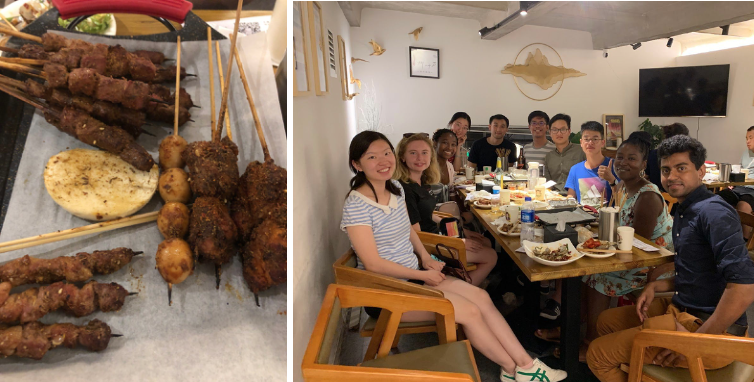
As we went out for meals, however, I quickly discovered that I was one of the only people on the trip who can’t handle spicy food! But don’t worry, if you’re like me, there are still plenty of delicious and affordable options to try in Beijing.
Image
SCPKU Rheology Class of 2019! A big thank you to Prof. Gerry Fuller, our TA Vinny, the SCPKU team, and everyone in the class for a wonderful three weeks in Beijing!
First of all, if you travel there during the summer months, it will be very, very hot. The best way to beat the heat is to eat lots of fruit, mung bean (has cooling properties), and ice cream! The cafeterias at Beida had fresh cut fruit, and we all fell in love with the (~1 USD) red dragonfruit (hóng huǒ lóng guǒ) there. There are also lots of ice cream flavors that are hard to find in the US, like red bean, white peach, durian, taro, honeydew, grape, etc.
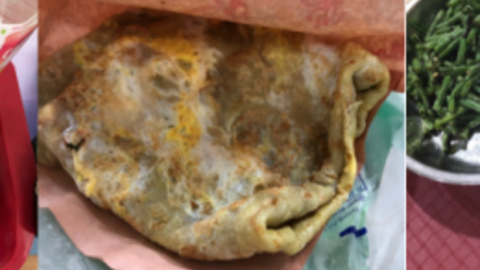
Next, Beijing/northern China is known for a lot of flour-based dishes, so be sure to try the dumplings (shuǐ jiǎo), steamed buns (bāo zi), fried dough (yóu tiáo), pancakes (bǐng) and noodles of all sorts (miàn tiáo). Also, if you go to a restaurant specializing in Beijing food, a lot of things on the menu will not be spicy, like Peking Duck (běi jīng kǎo yā) and Zhajiang Noodles (zhá jiàng miàn). A fun place on Beida campus to get a Beijing street food is the jian bing Jiānbing shop, which is essentially a savory crepe with egg, sauce, a crispy interior, plus whatever add-ons you want. (Caution: the sauce is a little bit spicy…)
Beijing also has lots of cuisines from other parts of China, so make sure to try dishes like Shanghai style soup dumplings, Yunnan pineapple rice, and Taiwanese pork rice!
There are also lots of foods that you can pretty easily enjoy the non-spicy version of. Either you (or your friendly hosts!) can ask the waiter/waitress for no spice (“miǎn là” or “bù yào là”):
Shredded chicken cold noodle (jī sī liáng miàn) and bean curd noodle with veggies and sauce (liángpí) -- still tasty without the chili oil!
Hotpot (huǒ guō) and Grilled fish (kǎo yú) -- the spice is just in the broth, and there are many to choose from
And finally, of course, desserts are not spicy! Shaved ice (bào bīng), sago (xī mǐ lù), bubble tea, fluffy pancakes, mooncakes and old Beijing desserts (lǘ dǎgǔn and wāndòu huáng) are some favorites of mine. A newly popular boba place called HeyTea (xǐ chá) also has fully customizable drinks in case it’s too late for caffeine.
Overall, even if I couldn’t try all of the spicy foods, sharing meals was a great way to get to know everyone, and we all can’t wait to see our friends again. Who knows, maybe my spice tolerance will have gone up by then...
If America frames its response to Russia and China as one of “civilizational struggle,” Diamond says, Vladimir Putin and Xi Jinping will only get stronger. Listen and read here.
The world is experiencing an unprecedented period of geopolitical change and technological disruption. How should we rethink U.S. national security and defense in an era of intensifying great power competition? What principles should guide US policy and presidents in the future?
Speaker's Biography: Michèle Flournoy is Co-Founder and Managing Partner of WestExec Advisors, and former Co- Founder and Chief Executive Officer of the Center for a New American Security (CNAS), where she currently serves on the board.
Michèle served as the Under Secretary of Defense for Policy from February 2009 to February 2012. She was the principal advisor to the Secretary of Defense in the formulation of national security and defense policy, oversight of military plans and operations, and in National Security Council deliberations.
Michèle is a former member of the President’s Intelligence Advisory Board, the CIA Director’s External Advisory Board, and the Defense Policy Board. She’s currently a member of the Council on Foreign Relations and the Aspen Strategy Group, is a Senior Fellow at Harvard’s Belfer Center for Science and International Affairs, and sits on the Honorary Advisory Committee of The Leadership Council for Women in National Security. Michèle serves on the boards of Booz Allen Hamilton, Amida Technology Solutions, The Mission Continues, Spirit of America, CARE, the U.S. Naval Academy Foundation.
Hauck Auditorium, David and Joan Traitel Building of Hoover Institution435 Lasuen Mall, Stanford, CA, 94305
Michèle Flournoy
Co-Founder and Managing Partner
WestExec Advisors
Every summer, the Draper Hills Summer Fellows Program brings together international leaders who are pioneering new approaches to advance social and political change in some of the most challenging global contexts. The fellows spend three weeks living and taking classes on the Stanford campus, visiting Silicon Valley tech companies and building a network.
Representing business, government and the nonprofit sector, fellows are working on the frontlines of democratic change to combat the global rise of authoritarianism and populism. The Freeman Spogli Institute for International Studies spoke to five of the fellows about the impact of the Draper Hills program on their work and activism. These are their stories.
Shaili Chopra, India
Shaili Chopra, founder of SheThePeopleTv. Photo: Alice Wenner
“I run a platform called SheThePeopleTv. It's a platform for women, and it aims to share news, opinions, data and statistics through a gendered lens. Women are a critical part of democracy — from where I come, in India, we have 600 million women. That's half of the country's population. I think they must also have half of the country’s voice, which they don't.
“I think a big plus of a program like Draper Hills is that when we are all working in the general construct of democracy, we have shared problems, and we also look for shared solutions. It's very empowering to be around people who understand these situations, or have found solutions or overcame them in their countries, or are going through similar problems. You can discuss them and get a sense of solidarity and a sense of empathy.”
Wiem Zarrouk, Tunisia
Wiem Zarrouk, senior advisor to the Minister of Development, Investment and International Cooperation in Tunisia. Photo: Alice Wenner
“I’ve been working for the Tunisian government for three years as an advisor to the Minister of Development, Investment and International Cooperation. I am leading the government reforms to improve Tunisia's ranking in the World Bank Competitiveness Report - Doing Business.
“In Tunisia, we’ve set up most of our democratic institutions, and now we want to improve the business environment to attract more investment in local businesses. Eight years ago, the people went into the streets demanding more jobs. The challenge in Tunisia right now is economic, that’s why economic reforms are important to our government.
“I think the impact of the Draper Hills program will be immediate. I’ve learned a lot here about the link between development and democracies, so it really covers the scope of my work. And it's been great to learn about the theoretical side — the professors are really speaking about things that impact our daily work.”
Ujwal Thapa, Nepal
Ujwal Thapa, president of the BibekSheel Nepali youth movement. Photo: Alice Wenner
“Bibeksheel Nepali is basically a political startup. It’s a youth-led movement, and we’re focused on changing the norms and mindsets of the culture in Nepal. We work a lot with citizens to instill the values of transparency, empathy and humility because we think democracy needs to be more emotional instead of just logical. I think liberal democracy needs to be understood more in the context of humanity. So it’s an experiment that we're doing in Nepal.
“When we started with the experiment, we decided not to focus only on the state, but thought about a few more components: one is our citizens, another is the society and the third is the government. Nepal recently came out of a violent civil war, and we just built a new constitution that is much more tolerant. Transparency is another value that we want to instill, because of the long isolationist and autocratic dictatorship that has existed in the past.
“Draper Hills is bringing all of these practitioners together who are experimental and innovative. And the world needs better collaboration from people who really believe in the ideals of the 21st century, which are liberal, democratic and more humanistic. That’s one of the strongest aspects of the Draper Hills program.”
N.S. Nappinai, India
N.S. Nappinai, senior practitioner in the Supreme Court of India and Bombay High Court. Photo: Alice Wenner
“I'm a lawyer — I specialize in cyber laws. My work throughout my career has been focused on ensuring responsible technology and the use of technology to fight crime. Two years ago I was appointed by the Supreme Court of India as Amicus Curiae on a matter related to protecting against the uploading of videos and images of gang rape and child pornography online.
“Some of the social media platforms had very good reporting mechanisms, whereas it was more hidden on other platforms. So we ensured that this issue was brought to the forefront so that people know that these are things that can be reported and some action can be taken. The whole idea was that as long as you identify such content at the earliest possible time, then you help the victim that much more.
“For me, balancing victims' rights with free speech is very important. This was a big dilemma that I faced, in terms of ‘How much of what I am doing is likely to stifle free speech?’ A lot of discussions at Draper Hills have helped formulate and structure my thoughts, and it's very nice to get the perspective from people from 26 other countries.”
Hinda Bouddane, Morocco
Hinda Bouddane, the first vice president of the elected provincial council of the city of Fez. Photo: Alice Wenner
“I'm involved in women's empowerment and education for girls in Morocco. And especially for women in rural areas — they are less privileged, and many of them don't know their rights. So my fight through JA Worldwide and my activism is to empower these women and to raise awareness about their rights and the importance of education for girls.
“Education for girls is really important in fighting discrimination against women. Education empowers women to become financially independent, say no to violence, and to get engaged in the public sphere. Through that, women can be a part of the democratic process not only by voting, but also by taking part from within and running for office.
At Draper Hills, we're deepening our knowledge about topics like the rule of law, democracy and human rights, and hearing many different perspectives. And importantly, we are building a great network to connect many intelligent people from around the world, and we will work together to foster democratic values.”
Hero Image
The 2019 Draper Hills Class of 2019 at the Freeman Spogli Institute for International Studies. Photo: Stanford Center on Democracy, Development and the Rule of Law
“Win support from the people,” Yuhua Wang, Assistant Professor of Government at Harvard University, repeated the words from one of Xi Jinping’s speeches that was given to justify China’s massive anti-corruption campaign. The exact scope and motivations for President Xi Jinping’s anti-corruption campaign is, as yet, unknowable, Wang stated; but clearly, a major public aim of CCP Chairman Xi Jinping was to build regime support by cracking down on bad actors in the government.
Prof. Yuhua Wang gave a talk titled “Why Xi Jinping’s Anti-Corruption Campaign has Undermined Chinese Citizens’ Regime Support?” at the Stanford China Program on November 12th, 2018, based on a national-level survey analysis that he had conducted with his co-author, Prof. Bruce Dickson at George Washington University. Rather than focusing on Xi’s motivations for undertaking his crackdown, however, Wang and Dickson tried to measure the impact of Xi’s anti-corruption campaign on public perception of the central government and the Chinese Communist Party (CCP). Did the campaign, in other words, shore up public support for China’s central government and Party, as Xi hoped it would – or did it, in fact, undermine regime support?
Professor Wang first offered some background on how this anti-corruption campaign got started around 2012-2013, shortly after Xi Jinping became Chairman of the CCP. A staggering 261 vice-ministerial officials and 350,000 officials had been investigated to date; and, even those at the highest levels of China’s leadership – former Politburo and Politburo Standing Committee members, for instance –were not immune from scrutiny. And, equally unprecedented, media coverage of these corruption cases – from Bo Xilai to Zhou Yongkang and Xu Caihou – were extensive, exposing their lavish lifestyles and illicit dalliances on social and traditional media. Wang speculated that such lurid publicity most likely shocked the public, potentially turning citizens against even the central government, which consistently enjoys significantly higher levels of public trust than local governments in China. He decided, therefore, to explore with his co-author what the effects of such exposés might be on public perception of the central regime.
Replicating the same questionnaire and sampling design, Wang and his co-author took a national random sample in two waves – one before the anti-corruption campaign in 2010 and a second one during the campaign in 2014. They interviewed approximately 4,000 people across 25 provinces in China in order to measure potential shifts in people’s attitudes towards the regime over those four years. The findings were, indeed, illuminating:
First, Wang stated, increasing frequency of corruption investigations in a locality was correlated with a greater drop in popular regime support (defined as trust in central government or support for the CCP) in that locality. Higher volume of corruption investigations in a locality was also negatively correlated with people’s perception that government officials were generally honest and clean. The corrosive effects of the campaign, furthermore, proved strongest on those who had initially believed in the integrity of government officials; but for those who were already cynical about official corruption, the campaign had a smaller effect. Lastly, higher the survey respondent’s use of social media like WeChat, stronger the negative effects on his/her support for the regime. The authors also took into account how the chilling effects of the campaign may be negatively impacting local economies and how that slowing economy may actually be the primary cause behind decreasing public regime support. To account for this potentially confounding effect, Wang looked for evidence as to whether the campaign had contributed to a slowdown in China’s economy by 2014. Perhaps because 2014 was still early on in the campaign, he stated that they found no evidence of slower GDP growth rate, growth rate per capita GDP, etc., in the regions where they had undertaken their surveys.
Overall, Wang’s research calls into question whether Xi Jinping’s anti-corruption campaign is, in fact, advancing one of his main goals– i.e., to increase people’s faith in the central regime – or whether it is actually proving counterproductive to his aim. In fact, Wang’s research seems to indicate that the more Chinese citizens are exposed to evidence of government corruption, the more the central regime appears to suffer a loss in credibility. Wang was careful to point out, however, that they were barred, due to political sensitivity, from asking any questions regarding respondents’ attitudes towards Xi Jinping himself. Thus, it is still an open question whether popular support for Xi Jinping himself is increasing even though public trust in the regime might be decreasing.
The recording and transcript are available below.
Hero Image
Yuhua Wang, Assistant Professor of Government at Harvard University, speaks at the Asia-Pacific Research Center's China Program on November 12th, 2018.
Armed conflict continues its brutal march in Syria, Yemen, Southeast Asia and South Sudan — to name a few of the international hotspots that contributed to an 11% increase in political violence around the world in 2018.
Nearly 10 million Yemenis are facing famine this year; Syria was the deadliest place on earth for civilians last year, with more than 7,100 fatalities.
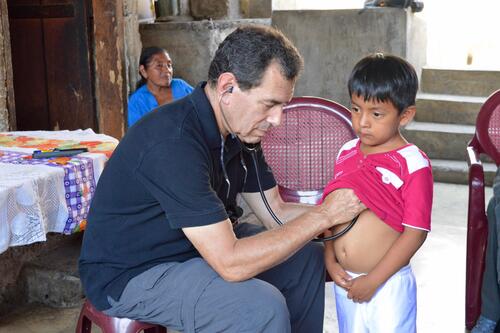
Many of those killed — and even more who face starvation — are children. And that’s when Stanford professor of pediatrics Paul Wise finds it hard to stand on the sidelines. Wise, who has traveled to Guatemala annually for the last 40 years to treat children in rural communities, also travels to the frontlines of global calamities.
As part of a small team of physicians, Wise went to Mosul, the northern city in Iraq once controlled by ISIS, in 2017 to evaluate the World Health Organization-led system to treat civilians injured in the brutal battle for the city.
Working with colleagues at the Freeman Spogli Institute for International Studies, Wise has collaborated with the U.S. military, non-governmental organizations and the United Nations on the interaction of humanitarian and security challenges.
So, it should come as no surprise that the American Academy of Arts & Sciences — of which he is a member — recently appointed him and two other global health experts to lead a new initiative to develop new strategies to protect civilians, health care and cultural heritage in areas of extreme violence.
The initiative, Rethinking the Humanitarian Health Response to Violence Conflict, will be a collaboration among political scientists, international human rights lawyers, physicians, academics and even the curators of major museums. They will develop strategies to prevent civilian harm and deliver critical health services in areas plagued by violent conflict, most notably in the Middle East, central and north Africa and parts of Asia.
“We also want to address the humanitarian and protective frameworks that operate in areas that are extremely violent but wouldn’t necessarily be defined as being in armed conflict, like in the northern triangle of Central America. The human toll in these areas is at least as great as some of these other more traditionally defined areas,” Wise said.
Image
Another of those areas is Myanmar, where nearly 700,000 ethnic Rohingya Muslims have fled to neighboring Bangladesh amid sectarian violence in the northern Rakhine province, in what the United Nations calls a “textbook example of ethnic cleansing.”
Rethinking is also headed up by global health expert Jaime Sepulvedaof the University of California, San Francisco, and Jennifer M. Welsh, a global governance and security expert at McGill University in Canada. Their work will result in a series of publications, blog posts, videos, podcasts and op-eds as a means to reach not only a general audience but also local and field-based humanitarian health providers. The initiative will also seek the engagement of those directly victimized by violence in the areas of greatest concern.
“We will come up with new strategies to protect civilians and deal with their needs when protection fails in the real world,” Wise said. “The goal is to make a difference in the real world. That’s a much more ambitious goal of course, but it’s the only goal that’s worthy of this kind of initiative.”
Wise said he is particularly excited about the prospect of working with those who curate and protect cultural heritage sites and objects.
“The other thing about the American Academy of Arts & Sciences is that we are not just academics, but artists, musicians, novelists — and we expect to take full advantage of breaking out into these disciplines that aren’t normally part of these conversations,” Wise said.
When fire nearly toppled Notre Dame in Paris three months ago, Parisians gathered near the French Gothic cathedral to pray and to sing. When al-Qaida seized control of the North African country of Mali in 2012, a band of librarians undertook a dangerous mission to protect 350,000 centuries-old Arabic texts and smuggled them out of the library in Timbuktu.
At a recent meeting at the Getty Museum in Los Angeles, Wise met with museum directors, archeologists and political scientists about the preservation of cultural heritage.
“It was very clear that there were enormous areas of overlap between the efforts to protect cultural heritage and the efforts to protect people,” he said. “They’re just pragmatically connected because when you start destroying things of cultural importance, it tends to be associated ultimately with atrocities against people.”
Hero Image
COX'S BAZAR, BANGLADESH: A Rohingya Muslim refugee boy is carried in a basket after crossing the border from Myanmar into Bangladesh close to the Naf River on November 2, 2017, near Anjuman Para in Cox's Bazar, Bangladesh. | Getty Images/Kevin Frayer
Hideaki Yonekura is a global affiliate visiting scholar at the Walter H. Shorenstein Asia-Pacific Research Center (Shorenstein APARC) for 2019-20. Yonekura has been working since 2009 for the Japan Patent Office, one of the external agencies of the Ministry of Economy, Trade & Industry (METI) of Japan, as a patent examiner, handling applications in the field of microwave technology.
Chao Sun is a global affiliate visiting scholar at the Walter H. Shorenstein Asia-Pacific Research Center (Shorenstein APARC) for 2019-20. Sun is a research fellow of International Monetary Institute, Renmin University (IMI); a member of dissertation defense committee of Finance Master Program, Hanqing Advanced Institute of Economics and Finance, Renmin University; the secretary general and research fellow of the Center for Global Studies, Tsinghua University; and a member of the Shanghai Economist Association (SEA). Sun also works for D&C Think, a Beijing-based think tank aiming to provide policy advice and suggestions for the civil society. Previously, he worked as co-head of the Fixed Income Department, Changjiang Securities; fund manager and assistant general manager of the Fixed Income Department, BOCOM Schroder Fund Management Co., Ltd; and portfolio manager of the Asset Management Department, China Securities Co., Ltd. Sun won the "Taurus Award", remarked as China's best mutual fund manager in 2015 (fixed income area); and was the author of the "Best Research Paper of the Year" of Bond Magazine in both 2015 and 2018. Sun received his M.A. degree from Columbia University and his B.A. degree from Renmin University of China.








 Shaili Chopra, founder of SheThePeopleTv. Photo: Alice Wenner
 Wiem Zarrouk, senior advisor to the Minister of Development, Investment and International Cooperation in Tunisia. Photo: Alice Wenner
 Ujwal Thapa, president of the BibekSheel Nepali youth movement. Photo: Alice Wenner
 N.S. Nappinai, senior practitioner in the Supreme Court of India and Bombay High Court. Photo: Alice Wenner
 Hinda Bouddane, the first vice president of the elected provincial council of the city of Fez. Photo: Alice Wenner