Part of APARC series COVID-19 IN ASIA: RESPONSES AND IMPLICATIONS FOR THE REGION
Co-sponsored by the Asia Health Policy Program and the Southeast Asia Program
Speakers (live and pre-recorded):
Dr. Dorairaj Prabhakaran, Professor of chronic disease epidemiology, Public Health Foundation of India, and Executive Director, Center for Chronic Disease Control.
Dr. Pham Quang Thai, Member of the Vietnam Steering Committee for COVID-19 Prevention and Control
Dr. HAC Van Vinh, Associate Professor & former Dean of Research & International Relations, Thai Nguyen University of Medicine and Pharmacy
Dr. Richard Cash, Senior Lecturer on Global Health, T.H. Chan School of Public Health, Harvard University
Dr. Radhika Jain, Asia Health Policy Postdoctoral Fellow, APARC, FSI, Stanford University
Dr. Arzan Tarapore, Research Scholar, APARC, FSI, Stanford University
How is the pandemic impacting health systems and society in south and southeast Asia? Numerous experts share their perspectives on topics ranging from COVID-19 challenges in Bangladesh, India and Vietnam, to geopolitical considerations for U.S. policy in the wider Indo-Pacific.
Dorairaj Prabhakaran
Professor of chronic disease epidemiology, Public Health Foundation of India, and Executive Director, Center for Chronic Disease Control.
Pham Quang Thai
Member of the Vietnam Steering Committee for COVID-19 Prevention and Control
HAC Van Vinh
Associate Professor & former Dean of Research & International Relations, Thai Nguyen University of Medicine and Pharmacy
Richard Cash
Senior Lecturer on Global Health, T.H. Chan School of Public Health, Harvard University
Asia Health Policy Postdoctoral Fellow, APARC, FSI, Stanford University
Arzan Tarapore
Research Scholar, APARC, FSI, Stanford University
Significant political barriers to implementing na- tional climate policies exist in both the US and China. Successful linkage of regional climate policies in the two countries can help overcome these impediments. Each country can be seen as willing to cooperate with the other to address the global climate challenge, which can help each national government overcome the resistance to formulating its own national climate policy.
Solving the climate challenge involves many years of sustained actions coordinated across the major emitting countries. Like any long journey, it begins with︎ a first step. Coordinating regional policies is such a step.
Applications are open for the China Scholars Program, an intensive, college-level online course on contemporary China for U.S. high school students. The China Scholars Program is offered by the Stanford Program on International and Cross-Cultural Education (SPICE), Stanford University, and is open to rising 10th, 11th, and 12th graders. The Fall 2020 online course will run from late August through December. Applications are due June 15, 2020.
Stanford University China Scholars Program for high school students Fall 2020 session (late August through December) Application period: April 25 to June 15, 2020
Accepted applicants will engage in a rigorous academic exploration of key issues in China, spanning politics, economics, social issues, culture, and the arts, with an emphasis on the relationship between the United States and China. In real-time conversations with leading scholars, experts, and diplomats from Stanford University and other institutions, participants will be exposed to the cutting edge of U.S.–China relations and scholarship. Students who complete the online course will be equipped with a rare degree of expertise about China and international relations that may have a significant impact on their choice of study and future career.
As in previous sessions of the China Scholars Program, the Fall 2020 cohort will comprise high school students from across the United States. Participants in the current cohort represent states across the nation, including California, Florida, Georgia, Illinois, Michigan, Missouri, Nebraska, New Jersey, New York, and Washington.
The immense diversity of student backgrounds and experiences within each online course allows for an especially rich exchange of ideas and perspectives among the young scholars—a crucial and invaluable component of the learning experience.
“Learning from Stanford’s knowledgeable East Asian studies experts remains one of my most formative educational experiences,” noted Rebecca Qiu, an alum of the program now at Tufts University. She continued, “Synchronous live lectures and lively discussion boards allowed me to learn from our professors and students alike, facilitating tremendous academic growth.”
What are the Chinese government’s objectives for the development of its healthcare system? How do these ambitions affect its interaction with U.S. and other foreign healthcare markets? And what policy recommendations should lawmakers consider regarding the development of China's healthcare system and its implications for U.S. national interests? These are some of the questions that APARC Deputy Director and Asia Health Policy Program Director Karen Eggleston discussed in her testimony before the U.S.-China Economic and Security Review Commission on May 7, 2020.
Chaired by Dr. Robin Cleveland, the commission’s hearing, “China’s Evolving Healthcare Ecosystem: Challenges and Opportunities,” focused on China's domestic healthcare infrastructure and its use of technology in the light of the COVID-19 pandemic. The commission listened as Eggleston reviewed the strides China has made in its national health reforms and highlighted the many challenges its health system now faces. “It is in the interest of Americans and Chinese to have a strong, resilient healthcare system in China,” she said. “The United States should reemphasize scientific, evidence-based health policy and regulation, and encourage China to do so as well.”
The commission’s mandate is to investigate and submit to Congress an annual report on the national security implications of the bilateral trade and economic relationship between the United States and China and to provide recommendations to Congress for legislative action.
Ambitious Goals, Complex Challenges
Reforms over the past two decades, noted Eggleston, have brought China’s health system closer to a level of reliability and accessibility commensurate with the country’s dramatic economic growth. The government has already achieved its goal of providing universal health coverage and has made significant progress in many of the areas outlined in its “Healthy China 2030” blueprint, including tackling health disparities between regional and urban/rural population subgroups and building a more comprehensive and higher quality health service delivery system.
Still, China faces many daunting challenges, from dealing with COVID-19 and its aftermath to other urgent and lingering needs, such as tackling its looming demographic crisis and promoting healthy aging, addressing patient-provider tensions and trust, and changing provider payment to promote “value” rather than volume. If China is to make its investments in universal health coverage and rapid medical spending growth sustainable, said Eggleston, then it must build an infrastructure that increases health system efficiency, strengthens primary care, reforms provider payment system, and protects the most vulnerable from illness-induced poverty.
Constructive policies in support of health system improvements in both the United States and China could strengthen the global capacity to control future pandemics and avoid the devastating social and economic effects of future outbreaks on the scale of COVID-19.
Karen Eggleston
Technology and COVID-19 Response
Like other countries, China’s government and private sector have utilized various technologies in response to the COVID-19 crisis, such as telemedicine, “internet-plus” healthcare, and contact tracing applications, and are deploying digital and biotechnologies in efforts focused on epidemic mentoring and on treatment and vaccine development. Eggleston noted that the response to COVID-19 “will leave an indelible mark on health policies for decades to come,” not only in terms of technology adoption but also organizational innovation. One would hope to see future prioritization in resource allocation and renewed investment in the diagnosis and treatment of health system weaknesses, she added.
Recommendations for Congress
In all our policies and interactions, Eggleston concluded her testimony, we should remember that China is large and diverse, that local government agencies are those that make many important decisions in health policies as in other policies, and that the “Chinese people” are not synonymous with any given leader. “Avoid politicizing the COVID-19 pandemic and other health and humanitarian issues,” she noted. “In other geopolitical considerations in bilateral US-China relations, uphold U.S. interests while encouraging the PRC to be active as a globally responsible stakeholder.”
The U.S. government should encourage China and its scientists and firms to work collaboratively with multilateral efforts to prevent and control future pandemics, she argued. Specific recommended actions include supporting efforts to strengthen primary care and population health interventions with proven cost-effectiveness; sharing experiences with regional, community-based efforts to address the social determinants of health and promote multisector policies for healthy aging; encouraging public-private collaborative governance arrangements to strengthen the health sector in China; promoting transparent peer review of research and international collaboration between Chinese and American scientists, medical educators, health systems researchers, and technology developers; and collaborating with Chinese counterparts to address regional issues of population health importance, such as health problems in the DPRK and integration of public health priorities into China’s Belt and Road Initiative.
Asia health policy expert Karen Eggleston provides testimony for a U.S.-China Economic and Security Review Commission hearing on China's domestic healthcare infrastructure and the use of technology in its healthcare system amid COVID-19.
Life expectancy in Japan, South Korea, and much of urban China has now outpaced that of the United States and other high-income countries. With this triumph of longevity, however, comes a rise in the burden of noncommunicable diseases (NCDs) like diabetes and hypertension, reducing healthy life years for individuals in these aging populations, as well as challenging the healthcare systems they rely on for appropriate care.
The challenges and disparities are even more pressing in low- and middle-income economies, such as rural China and India. Moreover, the COVID-19 pandemic has underscored the vulnerability to newly emerging pathogens of older adults suffering from NCDs, and the importance of building long-term, resilient health systems.
What strategies have been tried to prevent NCDs—the primary cause of morbidity and mortality — as well as to screen for early detection, raise the quality of care, improve medication adherence, reduce unnecessary hospitalizations and increase “value for money” in health spending?
Fourteen concise chapters cover multiple aspects of policy initiatives for healthy aging and economic research on chronic disease control in diverse health systems — from cities such as Singapore and Hong Kong to large economies such as Japan, India, and China.
The following is Part 1 of a two-article series. For Part 2, please go here.
Stanford e-Oita is an online course for high school students throughout Oita Prefecture in the southwestern island of Kyushu, Japan, that is sponsored by the Oita Prefectural Government. Launched in fall 2019, it is offered by the Stanford Program on International and Cross-Cultural Education (SPICE) in collaboration with the Oita Prefectural Board of Education. SPICE is grateful to Oita Prefectural Governor Katsusada Hirose whose vision made this course possible.
Social media posts, video-conference invites, and webinar notifications flood our inboxes ever since COVID-19 drove traditional classroom instruction online. Distance learning has gone mainstream.
While distance learning may never replace traditional classroom instruction, it’s certainly transforming how we teach, learn, and behave. Amid the coronavirus pandemic, 30 Stanford e-Oita students in Japan—on the other end of my virtual classroom—showed me what distance learning can offer: a greater appreciation of where we live, renewed cross-cultural perspectives, and a chance to enhance one’s communication skills in a foreign language without a textbook, classroom, or a trip overseas.
Students from 15 high schools throughout Oita Prefecture—from the capital city of Oita to the tiny island of Hotojima—logged onto their laptops, tablets, and smart phones on Saturday mornings for my bi-weekly distance learning class. It’s a course offered to highly motivated students with a certain proficiency in English. They could attend a class as if they were in Palo Alto without ever having to leave their tatami-mat living rooms.
Stanford e-Oita focuses on three areas: U.S.–Japan relations, United Nations Sustainable Development Goals (UNSDGs), and entrepreneurship. These are the collective objectives of SPICE, the Oita Prefectural Board of Education, and Oita’s Governor Hirose. For six months, I explored their intersections with my students.
I designed a course curriculum that engages students to think critically about global issues, empowers them to take pride in their hometowns, and encourages them to give back to their communities. We took what’s happening in the world and made it relevant to their daily lives in Oita. Students took this a step further by exploring issues that were personally meaningful.
Students worked individually and collaboratively through guided group discussions, submitted written assignments, developed research projects, watched documentary films, and prepared multi-media slideshows as part of their final presentations—all in English. I also created virtual experiential learning opportunities for students by introducing them to guest speakers via Zoom. In the pre-COVID-19 days, I took students along with me on fieldtrips to National Historic Sites in Seattle’s International District and visited social activists on Vashon Island, Washington.
Stanford e-Oita is taught in English, but it is not an English language course. I offer my students a chance to become confident in English, competent in critical thinking, and fluent in accessing the technologies of a digital classroom. We use online platforms like Zoom and Canvas and take advantage of discussion boards, breakout sessions, and other digital tools which are not often used in Japanese schools.
In order to ensure access and equity, students who did not have access to a computer or Wifi were able to return to their schools on Saturday mornings to take the class in the computer labs. Most students worked on tablets (some used smartphones) and grew accustomed to the online format within a few weeks. For the most part, e-Oita students were excited and open to technology enabled learning. One student noted, “For me, using Zoom in this new style of class is really refreshing. Students are scattered all over Oita and you’re in America but we’re all communicating through my tablet. It’s so cool!”
Getting Japanese students on board Stanford’s rigorous distance learning program, in a foreign language, was a challenge at first. In fact, the learning curve was steep for all of us. I taught my students the word “troubleshoot” early on and walked them through online setting changes to video presentation uploads.
Here are some lessons learned:
Distance learning provides learning opportunities for students in less accessible communities—in rural towns or islands—where traditional classrooms are unable to serve.
Distance learning allows students to re-invent themselves with a new audience, with people you have never met.
Distance learning can create an informality that breaks down the wall between teachers and students and makes their relationship less hierarchical. This is a new experience for students from Japan.
Distance learning allows instructors to invite speakers whose participation is not limited by geography, departmental budgets, disabilities, or availability of a considerable amount of time. All they need is a quiet corner, a laptop with Wifi, and a time commitment of 30 minutes to an hour.
Section Manager Hironori Sano and Teachers’ Consultant Keisuke Toyoda of the Global Education Acceleration Project Team (High School Education Division) of the Oita Prefectural Board of Education, reflected, “The most amazing thing is seeing how our students developed through the program. They have acquired five important skills: (1) the ability to cooperate with people around them; (2) the ability to state their ideas; (3) knowledge of Japan and Oita; (4) the confidence to communicate in English; and (5) the confidence to make a contribution in the world.”
Kasumi Yamashita
“Teach-from-Home” mandates have altered not only where and what we teach but how we learn: it has reset our mindset. As I reflect on the past six months as the instructor of SPICE’s e-Oita program, I recognize the lessons in patience, resilience, and empathy that my students have taught me. My students were neophytes to distance learning but were digital natives from halfway around the world.
In part two of this series, I will focus on Stanford e-Oita’s priorities (United Nations Sustainable Development Goals), guest speakers, final student presentations, and assessment.
APARC's China Program recently hosted Center Fellow Thomas Fingar for the webinar "Was America’s China Policy a Foolish Failure? The Logic and Achievements of Engagement." In this talk, Fingar examines the longtime U.S. strategy of engagement with China as well as the potential shift toward a strategy of decoupling. "Much recent commentary on U.S. relations with China claims that the policy of 'Engagement' was a foolish and failed attempt to transform the People’s Republic into an American style democracy that instead created an authoritarian rival," he says. "This narrative mocks the policies of eight U.S. administrations to justify calls for 'Decoupling' and 'Containment 2.0.'” Fingar argues that the policy of Engagement has been fruitful and that Decoupling is not only inadvisable but also unattainable. Watch:
Thomas Fingar is a Shorenstein APARC Fellow in the Freeman Spogli Institute for International Studies at Stanford University. From 2005 through 2008, he served as the first deputy director of national intelligence for analysis and, concurrently, as chairman of the National Intelligence Council. His forthcoming edited volume is Fateful Decisions: Choices That Will Shape China's Future, co-edited with Jean Oi (Stanford University Press, May 2020).
On June 25, 2020, Thomas Fingar gave a companion address to "Was America’s China Policy a Foolish Failure? The Logic and Achievements of Engagement" to the National Security Forum of Northern Nevada.
APARC Fellow Thomas Fingar on the U.S. Intelligence Report that Warned of a Coronavirus Pandemic
In our online conversation, Fingar discusses the 2008 National Intelligence Council report he oversaw and that urged action on coronavirus pandemic preparedness, explains the U.S. initial failed response to the COVID-19 outbreak, and considers the implications of the current crisis for U.S.-China relations.
While Wuhan, China was the first epicenter of the COVID-19 pandemic, every nation in Asia has been deeply affected by the spread of the virus. In a virtual seminar convened by the Freeman Spogli Institute, APARC experts discuss the social and economic impacts of COVID-19 and the various policy responses to the pandemic across Asian nations.
Senior Fellow Xueguang Zhou focuses on the phases of crisis response taken by the PRC in the early stages of the unfolding coronavirus outbreak. Center Fellow and Korea Program Deputy Director Yong Suk Lee discusses the policy responses of the South Korean government. Southeast Asia Program Director Don Emmerson offers a comparison of different governance strategies and actions implemented across Southeast Asian countries, while Karen Eggelston, APARC's deputy director and director of the Asia Health Policy Program, addresses the response of health systems in Japan and South Asia.
APARC Fellow Thomas Fingar on the U.S. Intelligence Report that Warned of a Coronavirus Pandemic
In our online conversation, Fingar discusses the 2008 National Intelligence Council report he oversaw and that urged action on coronavirus pandemic preparedness, explains the U.S. initial failed response to the COVID-19 outbreak, and considers the implications of the current crisis for U.S.-China relations.
WATARU FUKUDA Chief Representative of the Shizuoka Prefectural Government in Singapore Global Affiliates Program Fellow, 2014-16
Image
In Singapore, the government is strongly restricting our business activities and daily life. Foreign companies like the one I work for worry about receiving penalties from the government for violating COVID-19 prevention measures. In Japan, the government is asking people to self-isolate in their communities. It seems like there is a big difference between Japan and Singapore in how the authorities are handling COVID-19.
TSUYOSHI KOSHIKAWA Chief Advisor, Japan International Cooperation Agency Expert for the Ministry of Planning, Finance, and Industry in Myanmar Global Affiliates Program Fellow, 2014-15
I currently live in Naypyitaw, Myanmar, though I am originally from Japan. Naypyitaw is currently not under shelter-in-place, though the city of Yangon is. In Naypyitaw, restaurants are serving only take-out meals, and most amusement facilities like movie theaters, karaoke boxes, bars, and beauty salons have been closed. There are still a few big department stores open, as well as the public golf course and tennis courts.
At the time of this writing, the number of known COVID-19 cases in Myanmar is nearly 150, and I am worried about the potential risks because the healthcare and medical information systems here are not as organized as in countries like Japan, the UK, or the United States.
Anyone with a fever of 37.5 degrees C (99.5 F) or higher is being kept from entering Yangon. The Ministry of Health is taking all traveler’s temperatures at the airport, railways stations, and the exits of all highway interchanges throughout Yangon. Foreigners with a fever of 38 degrees C (100.4 F) have been told that they will not be permitted into private hospitals anywhere in Myanmar at present. Isolation wards in general hospitals will accommodate foreigners. The situation is frightening, but with frequent handwashing and hygiene, we are trying to take care of each other.
XIAOYUAN SHI Deputy General Manager in the Internal Audit Bureau at the Industrial and Commercial Bank of China Global Affiliates Program Fellow, 2012-13
Image
In China, we’ve been dealing with COVID-19 since last December. The government locked down Wuhan City starting in January and asked all people to avoid gatherings or unnecessary trips out. Wearing masks in public and frequently washing hands have also been required. We've strictly followed these directives. As manufacturing, entertainment, social activities, and travel have been suspended, society has slowed down and the economy has experienced significant losses.
Thankfully, our efforts have worked. The new confirmed cases are mostly coming in from foreign travel. Big cities like Beijing and Shanghai have low infection rates, and people feel much less stressed. Social life, work, and production are recovering, and the lockdown of Wuhan City has been lifted. Most schools will continue to use online classes for the time being and restaurants are still not fully open, but I think the most difficult time is behind us.
It’s impossible to spot all of the potential virus carriers, and therefore precautionary measures like avoiding going out unnecessarily, wearing masks in public, and handwashing are still recommended. I’ve not heard of COVID-19 cases or deaths among my acquaintances, thankfully, but the conditions here have proven that this virus is highly infectious and death is possible. I hope our practices here can provide some references for other places where it is spreading.
Stay connected to APARC by signing up for our monthly newsletter
China’s Incentives to Work Within the U.S.-led International Order Remain Compelling, Argues Thomas Fingar
In a video Q&A, Fingar discusses the challenges for the U.S.-China relationship and the principles that shape China’s foreign policy and international behavior.
Since March, a series of escalations have heightened tensions in the South China Sea. From the sinking of a Vietnamese fishing boat to an ongoing standoff with the Malaysian navy, China has been accused of taking advantage of the COVID-19 pandemic to further its control of the South China Sea. Beijing’s actions on the water are not all that different than what it was doing just a few months ago. But having them continue amid a global health crisis has sparked a new level of outrage. And the nationalistic response from Chinese authorities has only added fuel to the fire. These developments highlight the new normal in the South China Sea, which will continue long after COVID-19 fades.
Image
Gregory B. Poling is Senior Fellow for Southeast Asia and Director of the Asia Maritime Transparency Initiative at CSIS. His research interests include the South China Sea disputes, democratization in Southeast Asia, and Asian multilateralism. Mr. Poling’s writings have been featured in Foreign Affairs, the Wall Street Journal, Nikkei Asian Review, and Foreign Policy, among others. He has authored or coauthored multiple works including The Thickening Web of Asian Security Cooperation (RAND Corporation, 2019), Building a More Robust U.S.-Philippines Alliance (CSIS, August 2015), and A New Era in U.S.-Vietnam Relations (CSIS, June 2014). Mr. Poling received an M.A. in international affairs from American University and a B.A. in history and philosophy from St. Mary’s College of Maryland.



 Kasumi Yamashita


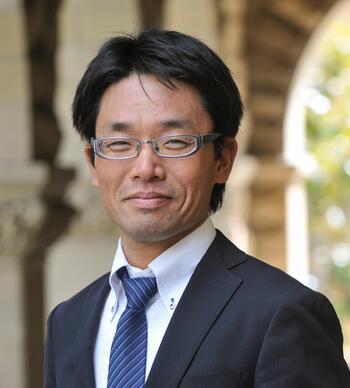
 I currently live in Naypyitaw, Myanmar, though I am originally from Japan. Naypyitaw is currently not under shelter-in-place, though the city of Yangon is. In Naypyitaw, restaurants are serving only take-out meals, and most amusement facilities like movie theaters, karaoke boxes, bars, and beauty salons have been closed. There are still a few big department stores open, as well as the public golf course and tennis courts.


