Authors
Yann-huei Song
News Type
Commentary
Date
Paragraphs
"Taiwan has territorial rights, sovereign rights and jurisdiction over islands in the South China Sea and the East China Sea, as well as, developmental and managerial rights to important resources in these areas," says Dr. Yann-huei Song. "It will be difficult for the South China Sea and the East China Sea to become truly peaceful and cooperative maritime areas" if Taiwan were not included in talks about developing the resources of these areas. Dr. Song would like to correct the translation in the online English version of the article. He says the translation says that in "2002 Taiwan built a runway on Itu Aba Island of the Spratly Island group in the South China Sea. In fact, it was built at the end of 2007, and Taiwan's President Chen visited the island by C-130 military cargo plane on February 2, 2008."
All News button
1
Authors
Siegfried S. Hecker
News Type
Q&As
Date
Paragraphs
Professor Siegfried S. Hecker of Stanford University's Centre for International Security and Cooperation in the US is one of the few outsiders to have visited North Korea's Yongbyon nuclear facility. He made the trips in an unofficial capacity to assess North Korea's nuclear programme. He told Al Jazeera what he saw on his visits to the plant, and how likely he thinks it is that North Korea will give up its nuclear programme.

What was Yongbyon like? How sophisticated was the plant?

It reminded me of the the Russian closed nuclear cities that you used to see.

As we approached Yongbyon there was one set of guard buildings and then lots of concrete-style guard buildings where plant workers lived.

The single greatest impression I had as I arrived was that its a really huge place. A significant facility.

Then we were shown the main building that contains the nuclear reactor. Again its a really huge place.

Inside, the buildings reminded me very much of ones built in a Soviet style.

The equipment inside seemed to be functioning well, but everything seemed very outdated, although it was adequate to get the job done.

However, the North Korean scientists themselves were very efficient at what they did - they were very impressive.

What did the plant tell you about how nuclear material was handled?

The reactor itself seemed safe and, as I said, the staff were very competetent.

In the spent fuel pool building, however, there was significant contamination - that building did not meet Western safety standards.

One has to be extremely careful when handling radioactive material - its a very tricky process - and they were not up to modern safety standards [in that particular building].

Do you think Yongbyon was built entirely by North Korea, as the government claims, or do you think there was outside help?

There was no question in my mind that the central facilities at the plant were built by North Korea.

They had significant help in installation and training from the Soviet Union.

But in the 1970's, the North Koreans decided to go solo.

They are masters at reverse engineering and the technology looked very much like nuclear facilities found in the early UK nuclear programme.

I spoke with the scientists there and there was no doubt in my mind that they understood the entire process.

Were you allowed to see everything you wanted to see on your visit?

I've been to North Korea five times and Yongbyon three times.

The first time I visited Yongbyon, in 2004, they had carefully scripted my visit.

They allowed me to physically handle the plutonium in a test tube, but they would not allow me into the laboratory itself.

But during my visits in 2007 and 2008 I was allowed to take pictures inside the building with my own camera.

By the time of the second visit they had also improved safety standards and I was required to wear a contamination suit.

Do you believe North Korea is serious about abandoning its nuclear programme?

I believe they are serious about abandoning plutonium production - they are serious and sincere.

However, they still have between 30 and 40 kilograms of plutonium that could be used to make weapons.

Getting rid of that will take some time.

All News button
1
Date
Paragraphs

The Stanford Program on International and Cross-Cultural Education has taken on world religions, Russian leaders and Aztec history. Now it's boiling down the glory and controversy of China's history, culture and politics in time for the Summer Olympics in Beijing.

Helping to make the scholarship and research at Stanford's Freeman Spogli Institute for International Studies accessible to younger learners, the program, known by its acronym "SPICE," has developed a multimedia curriculum for middle and high school students that introduces them to the sights and sounds of China through the prism of the upcoming Olympics.

"The Road to Beijing" includes a documentary featuring cellist Yo-Yo Ma and musicians from the Silk Road Ensemble discussing how they blend traditional Chinese and classical music, and a documentary developed by NBC that showcases Olympians planning to compete in the August games. The package also offers an interactive website and professional development material for teachers.

The curriculum can be tailored for use in a single day or during several classes.

"We want to make Stanford faculty's scholarship accessible to a younger and broader audience," said Gary Mukai, director of SPICE. "We have a number of China specialists on campus, and we want to spread the knowledge of Stanford to other schools."

SPICE has been offering curriculum packages to middle and high school students for the past three decades, covering topics such as Islam, the span of Soviet and Russian leaders from Lenin to Putin and the political geography of Europe.

While "The Road to Beijing" uses the Olympics to hook student interest, it also offers lessons on the political, social and environmental criticism facing China.

"That's one of the richest parts of the curriculum," Mukai said. "It engages students and gets them to think about critical issues."

The teacher guides and documentaries are free on the SPICE website, http://spice.stanford.edu. More written materials, CD-ROM PowerPoints and DVDs of the documentaries cost $34.95.

All News button
1
Paragraphs

The wireless telecommunications markets of both Japan and South Korea developed rapidly, offering extremely sophisticated and advanced wireless services. Yet, their fortunes in international markets diverged significantly: while Japanese handset manufacturers retreated to become virtual nonplayers, Korean firms gained global prominence. This paper argues that the politics of standard-setting and liberalization, set in motion by differences in initial conditions that created distinct domestic market dynamics, are critical in explaining this divergence. The Korean government, seeking independence from foreign equipment, actively sought to build domestic technological capacities through a standard that would advantage domestic firms in international markets. In contrast, the Japanese government, independent from foreign technology, was not initially focused on international markets, making it difficult later on to shift the terms of market competition away from an exclusive focus on the domestic market.

All Publications button
1
Publication Type
Journal Articles
Publication Date
Journal Publisher
Journal of Information Technology and Politics
Authors
Kenji E. Kushida
News Type
News
Date
Paragraphs
In looking back at President Lee's first 100 days, Gi-Wook Shin and a former Pantech Fellow, John Feffer, assess the issues in Korea today. "With a big margin in his victory, President Lee thought and misunderstood that he had a mandate to do whatever he wanted to do and that backfired, " says Shin.
All News button
1
Authors
Kathryn Stoner
News Type
Commentary
Date
Paragraphs

Interest in democracy, economic development, and the rule of law is clearly on the rise. Just as global attention in 2005 remained riveted on establishing and protecting the fundamentals of democracy in transitioning societies—the parliamentary elections in Afghanistan, the constitutional vote in Iraq, the threat to civil liberties in Russia—these issues took on increasing prominence on the Stanford campus, for policymakers and students alike.

STANFORD SUMMER FELLOWS PROGRAM

The Center on Democracy, Development, and the Rule of Law (CDDRL), the Freeman Spogli Institute’s newest research center, hosted its first annual Summer Fellows Program on campus in August. This innovative program is designed to help emerging and established leaders of transitioning countries in their efforts to create the fundamental institutions of democracy, fight the pernicious problem of corruption, improve governance at all levels of society, and strengthen prospects for sustainable economic development. In contrast to other programs of democracy promotion, which seek to transfer ready-made models to countries in transition, the Stanford program provides a comparative perspective on the evolution of established democratic practices, as well as theoretical and practical background on issues of democracy and good governance, to assist with needed economic, political, and judicial reform.

The three-week 2005 leadership seminar attracted 32 participants from 28 countries for specialized teaching, training, and outreach, including leaders from the Middle East, North and Sub-Saharan Africa, Central Asia, and parts of the former Soviet Union, whose stability is so vital to the international system. The curriculum draws on the combined expertise of Stanford scholars and practitioners in the fields of political science, economics, law, sociology, and business and emphasizes the dynamic linkages among democratization, economic development, and the rule of law in transitioning countries.

DEMOCRACY, DEVELOPMENT, AND THE RULE OF LAW

In the fall quarter of 2005, a new undergraduate course, titled %course1% (PS/IR 114D), examining the dynamic and interactive linkages among democratic institutions, economic development, and the framework of law proved to be an all-star attraction for Stanford students. Conceived by the research faculty and staff at CDDRL as an important introduction to fundamental concepts and team-taught by a number of prominent Stanford scholars—including University President Emeritus Gerhard Casper (Stanford Law School), Larry Diamond (Hoover Institution), CDDRL Director Michael A. McFaul (Hoover Institution and Department of Political Science), and Peter B. Henry (Graduate School of Business), the course attracted a record number of students this fall. Encina Columns recently interviewed Kathryn Stoner, associate director of research and senior research scholar at CDDRL, the course convener, to glean a few highlights.

Q. WHY DID YOU CHOOSE TO OFFER THE COURSE AT THIS TIME?

A. CDDRL research staff and faculty decided to offer the course in the fall of 2005 as a launch for what we hope will become an honors program. We wanted to use PS/IR 114D as a gateway course into other courses taught by our faculty, as well. For example, Larry Diamond teaches a very popular course on democracy, and we thought our course would be a good way to introduce undergraduates to some of the basic themes of that course, while also introducing them to connections between democracy and economic development and the interplay of these with the rule of law.

Q. DID YOU ENVISION A QUARTER-LONG OR YEAR-LONG COURSE? WHY?

A. The course was always envisioned as just a quarter-long course. This is to provide a launch into the menu of other courses that are offered by our faculty.

Q. WERE YOU SURPRISED BY THE STUDENT RESPONSE?

A. We were very surprised to have 130 students in the course this fall. We ran the course as a “beta test” in the spring of 2005 with just 25 students, but apparently the buzz among undergraduates was good and our enrollment numbers jumped in September when we offered the course again. The political science department was caught a little off guard and we had to hustle to find enough teaching assistants to staff the course.

Q. WHO WERE YOUR MAIN LECTURERS AND WHAT WERE THEIR TOPICS?

A. We had 13 lecturers in all including Gerhard Casper, on what rule of law means and why people choose to follow law or not; Larry Diamond, on meanings of democracy and Iraq; Avner Greif, on how economic institutions are established historically; and Jeremy M. Weinstein, on international aid and development in Africa, to name but a few.

Q. WHAT TOPICAL THEMES HAVE YOU EXPLORED WITH YOUR STUDENTS?

A. The Iraq lecture by Larry Diamond was particularly topical and the students clearly learned a lot from him. They also enjoyed Jeremy Weinstein’s lecture on debates on aid policy in Africa. He set it up in an engaging way so that students had to decide whether “conditionality” was a good idea in providing aid to Africa or not.

Q. DID YOU FIND THAT PARTICULAR ISSUES HAD SPECIAL "RESONANCE" FOR STANFORD STUDENTS?

A. I think that there is growing interest among Stanford undergraduates in how democracy can be promoted and to what extent the United States should be involved in this project. Many students in our course are interested in doing some sort of work in the development field, so they wanted to explore cases of when democracies have become consolidated versus situations where they slid back into dictatorship. They are also particularly interested in when or whether force is appropriate in promoting or establishing democracy in the Middle East and Afghanistan, for example.

Q. WHAT PROVED MOST GRATIFYING TO YOU? DID YOU GAIN NEW INSIGHT?

A. I always gain new insights when I interact with smart students who are deeply interested and engaged in these issues. I also find it a real privilege to actually sit down and listen to my colleagues deliver lectures on areas of their expertise. That is truly a treat.

Q. WHAT'S NEXT? WILL YOU OFFER THIS COURSE AGAIN?

A. Yes, we intend to offer the course every fall quarter. We are also currently planning to launch an honors program, perhaps this spring. As part of that we will offer a seminar for juniors interested in writing theses on the general themes of democracy, development, and the rule of law in the developing world.

All News button
1
Authors
News Type
News
Date
Paragraphs

Four years after the ouster of the extremist Taliban government , Afghanistan is moving ahead but needs investment and expertise to recover from 30 years of war, the country’s ambassador to the United States said during a Nov. 14 luncheon at the Freeman Spogli Institute for International Studies.

“Afghanistan has come a long way but the journey has just started,” said Said Tayeb Jawad, a former exile who returned to work for his homeland in 2002. The one-time San Francisco-based legal consultant was named Afghanistan’s ambassador to Washington two years ago by then-Interim President Hamid Karzai. “We would like to join the family of nations once again and stand on our own feet as soon as possible,” he said.

In an address to about 100 faculty, students, staff, and donors, Jawad spoke of his country’s strategic role in the war on terrorism. “Global security is one concept,” he said. “In order to fight terrorism effectively, better investment in Afghanistan is needed to stabilize the country and make [it] a safer place for Afghans and, therefore, global security.”

Afghanistan has established all the institutions needed for the emergence of a civil society, Jawad said. A new constitution was approved in January 2004, presidential elections took place in October of that year, and elections for a new parliament were held two months ago. “The constitution we have adopted is the most liberal in the region,” he said. Although problems abound—Afghanistan is the poorest country in Asia, only 6 percent of its residents have access to electricity and only 22 percent have clean water—the ambassador expressed hope for the future. About 3.6 million refugees have returned home, he said, and 86 percent of Afghans think they are better off today than four years ago, according to an Asia Foundation survey.

Émigrés are the leading investors in the country, Jawad said, noting that an Afghan American recently pumped $150 million into the country’s nascent cell phone system. Many others, including Jawad himself, have heeded President Karzai’s call for émigré professionals to aid their homeland. Other international expertise is also moving in: Eleven foreign banks have opened for business and 60,000 skilled workers from Pakistan and Iran have moved to Kabul. “We are trying to reconnect the country by building roads and the communication system,” Jawad said. “Reconnecting the country is important for national unity but also for the fight against terrorism and narcotics.”

Tackling the profitable opium trade is a top challenge facing the government and its greatest obstacle to national reconstruction, Jawad said. “Its proceeds feed into terrorism and lawlessness,” he said. In the past, horticulture comprised 70 percent of Afghanistan’s exports. But 30 years of war decimated a generation of farmers and destroyed traditional farming. “If you have a vineyard or orchard, you have to have a prospect of 10 years,” the ambassador said. “If you don’t have a sense of hope, you grow poppy seeds. It takes three months to harvest poppy. You can put it in a bag, take it with you and become a refugee again.”

While terrorists and the Taliban are defeated in Afghanistan, Jawad said, they are not eliminated and they continue to attack what he described as soft targets: schools and mosques and aid workers. But in the last two days, a U.S. soldier and NATO peacekeepers were killed in attacks, which police blame on al-Qaida. To help counter this, efforts are under way to build a trained national army and police force. More than 36,000 soldiers already have been trained. While the country is grateful for foreign military assistance, the ambassador said, “It’s our job to defend our country.”

The country’s leadership also allowed lower-ranking Taliban to join the government; three former officials have been elected to the new parliament. “This was a decision that was difficult to take,” Jawad said. “But we want to deny terrorists a recruiting ground. We are trying to pursue a policy of reconciliation. We cannot afford to have another circle of violence and another circle of revenge.”

At the end of the address, FSI Director Coit D. Blacker reiterated a formal statement initially made in August inviting President Karzai to visit Stanford.

All News button
1
Authors
News Type
News
Date
Paragraphs

TheStanford Program on International and Cross-Cultural Education (SPICE) develops innovative materials on key issues in international affairs for K-14 students in the United States and independent schools abroad. Multidisciplinary SPICE materials serve as a bridge between classrooms of receptive students and teachers and FSI scholars and collaborative partners. SPICE offered a number of important new publications for an emerging generation of scholars this year.

Image
1613 small 10
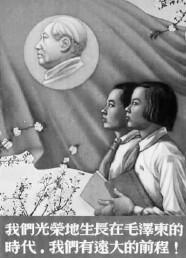
One new curriculum unit is titled China's Cultural Revolution. The Cultural Revolution (1966–1976) was a decade of enormous upheaval under the leadership of Mao Zedong with a lasting impact on China, its citizens, and the world. This unit teaches students about the social, educational, political, and economic transformations in China during this tumultuous era. Students examine primary source materials to hone their analytical and critical thinking skills, and gain exposure to a variety of perspectives on the Cultural Revolution. As part of the lessons, students evaluate official government documents, speeches, memoirs, eyewitness accounts, propaganda art, revolutionary songs, textbook coverage from three countries, and the book, Red Scarf Girl, by Ji-li Jiang.

As with all SPICE projects, collaboration with scholars and other experts on the Cultural Revolution was essential to the development of this unit. Andrew G. Walder, former director of the Shorenstein Asia-Pacific Research Center, served as principal advisor and was instrumental in the conceptualization of the curriculum. Connie Chin of Stanford’s Center for East Asian Studies translated entries from a Chinese textbook that students compare with textbooks of Taiwan and the United States. Jiang, a local author and survivor of the Cultural Revolution, oversaw the development of a lesson that features her book, Red Scarf Girl. Jiang worked with many Chinese who provided their own memoirs of the Cultural Revolution for the curriculum, exposing students to first-hand experiences of Chinese youth during this time.

Another new SPICE unit, titled Tea and the Japanese Tradition of Chanoyu, results from a collaboration with the Urasenke Foundation of Kyoto, Japan. This unit traces the history of tea from its origins in China 5,000 years ago to modern times, with an emphasis on its prominent role in Japan. By the 16th century, Japan’s tea practice had become formalized by Sen Rikyu, who integrated art, religion, social interaction, and economics into his tea practice. He so revolutionized chanoyu that he is universally recognized as the most important tea master who ever lived. The Urasenke School of Tea was established by one of his descendants some 400 years ago, and the Sen family has continued to pass on its way of tea for 16 generations.

SPICE worked with two of Sen Rikyu’s descendants, Great Grand Master Sen Soshitsu XV and Grand Master Sen Soshitsu XVI Iemoto, to develop this unit. Each wrote a personal letter, expressing their excitement about introducing American students to a cherished Japanese tradition. Grand Master Sen Soshitsu XVI Iemoto says, “In the age of globalization, there is a great need for truly international people, that is, those who understand and appreciate their own culture as well as that of others, and those who value both the diversity of mankind and the universality of the human spirit. These are the people who will enrich and reinvigorate our global society in the future.” His father, Great Grand Master Sen Soshitsu XV, adds, “I am very happy to have been involved with this project which, I pray, will help to contribute to world peace and goodwill through my motto ‘Peacefulness through a Bowl of Tea.’”

Hero Image
bow tea
All News button
1
Authors
News Type
News
Date
Paragraphs

A foreign policy firmly grounded in democratic values makes it possible for small states to stand up for their rights in the face of the shifting interests of large states, Estonia’s President Arnold Rüütel said Jan. 20.

“It is precisely action based on values that can provide answers in complicated situations,” Rüütel said. “This also makes it possible to distinguish long-term important issues from short-term changing interests.”

During a lunchtime speech at the Freeman Spogli Institute for International Studies, Rüütel thanked the United States for maintaining its policy of nonrecognition of the Soviet occupation of Estonia, Latvia, and Lithuania from World War II until 1991, when Baltic independence was restored in a bloodless revolution. “For us, this represents a powerful confirmation of a values-based foreign policy that remains crucial also today,” he said.

Rüütel, a onetime Communist who helped orchestrate Estonia’s transition to independence, spoke to about 100 students, faculty, and donors at an event hosted by management science and engineering Professor William J. Perry, who also is the Michael and Barbara Berberian Professor, a former U.S. Secretary of Defense, and co-director of the Stanford-Harvard Preventive Defense Project. Accompanied by an Estonian delegation, Rüütel also met with Institute Director Coit D. Blacker and visited the Hoover Institution, where archival specialist David Jacobs had prepared an exhibit of Baltic-related material.

The display included a series of informal photographs from the personal album of Nazi Foreign Minister Joachim von Ribbentrop taken during his visit to Moscow to sign the 1939 Molotov-Ribbentrop Pact, which was concluded just a few days before the beginning of World War II. The pact, which included a secret protocol dividing Eastern Europe into Soviet and Nazi spheres of influence, sealed the fate of the Baltic states for a halfcentury. Soviet officials denied the protocol’s existence until 1989. The unpublished photographs, obtained by U.S. forces after World War II, include a rare image of an enthusiastically grinning Stalin taken just after the pact was signed. “That’s a smile from the heart,” Rüütel remarked in Estonian.

Rüütel’s speech, which was translated into English, discussed Estonia’s two-year-old membership in the European Union and NATO. While the union gives opportunities for economic and social development in a globalizing world, Rüütel said, membership also offers Estonia a chance to contribute to international stability. And while NATO offers unprecedented protection, he continued, Estonia also is obliged to contribute to international security.

“NATO is not only a toolbox from which different tools can be taken,” Rüütel said. “It is an important mechanism for political and military cooperation among 26 states. We need it.” Public support for the organization remains at a steady 65 to 70 percent, he explained. “The NATO airspace control operation in the Baltic states certainly plays a role in this context,” he said. “Last year, U.S. planes contributed to it. We are grateful to the U.S. government.”

As a member of NATO, Estonia plans to increase its defense expenditure to 2 percent of gross domestic product by 2010, Rüütel said. The country also has participated in the “coalition of the willing.” Estonian soldiers fighting in Iraq alongside U.S. forces “have proved to be worthy combatants,” Rüütel said. “Responsible tasks lie ahead of us in Afghanistan. The Estonian parliament has decided to send up to 150 soldiers at a time there this year. Allow me to recall that there are 1.4 million inhabitants in Estonia.”

The president said that military operations can help to restore stability in conflict areas by providing security but that long-term success can be achieved only through the establishment of a free society based on democratic principles and the rule of law.

“The more successful the reconstruction and the strengthening of good governance are, the faster our peace forces can be [brought] home.” Arnold Rüütel, President of EstoniaWe need considerably higher capabilities for the strengthening of the civilian component in crisis management and [ensuing] reconstruction than we have today, both at the level of states and international organizations,” he said. “The more successful the reconstruction and the strengthening of good governance are, the faster our peace forces can be [brought] home.”

Rüütel also discussed his country’s role in combating international terrorism. “Estonia is determined to be a credible partner,” he said. “Among other things, this means making sure that our territory [is] not used by terrorists to prepare operations, to move money or for any other purpose.”

After the speech, Blacker asked about Estonia's relationship with neighboring Russia. A border agreement between the two countries remains unsigned. In response, Rüütel offered a history lesson about the consequences of the Molotov-Ribbentrop Pact after the Soviet Union forcibly annexed Estonia. Many of the country’s leaders were arrested, murdered or sent to death camps in Siberia, he said. Following the Nazi occupation of Estonia during the war, Soviet repression continued after 1945. In a country of 1.2 million inhabitants, about 70,000 people were deported to Siberia and more than 100,000 escaped to the West. As a result of World War II and its aftermath, he said, Estonia lost one out of every five citizens. “Practically, every Estonian family was somehow touched by these events,” he said. “This is something really difficult to forget.” Russia has failed to deal with its history in an honest way, he said.

Although Estonia cannot forget the past, Rüütel said his country is ready to cooperate with Russia and he expressed hope that a border treaty would soon be completed. “I would like to hope that Russia, one day, will understand that we are good neighbors living side by side with each other,” he said.

All News button
1
Subscribe to Asia-Pacific