News Type
News
Date
Paragraphs
Earlier in 2010, Walter H. Shorenstein Asia-Pacific Research Center scholars Donald K. Emmerson and Daniel C. Sneider were selected as research associates for the prestigious National Asia Research Program (NARP), a policy-oriented research and conference program run jointly by the National Bureau of Asian Research and the Woodrow Wilson International Center for Scholars. Emmerson, director of the Southeast Asia Forum, and Sneider, associate director for research at Shorenstein APARC, presented at a NARP symposium held on October 14, 2010 in honor of Professor Robert Scalapino of the Department of Political Science at the University of California, Berkeley. The two joined other prominent Asia scholars from across the United States. Emmerson took part in the session on regionalism in Asia with the presentation "An American Place at an Asian Table? Regionalism and its Reasons." Sneider's presentation, "Japan's New Asianism: Threat or Opportunity?," was featured during the session on governance in Asia.
Hero Image
DanDon1
All News button
1

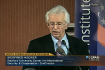
CISAC's Siegfried Hecker presented the findings of his recent trip to North Korea, where he was given a tour of a nuclear facility reportedly capable of enriching uranium. In his remarks he described two new nuclear facilities, a small light-water power reactor in early stages of construction, and a "modern, clean centrifuge plant" for uranium enrichment. Following his presentation he and Robert Carlin, a CISAC visiting professor, spoke about North Korean nuclear programs and the international reaction to North Korea's nuclear ambitions. This event occurred the day after North Korean military attacks on the South Korean island of Yeonpyeong.


Dr. Hecker's Nov. 23, 2010 Presentation at the Korea Economic Institute (C-Span video)


Korea Economic Institute

CISAC
Stanford University
Encina Hall, C220
Stanford, CA 94305-6165

(650) 725-6468 (650) 723-0089
0
Senior Fellow, Freeman Spogli Institute for International Studies, Emeritus
Research Professor, Management Science and Engineering, Emeritus
hecker2.jpg PhD

Siegfried S. Hecker is a professor emeritus (research) in the Department of Management Science and Engineering and a senior fellow emeritus at the Freeman Spogli Institute for International Studies (FSI). He was co-director of CISAC from 2007-2012. From 1986 to 1997, Dr. Hecker served as the fifth Director of the Los Alamos National Laboratory. Dr. Hecker is an internationally recognized expert in plutonium science, global threat reduction, and nuclear security.

Dr. Hecker’s current research interests include nuclear nonproliferation and arms control, nuclear weapons policy, nuclear security, the safe and secure expansion of nuclear energy, and plutonium science. At the end of the Cold War, he has fostered cooperation with the Russian nuclear laboratories to secure and safeguard the vast stockpile of ex-Soviet fissile materials. In June 2016, the Los Alamos Historical Society published two volumes edited by Dr. Hecker. The works, titled Doomed to Cooperate, document the history of Russian-U.S. laboratory-to-laboratory cooperation since 1992.

Dr. Hecker’s research projects at CISAC focus on cooperation with young and senior nuclear professionals in Russia and China to reduce the risks of nuclear proliferation and nuclear terrorism worldwide, to avoid a return to a nuclear arms race, and to promote the safe and secure global expansion of nuclear power. He also continues to assess the technical and political challenges of nuclear North Korea and the nuclear aspirations of Iran.

Dr. Hecker joined Los Alamos National Laboratory as graduate research assistant and postdoctoral fellow before returning as technical staff member following a tenure at General Motors Research. He led the laboratory's Materials Science and Technology Division and Center for Materials Science before serving as laboratory director from 1986 through 1997, and senior fellow until July 2005.

Among his professional distinctions, Dr. Hecker is a member of the National Academy of Engineering; foreign member of the Russian Academy of Sciences; fellow of the TMS, or Minerals, Metallurgy and Materials Society; fellow of the American Society for Metals; fellow of the American Physical Society, honorary member of the American Ceramics Society; and fellow of the American Academy of Arts and Sciences.

His achievements have been recognized with the Presidential Enrico Fermi Award, the 2020 Building Bridges Award from the Pacific Century Institute, the 2018 National Engineering Award from the American Association of Engineering Societies, the 2017 American Nuclear Society Eisenhower Medal, the American Physical Society’s Leo Szilard Prize, the American Nuclear Society's Seaborg Medal, the Department of Energy's E.O. Lawrence Award, the Los Alamos National Laboratory Medal, among other awards including the Alumni Association Gold Medal and the Undergraduate Distinguished Alumni Award from Case Western Reserve University, where he earned his bachelor's, master's, and doctoral degrees in metallurgy.

Date Label
Siegfried S. Hecker Speaker

CISAC
Stanford University
Encina Hall, C245 - Desk 2
Stanford, CA 94305-6165

(650) 736-0290
0
Carlin_Robert.jpg MA

Bob Carlin is a Visiting Scholar at CISAC. From both in and out of government, he has been following North Korea since 1974 and has made 25 trips there. He recently co-authored a lengthy paper to be published by the London International Institute of Strategic Studies, entitled "Politics, Economics and Security: Implications of North Korean Reform."

Carlin served as senior policy advisor at the Korean Peninsula Energy Development Organization (KEDO) from 2002-2006, leading numerous delegations to the North for talks and observing developments in-country during the long trips that entailed.

From 1989-2002, he was chief of the Northeast Asia Division in the Bureau of Intelligence and Research, U.S. Department of State. During much of that period, he also served as Senior Policy Advisor to the Special Ambassador for talks with North Korea, and took part in all phases of US-DPRK negotiations from 1992-2000. From 1971-1989, Carlin was an analyst at the Central Intelligence Agency, where he received the Exceptional Analyst Award from the Director of Central Intelligence.

Carlin received his AM in East Asian regional studies from Harvard University in 1971 and his BA in political science from Claremont Men's College.

Affiliate
Robert Carlin Speaker
Conferences
-

Northeast Asian countries share a tumultuous history from the last century. But South Korea stands alone in that it has launched a comprehensive national investigation to take a more balanced look at its tortuous modern history and finally give voice to the many thousands of people who perished in state-sponsored political killings but whose stories have long been silenced.

In the past several years, the South Korean government's Truth and Reconciliation Commission has led an effort to dig into this grim hidden history. It has confirmed dozens of mass political killings during the Korean War—summary executions of leftists and supposed sympathizers, including women and children, who were shot and dumped into makeshift trenches, mine shafts or the sea. Grave by mass grave, investigators and victims' families have unearthed the skeletons and buried truths. No longer shackled by the repression of free speech, victims of the Communist witch-hunts by the post-war military governments in Seoul also began speaking out. The Commission investigated their cases and concluded that state interrogators used torture to extract false confessions from the victims. Its findings led courts to reopen the cases, reverse the old convictions and clear the victims' names, sometimes posthumously. But the Commission's work has also reawakened the painful memories and stoked political controversy in South Korea. It exposed the deep-running ideological divide, reminding South Koreans of the long shadow the Korean War still casts over their society.

Mr. Sang-Hun Choe, whose Pulitzer-winning journalism identified and helped spur the desire of South Koreans to revisit their recent history, has written extensively about the Commission's investigations.

Philippines Conference Room

Shorenstein APARC
Stanford University
Encina Hall, Room C333
Stanford, CA 94305-6055

(650) 725-6459 (650) 723-6530
0
2010-2011 Fellow in Korean Studies
RSD10_076_0075.JPG

A Pulitzer Prize-winning journalist, Mr. Choe, has written extensively on United States-Korea relations for the international news media, including the Associated Press and The International Herald Tribune, the international version of The New York Times, where he currently serves as a correspondent. While at the Walter H. Shorenstein Asia-Pacific Research Center, Mr. Choe will analyze the perspective of U.S. experts focusing on issues concerning South Korea's government, media, and society.

Sang-Hun Choe 2010-2011 Fellow in Korean Studies, APARC Speaker
Seminars
-

For years, Japanese economists and public officials described regional development in East Asia as a unitary thing, something akin to a flock of flying geese -- with Japan as the lead goose, transferring capital and technology to its slower neighbors. But times have changed. For one thing, China is now the biggest bird in East Asia. So what has happened to the traditional "flying geese" pattern of development, and how has this impacted Japan?

Walter Hatch is an associate professor of government and the director of the Oak Institute for Human Rights at Colby College in Maine. He is the author of Asia's Flying Geese: How Regionalization Shapes Japan (Cornell UP, 2010), co-author of Asia in Japan's Embrace: Building a Regional Production Alliance (Cambridge UP, 1996), and the author and co-author of numerous articles on the politics and political economy of East Asia, especially Japan and China. He is now editing a book about NGOs and civil society in China, and working on his own new book about the way in which war memories continue to haunt international relations in East Asia. He received his PhD from the University of Washington in 2000.

Philippines Conference Room

Walter Hatch Associate Professor of Government & Director, Oak Institute for Human Rights Speaker Colby College
Seminars
News Type
News
Date
Paragraphs
Hard Choices: Security, Democracy, and Regionalism in Southeast Asia, an acclaimed volume in the Walter H. Shorenstein Asia-Pacific Research Center's three-part series on regionalism in Asia, was reviewed in the most recent issue of the Journal of Current Southeast Asian Affairs. Donald K. Emmerson, director of Shorenstein APARC's Southeast Asia Forum, is the editor of the volume. Reviewer Corrina Krome states, "I highly recommend the book, especially for its comprehensive references and indices, and for the inclusion of the 2007 ASEAN Charter . . ."
Hero Image
HardChoices frontcoverLOGO1
All News button
1
-

Larry May is a political philosopher who has written on conceptual issues in collective and shared responsibility, as well as normative issues in international criminal law. He has also written on professional ethics and on the Just War tradition.  

In addition to being W. Alton Jones Professor of Philosophy and Professor of Law at Vanderbilt University, he is also a Professorial Fellow at the Centre for Applied Philosophy and Public Ethics, Charles Sturt University in Canberra.  He has previously taught at Washington University, Purdue University, University of Wisconsin, and University of Connecticut. 

He has published 25 books and 100 articles. His five most recent authored books have been published by Cambridge University Press, including: "Genocide: A Normative Account" (2010) and "Global Justice and Due Process" (2011). 

His authored books have won awards from the American Philosophical Association, the North American Society for Social Philosophy, the International Association of Penal Law, the American Society of International Law, and the American Library Association. His writings have been translated into French, German, Spanish, Italian, Polish, Serbian, Japanese, Chinese, and Korean.

Professor May has lectured extensively around the world, including, in the last two years, keynote or plenary addresses at conferences in: Oxford, St. Andrews, Oslo, Helsinki, Krakow, Belgrade, Bielefeld, The Hague, Delft, Leiden, Montreal, Victoria, Toronto, Canberra, Melbourne, and Sydney.  

He has served on the board of directors of the American Philosophical Association and is past president of AMINTAPHIL, the American section of the International Society for Philosophy of Law. In addition, he has occasionally taken a criminal appeals case, and has worked on several death penalty cases, in the United States.

Landau Economics Building,
ECON 140

Larry May W. Alton Jones Professor of Philosophy and Professor of Law at Vanderbilt University Speaker
Seminars
News Type
Q&As
Date
Paragraphs

Over the past year, the Walter H. Shorenstein Asia-Pacific Research Center (Shorenstein APARC) has engaged in leading-edge research on demographic change in East Asia. Karen Eggleston, director of the Asia Health Policy Program at Shorenstein APARC, discusses the recent book Aging Asia: The Economic and Social Implications of Rapid Demographic Change in China, Japan, and South Korea, and the workshop on the economic, social, and political/security implications of demographic change in East Asia, held January 20-21 at Shorenstein APARC.

Across Northeast Asia, countries are facing the issue of an aging population, which causes socio-economic challenges that have policy implications. You explore this phenomenon in your forthcoming book Aging Asia: The Economic and Social Implications of Rapid Demographic Change in China, Japan, and South Korea. When did aging begin to become an issue and what are some of the greatest factors that you address in the book?

Aging started at different times in the countries of East Asia. The country with the oldest life expectancy in the world and the oldest age structure of its population is Japan. It had a very short baby boom after the war and has had a steep decline in fertility. Mortality has also been falling around the world, and so this creates a change in the population. Japan is already at the fourth stage of demographic transition. South Korea is rapidly moving towards that and already has one of the lowest fertility rates in the world. Of course, neither of them have policies to reduce fertility; in fact, they are trying to encourage it. China, on the other hand, has long been trying to control fertility and is not as extreme in terms of the population age structure, but it is rapidly changing. China will be older in median age than the United States soon—this is not a trivial factor when you think in terms of the absolute size of the Chinese population.

One of the things that we wanted to study in this project is the premise that the demographic transition is a "problem." It is true that you need to think about and have policy responses to it. But it can also be seen as a sign of success, and as an opportunity. We wanted to reframe the issue and think about evidence on both sides. There is some research highlighted in the book, for example, that looks at the impact of population aging on economic growth, which is one of the first things that comes to many people's minds. For example, if you have a lot of elderly people, they are not in the work force and they need to be supported. It is true that this can be bad for economic growth, but there also are policy and individual responses that may moderate the effects. Our research is trying to highlight several different aspects of aging, including the question of opportunity. For example, there is more investment in individual children now and elderly persons' savings have actually contributed to economic growth. In some aspects, this has been a sign of resiliency for Japan where there are a lot of transfers to the working-age population.

Ronald Lee at the University of California, Berkeley and Andrew Mason at the East-West Center at the University of Hawai'i, who is participating in the January workshop, have been working on the concept of a "second demographic dividend." They find that as countries have an older age structure, there are more people that are saving. In the widely accepted "first demographic dividend," there are more people in the working-age part of the population—more people employed and more people contributing to the GDP. You get a boom contributing to growth. We know that this contributed to Japan and South Korea's earlier growth, and to China's in the 80s and part of the 90s, but only one or two percent of GDP. The question then is whether it is a problem that with aging you are losing that first demographic dividend. A second demographic dividend might arise because people who are preparing for a longer retirement life are saving more, and those savings are then invested in the economy and the investment drives economic growth.

Is there any correlation to demographic issues faced by the United States?

Interestingly, the aging issue is more pronounced in East Asia than in the United States for several reasons. We have a higher fertility rate than in Japan and South Korea, and many other countries in Europe as well. We also historically are much more open to immigration than most other countries, and this has led to a certain vitality in the population mix that has slowed the impact of demographic change. That said, of course, there are issues with having a lot of baby boomers. Sometimes, depending on the specific question or the specific area of policy, you find other factors that are much more important than aging. For example, the growth of healthcare spending has been in the news a lot lately. Although obviously there is an impact from having more elderly people, there are much bigger issues, such as what we are spending per person per age group and the growth of that spending. Just aging per se is not as big of an issue as people might think.

In late January, you will be holding the workshop Comparative Policy Responses to Demographic Change in East Asia: Defining a Research Agenda. What are the major issues you will explore in the conference? Who will be involved? Finally, what is the publication or research project that you will launch from this?

We had an Aging Asia conference in February 2009, co-sponsored with the Global Aging Program at the Stanford Center on Longevity. The outcome of this is the forthcoming volume, co-edited with Shripad Tuljapurkar of the Department of Biology at Stanford University. We started with a basic survey of the region and thought about the basic trends-demographic, social, and economic-and built upon that to figure out where the gaps are in the literature and where the interesting research questions are. That is where the January 2011 workshop comes in as the next step. We are bringing in some of the same and some different people to focus on three specific themes: economics, society, and politics/security. The upcoming event again focuses on East Asia and there will be a public component, but it is a smaller event and its main goal is to dig deeper into these themes to figure out an interesting research agenda on the policy responses to demographic transition.

We decided to focus again on East Asia, which is the research focus of a lot of our Shorenstein APARC faculty. Masahiko Aoki and Michael Armacost are going to chair sessions, and Gi-Wook Shin is going to kick it all off and talk about the social aspects of demographic change. Andrew Walder will be participating in that session as well. Thomas Fingar will be covering the political and security implications. All Shorenstein APARC faculty have been invited to participate and think about how this issue of demographic change—and particularly policy responses—might be related to their own areas of research. 

An illustration that I like to give when people ask about how demographic change is related to other things is from Andrew Walder when he was talking about China's transition in the 1980s. He received a question about whether or not there had been an impact from the One Child policy. He said that obviously there are many different impacts, but the one thing that he noted was that students in China now, especially if they are only children, are under a lot of career pressure. This has changed the space or the freedom for self-exploration. Why does this have broader implications? Young people see access to political power as one key for their careers and this changes their views about joining the Communist Party, which has big implications for China's political future. This is just one illustration of how we are trying to explore the broader implications of demographic change.

Finally, what is the outcome that you would most hope to achieve through Aging Asia and the upcoming demographic change workshop?

I think that the biggest hope would be to develop a much better understanding of what is going on with demographic change: what are the processes and how is society changing? What are the individual challenges that families are facing and what are they are doing about it? What is the broader social or even global perspective on how this is going to shape our future world? For me, I think about the world that my children are going to grow up in.

Through our research, I hope that we will impact not only the understanding of what has driven past developments, but create policy recommendations for each of the societies that were are examining—including our own—on the opportunities and the challenges related to changes in population. That hopefully will be useful as these different societies think about how to respond.

Our research on the economic, the social, and political/security aspects of demographic change is intended to be tangible for individuals and families as well as for broader national policy.

Hero Image
ObachanFanLISTS
Elderly Japanese woman with a fan. | Lance Shields
All News button
1
-

Kavita Ramdas is an inspirational and mindful leader, an advocate for human rights, open and civil societies, and a respected advisor and commentator on issues of social entrepreneurship, development, education, health, and philanthropy.  Kavita has spent her professional life shaping a world where gender equality can help ensure human rights and dignity for all.  She is currently a Visiting Scholar and Fellow at Stanford University, The Freeman Spogli Institute for International Studies, with the Center on Democracy, Development and the Rule of Law (CDDRL) and Center on Philanthropy and Civil Society (PACS).  In 2011, Kavita will be a Visiting Scholar abd Practitioner at Princeton University's Wodrow Wilson School of Public and International Affairs.

From 1996 to 2010, Kavita served as President and CEO of the Global Fund for Women, which grew to become the world's largest public foundation for women's rights under her leadership.  During her tenure, the Global Fund assets grew to $21million from $3 million, giving women in more than 170 countries critical access to financial capital that fueled innovation and change. Kavita serves as Senior Advisor for the Global Fund for Women.

An instinctive entrepreneur, Kavita's leadership skills were recognized early in her tenure at the Global Fund for Women when she was chosen to be a Henry Crown Fellow of the Aspen Institute.  Her vision, drive, and management skills helped the Global Fund launch programs to promote girls' education, defend women's right to health and reproductive rights, prevent violence against women, and advance women's economic independence and political participation. Among these were a pioneering Africa Outreach Initiative that channeled over $30 million in grants to women's rights activists in Sub Saharan Africa, and the ground-breaking Now or Never Fund which infused $10 million over 5 years to groups working to preserve women's reproductive health and rights, combat religious extremism, and sustain communities in the midst of war and conflict.

Prior to her time at the Global Fund for Women, Kavita developed and implemented grantmaking programs to combat poverty and inequality in inner cities across the United States as well as advance women's reproductive health in Nigeria, India, Mexico and Brazil in her capacity as a Program Officer at the Chicago based John D. and Catherine T. MacArthur Foundation.

Kavita's extensive experience in the fields of global development, human rights, women's leadership, and philanthropy have led to her service as an Advisor and Board Member for a wide range of organizations; the Alan Guttmacher Institute, the Women's Funding Network,  and the Global Development Program of the Bill & Melinda Gates Foundation. She currently serves on the Advisory Council of the Asian University for Women Support Foundation, the Global Health Initiative of the University of Chicago, PAX World Management, and the Council of Advisors on Gender Equity of the Woodrow Wilson School of Princeton University.

Kavita Chairs the Expert Working Group of the Council of Global Leaders for Reproductive Health, an initiative led by Mary Robinson, former President for Ireland.  She serves on the Board of Trustees of Princeton University, Mount Holyoke College, and the Rockefeller Brothers Fund. 

An accomplished writer and public speaker, Kavita's thought leadership is evident in writings published in a wide variety of journals, newspaper, and magazines, including the Nation, Foreign Policy, and Conscience. She has spoken at many venues, including the Global Philanthropy Forum, TED, and the United Nations.  Her media commentary and interviews include appearances on NOW with the Bill Moyers Show, PBS NewsHour with Jim Lehrer, Democracy Now!, and CNN.

Kavita is the recipient of numerous philanthropic and leadership awards including in 2010, the Council on Foundation's Robert Scrivner Award for Most Creative Grantmaker of the Year, and the Frances Hesselbein Award for Excellence in Leadership. She is a 2011 Awardee of the Legal Momentum Award.

Kavita was born and raised in India and is married to Zulfiqar Ahmad, an independent researcher on South Asia security issues. Their daughter, Mira Ahmad, is a junior at Palo Alto High School.  Kavita enjoys hiking, cooking, writing, poetry, and is a long time practitioner of yoga. 

Encina Ground Floor Conference Room

Kavita Ramdas Visiting Scholar 2010-2011 Speaker CDDRL
Seminars
-

Natan Sachs is a CDDRL pre-doctoral fellow and a PhD candidate in the Department of Political Science at Stanford University. His primary research interest is on the formation of political cleavages and especially the politics of religious identity, with a regional focus on Southeast Asia and the Middle East. He is also interested in the use of experiments in comparative politics and has conducted extensive fieldwork in Indonesia, using experimental methods.

Encina Ground Floor Conference Room

Natan Sachs CDDRL Fellow 2010-2011 Speaker
Seminars
-

The Hon. Bob Rae is the Liberal Member of Parliament in the federal riding of Toronto Centre and foreign affairs critic for the Liberal Party of Canada. 

Bob Rae served as Ontario's 21st Premier, and has been elected ten times to federal and provincial parliaments.

Mr. Rae has a B.A. and an LLB from the University of Toronto and was a Rhodes Scholar from Ontario in 1969. He obtained a B.Phil degree from Oxford University in 1971 and was named a Queen's Counsel in 1984. Mr. Rae has received numerous honorary degrees and awards from Canadian and foreign universities, colleges, and organizations.

Mr. Rae was appointed to Her Majesty's Privy Council for Canada in 1998 and was appointed an Officer of the Order of Canada in 2000, and appointed an Officer of the Order of Ontario in 2004.

From 1996 to 2007 he was a partner in the law firm, Goodmans LLP one of Canada's leading international law firms. Mr. Rae's clients included companies, trade unions, charitable and non-governmental organizations, and governments themselves. He has extensive experience in negotiation, mediation and arbitration, and consults widely on issues of public policy both in Canada and worldwide.  He remains connected with the mediation and arbitration firm of ADR Chambers.

Mr. Rae is the past president and founding Chairman, of the Forum of Federations and served as Chairman of the Institute of Research on Public Policy (IRPP).  He was chair of the Toronto Symphony Orchestra and is the Chairman Emeritus of the Royal Conservatory of Music, as well as National Spokesperson of the Leukemia & Lymphoma Society of Canada. He was the Chief Negotiator of the Canadian Red Cross Society in its restructuring, and also served as a member of the Canada Transportation Act Review and the Security and Intelligence Review Committee for Canada.  He has served on the boards of a number of public companies and charities.  He was Chancellor of Wilfrid Laurier University from 2002 to 2007.

Mr. Rae completed a review of Ontario's Postsecondary School Education for the Ontario Provincial government, with a report entitled Ontario:  A Leader in Learning, which in turn led to significant policy and budgetary change. 

In the spring of 2005, Mr. Rae was appointed a special advisor to the Canadian Minister of Public Safety on the Air India bombing of 1985.  His report, Lessons to be Learned was published in November of 2005 and led to his further appointment as Independent Counsellor to the Prime Minister of Canada.

Mr. Rae's books From Protest to Power, The Three Questions, Canada in the Balance, and Exporting Democracy: The Risks and Rewards of Pursuing a Good Idea are published by McClelland & Stewart.

Mr. Rae is Senior Fellow of Massey College in the University of Toronto.

Oksenberg Conference Room

Bob Rae The Liberal Member of Parliament in the federal riding of Toronto Centre and foreign affairs critic Speaker The Liberal Party of Canada
Seminars
Subscribe to Asia-Pacific