-

Image
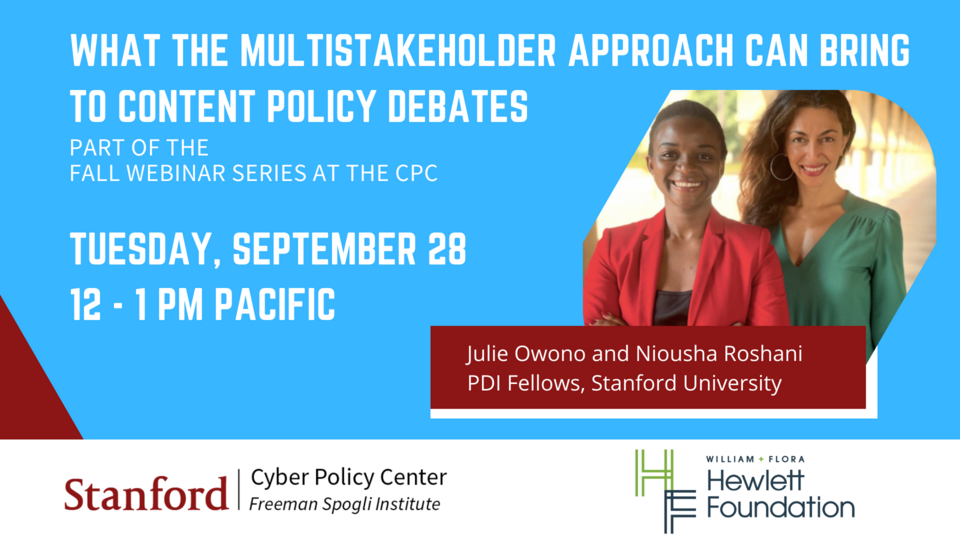
Julie Owono & Dr. Niousha Roshani Event September 28

PART OF THE FALL SEMINAR SERIES

Join us via Zoom on Tue, September 28th from 12 PM - 1 PM PST for a conversation with PDI fellows, Julie Owono and Dr Niousha Roshani, moderated by Co-Director of the Cyber Policy Center, Nathaniel Persily, as they discuss the challenges to content policy and the solutions that a multistakeholder approach has to offer. This is part of the fall seminar series organized by Stanford Cyber Policy Center’s Program on Democracy and the Internet, and the William and Flora Hewlett Foundation’s Cyber Initiative. 


REGISTER


The multistakeholder governance model is increasingly presented as a solution for addressing content governance issues online. While this inclusive and collaborative approach mirrors the foundational principle of an “open and free internet”, challenges with online content around scale and rapidity notably, call for further experimentation. 

The Content Policy & Society Lab (CPSL), a new project of the Program on Democracy and the Internet (PDI) at Stanford’s Cyber Policy Center (CPC), aims to be one of these experiments - by creating a safe space for a diverse array of stakeholders from government, the private sector, civil society, and academia to share knowledge and collaborate on solutions.

Moderator: Nathaniel Persily, Co-Director, Cyber Policy Center

Speakers: Julie Owono, PDI Fellow and Niousha Roshani, PDI Fellow


Stanford Law School Neukom Building, Room N230 Stanford, CA 94305
650-725-9875
0
James B. McClatchy Professor of Law at Stanford Law School
Senior Fellow, Freeman Spogli Institute
Professor, by courtesy, Political Science
Professor, by courtesy, Communication
headshot_3.jpg

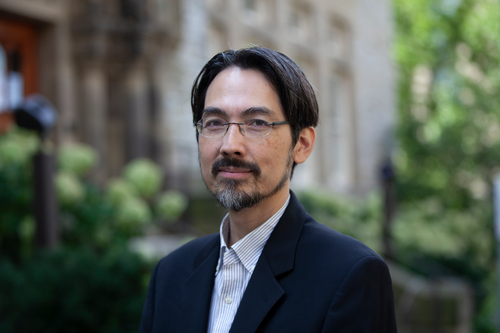
Nathaniel Persily is the James B. McClatchy Professor of Law at Stanford Law School, with appointments in the departments of Political Science, Communication, and FSI.  Prior to joining Stanford, Professor Persily taught at Columbia and the University of Pennsylvania Law School, and as a visiting professor at Harvard, NYU, Princeton, the University of Amsterdam, and the University of Melbourne. Professor Persily’s scholarship and legal practice focus on American election law or what is sometimes called the “law of democracy,” which addresses issues such as voting rights, political parties, campaign finance, redistricting, and election administration. He has served as a special master or court-appointed expert to craft congressional or legislative districting plans for Georgia, Maryland, Connecticut, New York, North Carolina, and Pennsylvania.  He also served as the Senior Research Director for the Presidential Commission on Election Administration. In addition to dozens of articles (many of which have been cited by the Supreme Court) on the legal regulation of political parties, issues surrounding the census and redistricting process, voting rights, and campaign finance reform, Professor Persily is coauthor of the leading election law casebook, The Law of Democracy (Foundation Press, 5th ed., 2016), with Samuel Issacharoff, Pamela Karlan, and Richard Pildes. His current work, for which he has been honored as a Guggenheim Fellow, Andrew Carnegie Fellow, and a Fellow at the Center for Advanced Study in the Behavioral Sciences, examines the impact of changing technology on political communication, campaigns, and election administration.  He is codirector of the Stanford Program on Democracy and the Internet, and Social Science One, a project to make available to the world’s research community privacy-protected Facebook data to study the impact of social media on democracy.  He is also a member of the American Academy of Arts and Sciences, and a commissioner on the Kofi Annan Commission on Elections and Democracy in the Digital Age.  Along with Professor Charles Stewart III, he recently founded HealthyElections.Org (the Stanford-MIT Healthy Elections Project) which aims to support local election officials in taking the necessary steps during the COVID-19 pandemic to provide safe voting options for the 2020 election. He received a B.A. and M.A. in political science from Yale (1992); a J.D. from Stanford (1998) where he was President of the Stanford Law Review, and a Ph.D. in political science from U.C. Berkeley in 2002.   

CV
Date Label
Julie Owono
Niousha Roshani
Seminars
Authors
Michael Breger
News Type
News
Date
Paragraphs

On September 17, 2021, APARC hosted a delegation from the Mongolian Parliament including speaker Gombojav Zandanshatar, who addressed a joint panel of parliament members and Stanford scholars. Zandanshatar, an alumnus at the Stanford Center on Democracy, Development and the Rule of Law, instituted a program of deliberative democracy in Mongolia, and reflected on the outcomes and challenges that still affect the nation.

Zandanshatar’s work with Stanford’s Center for Deliberative Democracy has impacted political reform processes in Mongolia, and he underscored the potential for academic exchange and policy research to improve overall governance and civic participation.

Sign up for APARC newsletters to receive our experts' analysis and commentary. 


A partnership years in the making

Following Zandanshatar’s initial time as a visiting scholar at CDDRL in 2015, he returned to Mongolia, where he promoted concepts of deliberative democracy. In 2017, the Mongolian government adopted the deliberative polling method developed by Stanford communications professor James Fishkin.

Other places around the world have looked seriously at what you are doing in Mongolia.
James Fishkin
Janet M Peck Chair of International Communication, Stanford

The deliberative method that analyzes public opinion was put in place to garner public input before the Mongolian constitution could be amended. Fishkin, who devised the deliberative polling process more than 30 years ago, sat on the panel and mentioned that "other places around the world have looked seriously at what you are doing in Mongolia." 

Member of Parliament Bulgantuya Khurelbaatar also addressed the panel, discussing the country’s path towards benefiting from democracy and a market economy. Bulgantuya shared statistics of recent economic and industrial outputs, and enumerated the many challenges facing the maturing democracy. Despite Mongolia's improvements in governance, the economy, the health sector, and access to education, the poverty rate in the country remains high (28.4%), there is a serious budget deficit, and the quality of education needs improvement, said Bulgantuya.

While many are optimistic about Mongolia’s ability to remain democratic in its current geostrategic context, Zandanshatar cited professor Larry Diamond's concept of democratic recession. Zandanshatar and Bulgantuya responded to questions from Diamond and CDDRL Director Kathryn Stoner on how Mongolia is dealing with the challenges to its democracy, especially against the rise of Russia and China, two authoritarian competitors on which its economy is heavily dependent. According to the delegatiuon, "Democracy is the only way Mongolia can stay alive as a nation."  These results of the panel suggest that autocratic pressure poses an important challenge to democratic integrity.

Read More

Flags of Asian states and text "Symposium: The Stakes in Asia"
Commentary

Talking Democracy: A Symposium on Asia

On a panel discussion hosted by the political quarterly 'Democracy,' Donald K. Emmerson joins experts to assess how the Biden administration is navigating the U.S. relationships in Asia.
Talking Democracy: A Symposium on Asia
A coronavirus spinning with Mongolia flag behind
Blogs

Lessons from Mongolia’s COVID-19 Containment Strategy

Dr. Gendengarjaa Baigalimaa, an oncologist at a hospital in Mongolia’s capital and former postdoctoral fellow with APARC’s Asia Health Policy Program, explains how decisive preventative measures have helped the country prevail in the fight against COVID-19.
Lessons from Mongolia’s COVID-19 Containment Strategy
Photo clinic HEADLINE 2
News

Stanford fellow addresses burden of cervical cancer in Mongolia

Stanford fellow addresses burden of cervical cancer in Mongolia
Hero Image
Mongolian parliamentary delegation
All News button
1
Subtitle

At an in-person address to a panel of parliament members and Stanford scholars, Speaker Gombojav Zandanshatar assessed the nation's experiment in deliberative democracy and offered reflections on the challenges that face maturing democracies.

Authors
Noa Ronkin
News Type
News
Date
Paragraphs

The Walter H. Shorenstein Asia-Pacific Research Center (APARC) is pleased to invite applications for four types of fellowship in contemporary Asia studies for the 2022-23 academic year.

The Center offers postdoctoral fellowships that promote multidisciplinary research on contemporary Japan, contemporary Asia broadly defined, health or healthcare policy in the Asia-Pacific region, and a fellowship for experts on Southeast Asia. Learn more about each fellowship and its eligibility and specific application requirements:

Postdoctoral Fellowship on Contemporary Japan

Hosted by the Japan Program at APARC, the fellowship supports research on contemporary Japan in a broad range of disciplines including political science, economics, sociology, law, policy studies, and international relations. Appointments are for one year beginning in fall quarter 2022. The application deadline is January 3, 2022.
 

Shorenstein Postdoctoral Fellowship on Contemporary Asia

APARC offers two postdoctoral fellowship positions to junior scholars for research and writing on contemporary Asia. The primary research areas focus on political, economic, or social change in the Asia-Pacific region (including Northeast, Southeast, and South Asia), or international relations and international political economy in the region. Appointments are for one year beginning in fall quarter 2022. The application deadline is January 3, 2022.
 

Read More

Photo of Charles Crabtree
News

Charles Crabtree Appointed as a Visiting Assistant Professor with the Japan Program at APARC

Crabtree, an assistant professor at Dartmouth College, researches discrimination in politics, particularly in Japan.
Charles Crabtree Appointed as a Visiting Assistant Professor with the Japan Program at APARC
[Left] Postdoc Spotlight, Jeffrey Weng, Shorenstein Postdoctoral Fellow in Contemporary Asia, [Right] Jeffrey Weng
Q&As

Postdoc Spotlight: Jeffrey Weng on Language and Society

Shorenstein Postdoctoral Fellow in Contemporary Asia Jeffrey Weng shares insights from his research into how language and society shape one another, particularly how the historical use of Mandarin affects contemporary Chinese society and linguistics.
Postdoc Spotlight: Jeffrey Weng on Language and Society
Hero Image
Autumn scene on the Stanford campus with a call to apply for APARC's 2022-23 fellowships for Asia schoalrs
All News button
1
Subtitle

The Center offers fellowships for postdoctoral scholars specializing in contemporary Asia, Japan, and Asia health policy and for experts on Southeast Asia.

Authors
Oriana Skylar Mastro
News Type
Commentary
Date
Paragraphs

There are many reasons to fear an impending Chinese attack on Taiwan: Intensified Chinese aerial activity. High-profile Pentagon warnings. Rapid Chinese military modernization. President Xi Jinping’s escalating rhetoric. But despite what recent feverish discussion in foreign policy and military circles is suggesting, the U.S. withdrawal from Afghanistan isn’t one of them.

Some critics of President Biden’s decision to withdraw from Afghanistan argue the move will embolden Beijing because it telegraphs weakness — an unwillingness to stick it out and win wars that China will factor in when deciding whether to attack Taiwan, which it considers to be part of its territory.

The reality is, though, that the U.S. departure from Afghanistan will more likely give pause to Chinese war planners — not push them to use force against Taiwan.

The Chinese Communist Party’s stated goal is “national rejuvenation”: Regaining China’s standing as a great power. Chinese leaders and thinkers have studied the rise and fall of great powers past. They have long understood that containment by the United States could keep China from becoming a great power itself.

Luckily for Beijing, the Afghan war — along with Iraq and other American misadventures in the Middle East — distracted Washington for two decades. While China was building roads and ports from Beijing to Trieste, Italy, fueling its economy and expanding its geopolitical influence, the United States was pouring money into its war on terrorism. While Beijing was building thousands of acres of military bases in the South China Sea and enhancing its precision-strike capabilities, the U.S. military was fighting an insurgency and dismantling improvised explosive devices.

While Beijing was building thousands of acres of military bases in the South China Sea and enhancing its precision-strike capabilities, the U.S. military was fighting an insurgency and dismantling improvised explosive devices.
Oriana Skylar Mastro

In many ways, it was just dumb luck that Mr. Xi and his predecessors, thanks in part to the war in Afghanistan, could build national power, undermine international normsco-opt international organizations and extend their territorial control all without the United States thwarting their plans in any meaningful way.

But the end of the war in Afghanistan could bring these good times — which the Communist Party calls the “period of important strategic opportunities” — to an abrupt end. Sure, over the past 10 years American presidents tried to get back into the Asia game even as the war continued. Barack Obama asserted we would pivot to Asia back in 2011. Donald Trump’s national security team made great power competition with China its top priority.

But neither went much beyond paying lip service. The withdrawal shows Mr. Biden is truly refocusing his national security priorities — he even listed the need to “focus on shoring up America’s core strengths to meet the strategic competition with China” as one of the reasons for the drawdown.

Such a refocusing comes not a moment too soon. Chinese expansion and militarization in the South China Sea, deadly skirmishes with India, its crackdown in Hong Kong and repression in Xinjiang all point to an increasingly confident and aggressive China. In particular, Chinese military activity around Taiwan has spiked — 2020 witnessed a record number of incursions into Taiwan’s airspace. The sophistication and scale of military exercises has increased as well. These escalations come alongside recent warnings from Mr. Xi that any foreign forces daring to bully China “will have their heads bashed bloody” and efforts toward “Taiwan independence” will be met with “resolute action.”

The U.S. policy toward Taiwan is “strategic ambiguity” — there is no explicit promise to defend it from Chinese attack. In this tense environment, U.S. policymakers and experts are feverishly considering ways to make U.S. commitment to Taiwan more credible and enhance overall military deterrence against China. A recent $750 million arms sale proposal to Taiwan is part of these efforts, as is talk of inviting Taiwan to a democracy summit, which undoubtedly would provoke Beijing’s ire.

Some have argued that America’s withdrawal from Afghanistan undermines efforts to signal U.S. support for Taiwan. On the surface, it may seem as if the U.S. withdrawal would be a good thing for China’s prospects at what it calls “armed reunification.” Indeed, this is the message the nationalist Chinese newspaper The Global Times is peddling: The United States will cast Taiwan aside just as it has done with Vietnam, and now Afghanistan.

However, the American departure from Afghanistan creates security concerns in China’s own backyard that could distract it from its competition with the United States. Beijing’s strategy to protect its global interests is a combination of relying on host nation security forces and private security contractors and free-riding off other countries’ military presence. Analysts have concluded that China is less likely than the United States to rely on its military to protect its interests abroad. Beijing appears committed to avoiding making the same mistakes as Washington — namely, an overreliance on military intervention overseas to advance foreign policy objectives.

Now there will be no reliable security presence in Afghanistan and undoubtedly broader instability in a region with significant economic and commercial interests for China. Chinese leaders are also worried that conflict in Afghanistan could spill across the border into neighboring Xinjiang, where Beijing’s repressive tactics have already been the cause of much international opprobrium.

The reality is, the United States stayed much longer in Afghanistan than most expected. This upsets China’s calculus about what the United States would do in a Taiwan crisis, since conventional wisdom in Beijing had been that the painful legacy of Somalia would deter Washington from ever coming to Taipei’s aid.

But U.S. interventions in Afghanistan and Iraq have called these assumptions into question. Taiwan, with its proportionately large economy and semiconductor industry, is strategically important to the United States. U.S. power and influence in East Asia are reliant on its allies and military bases in the region and America’s broader role as the security partner of choice. If Taiwan were to fall to Chinese aggression, many countries, U.S. allies included, would see it as a sign of the arrival of a Chinese world order. By comparison, Afghanistan is less strategically important, and yet the United States stayed there for 20 years.

If Taiwan were to fall to Chinese aggression, many countries, U.S. allies included, would see it as a sign of the arrival of a Chinese world order. By comparison, Afghanistan is less strategically important, and yet the United States stayed there for 20 years.
Oriana Skylar Mastro

This does not bode well for any designs Beijing might have for Taiwan.

It’s true that China would benefit from a home-field advantage given Taiwan’s proximity, and that Beijing’s arsenal is far greater than Taiwan’s. China, too, would likely enjoy more domestic public support for any conflict than the U.S. would for yet another intervention.

But if China has any hope of winning a war across the Strait, its military would have to move fast, before the United States has time to respondChinese planners know that the longer the war, the greater the U.S. advantage. Unlike Chinese production and manufacturing centers, which can all be targeted by the United States, the American homeland is relatively safe from Chinese conventional attack. China is far more reliant on outside sources for oil and natural gas, and thus vulnerable to U.S. attempts to cut off its supply.

And the Chinese economy would suffer more: Since the war would be happening in Asia, trade would be bound to be disrupted there. The United States would need to stick it out for only a short time — not 20 years — for these factors to come into play.

A call on Thursday between Mr. Biden and Mr. Xi hinted at the stakes — the two “discussed the responsibility of both countries to ensure competition does not veer into conflict,” according to the White House.

Chinese leaders already expected a tense relationship with the Biden administration. Now they are faced with the fact that the United States might have the will and resources to push back against Chinese aggression, even if it means war.

So, while there may be other reasons to oppose the end of the war in Afghanistan, the impact on China’s Taiwan calculus is not — and should not be — one of them.

Read More

Figures of Kuomintang soldiers are seen in the foreground, with the Chinese city of Xiamen in the background, on February 04, 2021 in Lieyu, an outlying island of Kinmen that is the closest point between Taiwan and China.
Commentary

Strait of Emergency?

Debating Beijing’s Threat to Taiwan
Strait of Emergency?
An Island that lies inside Taiwan's territory is seen with the Chinese city of Xiamen in the background.
Commentary

The Taiwan Temptation

Why Beijing Might Resort to Force
The Taiwan Temptation
A case holding lunar rock and debris collected from the Moon by China's space program that is part of a display at the National Museum of China is seen on March 2, 2021 in Beijing,
Commentary

Chinese Space Ambition

On the American Foreign Policy Council Space Strategy podcast, Center Fellow Oriana Skylar Mastro discusses how China views space and why the United States must not surrender global leadership in pursuing aspirational and inspirational space goals.
Chinese Space Ambition
Hero Image
Taiwan island seen from mid-air.
Yongyuan Dai/Getty Images
All News button
1
Subtitle

In a New York Times opinion piece, Center Fellow Oriana Skylar Mastro argues that the U.S. withdrawal from Afghanistan does not represent a potential catalyst for an impending Chinese attack on Taiwan.

-

Asia Health Policy Program (AHPP) 2021-22 Colloquium series "Aligning Incentives for Better Health and More Resilient Health Systems in Asia”

Friday, October 29, 2021, 8:30am - 9:30am (Beijing time)

This paper investigates the impact of China’s reform of the system for medical payments from traditional fee-for-service to prospective payment in the form of diagnosis-related group. The paper explores comprehensive aspects of the reform, taking advantage of a large-scale administrative data set from a pilot city in China. It finds that medical expenditure per admission dropped by 7.3 percent, with greater impact on patients who spent a larger amount. To better understand the changes, further decompositions find that the expenditure reduction is fully explained by reduction in the quantity of services instead of using cheaper ones, and by reduction in the use of drugs but not reduction in other types of services, including examination, treatment, and nursing care. In addition, no evidence is found on quality deterioration or behavioral responses, including upcoding and cream skimming. Hospitals maintained their revenue through attracting more patients to contend with cost containment induced by the payment reform.

Image
Julie Shi 4X4
Julie Shi is Associate Professor of Health Economics in the School of Economics and the School of Global Health Development at Peking University. Dr. Shi’s research focuses on the design and impact of health care payment systems, the economics of health insurance coverage, drug regulations, and the trend of medical expenditures. Shi’s work has contributed to the theory and practice of China’s payment system reform. Her research on health insurance includes the impact of insurance on medical utilization. She has conducted academic and policy research on government regulations on prescription drugs. She also works on the trend of expenditures for patients with catastrophic diseases.

Dr. Shi’s undergraduate degree is from Tsinghua university and her PhD is from Boston University, both in economics. Before joining Peking University, she was a post-doctoral fellow at Harvard Medical School. Her work has published on leading academic journals including Journal of Public Economics, Journal of Health Economics, and Health Economics. She received awards for paper of the year in 2014 from the National Institute of Health Care Management (NIHCM) in the United States. She has conducted multiple projects for central and local governments in China for policy recommendation.


Via Zoom Webinar
Register: https://bit.ly/2YXJwkl

Julie Shi Associate Professor of Health Economics in the School of Economics and the School of Global Health Development, Peking University
Seminars
-

Jakarta time: Friday, October 8, 2021 07:00 - 08:30 AM

Students often ask themselves: Do I want to be a specialist or a generalist? A hedgehog digging deeper or a fox ranging wider? The answer embedded in Gita Wirjawan’s life so far is unequivocal: Go broad. Think big. And be optimistic. For his weekly virtual podcast Endgame, Gita has interviewed many people, including Stanford’s Southeast Asia Program director Don Emmerson.  Don will turn the tables and interview Gita in this event. Gita will highlight life lessons from his international childhood and consider questions such as these: How well or poorly is Indonesia coping with corrupted governance, religious extremism, Covidian infection, and climate change? How should it respond to worsening US-China relations? To China’s efforts to control the South China Sea? To America’s exit from Afghanistan? To Myanmar’s brutal junta and ASEAN’s apparent impotence? Worldwide, looking forward, is eco-suicide avoidable? Will surveillance technology doom liberal democracy? If there is a global endgame to be played, how should concerned actors play it? Have present perils made Gita’s proactive optimism all the more necessary? Or all the more naïve? Attend the event and find out.

Image
photo_gita_wirjawan_4X4.jpg
Gita Wirjawan is the founding chairman of the Ancora Group of private-equity investors and wealth managers in Indonesia. He has held leadership positions in Citibank, JP Morgan, and other such firms. His philanthropy sustains the Ancora Foundation, which seeks to improve access to quality education in Indonesia across a range of endeavors—from funding the training of kindergarten teachers to endowing scholarships for students to attend universities around the world including Stanford. His passion for sports led Gita to chair Indonesia’s badminton association (2012-16). His public service career has included heading Indonesia’s trade ministry (2011-14) and investment coordinating board (2009-2011). A jazz pianist, he has performed in concerts and composed and played pieces in more than a dozen albums. His degrees include masters in business administration (Baylor) and public policy (Harvard). Indonesia’s School of Government and Public Policy sponsors his wide-ranging podcast “Endgame with Gita Wirjawan.”

Via Zoom Webinar
Register: https://bit.ly/3z7hM9b

Gita Wirjawan Indonesian businessman, philanthropist, educationist, musician, former minister of trade, badminton advocate, and popular talk-show host
Seminars
1
kelsi_caywood.jpg

Kelsi Caywood graduated from Stanford with a Master's in International Policy, concentrating in governance and development. Her research areas include comparative policy analysis of the Asia-Pacific region, global women's issues, and migration and mobility. During her Master's program, she served as editor-in-chief of the Stanford International Policy Review, a course assistant, and a research assistant for Professor H. R. McMaster. Prior to Stanford, Kelsi received a Master of Law from Peking University as a Yenching Scholarship recipient and a BA in Political Science from Yale University. Her international work and study experiences include South Korea, China, the United Kingdom, and France.

In the Korea Program at APARC, Kelsi supported the research and practice partnerships stemming from the New Asia Research Project, a cluster of multi-year studies focusing on the new societal issues and challenges facing Korea and its neighbor countries. Currently, she focuses on the Global Talents book project and a series of research articles examining human resource development and associated global talent strategies in four Asia-Pacific countries: Australia, China, India, and Japan.

Research Associate, Korea Program (former)
Date Label
Authors
Gary Mukai
News Type
Blogs
Date
Paragraphs

Under the leadership of Carey Moncaster (MA ’94) and Liyi Ye (MA ’16), Stanford e-China recently concluded its Spring 2021 session. Launched in Winter 2020, Stanford e-China, Technologies Changing the World: Design Thinking into Action, is offered twice annually and introduces high school students in China to cutting-edge technologies that are defining the future and providing exciting areas for academic study, professional opportunities, and entrepreneurial innovation. Focusing on the fields of green tech, finance tech, health tech, and artificial intelligence, students engage in live discussion sessions and real-time conversations with Stanford University scholars, Silicon Valley entrepreneurs, as well as American high school students. Moncaster partners with Stanford e-China Advisor Liyi Ye and Ye’s team at Third Classroom in Shanghai.

A key challenge in developing Stanford e-China has been finding and refining a framework that encourages students to analyze the challenges facing each of the technologies highlighted in the course and then brainstorm innovative solutions. To showcase the dynamic research and teachings at Stanford University, Moncaster honed in on Design Thinking, a creative-thinking and problem-solving framework widely utilized throughout campus and Silicon Valley. Moncaster explained, “Design Thinking is a very hands-on, interactive, team-based experience that is dependent on critical feedback from other people. Translating the Design Thinking concepts online, with students, scholars, and practitioners virtually scattered across the world, presents an exciting opportunity to create curriculum that effectively introduces the relevant skills and mindset.”

For final projects, Stanford e-China students delve into an area of personal interest in one of the technology fields, applying aspects of the Design Thinking framework to develop a prototype pitch and action plan. Some of the sample projects have focused on improving the accessibility of digital healthcare for China’s rural residents, improving the mental health of Chinese students, utilizing solar energy at rural schools to provide electricity to students at night, and lowering carbon emissions at traditional power plants. Once it has been deemed safe to travel to the United States again, the top three students from each session will be invited to annual ceremonies at Stanford University. During the ceremonies, students will present their pitches and sharpen their Design Thinking skills with Stanford community members present.

Based on feedback from students, a highlight of Stanford e-China has been the chance to collaborate with American high school students studying about China and U.S.–China relations in SPICE’s China Scholars Program (CSP). With the support of CSP instructor Dr. Tanya Lee, the Chinese and American students work together in small groups on WeChat and Canvas to apply Design Thinking to an environmental challenge in their respective communities. In the process, they figure out how to bridge different time zones, tech resources, learning styles, and cultural perspectives.

Moncaster reflected, “Since Tanya, Liyi, and I are trying to cultivate future leaders in U.S.–China relations, we are hoping to increase the interaction between the students in Stanford e-China and the China Scholars Program. It has been fascinating to hear them discuss not only cutting-edge technologies but also how they can serve as change agents and address topics such as social inequality.” She continued, “Thanks to our inspiring guest speakers and the robust dialogue between my students and the CSP students, I am confident that many of my students have been inspired to become social entrepreneurs of the future. I also hope that some of my students will consider applying to Stanford as undergraduates or graduate students.”

Thanks to our inspiring guest speakers and the robust dialogue between my students and the CSP students, I am confident that many of my students have been inspired to become social entrepreneurs of the future.
Carey Moncaster

In terms of next steps, Moncaster and Ye hope to shift some of their attention to training schoolteachers in China—including the regular schoolteachers of their Stanford e-China students—via professional development seminars. SPICE Instructor Dr. Mariko Yoshihara Yang and Dr. Rie Kijima already offered one such seminar, which focused on Design Thinking. SPICE hopes to offer additional seminars to teachers in China on Design Thinking as well as other pedagogically focused strategies such as Project-Based Learning.

SPICE is seeking support to broaden its work with Stanford e-China, the China Scholars Program, and teacher professional development in China.

Read More

arches at Stanford University
Blogs

High School Students in China and the United States Collaborate

Students in SPICE’s China Scholars and Stanford e-China Programs meet in virtual classrooms.
High School Students in China and the United States Collaborate
Hero Image
screenshot of an instructor and a student
Stanford e-China Instructor Carey Moncaster and Stanford e-China Advisor Liyi Ye
All News button
1
Subtitle

SPICE seeks to expand its offerings to students and teachers in China.

Authors
Noa Ronkin
News Type
News
Date
Paragraphs

The Walter H. Shorenstein Asia-Pacific Research Center (APARC) at Stanford University is pleased to announce that political scientist Charles Crabtree has been appointed as a visiting assistant professor with the Japan Program.

Crabtree is an assistant professor in the Department of Government at Dartmouth College. During the 2021-22 academic year, while on leave from Dartmouth, Crabtree will research fairness in politics, with applications to areas including the study of repression, human rights, policing, and immigration. He will also collaborate with Kiyoteru Tsutsui, director of the Japan Program and senior fellow at the Freeman Spogli Institute, on several forthcoming publications and seminars that generate fresh perspectives on Japanese political, economic, and societal issues.

"Charles is an excellent academic partner, and I am delighted to have him with us at Stanford this year,” said Tsutsui. “His research into the normatively important issue of discrimination makes unique contributions to public evaluations of institutional legitimacy across regimes, especially in the context of Japanese politics, where it is insufficiently studied.”

Crabtree’s research focuses on the politics, sociology, and economics of discrimination across countries in Asia, particularly in Japan, where out-group discrimination continues to mar the lived experiences of many. He examines the consequences of discrimination and evaluates various means of reducing it in politics, the workplace, and everyday life. His book on this subject, Studying Discrimination: An Experimental Approach, is under contract with Cambridge University Press.

Methodologically, Crabtree is interested in research design, experiments, and applying computational tools to better understand the social world. He has published his research in journals such as the American Journal of Political Science, the British Journal of Political Science, the Journal of Politics, and Political Analysis. As someone who deeply believes in the value of public scholarship, he regularly writes on issues related to Japan for The Hill and about American and Japanese politics for outlets such as Foreign Policy, the Japan Times, the South China Morning PostThe Atlantic, and the Washington Post.

Crabtree holds a doctorate in Political Science from the University of Michigan and master’s degrees from Pennsylvania State University and Northwestern University.

Read More

Portrait of Ma'ili Yee, 2020-21 APARC Diversity Fellow
News

Student Spotlight: Ma’ili Yee Illuminates a Vision for Building the Blue Pacific Continent

With support from Shorenstein APARC’s Diversity Grant, coterminal student Ma’ili Yee (BA ’20, MA ’21) reveals how Pacific island nations are responding to the U.S.-China rivalry by developing a collective strategy for their region.
Student Spotlight: Ma’ili Yee Illuminates a Vision for Building the Blue Pacific Continent
Figures of Kuomintang soldiers are seen in the foreground, with the Chinese city of Xiamen in the background, on February 04, 2021 in Lieyu, an outlying island of Kinmen that is the closest point between Taiwan and China.
Commentary

Strait of Emergency?

Debating Beijing’s Threat to Taiwan
Strait of Emergency?
SINGAPORE (Aug. 23, 2021) Vice President Kamala Harris visits combat ship USS Tulsa, part of a deployment in the U.S. 7th Fleet area of operation in support of a free and open Indo-Pacific region.
Commentary

The Significance of Kamala Harris’ Vietnam Trip: Interview with Donald K. Emmerson

Emmerson talks to VnExpress about the implications of Harris’ visit to Hanoi, the first such visit by a U.S. vice president.
The Significance of Kamala Harris’ Vietnam Trip: Interview with Donald K. Emmerson
Hero Image
Photo of Charles Crabtree Rod Searcey
All News button
1
Subtitle

Crabtree, an assistant professor at Dartmouth College, researches discrimination in politics, particularly in Japan.

Subscribe to Asia-Pacific