-
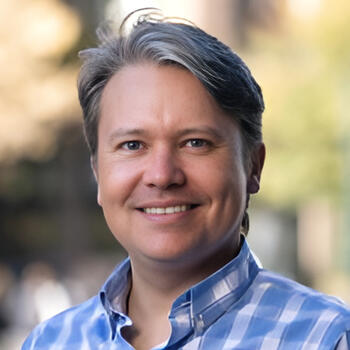
l jean camp headshot on blue background

Join the Program on Democracy and the Internet (PDI) and moderator Andrew Grotto, in conversation with L. Jean Camp for Create a Market for Safe, Secure Software

This session is part of the Fall Seminar Series, a months-long series designed to bring researchers, policy makers, scholars and industry professionals together to share research, findings and trends in the cyber policy space. Both in-person (Stanford-affiliation required) and virtual attendance (open to the public) is available; registration is required.

Today the security market, particularly in embedded software and Internet of Things (IoT) devices, is a lemons market.  Buyers simply cannot distinguish between secure and insecure products. To enable the market for secure high quality products to thrive,  buyers need to have some knowledge of the contents of these digital products. Once purchased, ensuring a product or software package remains safe requires knowing if these include publicly disclosed vulnerabilities. Again this requires knowledge of the contents.  When consumers do not know the contents of their digital products, they can not know if they are at risk and need to take action.

The Software Bill of Materials  is a proposal that was identified as a critical instrument for meeting these challenges and securing software supply chains in the Executive Order on Improving the Nation’s Cybersecurity} by the Biden Administration (EO 14028. In this presentation Camp will introduce SBOMs, provide examples, and explain the components that are needed in the marketplace for this initiative to meet its potential.

Jean Camp is a Professor at Indiana University with appointments in Informatics and Computer Science.  She is a Fellow of the AAAS (2017), the IEEE (2018), and the ACM (2021).  She joined Indiana after eight years at Harvard’s Kennedy School. A year after earning her doctorate from Carnegie Mellon she served as a Senior Member of the Technical Staff at Sandia National Laboratories. She began her career as an engineer at Catawba Nuclear Station after a double major in electrical engineering and mathematics, followed by a MSEE in optoelectronics at University of North Carolina at Charlotte.

Andrew Grotto
L. Jean Camp Professor at Indiana University
Seminars
-

Co-sponsored with Stanford University Libraries

About the Event: Join us for an engaging conversation with the Ambassador of Estonia to the U.S. Kristjan Prikk, Rose Gottemoeller, and Steven Pifer, who will discuss Russia's war in Ukraine - what's at stake and what we should do about it.
Russia's unprovoked war against Ukraine has brought about the most serious reassessment of the European security realities since the end of the Cold War. The epic clash of political wills, the magnitude of military operations, and the scale of atrocities against the Ukrainian people are beyond anything Europe has seen since World War II. The past nine months have forced many to reassess what is possible and impossible in international security A.D. 2022. What is this war about, after all? What's at stake in this – to paraphrase former British PM Chamberlain – "quarrel in a faraway country, between people of whom most Americans know nothing?" What should be the lessons for U.S. strategists and policymakers? What are the wider implications for U.S. national security interests, particularly those related to the Indo-Pacific? How has the Alliance supported Ukraine since the war started? What should the end of this war look like and how to get there?

All these questions are relevant and should be carefully weighed with current information from the war as well as historic perspective and regional knowledge in mind.

About the Speakers: 

Estonia's Ambassador to the U.S. Mr. Kristjan Prikk started his mission in Washington, D.C. in May 2021. He is a graduate of the USA Army War College and has served as the National Security Coordinator to the Prime Minister. Prior to arriving in D.C., he was the Permanent Secretary of the Estonian Ministry of Defense. Among his previous assignments are two other tours in Washington as an Estonian diplomat and work on NATO-Russia and NATO-Ukraine topics at a time when these relationships were considerably less charged than today.

Rose Gottemoeller is the Steven C. Házy Lecturer at Stanford University's Freeman Spogli Institute for International Studies and its Center for International Security and Cooperation. Before joining Stanford, Gottemoeller was the Deputy Secretary General of NATO from 2016 to 2019, where she helped to drive forward NATO's adaptation to new security challenges in Europe and in the fight against terrorism.  Prior to NATO, she served for nearly five years as the Under Secretary for Arms Control and International Security at the U.S. Department of State, advising the Secretary of State on arms control, nonproliferation and political-military affairs. 

Steven Pifer is an affiliate of the Center for International Security and Cooperation as well as a non-resident senior fellow with the Brookings Institution. He was a William J. Perry Fellow at the center from 2018-2022 and a fellow at the Robert Bosch Academy in Berlin from January-May 2021. Pifer's research focuses on nuclear arms control, Ukraine, Russia, and European security. A retired Foreign Service officer, Pifer's more than 25 years with the State Department focused on U.S. relations with the former Soviet Union and Europe, as well as arms control and security issues, and included service as the third US ambassador to Ukraine.

 All CISAC events are scheduled using the Pacific Time Zone.

Green Library, East Wing 

Kristjan Prikk
Rose Gottemoeller
Steven Pifer
Seminars
News Feed Image
640px-flag_of_ukraine_clear.png
-
Event flyer with portraits of Richard Heydarian, Huong Le Thu, and Don Emmerson

When the U.S. Senate voted to expand NATO into the USSR’s sphere of influence in Europe in 1988, American diplomat-scholar George Kennan called it "the beginning of a new [U.S.-Russia] cold war” and said that Moscow would “gradually react quite adversely." Russia invaded Ukraine in February 2022 following a joint statement by Moscow and Beijing criticizing the United States. In May 2022, China's Foreign Minister Wang Yi said U.S.-China relations were on the "brink of a new Cold War.”  What does this mean for Southeast Asians? Are they refusing to choose between the United States and its opponents? How much does the fate of Ukraine matter to Southeast Asians? Do they want peace or justice—to prevent big-power escalation or to reverse imperial expansion? How are they balancing those different views and the contending pressures to side with the United States or Russia+China?

This event is part of APARC’s 2022 Fall webinar seriesAsian Perspectives on the US-China Competition.

Image
Heydarian 112922
Richard Heydarian is a Manila-based scholar and columnist serving as a senior lecturer at the Asian Center, University of the Philippines Diliman. His academic career has included professorial positions in political and social science at the University of the Philippines, Ateneo de Manila University, De La Salle University, and a visiting fellowship at National Chengchi University. As a columnist, he has written for leading publications such as Foreign Affairs, The Guardian, and The New York Times, and has regularly contributed, for example, to Al Jazeera English, Nikkei Asian Review, South China Morning Post, and The Straits Times. His books include The Indo-Pacific: Trump, China, and the New Struggle for Global Mastery (2019); The Rise of Duterte: A Populist Revolt against Elite Democracy (2017), and Asia's New Battlefield: The USA, China and the Struggle for the Western Pacific (2015).

Image
Huong Le Thu 112922
Huong Le Thu, an Australia-resident analyst of geopolitics in Southeast Asia, is a principal policy fellow at the Perth USAsia Centre, University of Western Australia and a non-resident fellow in CSIS Washington’s Southeast Asia Program. She has worked in universities and think tanks in Australia, Singapore, and Taiwan, and has held visiting positions in the University of Malaya and the ASEAN Secretariat among other places.  Her scholarly writings have appeared in journals including Asia Policy, Asia-Pacific Review, Asian Security, and Foreign Policy, and  she has been quoted in the Financial Times, The Japan Times, The New York Times, The Straits Times, and The Washington Post among other media.  Her degrees are from the National Chengchi University (PhD) and Jagiellonian University in Poland (MA).  She speaks five languages and has published in four of them.

Donald K. Emmerson

Via Zoom webinar

Richard Heydarian Senior Lecturer, Asian Center, University of the Philippines Diliman
Huong Le Thu Principal Policy Fellow, PerthUSA Centre, University of Western Australia
Seminars
-
Illustration of the globe as a chessboard with the king piece draped in China's flag with portraits of speakers David Shambaugh, Glenn Tiffert, and Jean Oi.

This event is co-sponsored by the Hoover Project on China’s Global Sharp Power. 

If you cannot join in person but would like to attend virtually, please join us via Zoom meeting. Meeting ID: 953 0045 6111 Password: 120122

Since the founding of the People’s Republic of China over 70 years ago, five paramount leaders have shaped the fates and fortunes of the nation and the ruling Chinese Communist Party: Mao Zedong, Deng Xiaoping, Jiang Zemin, Hu Jintao, and Xi Jinping. Drawing on his recent book, China’s Leaders: From Mao to Now, in this lecture Professor David Shambaugh will explore the differing backgrounds, contrasting leadership styles, and impact of each paramount leader.

Speaker

Image
David Shambaugh Headshot
David Shambaugh is the Gaston Sigur Professor of Asian Studies, Political Science & International Affairs, and Director of the China Policy Program, Elliott School of International Affairs, at George Washington University. Professor Shambaugh joined the George Washington faculty after serving as Reader in Chinese Politics at the University of London’s SOAS and as editor of The China Quarterly. As an author, Professor Shambaugh has published 35 books, including most recently International Relations of Asia (3rd ed., 2022), China’s Leaders: From Mao to Now (2021), Where Great Powers Meet: America & China in Southeast Asia (2021), and China & the World (2020).

Chair

Image
Jean Oi Headshot
Jean C. Oi is the William Haas Professor of Chinese Politics in the Department of Political Science and a senior fellow in the Freeman Spogli Institute for International Studies at Stanford University. She directs the China Program at the Walter H. Shorenstein Asia-Pacific Research Center (APARC) and is the Lee Shau Kee Director of the Stanford Center at Peking University.

Discussant 

Image
Glenn Tiffert Headshot
Glenn Tiffert is a research fellow at the Hoover Institution and a historian of modern China. He co-chairs the Hoover project on China’s Global Sharp Power and works closely with government and civil society partners to document and build resilience against authoritarian interference with democratic institutions. Most recently, he co-authored and edited Global Engagement: Rethinking Risk in the Research Enterprise (2020).

Jean C. Oi

Hybrid at Philippines Room, Encina Hall 3rd Floor

David Shambaugh
Glenn Tiffert
Seminars
Paragraphs

US defense strategy has long been predicated on the view that military activities, maneuvers, and deployments are credible conveyers of information to both adversaries and partners about US willingness to fight in specific circumstances. Brian Blankenship and Erik Lin-Greenberg’s article, “Trivial Tripwires? Military Capabilities and Alliance Reassurance,” makes an important contribution by demonstrating that not all military activities are created equal when it comes to reassuring allies and partners. Blankenship and Lin-Greenberg rightfully capture reassurance as a product of resolve and capability—thus a “reassuring” state can provide differing acts of reassurance depending on the degree of resolve it wishes to demonstrate and the capabilities it possesses. The authors evaluate four types of reassurance, which vary according to their strength of signaling resolve and capability: (1) tripwires; (2) fighting forces; (3) transient demonstrations; and (4) offshore presences. Relying largely on surveys of defense experts in the Baltics and Central Europe, they argue that a commitment of fighting forces—such as a permanent overseas base or a large in-country ground deployment—makes countries feel safest.

The big question that comes to mind is whether these findings are valid in other theaters, such as the Indo-Pacific. The rise of China presents the greatest challenge to the security and interests of the United States and its allies since the Cold War. As China’s military capabilities have grown, so too has its aggressiveness in pushing territorial issues in the South China Sea, East China Sea, along the Sino-Indian border, and regarding Taiwan. In response, the United States has undertaken numerous military efforts designed to enhance deterrence and reassure allies, including freedom-of-navigation operations (FONOPS), a continuous presence of strategic bombers at Andersen Air Force Base in Guam, and an expanded Marine Air Ground Task Force deployed to Darwin, Australia. America’s behavior reflects an ingrained conventional wisdom: increased military presence and activities will signal US resolve, thereby will enhancing deterrence against an adversary and reassuring allies.

Whether these policy decisions in Asia will indeed contribute to a peaceful and stable Asia directly concern the central claims made in Blankenship and Lin-Greenberg’s study. In this response, Mastro argues that although their research is a step in the right direction, their conclusions do not tell us much about how the United States can reassure Asian allies and partners. Indeed, the article is one more example of the broader problematic tendency to overly rely on Europe to build understanding in the security-studies field.

Mastro makes three main points in this response. First, whether a force deployment serves as a tripwire depends on the risk to forces, not the number of forces deployed (as Blankenship and Lin-Greenberg argue). Second, how capable a country’s deployment is cannot be evaluated in isolation; the enemy’s military capabilities greatly determine the relative capabilities of different posture decisions. Third, Blankenship and Lin-Greenberg’s assumption that transient military operations are low risk (and thus signal lower resolve) is not valid in the Asian theater.

All Publications button
1
Publication Type
Journal Articles
Publication Date
Journal Publisher
Security Studies
Authors
Oriana Skylar Mastro
-
Aleksandra Kuczerawy headshot on a blue background with text European Developments in Internet Regulation

Join the Program on Democracy and the Internet (PDI) and moderator Daphne Keller, in conversation with Aleksandra Kuczerawy for European Developments in Internet Regulation.

This session is part of the Fall Seminar Series, a months-long series designed to bring researchers, policy makers, scholars and industry professionals together to share research, findings and trends in the cyber policy space. Both in-person (Stanford-affiliation required) and virtual attendance (open to the public) is available; registration is required.

The Digital Services Act is a new landmark European Union legislation addressing illegal and harmful content online. Its main goals are to create a safer digital space but also to enhance protection of fundamental rights online. In this talk, Aleksandra Kuczerawy will discuss the core elements of the DSA, such as the layered system of due diligence obligations, content moderation rules and the enforcement framework, while providing underlying policy context for the US audience.

Aleksandra Kuczerawy is a postdoctoral scholar at the Program on Platform Regulation and has been a postdoctoral researcher at KU Leuven’s Centre for IT & IP Law and is assistant editor of the International Encyclopedia of Law (IEL) – Cyber Law. She has worked on the topics of privacy and data protection, media law, and the liability of Internet intermediaries since 2010 (projects PrimeLife, Experimedia, REVEAL). In 2017 she participated in the works of the Committee of experts on Internet Intermediaries (MSI-NET) at the Council of Europe, responsible for drafting a recommendation by the Committee of Ministers on the roles and responsibilties of internet intermediaries and a study on Algorithms and Human Rights.

Daphne Keller
Aleksandra Kuczerawy Postdoctoral Scholar at the Program on Platform Regulation (PPR)
Seminars
-
Flyer for webinar "Media, Politics, and Polarization in Asia" with portraits of speakers Cherian George and Zuraidah Ibrahim.

Stark contradictions mark Asia’s news and information landscape.  Citizens have gained unprecedented ability to express and inform themselves through media.  Yet the internet, once thought of as a great liberator and equalizer, has been harnessed by powerful interests.  Social media platforms, even as they facilitate collective action, have deepened divisions, circulated hate, and undermined public-interest journalism.  What are the political and other effects of this combination of abundant informative discourse and divisive manipulative bias?  A media scholar and a media practitioner with professional experience in both Southeast Asia and Hong Kong will reflect on these contrary trends and their implications.

Image
Cherian George 110922
Cherian George, a media professor at Hong Kong Baptist University, is a visiting scholar at Stanford’s Department of Communication. His books include Red Lines: Political Cartoons and the Struggle Against Censorship, a double finalist for the American Association of Publishers PROSE award for scholarly books (2021); Media and Power in Southeast Asia (2019); and Hate Spin: The Manufacture of Religious Offense and its Threat to Democracy (2016).

Image
Zuraidah Ibrahim 110922
Zuraidah Ibrahim is executive managing editor at Hong Kong’s English language daily, South China Morning Post, where her responsibilities include overseeing Hong Kong and international coverage. She was previously deputy editor and political editor of Singapore’s Straits Times. Her books include Rebel City: Hong Kong’s Year of Water and Fire (2020); Singapore Chronicles: Opposition (2017); and Lee Kuan Yew: Hard Truths to Keep Singapore Going (2011).

Donald K. Emmerson

Via Zoom Webinar

Cherian George Professor of Media Studies, Hong Kong Baptist University
Zuraidah Ibrahim Executive Managing Editor, South China Morning Post
Seminars
Paragraphs

Arzan Tarapore is the co-editor of the Asia Policy roundtable 'Minilateral Deterrence in the Indo-Pacific' and the co-author of its introductory essay, "Minilaterals and Deterrence: A Critical New Nexus." Oriana Skylar Mastro is the author of the first essay in the roundtable, "Deterrence in the Indo-Pacific." Excerpts from both essays are included below.


Excerpt from "Minilaterals and Deterrence: A Critical New Nexus," by Arzan Tarapore and Brendan Taylor:

As countries around the Indo-Pacific strive to manage the challenges of China’s growing power and assertiveness, they have emphasized two concepts. First, they have increasingly embraced “minilateral” groupings—small, issue-based, informal, and uninstitutionalized partnerships — as a way of coordinating international policy action.

Second, the United States and its allies, such as Australia and Japan, have renewed their commitment to deterrence to maintain regional stability. Rather than relying on institutions to deepen regional integration, which was their preferred option after the end of the Cold War, they are designing defense policies to dissuade potential adversaries, especially China, from revisionist behavior.

The Cold War produced a distinguished body of scholarship addressing the concept of deterrence.3 There is also a burgeoning literature on minilateral security cooperation in the Indo-Pacific.4 Yet little, if any, work has thus far addressed the potential convergence between these two increasingly dominant trends in the region’s security politics. By bringing together six leading security experts to explore the nexus between deterrence and minilateralism, this roundtable constitutes a first attempt to fill this gap. 


Excerpt from "Deterrence in the Indo-Pacific," by Oriana Skylar Mastro:

As China’s military might and tendency toward regional aggression grow, the United States and its allies are increasingly concerned with deterrence. Their strategies seek to prevent Beijing from disrupting the rules-based order in the Indo-Pacific by, for example, invading Taiwan or conducting gray-zone operations in the South China Sea.

Yet deterring China with minilateral groupings of states is more complex and difficult than traditional deterrence theory might suggest. This essay lays out some of the unique characteristics of the China challenge before considering how minilaterals can best enhance deterrence in these circumstances. 

All Publications button
1
Publication Type
Journal Articles
Publication Date
Subtitle

An Asia Policy roundtable co-edited by Arzan Tarapore, including an essay by Oriana Skylar Mastro.

Journal Publisher
Asia Policy
Authors
Arzan Tarapore
Oriana Skylar Mastro
Number
4
-
Honors students with the Washington Monument in the background

The Center on Democracy, Development and the Rule of Law (CDDRL) will be accepting applications from eligible juniors from any university department who are interested in writing their senior thesis on a subject touching upon democracy, economic development, and rule of law (DDRL). 

On Wednesday, January 17 at 12:00 pm PT, join CDDRL faculty and current honors students to discuss the program and answer questions.

The application period opens on January 8, 2024, and runs through February 9, 2024.

For more information on the Fisher Family CDDRL Honors Program, please click here.

CDDRL
Encina Hall, C152
616 Jane Stanford Way
Stanford, CA 94305-6055

(650) 725-2705 (650) 724-2996
0
Senior Fellow at the Freeman Spogli Institute for International Studies
Professor, by courtesy, of Political Science
Stedman_Steve.jpg PhD

Stephen Stedman is a Senior Fellow at the Freeman Spogli Institute for International Studies (FSI) and the Center on Democracy, Development and the Rule of Law (CDDRL), an affiliated faculty member at CISAC, and professor of political science (by courtesy) at Stanford University. He is director of CDDRL's Fisher Family Honors Program in Democracy, Development and Rule of Law, and will be faculty director of the Program on International Relations in the School of Humanities and Sciences effective Fall 2025.

In 2011-12 Professor Stedman served as the Director for the Global Commission on Elections, Democracy, and Security, a body of eminent persons tasked with developing recommendations on promoting and protecting the integrity of elections and international electoral assistance. The Commission is a joint project of the Kofi Annan Foundation and International IDEA, an intergovernmental organization that works on international democracy and electoral assistance.

In 2003-04 Professor Stedman was Research Director of the United Nations High-level Panel on Threats, Challenges and Change and was a principal drafter of the Panel’s report, A More Secure World: Our Shared Responsibility.

In 2005 he served as Assistant Secretary-General and Special Advisor to the Secretary- General of the United Nations, with responsibility for working with governments to adopt the Panel’s recommendations for strengthening collective security and for implementing changes within the United Nations Secretariat, including the creation of a Peacebuilding Support Office, a Counter Terrorism Task Force, and a Policy Committee to act as a cabinet to the Secretary-General.

His most recent book, with Bruce Jones and Carlos Pascual, is Power and Responsibility: Creating International Order in an Era of Transnational Threats (Washington DC: Brookings Institution, 2009).

Director, Fisher Family Honors Program in Democracy, Development and Rule of Law
Director, Program in International Relations
Affiliated faculty at the Center for International Security and Cooperation
Date Label

Encina Hall, C150
616 Jane Stanford Way
Stanford, CA 94305

0
Center Fellow, Freeman Spogli Institute for International Studies
didi_kuo_2023.jpg

Didi Kuo is a Center Fellow at the Freeman Spogli Institute for International Studies (FSI) at Stanford University. She is a scholar of comparative politics with a focus on democratization, corruption and clientelism, political parties and institutions, and political reform. She is the author of The Great Retreat: How Political Parties Should Behave and Why They Don’t (Oxford University Press) and Clientelism, Capitalism, and Democracy: the rise of programmatic politics in the United States and Britain (Cambridge University Press, 2018).

She has been at Stanford since 2013 as the manager of the Program on American Democracy in Comparative Perspective and is co-director of the Fisher Family Honors Program at CDDRL. She was an Eric and Wendy Schmidt Fellow at New America and is a non-resident fellow with the Carnegie Endowment for International Peace. She received a PhD in political science from Harvard University, an MSc in Economic and Social History from Oxford University, where she studied as a Marshall Scholar, and a BA from Emory University.

Date Label
-
transatlantic summit text on blue background with globe

Please note, event is now sold out, though waitlist is available through the registration link above.

The Transatlantic Summit is where the worlds of cutting-edge research, industry, and policy come together to find answers on geopolitics, digital platforms and emerging tech as well as digital sovereignty. Whether you're an industry leader, policy maker, or student - join the start of a new Transatlantic movement seeking synergies between technology and society and become part of the international conversation going forward.

About:

  • Creates a vibrant forum for a dialogue between the US and Europe in Silicon Valley about the impact of digital technologies on business and society
  • Builds a strong network for German American collaboration in digital innovation, business, and geopolitics
  • Excite, connect and inspire: Participants meet the movers and shakers of the digital future from business, academia, and politics


Topics:

  1. Digital Sovereignty
  2. Geopolitics of Emerging Technologies
  3. Digital Platforms and Misinformation


The conference, which is jointly organized by the German Federal Foreign Office, The Representatives of German Business (GAAC West), German Consulate General of San Francisco, Stanford German Student Association and Program on Geopolitics, Technology, and Governance at the Stanford Cyber Policy Center addresses current discussions about digital technologies, business and society. Join us and get inspired by our series of speakers and networking sessions to bring together leaders, politicians, students, and changemakers.

Digital Sovereignty and Multilateral Collaboration

Digital sovereignty vs. cooperation: What should the future of the transatlantic partnership on digital policies look like, and how do we reach it?

Technology increasingly sits at the epicenter of geopolitics. In recent years, the notion of technological or digital sovereignty has emerged in Europe as a means of promoting the notion of European leadership and strategic autonomy in the digital field. On the other side of the Atlantic, the United States find themselves in an increasingly fierce race with China for global technology dominance. Against this backdrop, cooperation between the European Union and the United States may be more critical than ever. This raises important questions: What does Europe's move toward digital sovereignty and self- determination mean for the transatlantic partnership? And how should the US and EU balance sovereignty and cooperation in digital and technology policy? Our panel will explore tensions between sovereignty and cooperation and what the future of transatlantic policy may look like on issues from data protection to semiconductors, in light of the rising technological influence and ambitions of China.

John Zysman, Professor Emeritus, UC Berkeley
Maryam Cope, Head of Government Affairs, ASML U. S.
Hannah Bracken, Policy Advisor -Privacy Shield, U.S. Department of Commerce
Adriana Groh, Co-Founder, Sovereign Tech Fund

Agenda & Speakers

Transatlantic Summit: Sovereignty vs. Cooperation in the Digital Era
Thursday, Nov. 17th, 2022, 9:00am – 6:00pm PT
Vidalakis Dining Hall, Schwab Residential Center Stanford, CA 94305

FULL AGENDA
Download pdf
SPEAKER BIOS
Download pdf
Conferences
Subscribe to Asia-Pacific