-

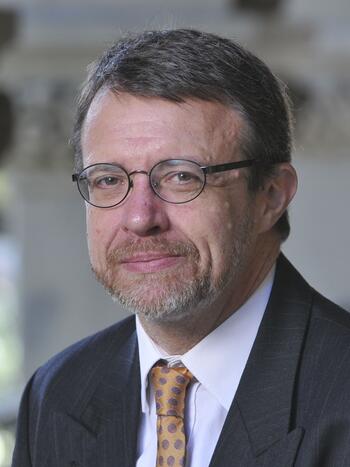
This is a time at which the global movement for universal health coverage (UHC) is under intense review.  As an isolated country which recently opened up to the world, Myanmar has endorsed the goal of achieving UHC by 2030. However, current evidence has shown that there will be significant challenges for Myanmar to achieve this target.  The Myanmar health system comprises a pluralistic mix of public and private systems both in financing and provision. It was ranked the second worst in terms of ‘overall health system performance’ by the WHO in 2000. According to World Bank (2012), the country’s out-of-pocket payment burden is one of the highest in the world, at 81% of total health expenditures, resulting in high levels of catastrophic health expenditure. About three-quarters of Myanmar’s citizens, including the poorest and most marginalized communities, find themselves with very limited access to essential health services. And too many of these same populations suffer a further burden of being pushed, or kept, in poverty because they have to pay for their health care. Recognizing the fragility of its health system, Myanmar launched some transformations in the health sector in 2011. The most significant changes were increasing the health budget four-fold since 2011, launching some health insurance programs in some areas, starting to collaborate with a diversity of actors in the health sector, and major structural changes in the Ministry of Health, Myanmar. This colloquium will reflect upon these transformations and discuss how the changes will shape Myanmar’s future health system, drawing upon comparisons with health reforms in other South East Asian countries.

Image
phyu phyu thin zaw4x4
Phyu Phyu Thin Zaw is currently a visiting scholar at the Walter H. Shorenstein Asia-Pacific Research Center (Shorenstein APARC). Her research interests are reproductive health, equity, health policies and gender issues.  

After receiving her MBBS degree from the University of Medicine (Mandalay), Phyu Phyu worked for two years at a public hospital. In 2009, she became an active researcher at the Department of Medical Research (Upper Myanmar). As a researcher, she participated in various clinical and public health researches and presented papers at national and international conferences. She was also actively involved in the welfare of underprivileged groups in Myanmar. She earned her PhD in Epidemiology from the Prince of Songkla University, Thailand in 2013. After her PhD, she continued her work at DMR (Upper Myanmar) as a research officer as well as a member of the secretariat of the Academic Committee. She was also as a field supervisor in two national surveys on HIV and RH commodities and services in Myanmar. She has also published journal articles on equity, gender differences and RH services utilization among the poor.

At APARC, Phyu Phyu will study the current trends of Myanmar health policies in general, as well as the specific sex education programs of the country. She will investigate how Myanmar/Burmese culture affects the objectives of the current sex education programs at schools based on the perceptions of adolescent students, teachers and parents.


The Philippines Conference Room

Encina Hall 3rd Floor Central

616 Serra Street

Stanford, CA 94305

Phyu Phyu Thin Zaw 2014-2015 Walter H. Shorenstein Asia-Pacific Research Center Visiting Scholar
Seminars
-

China has a relatively weak primary healthcare system as well as the highest absolute disease burden of diabetes in the world, accounting for almost one in three diabetes patients globally. An estimated 74.2% of the 114 million Chinese patients with diabetes are untreated. Extending treatment will add a heavy burden on the health care system. As the most developed Chinese city that spends a modest 5.1% GDP on health with excellent outcomes, Hong Kong may serve as a cost-effective model for strengthening primary  care for chronic disease management, with diabetes care as an example.

In this seminar, Professor Leung will discuss the health system in Hong Kong, the importance of primary care, and recent research assessing the ‘value for money’ of care for all 631,469 patients with diabetes who attended the public sector in Hong Kong between 2006 and 2013.  He argues that the publicly funded and provided integrated model of Hong Kong may serve as a useful value-for-money reference as mainland China scales up to address the national epidemic of chronic disease like diabetes.  

Image
leung4x4
Gabriel Leung became the fortieth Dean of the Li Ka Shing Faculty of Medicine in August 2013. Leung, a clinician and a respected public health authority, concurrently holds the Chair of Public Health Medicine. Previously he was Professor and Head of Community Medicine and served as Hong Kong’s first Under Secretary for Food and Health and fifth Director of the Chief Executive's Office in government.

Leung specialises in the field of public health medicine, a statutorily accredited specialty that covers the full range of public health sciences and their constituent disciplines.

Within the broad scope of public health medicine, his major interests revolve around topics that 1) have major population health impact locally, 2) where Hong Kong is a reliable and unique epidemiologic sentinel for mainland China, or 3) where Hong Kong is particularly endowed and best placed to address the fundamental science at hand. As such his research crosses the traditional boundaries of individual disciplines or fields of enquiry.

Philippines Conference Room

Encina Hall 3rd. Floor Central

616 Serra Street,

Stanford, CA 94305

Gabriel M. Leung Division of Health Economics, Policy and Management, School of Public Health, Li Ka Shing Faculty of Medicine, The University of Hong Kong, Hong Kong SAR, China
Seminars
-

Koret Distinguished Lecture Series: Lecture VI

Image
hyong o kim square
Facing increasingly daunting challenges at home and abroad, South Korea will hold its next presidential election in December 2017. At home, South Koreans are concerned about a rapidly aging society, imminent population decline, economic slowdown, and an inadequate social welfare net. Abroad, they worry about the strength of their alliance with the United States, confrontation among the countries of Northeast Asia over history and territorial issues, and military buildups in the region, including North Korea’s continuing pursuit of nuclear weapons. Thus, the 19th presidential election may prove to be the most important in Korea’s history. Yet problems with Korea’s current presidential system and candidate selection process are all too apparent. The Honorable Hyong O Kim, a former Speaker of Korea’s National Assembly who has been heavily engaged in many past presidential elections, will analyze the outlook for the 2017 presidential election and recommend ways of dealing with the weighty issues it entails.


The Koret Distinguished Lecture Series is made possible through the generous support of the Koret Foundation.

Philippines Conference Room

Encina Hall, 3rd floor

Hyong O Kim <i>former Speaker of the National Assembly, South Korea</i>
Lectures
-

The Asian Liver Center and the Asia Health Policy Program joint event.

Current Status of the Health System in Mongolia
Download pdf

Asian Liver Center

780 Welch Road, CJ 130

Palo Alto, CA

Enkhbold Sereenen Deputy Director, National Center for Communicable Disease, Ministry of Health, Mongolia
Seminars
-

Read a full event summary here

Agricultural crops are on the front lines of climate change. Can we expect increased food production in the context of global warming? Do our crops come pre-adapted to a climate not seen since the dawn of agriculture, or must we take bold measures to prepare agriculture for climate change? This talk will focus on the role that crop diversity must necessarily play in facilitating the adaptation of agricultural crops to new climates and environments. Genebanks, the “Doomsday Vault” near the North Pole, and possible new roles for plant breeders and farmers will be explored. 
 

Image
cary fowler 1

Dr. Cary Fowler is perhaps best known as the “father” of the Svalbard Global Seed Vault, which UN Secretary General Ban Ki-Moon has described as an “inspirational symbol of peace and food security for the entire humanity.” Dr. Fowler proposed creation of this Arctic facility to Norway and headed the international committee that developed the plan for its establishment by Norway. The Seed Vault provides ultimate security for more than 850,000 unique crop varieties, the raw material for all future plant breeding and crop improvement efforts. He currently chairs the International Council that oversees its operations.

In 2005 Dr. Fowler was chosen to lead the new Global Crop Diversity Trust, an international organization cosponsored by Food and Agriculture Organization of the UN (FAO) and the Consultative Group on International Agricultural Research (CGIAR). This position carried international diplomatic status. During his tenure, he built an endowment of $130 million and raised an additional $100 million (including the first major grant given for agriculture by the Gates Foundation) for programs to conserve crop diversity and make it available for plant breeding. The Trust organized a huge global project to rescue 90,000 threatened crop varieties in developing countries – the largest such effort in history - and is now engaged in an effort Dr. Fowler initiated with the Royal Botanic Gardens (Kew) to collect, conserve and pre-breed the wild relatives of 26 major crops. He oversaw development of a global information system to aid plant breeders and researchers find appropriate genetic materials from genebanks around the world. These initiatives at the Crop Trust, positioned the organization as a major path-breaking player in the global effort to adapt crops to climate change.

Prior to leading the Global Crop Diversity Trust, Dr. Fowler was Professor at the Norwegian University of Life Sciences in Ås Norway. He headed research and the Ph.D. program at the Department of International Environment and Development Studies and was a member of the university committee that allocated research funding to the different departments. 

The U.N.’s FAO recruited him in the 1990s to lead the team to produce the UN’s first global assessment of the State of the World’s Plant Genetic Resources. He was personally responsible for drafting and negotiating the first FAO Global Plan of Action on the Conservation and Sustainable Utilization of Plant Genetic Resources, formally adopted by 150 countries in 1996. Following this, Dr. Fowler served as Special Assistant to the Secretary General of the World Food Summit (twice) and represented the Consultative Group on International Agricultural Research (CGIAR/World Bank) in negotiations on the International Treaty on Plant Genetic Resources. He chaired a series of Nordic government sponsored informal meetings of 15 countries to facilitate negotiations for this treaty. And, he represented Norway on the Panel of Experts of the Convention on Biological Diversity.

Cary Fowler was born in 1949 and grew up in in Memphis, Tennessee, the son of a judge and a dietician. He studied at Simon Fraser University in Canada where he received a B.A. (honors – first class) degree. He earned his Ph.D. at Uppsala University in Sweden with a thesis on agricultural biodiversity and intellectual property rights. Dr. Fowler has lectured widely, been a visiting scholar at Stanford University and a visiting professor at the University of California – Davis. He is the author or co-author of more than 100 articles and several books including the classic Shattering: Food, Politics and the Loss of Genetic Diversity (University of Arizona Press), Unnatural Selection, Technology, Politics and Plant Evolution (Gordon & Breach Science Publishers) and The State of the World’s Plant Genetic Resources (UN-FAO).

Dr. Fowler currently serves on the boards of Rhodes College, the NY Botanical Garden Corporation, the Lillian Goldman Charitable Trust and Amy Goldman Charitable Trust. He remains associated with the Global Crop Diversity Trust as Special Advisor. He is a former member of the U.S. National Plant Genetic Resources Board (appointed by the Secretary of Agriculture) and former board and executive committee member of the International Maize and Wheat Improvement Center in Mexico. He has served as chair of the national Livestock Conservancy. He is the recipient of several awards: Right Livelihood Award, Vavilov Medal, the Heinz Award, Bette Midler’s Wind Beneath My Wings Award, the William Brown Award of the Missouri Botanical Garden and two honorary doctorates. He is one of two foreign elected members of the Russian Academy of Agricultural Sciences and is a member of the Russian Academy of Sciences. 


Dr. Cary Fowler Speaker Senior Advisor, Global Crop Diversity Trust
Symposiums
-

Anne Mills will speak about primary healthcare and the private sector in low- and middle-income Countries, drawing from her wide-ranging expertise and careful empirical evaluation of health policies in a range of countries in Asia, Africa, and other parts of the developing world. Linking themes of good health at low cost and equitable paths toward universal coverage, Professor Mills will argue how policymakers might best strengthen healthcare systems in the Asia-Pacific region, including the opportunities for health and efficiency improvements and the opportunity costs of continuing hospital-centric delivery systems. Professor Mill embodies a distinctive ability to combine broad thinking on the role of primary care with specific examples of how to harness the private sector toward public health objectives, an inter-linked theme the Asia Health Policy Program’s colloquium series and policy research. 

Image
mills anne office 094x4
Dame Anne Mills DCMGCBEFRS  Vice Director and Professor of Health Economics and Policy at the London School of Hygiene and Tropical Medicine. In 2014 she became a Fellow of the Royal Society and was made a Dame in the 2015 New Year's Honors. Her main research interests are: (1) issues concerned with the financing and organization of health care in low and middle income countries, including the impact on demand, utilization, equity and efficiency, and the private health sector; (2) the economics of tropical disease control; and (3) how to encourage the use of economic thinking and analysis in decision making. Professor Mills has been active in making economic evaluation techniques accessible to a non-specialist audience, as well as initiatives to build capacity in health economics. She chaired the Board of the Alliance for Health Policy and Systems Research, based in WHO; was a member of the Commission on Macroeconomics and Health; and co-chaired Working Group 1 of the High Level Taskforce on Innovative International Financing for Health Systems.  Dr. Mills was President of the International Health Economics Association for 2012-13, and is currently a Board member of Health Systems Global.

Philippines Conference Room

Encina Hall, 3rd Floor Central

616 Serra Street,

Stanford, CA 94305

Anne Mills Vice Director and Professor of Health Economics and Policy London School of Hygiene and Tropical Medicine
Seminars
News Type
News
Date
Paragraphs

Each year the Walter H. Shorenstein Asia-Pacific Research Center offers fellowship opportunities to recent graduates to further their research and engage with scholars at Stanford. Postdoctoral fellows have the opportunity to develop their dissertations for publication, present their research to the Stanford community, and participate in Center activities.

Fellows often go on to pursue teaching positions and advisory roles at top universities and research organizations around the world. Into the future, they remain engaged with the Center and continue to contribute to Shorenstein APARC publications, conferences and related activities.

Shorenstein APARC is pleased to welcome three postdoctoral fellows for the 2015-16 academic year:

Asia Health Policy Fellow

Image
darika profile
Darika Saingam

Saingam’s research interests are public health, substance abuse, drug policy and Southeast Asia. While at Shorenstein APARC, she will research the evolution of substance-abuse control measures and related policy in Thailand.

Saingam seeks to identify potentially effective policy directions suitable for Thailand, and other developing countries in Southeast and East Asia.

“There are a lot of lessons to be learned from substance abuse policy implementations in other countries…coping and dealing with substance abuse is a complex story and cannot respond successfully with only one strategy.”

Saingam completed her doctorate in epidemiology at the Prince of Songkla University in 2012, and has served as a researcher at the University’s epidemiology unit since, as well as a researcher at the Thailand Substance Abuse Academic Network since 2014.

Shorenstein APARC Postdoctoral Fellows

Image
chang profile
Booseung Chang

Chang’s research interests are comparative policy analysis and political institutions in East Asia, mainly South Korea and Japan. While at Shorenstein APARC, Chang will conduct research on how countries respond differently to the same external challenges, and how institutions are interpreted and applied in different ways.

His dissertation, which he seeks to build upon, is titled “The Sources of Japanese Conduct: Asymmetric Security Dependence, Role Conceptions, and the Reactive Behavior in response to U.S. Demands.” It is a qualitative comparative case study of how key U.S. allies in Asia – namely Japan and South Korea – and major powers in Europe - the United Kingdom and France responded to the U.S.-led Persian Gulf War and the Iraq War.

“East Asia is a treasure island of new theory building because some of the big challenges facing East Asia – finding a new role for Japan, denuclearization of North Korea, unification of the Korean peninsula, democratization of China and reconfiguration of its relations with the world, and development and integration of Southeast Asian countries – are truly new ones…”

Chang completed his doctorate in political science from the Paul H. Nitze School of Advanced International Studies at Johns Hopkins University in 2014.

Image
rnico profile
Nico Ravanilla

Ravanilla’s research interests are political economy and governance, comparative politics and Southeast Asia. While at Shorenstein APARC, Ravanilla will research how political selection impacts governance, and evaluate possible routes for incentivizing capable and virtuous citizens to run for public office.

His project titled “Nudging Good Politicians” looks at the case of the Sangguniang Kabataan, a governing body in the Philippines comprised of elected youth leaders. Ravanilla aims to apply his research to develop and scale up programs for politicians, especially those at the onset of their careers, which would include specialized leadership training and merit-based endorsement.

“If we could design a policy that screens-in and incentivizes competent and honest citizens to run for office, would it play a catalytic role in improving the quality of the political class, and ultimately, the quality of government?”

Ravanilla is also a Southeast Asia Research Group (SEAREG) Young Southeast Asia Fellow for 2015-16. He will complete his doctorate in political science and public policy from the University of Michigan in summer 2015.

Hero Image
hoover quad
View of Hoover Tower from Stanford's main quad. | Linda A. Cicero / Stanford News Service
All News button
1
-

Monday, May 4, 2015

4:30pm – 5:45pm Seminar
5:45pm - 6:15pm Reception


Image
mori ma
Masako Mori (Liberal Democratic Party) is in her second term as a member of House of Councillors of Japan’s Diet (roughly equivalent of U.S. Senate).  She represents Fukushima prefecture.  From December 2012 to September 2014, she served as Minister in charge of Support for Women's Empowerment and Child-Rearing, Minister of State for Consumer Affairs and Food Safety, Minister of State for Declining Birthrate and for Gender Equality in the Cabinet led by Prime Minister Shinzo Abe.  As a central policy maker in Abe Administration’s “womenomics,” she will discuss the progress on women’s empowerment in Japan and the road ahead.


Bechtel Conference Center
Encina Hall
616 Serra St., 1st floor
Stanford University
Stanford, CA 94305

Masako Mori Member of House of Councillors of Japan's Diet
Seminars
Subscribe to Asia-Pacific