Digital health technologies hold great promise to strengthen health systems in the Asia-Pacific region and provide affordable access for remote and vulnerable populations. But what is the evidence about how digital health initiatives work in practice in low resource settings? What incentive structures and provider skillsets are needed to improve health equity, health service quality, and health system resilience at an affordable cost? What is the role of APEC in promoting these innovations while also addressing concerns about data privacy and security? This colloquium explores these questions with case studies from South and Southeast Asia. Our three expert speakers discuss how APEC members are actively experimenting with “innovative digital health solutions to increase access to, and delivery of, health services,” as highlighted in the Chair's Statement of the 13th APEC High-Level Meeting on Health and the Economy.
Panelists:
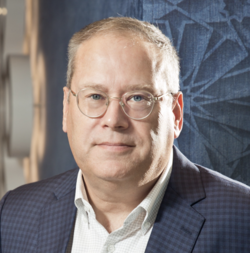
CK Cheruvettolil, Senior Strategy Officer, Digital Health and Artificial Intelligence, Bill & Melinda Gates Foundation
CK Cheruvettolil is a Senior Strategy Officer on the Gates Foundation Artificial Intelligence Taskforce. He leads the deployment of AI solutions in Asia and works closely with governments, public health agencies and health service providers to identify and fund digital technologies that could have impact. CK has been at the Gates Foundation for 12 years in a variety of roles including financing and strategy for global vaccine development and disease surveillance. Prior to joining the Gates Foundation, CK spent 8-years as a consultant to the US Centers for Disease Control and Prevention. In this capacity, he played a crucial role in designing the technical framework for the Environmental Public Health Tracking Network.
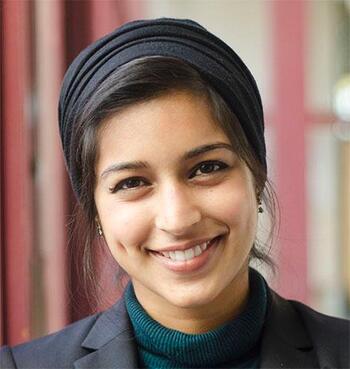
Kiran Gopal Vaska, Director of the National Health Authority of India
Mr. Kiran Gopal Vaska is an officer of the Indian Administrative Service (IAS) currently working at the National Health Authority, New Delhi. In his earlier roles, he worked at various levels of government in the areas of power, rural development, health and family welfare, education, and industrial development, among others. As Managing Director of MP Eastern Zone Power Distribution Company, he led the digitization of the company including GIS mapping of the entire power network, introduction of smart meter technologies, and more. He led the development of an online single window system and was instrumental in Madhya Pradesh state ranking among the top 5 states in Ease of Doing Business (EoDB) in India for 2016. Before joining government service, he worked in the finance industry performing risk analytics for hedge funds and banks.
Moderator:
Dr. Siyan Yi, Assistant Professor and Director of Integrated Research Program at National University of Singapore; 2011-12 Developing Asia Health Policy Fellow, Shorenstein APARC
Dr. Yi is a medical doctor and an infectious disease epidemiologist by training. He received his PhD from the School of International Health of the University of Tokyo in Japan in 2010. He was a postdoctoral fellow at the Asia Health Policy Program, Walter H. Shorenstein Asia Pacific Research Center, Stanford University from 2011-2012. He is an Assistant Professor and Director of the Integrated Research Program at Saw Swee Hock School of Public Health, National University of Singapore. He also serves as Director of KHANA Center for Population Health Research in Cambodia and Adjunct Associate Professor at Touro University California, the United States. His implementation research program focuses on developing and evaluating community-based innovative interventions for improving access to prevention, treatment, and care services for HIV/AIDS, tuberculosis, sexual and reproductive health, and maternal and child health among vulnerable and marginalized populations in Southeast Asia.
Ever since its informal beginnings in late 1989, the Asia-Pacific Economic Cooperation (APEC) forum has been a central hub for economic engagement and cooperation around the Pacific Rim, both shaping and being shaped by developments in the region over an extraordinary period of trade and economic expansion. As leaders from 21 APEC member economies prepare to meet in San Francisco in November, we will explore APEC's evolution over its three-decade-plus history to consider both its role and contributions in the Asia-Pacific region to date, as well as explore its challenges and relevance in the region going forward. Is APEC still hitting its regional economic cooperation target and how might APEC better achieve its goals?
Speakers
Aida Safinaz Allias, Minister for Economic Affairs, Embassy of Malaysia to the United States; Former APEC Senior Official for Malaysia.
Ms. Aida Safinaz Allias currently serves as the Minister (Economic Affairs) at the Embassy of Malaysia in Washington, D.C. This is her second time in D.C., her first being during her intern days at the US-Asia Institute in DC circa the mid-90s.
She has served in the Malaysian Ministry of International Trade & Industry (MITI) for 23 years, since the year 2000, starting at the Industry Wing in various capacities including with the iron & steel, E&E, and investment units, before crossing over to the Trade Wing at the Multilateral Trade Policy and Negotiations Division. Subsequently, she was posted to the Permanent Mission of Malaysia to the WTO, Geneva, Switzerland as the Economic Counsellor in charge of Services trade negotiations from 2005-2007.
Following that, she returned to HQ and was posted at the FTA Coordination Division as the Principal Assistant Director (2007-2009). From 2011-2013, she gained her first experience in APEC work at the APEC Division in MITI as the Malaysian Lead at the Committee on Trade and Investment (CTI), during which she had the opportunity to serve as the Market Access Group (MAG) Convenor.
Pursuant to that she was again posted as Minister Counsellor (Economic Affairs) at the Malaysian High Commission in New Delhi from 2013-2016. Later, she returned to MITI HQ as Director of the Services Sector Development Division before she was tasked to lead the Substantive Unit of the APEC 2020 National Secretariat in 2018 when it was established for the Malaysian hosting of APEC 2020. Ms. Allias was then promoted to Senior Director of APEC Division in 2019 (also overseeing the APEC 2020 National Secretariat, which was incidental to the successful hosting of APEC 2020). From 2019 - 2021, she also served as the Malaysian APEC Senior Official. During the hosting of APEC 2020, she led the Malaysian Delegation to the successful drafting and conclusion of many important consensus documents at APEC, the most notable being the APEC Putrajaya Vision 2040.
She received a Bachelor of Arts (B.A) in International Relations from Syracuse University, New York. She also holds a Diploma in Public Administration from the Malaysian National Public Administration Institute (INTAN).
Amb. Kurt Tong, Managing Partner, The Asia Group; Former U.S. Ambassador for APEC; Former U.S. Consul General and Chief of Mission in Hong Kong and Macau.
Ambassador Kurt Tong is Managing Partner and member of the Executive Committee at The Asia Group, where he leads consulting teams focused on Japan, China, and Hong Kong, and on East Asia regional policy matters. He also leads the firm’s innovative thought leadership programs. A leading expert in diplomacy and economic affairs in East Asia, Ambassador Tong brings thirty years of experience in the Department of State as a career Foreign Service Officer and member of the Senior Foreign Service.
Moderator
Michael Beeman, Former Assistant U.S. Trade Representative for Japan, Korea and APEC at the Office of the U.S. Trade Representative; Visiting Scholar at Shorenstein APARC.
Michael Beeman is a Visiting Scholar during 2023 at Shorenstein APARC. Previously, he served as Assistant U.S. Trade Representative for Japan, Korea, and APEC at the Office of the U.S. Trade Representative (USTR). In that role, he led the renegotiation of the U.S.-Korea Free Trade Agreement and the U.S.-Japan Trade Agreement, among other initiatives. After joining the U.S. government in 1998, he served in various other capacities for the Department of Commerce, for the U.S. Executive Director to the World Bank, and for USTR. He received his D.Phil. (Ph.D.) in Politics from the University of Oxford in 1998 and is the author of Public Policy and Economic Competition in Japan (Routledge, 2002).
The world’s dictators are no longer content with shoring up control over their own populations—they are now exploiting the openness of the free world to spread disinformation, sow discord, and suppress dissent. In Defending Democracy in an Age of Sharp Power, editors William J. Dobson, Tarek Masoud, and Christopher Walker bring together leading analysts to explain how the world’s authoritarians are attempting to erode the pillars of democratic societies—and what we can do about it. Far from offering a counsel of despair, the international contributors in this collection identify the considerable resources that democracy provides for blunting sharp power’s edge.
ABOUT THE SPEAKERS
Christopher Walker is Vice President for Studies and Analysis at the National Endowment for Democracy (NED), a private, nonprofit foundation dedicated to the growth and strengthening of democratic institutions around the world. In this capacity, he oversees the department responsible for NED’s multifaceted analytical work. He has a particular focus on authoritarian regimes and has been at the forefront of the discussion of how authoritarian powers exert influence on open systems, including in the context of sharp power. His articles have appeared in numerous publications, including the Financial Times, Wall Street Journal, New York Times, Washington Post, Foreign Affairs, Foreign Policy, and the Journal of Democracy. Walker is co-editor (with Larry Diamond and Marc Plattner) of Authoritarianism Goes Global: The Challenge to Democracy (Johns Hopkins University Press, 2016) and co-editor (with William J. Dobson and Tarek Masoud) of Defending Democracy in an Age of Sharp Power (2023, Johns Hopkins University Press).
William J. Dobson is the coeditor of the Journal of Democracy. Prior to assuming this position, he was the Chief International Editor at NPR, where he led the network’s award-winning international coverage and oversaw a team of editors and correspondents in 17 overseas bureaus and Washington, DC. Dobson is the author of The Dictator’s Learning Curve: Inside the Global Battle for Democracy, which examines the struggle between authoritarian regimes and the people who challenge them. It was selected as one of the “best books of 2012” by Foreign Affairs, the Atlantic, The Telegraph, and Prospect, and it has been translated into many languages, including Chinese, German, Japanese, and Portuguese. Dobson has published widely on international relations, democracy, and authoritarianism. His articles and essays have appeared in the New York Times, Washington Post, Financial Times, Wall Street Journal, Foreign Policy, The New Republic, Newsweek, and elsewhere. He has provided commentary and analysis on international politics for NPR, ABC, CNN, CBS, and MSNBC.
Virtual to Public. Only those with an active Stanford ID with access to Perry Conference Room in Encina Encina Hall may attend in person.
Hesham Sallam
Hesham Sallam
Virtual to Public. Only those with an active Stanford ID with access to Perry Conference Room in Encina Encina Hall may attend in person.
APARC and the Ban Ki-moon Foundation launched the dialogue initiative to spur new research and policy collaborations between experts from the United States and Asia to expedite the implementation of the SDGs by governments and non-state actors. This year’s event builds upon the success of the inaugural Tran-Pacific Sustainability Dialogue, held in Seoul in October 2022, and the continued momentum generated through its resultant regional convening, the Trans-Altai Sustainability Dialogue, which took place earlier this summer in Mongolia.
At the core of the 2023 TPSD is the pivotal theme of energy security, SDG7, which proposes to ensure access to affordable, reliable, and sustainable energy for all. The challenge of energy production, transportation, and security poses a critical barrier to a shared sustainable future. Despite ongoing progress toward sustainable energy targets on a global scale, recent data indicates that the pace of advancements is insufficient to meet the SDG7 targets by 2030 and varies significantly across different regions. The latest report from the SDG7 Indicator Custodian Agencies also finds that the policy measures required to tackle the global energy crisis, exacerbated by the war in Ukraine, continue to lag and that international public financial support for clean energy in low and middle-income countries has been declining since before the onset of the COVID-19 pandemic.
By extending a platform for leading experts to combine rigorous scientific research, policy analysis, and industry insights, I am confident in our ability to advance tangible solutions and real-world action to propel us forward in pursuit of a decarbonized world.
Gi-Wook Shin
Director, Shorenstein APARC
“Energy security is pivotal to the SDGs. Without securing clean energy, the climate crisis remains insurmountable. However, the clean energy future is under serious threat from the war in Ukraine sparked by Russia,” says Mr. Ban Ki-moon, the 8th Secretary-General of the United Nations. “In this regard, I expect the second annual Trans-Pacific Sustainability Dialogue to play an important role in convening world-renowned researchers, policymakers, and students to address energy security and advance clean energy technologies,” he adds.
In pursuit of genuine progress, the second annual TPSD will convene esteemed academics, government officials, industry experts, and leading professionals from Stanford University and across Asia. Together, they will interact in dynamic discussions that bridge multiple disciplines and climate science, exploring technological and policy solutions to expedite the transition toward a future free from fossil fuels and other unsustainable energy practices.
“As we approach the 2023 TPSD, we find ourselves at a crucial juncture, crossing the mid-point of the implementation of the UN 2030 Agenda for Sustainable Development with mixed results,” notes Gi-Wook Shin, the William J. Perry Professor of Contemporary Korea at Stanford and director of APARC. “By extending a platform for leading experts to combine rigorous scientific research, policy analysis, and industry insights, I am confident in our ability to advance tangible solutions and real-world action to propel us forward in pursuit of a decarbonized world.”
The first day of the dialogue, co-hosted by the Korea Environment Institute and the Korea Energy and Economics Institute, will convene at The Plaza Seoul. A World Leaders Session will kick off the event, headlined by Mr. Ban Ki-moon; Chairman of the State Great Hural (Parliament) of Mongolia Zandanshatar Gombojav; former U.S. Secretary of Energy and Nobel Prize Laureate in Physics, Stanford Professor Steven Chu; and Managing Director General of the Asian Development Bank Woochong Um. The following plenary sessions will examine the intersections of energy security, sustainability, and issues such as geopolitics, green technologies, and clean energy co-benefits.
The second day will be held at Ewha Womans University and hosted by Ewha’s Center for Climate/Environmental Change Prediction Research. The day’s discussion topics will include, among others, energy-efficient technologies and principles for energy security education. With the mission of empowering young leaders to drive the climate change and sustainable development agenda, the second day will offer opportunities for emerging scholars and young professionals to present their research and applied work in championing progress toward energy security.
The 2023 TPSD underscores APARC’s and the Ban Ki-moon Foundation's shared commitment to fostering ambitious action toward delivering the 2030 Agenda and its Sustainable Development Goals. APARC and our partners, co-hosts, and supporters warmly invite scholars, students, policy experts, and professionals to join us at the TPSD and get involved with our efforts to shape a sustainable and resilient future for the Asia-Pacific region and beyond.
Visit the 2023 TPSD page to register to attend the event in person and access the complete program agenda and list of speakers.
About the Walter H. Shorenstein Asia-Pacific Research Center The Walter H. Shorenstein Asia-Pacific Research Center (Shorenstein APARC) is Stanford University's esteemed institute dedicated to addressing critical issues impacting Asia and its relations with the United States. Through interdisciplinary research, education, and dialogue, APARC seeks to shape innovative policy solutions and enhance collaboration among countries in the Asia-Pacific region. For more information, visit aparc.stanford.edu.
About the Ban Ki-moon Foundation For a Better Future The Ban Ki-moon Foundation For a Better Future upholds the legacy and vision of Ban Ki-moon, the 8th Secretary-General of the United Nations. Guided by the principles of unification, communication, co-existence, and dedication, the Foundation works tirelessly towards achieving peace, security, development, and human rights. Collaborating with international organizations and stakeholders, the Foundation actively supports the UN's Sustainable Development Goals and the 2050 carbon net-zero target set by the Paris Climate Accord. For more information, visit eng.bf4bf.or.kr.
Contact
For further information on the Trans-Pacific Sustainability Dialogue, contact Cheryll Alipio, Shorenstein APARC’s Associate Director for Program and Policy at calipio@stanford.edu.
Read More
News
Inaugural Trans-Pacific Sustainability Dialogue Spotlights Climate Finance Mobilization and Green Innovation Strategies
Co-organized by Stanford’s Walter H. Shorenstein Asia-Pacific Research Center and the Ban Ki-moon Foundation for a Better Future, the inaugural Trans-Pacific Sustainability Dialogue brought together a new network of social science researchers, scientists, policymakers, and practitioners from Stanford University and across the Asia-Pacific region to accelerate action on the United Nations-adopted Sustainable Development Goals (SDGs).
The second annual convening of the Trans-Pacific Sustainability Dialogue will gather social science researchers and scientists from Stanford University and across the Asia-Pacific region alongside young leaders, policymakers, and practitioners, to expedite energy security solutions, investment, and policy support. Held in Seoul, Republic of Korea, on September 12-14, 2023, the dialogue features award-winning actor and director Cha In-pyo as honorary ambassador.
AHPP 2023-24 Colloquium series, “Technology, Trust, and Healthy Aging”
Patient trust is an important driver of the demand for healthcare. But it may also impact supply: doctors who realize that patients may not trust them may adjust their behavior in response. We assemble a large dataset that assesses clinical performance using standardized-patients (akin to audit studies in economics) in low-income countries to investigate this possibility; most of these data are on healthcare providers who practice in the private sector on a fee-for-service basis.
We establish that patients receive low quality of care, with a generous definition suggesting that fewer than 50% of cases are correctly managed, and between 70% and 90% of expenditures are medically unnecessary. Strikingly, and in contrast to the literature suggesting that the main problem with fee-for-service provision is over-treatment, the majority of these unnecessary expenditures are incurred because patients are incorrectly rather than over-treated.
We then rule out two plausible explanations for low quality of care: low levels of medical knowledge and low market incentives to invest effort. In our data, there are many healthcare providers who know how to correctly treat the patient and could substantially increase their revenue by doing so given the price-quality gradients we estimate, but still treat the patient incorrectly.
A model of the patient-provider relationship in which patients have incomplete information about the quality of providers generates predictions consistent with our findings. The theory additionally suggests that issuing a credible signal of quality should raise the average quality of care among providers, even if their underlying ability remains unchanged.
We assess this prediction through an evaluation of a highly publicized training program with informal healthcare providers in West Bengal, India. The program has no impact on knowledge, yet substantially raises the quality of care, leading to an increase in the likelihood of correct treatment, a 19% decline in unnecessary expenditures for patients and a 9% increase in revenues for providers. We conclude that low trust undermines clinical performance in an economically and medically significant manner.
Image
Reshmaan Hussam is an assistant professor of business administration in the Business, Government and International Economy Unit at Harvard University's Business School, a Faculty Research Fellow at the National Bureau of Economic Research (NBER), and a faculty affiliate at the Abdul Latif Jameel Poverty Action Lab (J-PAL) and the Bureau for Research and Economic Analysis of Development (BREAD).
Her research explores questions at the intersection of development and behavioral economics, with research in three areas: migration, health, and finance. Her most recent work engages refugee populations including the Rohingya in Bangladesh, examining the psychosocial value of employment in contexts of mass unemployment, the role of home in migration decision-making, and refugee preferences for repatriation, integration, and resettlement. In her work in health, which involves field experiments across South Asia, she considers the puzzle of the ubiquitously low adoption of low-cost, high-return goods, behaviors, and technologies in the developing world, exploring the role of learning and habit formation in behavior change. Her work in finance explores how to identify high-return microentrepreneurs using local community knowledge in India and how to increase credit access and returns to capital among refugee communities in Uganda.
Prior to joining HBS, Professor Hussam was a postdoctoral fellow at the Economic Growth Center at Yale University. She received her SB and PhD in economics from MIT.
This announcement was updated on October 6, 2023, to reflect the addition of two new fellowship offerings focused on contemporary Taiwan.
The Walter H. Shorenstein Asia-Pacific Research Center (APARC) is pleased to invite applications for a suite of fellowships in contemporary Asia studies to begin fall quarter 2024.
The Center offers postdoctoral fellowships that promote multidisciplinary research on Asia-focused health policy; contemporary Japan; contemporary Asia broadly defined; postdoctoral fellowships and visiting scholar positions as part of the new Stanford Next Asia Policy Lab; and a fellowship for experts on Southeast Asia. Learn more about each opportunity and its eligibility and specific application requirements:
Asia Health Policy Postdoctoral Fellowship
Hosted by the Asia Health Policy Program at APARC, the fellowship is awarded annually to one recent PhD undertaking original research on contemporary health or healthcare policy of high relevance to countries in the Asia-Pacific region, especially developing countries. Appointments are for one year beginning in fall quarter 2024. The application deadline is December 1, 2023.
Hosted by the Japan Program at APARC, the fellowship supports research on contemporary Japan in a broad range of disciplines including political science, economics, sociology, law, policy studies, and international relations. Appointments are for one year beginning in fall quarter 2024. The application deadline is December 1, 2023.
Shorenstein Postdoctoral Fellowship on Contemporary Asia
APARC offers two postdoctoral fellowship positions to junior scholars for research and writing on contemporary Asia. The primary research areas focus on political, economic, or social change in the Asia-Pacific region (including Northeast, Southeast, and South Asia), or international relations and international political economy in the region. Appointments are for one year beginning in fall quarter 2024. The application deadline is December 1, 2023.
The Stanford Next Asia Policy Lab (SNAPL) is a new initiative committed to addressing Asia's emergent social, cultural, economic, and political challenges. Housed at Shorenstein APARC, the lab is led by Center and Korea Program Director Gi-Wook Shin.
SNAPL is offering one or two postdoctoral fellowships (two years in length) to begin in fall quarter 2024. There are four fellowship tracks and applicants can apply for any of them: "Talent Flows and Development,” "Nationalism and Racism," "U.S.-Asia Relations," and "Democratic Crisis and Reform." Each postdoctoral fellow will lead one thematic research group and support student programming for SNAPL alongside general research and publication activities. The deadline to apply for fall quarter 2024 admission is December 1, 2023.
SNAPL is also offering three visiting fellow positions to researchers and professionals from Asia with a PhD or a substantial record of achievement related to the Lab's four research themes. One of these three positions will be specifically dedicated to research on the Philippines. Visiting scholar appointments are for one year, and the deadline to apply for fall quarter 2024 admission is March 1, 2024.
Postdoctoral and Visiting Scholar Positions on Contemporary Taiwan
APARC invites applications for a postdoctoral fellowship and a visiting scholar position on contemporary Taiwan to begin in fall quarter 2024. We welcome applications from candidates studying issues related to how Taiwan can meet the challenges and opportunities of economic, social, technological, environmental, and institutional adaptation in the coming decades, using a variety of disciplines including the social sciences, public policy, and business.
The application deadline for fall quarter admission to the postdoctoral fellowship is January 1, 2024. The application deadline for fall quarter admission to the visiting scholar position is March 1, 2024.
Lee Kong Chian NUS-Stanford Fellowship on Southeast Asia
The Lee Kong Chian National University of Singapore-Stanford (LKC NUS-Stanford) Fellowship on Southeast Asia provides experts on Southeast Asia the opportunity to conduct research on or related to contemporary Southeast Asia. Fellows spend three to four months at both institutions. At Stanford, APARC's Southeast Asia Program hosts the fellowship. Appointments will begin and end within the period from September 1, 2024 to May 31, 2025. The application deadline is January 26, 2024.
New Stanford Next Asia Policy Lab to Tackle Emerging Challenges in Asia
Housed within the Walter H. Shorenstein Asia-Pacific Research Center, the lab will pioneer evidence-based policy research to help Asian nations forge pathways to a future characterized by social, cultural, economic, and political maturity and advance U.S.-Asia dialogue.
The Center offers a suite of fellowships for Asia researchers to begin in fall quarter 2024. These include postdoctoral fellowships on Asia-focused health policy, contemporary Japan, and the Asia-Pacific region, postdoctoral fellowships and visiting scholar positions with the Stanford Next Asia Policy Lab, and fellowships for experts on Southeast Asia.
Military tensions between China and Taiwan rise, and the U.S. government informs the Japanese government that it wants to deploy U.S. forces in Japan to defend Taiwan. At the same time, China sends a message through various channels that it will not touch Japan at all if it does not cooperate with the U.S. military and remains neutral.
In the event of a Taiwan contingency, It is highly likely that military conflict between China and Taiwan will lead to a decision by the U.S. military to intervene, followed by the deployment of fighter jets and naval vessels from U.S. military bases in Japan. In the process, Japan will be forced to make a major choice.
If U.S. forces are deployed to the area around Taiwan, U.S. bases located in Japan, including Okinawa, will serve as bases. Under the so-called “Far East Clause” of Article 6 of the Japan-U.S. Security Treaty, U.S. forces can use Japanese facilities and areas “to contribute to the maintenance of international peace and security in the Far East.” However, the deployment of U.S. forces under the Far East Clause requires prior consultation with the Japanese side. Nevertheless, there is little chance that the Japanese government will turn the US down for fear of a confrontation with China. If Japan were to refuse at the last minute, the trust between Japan and the U.S. would be damaged, and the Japan-U.S. Security Treaty regime would effectively collapse. As a result, Japan would have no choice but to confront China alone. This would be a bad move that would only be a temporary fix.
However, some officials from the Ministry of Defense and the Self-Defense Forces are concerned about how the public would react. From China's point of view, this is a point to take advantage of, and by communicating that "Japan will be safe if it declares its neutrality," it may be able to divide Japan, the U.S., and Taiwan.
The phrase "a Taiwan contingency is a Japan contingency" was introduced by former Prime Minister Shinzo Abe at a symposium sponsored by a Taiwanese think tank in 2006. This comment was followed by the statement, "It is also a contingency for the Japan-U.S. alliance." How will Japanese public opinion react to the "ultimate choice" in the face of a Taiwan contingency?
An interesting study, part of the Stanford Japan Barometer, conducted by Stanford University sociologist Kiyoteru Tsutsui and his colleagues examined this issue using a method called conjoint experiments.
The subjects were presented with two scenarios: "In the event of an emergency in Taiwan, under what circumstances would you be more likely to support military involvement by the Self-Defense Forces?" The subjects were presented with two scenarios and asked to choose the one in which they would be more likely to support Japan's military involvement.
In the event of a Taiwan contingency, the researchers presented three options in each of five categories: "Chinese actions," "U.S. actions," "Chinese actions toward Japan," "U.S. actions toward Japan," and "international community reaction. In an experiment in which each of more than 7,000 subjects was asked to answer which of two scenarios in which they were randomly combined would support Japan's military involvement in the event of an emergency in Taiwan. The series of scenarios reflect the opinions of security experts who participated in simulations of a Taiwan contingency conducted by various agencies in the United States. The results show whether support for Japan's military involvement strengthened or weakened when each scenario was presented.
The survey results indicate that Japan is hesitant to fight China but would respond to a request from the U.S. military for logistical support.
One of these scenarios is precisely related to the aforementioned issue. When China promised Japan that it would not touch Japanese territory, including the Senkaku Islands, support for Japan's military involvement weakened. On the other hand, if China landed on and occupied the Senkaku Islands at the same time as its invasion of Taiwan, support for Japan's military involvement increased. The result is clear: "Japanese people place the highest priority on the impact on Japanese territory," said Professor Tsutsui.
The survey results indicate that Japan is hesitant to fight China but would respond to a request from the U.S. military for logistical support. How will Japan be involved in a Taiwan contingency? Public opinion is not yet settled.
In reality, many experts believe that if U.S. forces deployed from bases in Japan clash with Chinese forces, the next request will be for cover by the Self-Defense Forces. It is quite a narrow pass to say that they will not participate in combat and only provide logistical support.
As for why Japan should get involved in a Taiwan contingency, the debate tends to settle on supply chain issues, particularly in the area of semiconductors, or geopolitical importance. Many Japanese, however, may feel that such reasons alone are not sufficient to make a decision to put the lives of Self-Defense Force personnel on the line and the residents of the Nansei Islands at risk. The supply chains that Japanese firms have built in East Asia, including China, would also be severely damaged. In addition, Chinese nationalism would flare up violently if it were to fight Japan again. The cost of fighting China as a neighbor is extremely high for Japan.
Where Did You Get the Money To Pay for the Succession?
The issue of money is also unavoidable. In order to prepare for contingencies, we must also consider financing the cost of war.
If the armed conflict with China is prolonged, huge fiscal outlays will be required not only for the continuation of the war but also for the repair of domestic infrastructure. In addition to supplementary budgets, it will be necessary to issue government bonds.
However, Japanese financial institutions alone may not be able to digest the Japanese Government Bonds. For this reason, a simulation by the Japan Strategy Research Forum this year called for the direct underwriting of Japanese Government Bonds by the Bank of Japan.
Junichi Kanda, a Bank of Japan alumnus in the House of Representatives who served as finance minister, opposed this proposal, saying, "It would cause a sudden loss of confidence in Japan's finances and the yen, leading to a significant depreciation of the yen to over 300 yen to the dollar and an increase in interest rates to over 10%. Such an extreme depreciation of the yen would also hinder the purchase of equipment and materials in foreign currency.
Instead, Kanda suggested issuing foreign currency-denominated government bonds for foreigners. However, since there has been no such issuance since 1988, it is necessary to gradually issue these bonds from normal times to develop investors, he said.
The prerequisite is that confidence in Japan's finances is secured. Japan needs to maintain fiscal discipline on a regular basis in case of emergency," said Kanda. Even in peacetime, there is a strong argument in Japan for using government bonds as a source of funds for increased defense spending. If the government cannot even raise taxes, China will question its seriousness. More open and substantive discussions are needed if the Japanese people are to be convinced to accept the costs of a Taiwan contingency.
Kiyoteru Tsutsui
Senior Fellow at FSI; Professor of Sociology; Henri H. and Tomoye Takahashi Professor and Senior Fellow in Japanese Studies at APARC; Director of the Japan Program; Deputy Director, APARC
The Japanese Public Supports Women’s Leadership More Than Japan’s Global Gender Ranking Suggests
Contrary to current levels of women’s under-representation in leadership positions in Japan, the Stanford Japan Barometer, a new periodic public opinion survey co-developed by Stanford sociologist Kiyoteru Tsutsui and Dartmouth College political scientist Charles Crabtree, finds that the Japanese public favors women for national legislature and corporate board member positions.
The Japanese Public Broadly Supports Legalizing Dual-Surname Option for Married Couples
Reflecting complex gender politics at play in Japan, the Stanford Japan Barometer, a new periodic public opinion survey co-developed by Stanford sociologist Kiyoteru Tsutsui and Dartmouth College political scientist Charles Crabtree, finds that the Japanese public largely supports a legal change to allow married couples to keep separate surnames.
Most Japanese Support Same-Sex Marriage, New Public Opinion Survey Finds
The initial set of results of the Stanford Japan Barometer, a new periodic public opinion survey co-developed by Stanford sociologist Kiyoteru Tsutsui and Dartmouth College political scientist Charles Crabtree, indicate that most Japanese are in favor of recognizing same-sex unions and reveal how framing can influence the public attitude toward LGBTQ communities.
The Trans-Pacific Sustainability Dialogue convenes social science researchers and scientists from Stanford University and across the Asia-Pacific region, alongside student leaders, policymakers, and practitioners, to accelerate progress on achieving the United Nations-adopted 2030 Agenda for Sustainable Development. The Dialogue aims to generate new research and policy partnerships to expedite the implementation of the Agenda's underlying framework of 17 Sustainable Development Goals.
The Dialogue on Energy Security will be held in Seoul, South Korea, on September 12 to 14, 2023 Korea Standard Time, and is free and open to the public.
Hosted by the Ban Ki-moon Foundation For a Better Future
Master of Ceremonies: Hannah Jun, Assistant Professor at the Graduate School of International Studies, Ewha Womans University
Welcoming Dinner
18:00–18:10 Welcoming of Guests
18:10–18:20 Welcome Remarks Ban Ki-moon, The 8th Secretary-General of the United Nations and Chairman of the Ban Ki-moon Foundation For a Better Future
18:20–18:35 Congratulatory Remarks Park Jin,Minister of Foreign Affairs, Republic of Korea Han Wha-jin, Minister of Environment, Republic of Korea Cha In-pyo, Actor, Director, and Honorary Ambassador of the Trans-Pacific Sustainability Dialogue
18:35-18:40 Toast Gombojav Zandanshatar, Chairman, State Great Hural of Mongolia Kim Hwang Sik, Former Prime Minister, Republic of Korea
18:40–19:30 Dinner
19:30-19:35 Toast Eun Mee Kim, President of Ewha Womans University, Professor at the Graduate School of International Studies, and Director of the Ewha Global Health Institute for Girls and Women, Ewha Womans University Steven Chu, William R. Kenan Jr. Professor of Physics, of Molecular and Cellular Physiology, and of Energy Science and Engineering at Stanford University; former U.S. Secretary of Energy; and 1997 Nobel Prize Laureate in Physics
Grand Ballroom, The Plaza Seoul 119 Sogong-Ro, Jung-gu, Seoul
Co-hosted by the Korea Environment Institute (KEI), the Korea Energy and Economics Institute (KEEI), and the Korea Environmental Industry & Technology Institute (KEITI)
Master of Ceremonies: Hannah Jun, Assistant Professor at the Graduate School of International Studies, Ewha Womans University
8:30-9:00 Registration
Opening Session
9:00–9:10 Welcome Remarks Ban Ki-moon, The 8th Secretary-General of the United Nations and Chairman of the Ban Ki-moon Foundation For a Better Future Gi-Wook Shin, Director of the Walter H. Shorenstein Asia-Pacific Research Center and Korea Program, Professor of Sociology, William J. Perry Professor of Contemporary Korea, and Senior Fellow at the Freeman Spogli Institute for International Studies, Stanford University
9:10–9:30 Congratulatory Remarks Kim Jin-pyo, Speaker of the National Assembly, Republic of Korea Cha In-pyo, Actor, Director, and Honorary Ambassador of the Trans-Pacific Sustainability Dialogue Teruo Fujii, President of the University of Tokyo
Plenary 1: World Leaders Session
9:30–9:35 Moderator Gi-Wook Shin, Director of the Walter H. Shorenstein Asia-Pacific Research Center and Korea Program, Professor of Sociology, William J. Perry Professor of Contemporary Korea, and Senior Fellow at the Freeman Spogli Institute for International Studies, Stanford University
9:35–10:15 Keynote Speakers Ban Ki-moon, The 8th Secretary-General of the United Nations and Chairman of the Ban Ki-moon Foundation For a Better Future Zandanshatar Gombojav, Chairman of the State Great Hural of Mongolia Steven Chu, William R. Kenan Jr. Professor of Physics, of Molecular and Cellular Physiology, and of Energy Science and Engineering at Stanford University; former U.S. Secretary of Energy; and 1997 Nobel Prize Laureate in Physics Woochong Um, Managing Director General of the Asian Development Bank
10:15–10:45 Q&A
10:45–11:00 Coffee and Tea Break
Plenary 2: Global Picture for Energy Security Organized by the Ban Ki-moon Foundation For a Better and Korea Environment Institute
11:00–11:05 Moderator Chang Hoon Lee, President of the Korea Environment Institute
11:05–11:15 Keynote Speaker Hyun Jae Kim, President, Korea Energy Economics Institute, Republic of Korea
11:10–11:45 Panelists Sung Jin Kang, Director, Global Energy Technology Policy Professionals Program, Korea University Jong Soon Im, Executive Vice President, Korea Gas Corporation (KOGAS) Oyun Sanjaasuren, Director of External Affairs, Green Climate Fund
11:45–12:15 Q&A
12:30–14:00 Luncheon Hosted by the Korea Energy and Economics Institute (KEEI)
Plenary 3: Geopolitics and Energy Sustainability Organized by the Walter H. Shorenstein Asia-Pacific Research Center of Stanford University
14:00–14:05 Moderator Joon-woo Park, Former Ambassador of the Republic of Korea to the European Union, Belgium, and Singapore, former Senior Secretary to the President for Political Affairs at the Blue House, former Chairman of The Sejong Institute, former Visiting Professor at the Institute for State Governance at Yonsei University, and former Koret Fellow at the Walter H. Shorenstein Asia-Pacific Research Center at Stanford University
14:05–14:45 Panelists Thomas Fingar, Fellow at the Walter H. Shorenstein Asia-Pacific Research Center at Stanford University, former U.S. Department of State Assistant Secretary of the Bureau of Intelligence and Research, Deputy Assistant Secretary for Analysis, Director of the Office of Analysis for East Asia and the Pacific, and Chief of the China Division, former Deputy Director of National Intelligence for Analysis, and Chairman of the National Intelligence Council Undraa Agvaanluvsan, President of the Mitchell Foundation for Arts and Sciences, President of the Green Building Council of Mongolia, Co-Chair of the Mongolia Chapter of the Women Corporate Directors, Affiliate at the Center for International Security and Cooperation at Stanford University, and former Member of Parliament of Mongolia Gita Wirjawan, Research Scholar at the Walter H. Shorenstein Asia-Pacific Research Center at Stanford University, former Minister of Trade and former Chairman of the Investment Coordinating Board of the Republic of Indonesia, and Founder of Ancora Group and Ancora Foundation Scot Marciel, Oksenberg-Rohlen Fellow at the Walter H. Shorenstein Asia-Pacific Research Center at Stanford University and former U.S. Ambassador to Myanmar, Indonesia, and the Association of Southeast Asian Nations
14:45–15:15 Q&A
15:15–15:30 Coffee and Tea Break
Plenary 4: Energy Security Through Clean Energy Solutions in Asia and the Pacific Organized by the Asian Development Bank (ADB)
15:30–15:35 Moderator Kee-Yung Nam, Principal Energy Economist, Energy Sector Group, Sectors Group of the Asian Development Bank
15:35–16:25 Panelists Hongpeng Liu, Director, Energy Division, United Nations Economic and Social Commission for Asia and the Pacific (UNESCAP) Joel Abraham, Chief Executive Officer, Fijian Competition and Consumer Commission Priyantha D.C. Wijayatunga, Senior Director, Energy Sector Group, Sectors Group of the Asian Development Bank
16:25–16:45 Q&A
16:45–17:00 Coffee and Tea Break
Plenary 5: Clean Energy and Co-Benefits Organized by the Ministry of Foreign Affairs of the Republic of Korea
17:00–17:05 Moderator Hyoeun Jenny Kim, Ambassador and Deputy Minister for Climate Change, Ministry of Foreign Affairs of the Republic of Korea
17:05–17:45 Panelists Nabeel Munir, Ambassador of the Islamic Republic of Pakistan to the Republic of Korea Tamara Mawhinney, Ambassador of Canada to the Republic of Korea Hamza Ali Malik, Director of Macroeconomic Policy and Financing, Development Division, United Nations Economic and Social Commission for Asia and the Pacific (UNESCAP) Tae Yong Jung, Professor of Sustainable Development at the Graduate School of International Studies, Yonsei University
17:45–18:15 Q&A
Reception and Dinner This is an invitation-only dinner.
Maple Hall The Plaza Seoul 119 Sogong-Ro, Jung-gu, Seoul
Hosted by the Walter H. Shorenstein Asia-Pacific Research Center of Stanford University
18:30–19:00 Reception
19:00–19:05 Welcome Remarks Gi-Wook Shin, Director of the Walter H. Shorenstein Asia-Pacific Research Center and Korea Program, Professor of Sociology, William J. Perry Professor of Contemporary Korea, and Senior Fellow at the Freeman Spogli Institute for International Studies, Stanford University
19:05-19:15 Congratulatory Remarks Kim Hyong-O, Former Speaker of the National Assembly, Republic of Korea, and former Visiting Scholar at the Walter H. Shorenstein Asia-Pacific Research Center, Stanford University Jae Youl Kim, Vice President of Stanford Club Korea, President of Global Strategy Group at Samsung Global Research, and President of the International Skating Union
19:15–19:30 Keynote Speaker Steven Chu, William R. Kenan Jr. Professor of Physics, of Molecular and Cellular Physiology, and of Energy Science and Engineering at Stanford University; former U.S. Secretary of Energy; and 1997 Nobel Prize Laureate in Physics
19:00–20:30 Dinner
Lee Sam Bong-Hall, Ewha Campus Complex, Level B4 Ewha Womans University 52 Ewhayeodae-gil, Seodaemun-gu, Seoul
Hosted by Center for Climate/Environmental Change Prediction Research at Ewha Womans University
Master of Ceremonies: Hannah Jun, Assistant Professor at the Graduate School of International Studies, Ewha Womans University
8:30-9:00 Registration
Opening Session
9:00–9:30 Welcome Remarks Ban Ki-moon, The 8th Secretary-General of the United Nations and Chairman of the Ban Ki-moon Foundation For a Better Future Eun Mee Kim, President of Ewha Womans University, Professor at the Graduate School of International Studies, and Director of the Ewha Global Health Institute for Girls and Women, Ewha Womans University
Plenary 6: Pursuit of Energy Security With Energy Efficient Technologies and Solutions Organized by Samsung Electronics America
9:30–9:35 Moderator Celeste Crystal, Sustainability Lead for Device Solutions America Memory, Samsung Electronics America
9:35–10:35 Panelists Ken Haig, Head of Energy and Environmental Policy, APAC, Amazon Web Services Ji-Hee Son, Director of the Center for Institutional Innovation, National Institute of Green Technology Marijn Vervoorn,Director of ESG Sustainability Strategy, ASML
10:35–10:45 Q&A
10:45–11:00 Coffee and Tea Break
Plenary 7: The Political Economy of Renewable Energy and Energy Security Organized by the Walter H. Shorenstein Asia-Pacific Research Center of Stanford University
11:00–11:05 Moderator Kiyoteru Tsutsui, Deputy Director of the Walter H. Shorenstein Asia-Pacific Research Center and Director of the Japan Program, Faculty Co-Director of the Center for Human Rights and International Justice, Professor of Sociology, and Senior Fellow at the Freeman Spogli Institute for International Studies, Stanford University
11:05–11:45 Panelists Jin Hur, Associate Professor of Climate and Energy Systems Engineering at Ewha Womans University; Member of the Renewable Energy Policy Council at the Ministry of Trade, Industry and Energy; Committee Member at the Korea Power Exchange; and Senior Member of IEEE Power and Energy Society Naoko Ishii, Executive Vice President, Professor at the Institute for Future Initiatives, and Director of the Center for Global Commons at the University of Tokyo; former CEO and Chairperson of the Global Environment Facility; former Deputy Vice Minister of Finance of Japan; and former Country Director of Sri Lanka at the World Bank Hardy T.S. Kagimoto, Chairman of the Board of PowerX, Inc. and Founder, Chairman, and CEO of Healios Yao Lixia, Senior Research Fellow and Head of Energy Security Division at the Energy Studies Institute of the National University of Singapore
11:45–12:15 Q&A
12:30–14:00 Luncheon Hosted by Ewha Womans University
Plenary 8: Environment and Energy Security: Dialogue With the Future Generation Organized by the Graduate School of International Studies at Yonsei University
14:00–14:05 Moderator Tae Yong Jung, Professor of Sustainable Development at the Graduate School of International Studies, Yonsei University
14:05–14:45 Panelists Haksik Yoo, Research Fellow, Korea Energy Economics Institute, Republic of Korea Sang Cheol Kim, Stanford Energy Postdoctoral Fellow at the Precourt Institute for Energy and Stanford Emerging Technology Review (SETR) Fellow at the Hoover Institution, Stanford University Kenji Kimura, Senior Researcher, Institute of Energy Economics, Japan Prem Kumar Pokhrel, PhD Candidate, Global Energy Technology Policy Professionals Program, Korea University
14:45–15:15 Q&A
15:15–15:30 Coffee and Tea Break
Plenary 9: Education and Energy Security: Dialogue With the Future Generation Organized by the Center for Climate/Environmental Change Prediction Research at Ewha Womans University
15:30–15:35 Moderator Yong-Sang Choi, Director of the Center for Climate/Environmental Change Prediction Research, Ewha Womans University
15:35–16:25 Panelists Jeonghoon Shin,Director General and Head of Future Grid Research Center, Korea Electric Power Corporation Research Institute Baehyun Min, Associate Professor of Climate and Energy Systems Engineering, Ewha Womans University Dong Joo Kang, Director of the Research Institute at HAEZOOM, Inc. SungUn Chang, CEO of YOLK Solar Energy Nuri Bae, PhD Student, Graduate School of Environmental Studies, Seoul National University
16:25–16:45 Q&A
16:45–17:00 Coffee and Tea Break
Plenary 10: Equality and Energy Security: Dialogue With the Future Generation Organized by the Walter H. Shorenstein Asia-Pacific Research Center of Stanford University
17:00–17:05 Moderator Cheryll Alipio, Associate Director for Program and Policy at the Walter H. Shorenstein Asia-Pacific Research Center, Stanford University
17:05–17:45 Panelists Sanghun Lee, Assistant Professor of Climate and Energy Systems Engineering at Ewha Womans University Nomin Badam, Former Renewable Energy Coordinator at the Ministry of Energy of Mongolia and Project Analyst, Newcom Group Ekaterina Azarova, PhD Candidate in International Business, Graduate School of International Studies, Ewha Womans University Niña Alexandria R. Agustin, Campaign and Advocacy Officer at the Institute for Climate and Sustainable Cities, Philippines
17:45–18:15 Q&A
Closing Session
18:15–18:30 Closing Remarks Kim Bong-hyun, Former Ambassador of the Republic of Korea to Australia, former President of Jeju Peace Institute, and Advisor to Mr. Ban Ki-moon, the 8th Secretary-General of the United Nations at the Ban Ki-moon Foundation For a Better Future Kiyoteru Tsutsui, Deputy Director of the Walter H. Shorenstein Asia-Pacific Research Center and Director of the Japan Program, Faculty Co-Director of the Center for Human Rights and International Justice, Professor of Sociology, and Senior Fellow at the Freeman Spogli Institute for International Studies, Stanford University Yong-Sang Choi, Director of the Center for Climate/Environmental Change Prediction Research and Professor of Climate and Energy Systems Engineering, Ewha Womans University
Day 1: September 13, 8:30 a.m. - 6:15 p.m. KST | The Grand Ballroom, The Plaza Hotel, Seoul Day 2: September 14, 8:30 a.m. - 6:30 p.m. KST | ECC Lee Sam Bong-Hall, Ewha Womans University
Opening remarks Zandanshatar,G Chairman of the State Great Hural of Mongolia Ban Ki-moon The 8th Secretary-General of the United Nations and Chairman of the Ban Ki-moon Foundation for a Better Future Kim Young-joo Deputy Speaker of the National Assembly of the Republic of Korea Gi-Wook Shin Professor of Sociology, Director of the Walter H. Shorenstein Asia-Pacific Research Center, William J. Perry Professor of Contemporary Korea, Director of the Korean Studies Program, Senior Fellow, Freeman Spogli Institute for International Studies, Stanford University
Policy Papers Eun Mee Kim Empowering women through higher education: Women in STEM in the digital transformation era Bulgantuya,Kh Women’s Leadership and Sustainable Development Undraa, A. Sustainable Development and Gender Equality: Role of Organizations Odontuya, S. Gender Equality in the Labor Market Dorjkhand, T. Gender Equality and Sustainable Development Elaine Conkievich Women’s Empowerment and Leadership Mark Koenig Gender Equality in the Labor Market
Academic Articles Gender Studies Christine Min Wotipka Persistent Gaps: Global and National Perspectives on Gender and Higher Education Begz, N. Issues of Human Development and Maturity in Sustainable Development Ankhbayar, B. Christine Min Wotipka, Risa Ninomiya, Jieun Song. Development of Gender Equality Evaluation Index in Higher Education Institutions Maznah Mohamad Gender-Based Violence and Human Rights Gulmira Kudaiberdieva Quality and Gender Inclusive Education in the Kyrgyz Republic Ariunaa,Kh Factors Influencing Career Choices Enkhtogtokh,A., Sanjaabadam,S., Bayarmaa,B. Sustainable Development and Education for Sustainable Development Policy Alignment and Implementation Study (a Case Study of Mongolia)
International Trends for Altai Regional Research Enkhbat,A Further Development of “Altai Studies” Aynur Ibrahimova The Gender Problem in the Context of the Epic “Koroglu” 70 İlhan Şahin Studies on the Altai People in the Historical Process: Past, Present and Future 73 Abdrasul İsakov Native Americas (Na-Dene) are a Part of the Altai Civilization Kürşat Yildirim An Evaluation of Studies on Mongolian History in Türkiye
Student Papers Tsolmon,G., Namuun,U., Yesui,B. Applications of Artificial Intelligence Tools to Mongolian Higher Education Sector Enkhtsetseg,T. Can Partnership Help English Teachers to Improve the Quality of EFL Curriculum? Marlaa,B., Mandukhai,B., Dulguun,N. Research on Accessible Infrastructure for People with Disabilities: a Case Study of Mongolia Misheel,A., Binderya,B., Temulun,S., Emujin,A., Erdenechuluun,B. Studying Water Usage Pattern for Residents in Ulaanbaatar, Mongolia Vilina Engheepi. Deconstructing Water Scarcity in Water-Rich Himalayan Region: A case study of Sikkim, India Tuulsaikhan,A. Contribution of “Ulaanbaatar Railway” to the Sustainable Development of Mongolia Supplied Community Participation Tuvshintugs,A., Gunbileg,B. Article 6.2 of the Constitution of Mongolia is the Basis for the Efficient Use of Natural Resources and the Development of Its Sustainable Management Udval,O., Temuge,G. Umyete “Impartiality” Mongolian Red Cross Rotary Club
Stanford University's Walter H. Shorenstein Asia-Pacific Research Center (APARC) is pleased to unveil the Stanford Next Asia Policy Lab (SNAPL), an interdisciplinary initiative committed to producing evidence-based, actionable policy research to facilitate structural reform and propel Asia toward a future defined by growth, maturity, and innovation. Based at APARC and led by sociologist Gi-Wook Shin, the William J. Perry Professor of Contemporary Korea and a senior fellow at the Freeman Spogli Institute for International Studies, SNAPL seeks to tackle pressing social, cultural, economic, and political challenges facing Asian countries, including aging populations, escalating inequality, brain drain, environmental threats, and institutional deficiencies in areas like the rule of law and cultural intolerance.
"SNAPL represents a significant milestone in our commitment to building research networks that engage academics, policymakers, business leaders, and civil society organizations interested in regional and global perspectives on contemporary Asia," said Shin, who is also the director of APARC and the Korea Program within APARC. “Through an interdisciplinary, solution-oriented, and comparative lens, we aim to set a research and policy agenda to help Asian nations create their unique roadmaps to becoming and remaining innovation-driven economics at the center of 21st-century dynamism and growth. At the same time, we believe that research on Asia could uncover important implications and lessons for the United States and European countries as they grapple with their own social, cultural, economic, and political challenges.”
Combining theoretical and field studies, SNAPL researchers will initially examine issues such as the prospects for reform of educational institutions, immigration policy, and cultural attitudes in Asia; paths to combating recent democratic declines; and U.S.-Asia relations. In addition to Shin, the lab director and principal investigator, the SNAPL inaugural research team includes Research Scholar Xinru Ma, Postdoctoral Fellows Gidong Kim and Junki Nakahara, Research Associates Haley Gordon and Irene Kyoung, and a cohort of Stanford undergraduate and graduate students serving as research assistants. The lab plans to continue offering fellowship and training opportunities to scholars and students.
“SNAPL’s education mission is to nurture the next generation of researchers, including students and visiting scholars, and we firmly believe that the laboratory model, proven successful in the sciences — with its mentorship and hands-on engagement — holds immense potential for nurturing talent in the social sciences,” notes Shin. “I look forward to our team’s contributions to U.S.-Asia dialogue and Asia’s security and prosperity, and I am grateful to our supporters for providing foundational funding for the lab.”
On August 29-30, 2023, SNAPL will co-host its inaugural event, the Sustainable Democracy Roundtable, jointly with the Korea Foundation for Advanced Studies and APARC's Korea Program. The two-day event will convene scholars and students from the United States and South Korea to present solutions that address global democratic backsliding, promote social progress, and advance long-term development.
Flow of Talent Among Asia-Pacific Nations Would Revitalize the Economy and National Security
Depopulation is a concern shared by Japan and South Korea. Immigration of high-skilled labor could be a solution for mitigating it. In this regard, Japan SPOTLIGHT interviewed Prof. Gi-Wook Shin, who is working on a new research initiative seeking to examine the potential benefits of talent flows in the Asia-Pacific region.
Stanford Next Asia Policy Lab team members. | Michael Breger
All News button
1
Subtitle
Housed within the Walter H. Shorenstein Asia-Pacific Research Center, the lab will pioneer evidence-based policy research to help Asian nations forge pathways to a future characterized by social, cultural, economic, and political maturity and advance U.S.-Asia dialogue.