"What is behind democracy’s seeming decline? What is fuelling the widespread appeal of authoritarianism? Is liberal democracy simply a politics of prosperity, but ill-suited for times of crisis and parsimony? By privileging individual choice and minimizing civic virtue, is liberal democracy simply a victim of its own ‘success’?" For ABCRadio, Larry Diamond, Senior Fellow at CDDRL/FSI discusses the dangers of authoritarianism. Listen here.
Pandemics are a growing health concern in the United States and abroad. But as global health specialists are ramping up efforts to prevent them, funding may be slipping away.
President Trump's proposed budget would eliminate the National Institutes of Health's Fogarty International Center, a key player in the fight against diseases worldwide.
According to a USA Today column by Michele Barry, Director of the Center for Innovation in Global Health and a Stanford Health Policy affiliate, and David Yach, a former cabinet director at the World Health Organization, Fogarty's global health research benefits the United States along with other countries. The center has produced insights into Alzheimer's research, is looking into the genetics of obesity and diabetes, and has started developing early warning systems for pandemics.
But its most important accomplishment, according to Barry and Yach, is training scientists in more than 100 low- and middle-income countries. These experts have emerged as leaders in their own countries and around the world.
Their contributions have not only improved health but have influenced the World Health Organization and leading global health donors.
Said Barry and Yach, "To eliminate the Fogarty Center now would undermine progress, erode trust in America’s leadership in global health, and increase the risk of a devastating and preventable epidemic in the U.S. Keeping Fogarty would preserve health, both of Americans and populations all over the world."
Senior Research Scholar, Columbia University’s School for International and Public Affairs
jasonhealey_ac_photo_large_best.jpg
Jason Healey is a Senior Research Scholar and adjunct faculty at Columbia University’s School for International and Public Affairs specializing in cyber conflict, competition and cooperation. Prior to this, he was the founding director of the Cyber Statecraft Initiative of the Atlantic Council where he remains a Senior Fellow. He is the author of dozens of published articles and the editor of the first history of conflict in cyberspace, A Fierce Domain: Cyber Conflict, 1986 to 2012. A frequent speaker on these issues, he is rated as a “top-rated” speaker for the RSA Conference and won the inaugural “Best of Briefing Award” at Black Hat.
During his time in the White House, he was a director for cyber policy and helped advise the President and coordinate US efforts to secure US cyberspace and critical infrastructure. He created the first cyber incident response team for Goldman Sachs and later oversaw the bank’s crisis management and business continuity in Hong Kong. He has been vice chairman of the FS-ISAC (the information sharing and security organization for the finance sector) and started his career as a US Air Force intelligence officer with jobs at the Pentagon and National Security Agency. Jason was a founding member (plankowner) of the first cyber command in the world, the Joint Task Force for Computer Network Defense, in 1998, where he was one of the early pioneers of cyber threat intelligence.
He is on the Defense Science Board task force on cyber deterrence and is a frequent speaker at the main hacker and security conferences, including Black Hat, RSA, and DEF CON, for which he is also on the review board. He is president of the Cyber Conflict Studies Association, and has been adjunct faculty at NSA’s National Cryptologic School, Georgetown University and Johns Hopkins School of Advanced International Studies.
When a state is “shamed” by outsiders for perceived injustices, it often proves counterproductive, resulting in worse behavior and civil rights violations, a Stanford researcher has found.
Rochelle Terman, a political scientist and postdoctoral fellow at Stanford’s Center for International Security and Cooperation (CISAC), recently spoke about how countries criticized by outsiders on issues like human rights typically respond -- and it's contrary to conventional wisdom. Terman has published findings, “The Relational Politics of Shame: Evidence from the Universal Periodic Review,” on this topic in the Review of International Organizations. She discussed her research in the interview below:
What does your research show about state "shaming"?
Shaming is a ubiquitous strategy to promote international human rights. A key contention in the literature on international norms is that transnational advocacy networks can pressure states into adopting international norms by shaming them – condemning violations and urging reform. The idea is that shaming undermines a state’s legitimacy, which then incentivizes elites into complying with international norms.
In contrast, my work shows that shaming can be counterproductive, encouraging leaders in the target state to persist or “double down” on violations. That is because shaming is seen as illegitimate foreign intervention that threatens a state’s sovereignty and independence. When viewed in this light, leaders are rewarded for standing up to such pressure and defending the nation against perceived domination. Meanwhile, leaders who “give in” have their political legitimacy undermined at home. The result is that violations tend to persist or even exacerbate.
When and where does it work better to directly confront a country’s leadership about such injustices?
At least two factors moderate the effects of international shaming. The first is the degree to which the norm being promoted is shared between the “shamer” and the target. For instance, the West may shame Uganda or Nigeria for violating LGBT rights. But if Uganda and Nigeria do not accept the “LGBT rights” norm, and refuse to accept that homophobia constitutes bad behavior, then shaming will fail. In this case, it is more likely that shaming will be viewed as illegitimate meddling by foreign powers, and will be met with indignation and defiance.
Second, shaming is quintessentially a relational process. Insofar as it is successful, shaming persuades actors to voluntary change their behavior in order to maintain valued social relationships. In the absence of such relationship, shaming will fail. This is especially so when pressure emanates from a current or historical geopolitical adversary. In this later scenario, not only will shaming fail to work, it will likely provoke defensive hostility and defiance, having a counterproductive effect.
Combing these insights, we can say that shaming is most likely to work under two conditions: when the target is a strong ally, and the norm is shared.
What are some well-known cases where "shaming" backfired?
The main example I use in my forthcoming paper is on the infamous “anti-homosexuality bill” in Uganda. When Uganda introduced the legislation in 2009 (which in some versions applied capital punishment to offenders) it provoked harsh condemnation among its foreign allies, especially in the West. Western donor countries even suspended aid in attempt to push Yoweri Musaveni’s government to abandon the bill. According to conventional accounts, the onslaught of foreign shaming, coupled with the threat of aid cuts and other material sanctions, should have worked best in the Uganda case.
And yet what we saw was the opposite. The wave of international attention provoked an outraged and defiant reaction among the Ugandan population, turning the bill into a symbol of national sovereignty and self-determination in the face of abusive Western bullying. This reaction energized Ugandan elites to champion the bill in order to reap the political rewards at home. Indeed, the bill was the first to pass unanimously in the Ugandan legislature since the end of military rule in 1999. Museveni – who by all accounts preferred a more moderate solution to the crisis – was backed into a corner.
A Foreign Policystory quoted Ugandan journalist Andrew Mwenda as saying, “the mere fact that Obama threatened Museveni publicly is the very reason he chose to go ahead and sign the bill.” And Museveni did so in a particularly defiant fashion, “with the full witness of the international media to demonstrate Uganda’s independence in the face of Western pressure and provocation.”
Uganda anti-homosexuality law was finally quashed by its constitutional court, which ruled the act invalid because it was not passed with the required quorum. By dismissing the law on procedural grounds, Museveni – widely thought to have control over the court – was able to kill the legislation “without appearing to cave in to foreign pressure.” But by that time, defiance had already transformed Uganda’s normative order, entrenching homophobia into its national identity.
Does this 'doubling down' effect vary in domestic or international contexts?
Probably. States with a significant populist contingent, for instance, are especially hostile to international pressure, especially when it emanates from a historical adversary, like a former colonial power. Ironically, democracies may also be more susceptible to defiance, because elites are more beholden to their constituents, and thus are less able to “give in” to foreign pressure without undermining their own political power.
The international context matters a great deal as well. States are more likely to resist certain norms if they have allies who feel the same way. For instance, we see significant polarization around LGBT rights at the international level, with most states in Africa and the Muslim world voting against resolutions that push LGBT rights forward. South Africa – originally a pioneer for LGBT rights – has changed its position following criticism from its regional neighbors.
Does elite reaction drive this response to state "shaming?"
To be quite honest, this is a question I’m still exploring and I don’t have a very clear answer. My hunch at the moment is no. The “defiant” reaction occurs mainly at the level of public audiences, which then incentives elites to violate norms for political gain. These audiences can be at either the domestic or international level. For instance, if domestic constituents are indignant by foreign shaming, elites are incentivized to “double down,” or at least remain silent, lest they undermine their own political legitimacy.
That said, elites can also strategize and manipulate these expected public reactions for their own political purposes. For instance, if Vladimir Putin knows that the Russian public will grow indignant following Western shaming, he might strategically promote a law that he knows will provoke such a reaction in order to benefit from the ensuing conflict. This is what likely occurred with Russia’s “anti-gay propaganda” law, which (unsurprisingly) provoked harsh condemnation from the West and probably bolstered Putin’s domestic popularity.
Any other important points to highlight?
One important point I’d like to highlight is the long-term effects of defiance. In an effort to resist international pressure, states take action that, in the long term, work to internalize oppositional norms in their national identity. In this way, shaming actually produces deviance, not the other way around.
Rochelle Terman, Center for International Security and Cooperation: (650) 721-1378, rterman@stanford.edu,
Clifton B. Parker, Center for International Security and Cooperation: (650) 725-6488, cbparker@stanford.edu
Hero Image
Protestors march to the United Nations building during International Human Rights Day in 2012 in New York City. Activists then called for immediate action by the UN and world governments to pressure China to loosen its control over Tibet -- a form of "state shaming," as examined by CISAC fellow Rochelle Terman in her research. | Steve Platt/Getty Images
Whether it’s WikiLeaks and CIA documents or nuclear thieves, the danger from insiders in high-security organizations is escalating in our Internet age.
But many threats from within go unrecognized or misunderstood, according to Stanford professor Scott Sagan, who co-edited a new book Insider Threats with Matthew Bunn, a professor of practice at Harvard University. Their work analyzes the challenges that high-security organizations face in protecting themselves from employees who might betray them. Sagan, a core faculty member in Stanford's Center for International Security and Cooperation, and Bunn recently participated in an online discussion of the book’s key arguments. They will hold a talk and book signing at 3:30 p.m. on May 16 in the CISAC Central Conference Room.
Sagan and Bunn wrote, “Perhaps the most striking lesson we learned in working with scholars and officials who have dealt with this problem was the sheer scale of the red flags – from explicit statements of support for Osama bin Laden to behavior leading other staff to fear for their lives – that organizations are able to ignore.”
They found that organizations tend to have biases that cause them to downplay insider threats. In particular, organizations with high-security needs face significant risks from trusted employees with access to sensitive information, facilities, and materials.
The researchers highlight "worst practices" from these past mistakes, suggesting lessons and insights that could improve the security situations at many workplaces. Amy Zegart, co-director of CISAC, has a chapter in Insider Threats that provides a detailed account of the organizational dysfunction that allowed Nidal Hasan to carry out his massacre at Fort Hood.
Other chapters include the following topics and authors:
An analysis of the similar problems that led Bruce Ivins, who probably carried out the anthrax attacks in 2001, to continue to have access to deadly pathogens (by Jessica Stern, then of Harvard and now at Boston University, and Ron Schouten, of Massachusetts General Hospital and Harvard Medical School);
An analysis of the rapid rise and subsequent fall of “green-on-blue” attacks in Afghanistan – that is, Afghan soldiers and police officers attacking Americans there to help them (by Austin Long of Columbia University); and
An assessment of how casinos and pharmaceutical plants, with a profit incentive to protect against insiders, cope with the problem (by Bunn and Kathryn Glynn, then of IBM Global Business Services and now at the National Nuclear Security Administration).
Another chapter examines the potential terrorist use of nuclear insiders, offering new data that shows that jihadist writings and postings contain only a modest emphasis on possible nuclear plots, and essentially no mention of the possibility of using nuclear insiders. However, the authors warn this is no reason for complacency – insiders have been largely responsible for past nuclear theft incidents.
MEDIA CONTACTS
Scott Sagan, Center for International Security and Cooperation: (650) 725-2715, ssagan@stanford.edu
Clifton B. Parker, Center for International Security and Cooperation: (650) 725-6488, cbparker@stanford.edu
Hero Image
CISAC's Scott Sagan writes in a new book that organizations tend to ignore the many red flags typically associated with insider threats. | xijian/Getty Images
Non-communicable diseases such as heart and respiratory disease, cancer, obesity and diabetes are now responsible for some two-thirds of premature deaths around the world. And most of those are in low- and middle-income countries.
The United Nations has estimated that on top of the social and psychological burdens of chronic disease, the cumulative loss to the global economy could reach $47 trillion by 2030 if things remain status quo.
“That was a big whopper of a number and got a lot of attention, and that was good because it raised awareness,” said Rachel Nugent, vice president for global non-communicable diseases (NDCs) at the research institute RTI International.
“It’s an issue that is driven by a lot of different factors, “ she said. “And understanding how the larger social and economic factors affect NDCs, at a policy level, very little progress has been made — there’s been very little collaboration.”
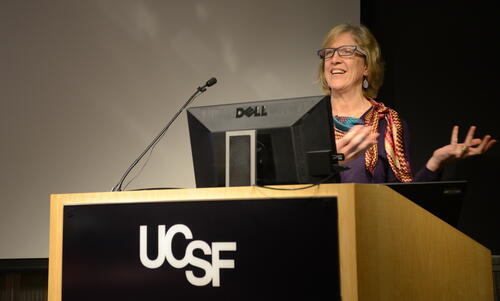
Nugent was addressing the fourth annual Global Health Economics Colloquium at University of California San Francisco, with health experts, policymakers, students and researchers from Stanford, Berkeley and UCSF who gather every year to take a deep dive into the economics of a global health issue. More than 200 experts from 10 universities and public health departments attended the conference.
The daylong gathering focused on recent developments in the economics of NDCs, looking at case studies from around the world, and new guidelines for cost-effectiveness analysis and the role of economics in reducing health inequality.
“The donors are not convinced that there are cost-effective things that we can do in these countries; a lot of them are very skeptical that this is affecting the poor,” said Nugent, a member of the World Health Organization’s expert advisory panel on the management of NCDs.
In India, for example, much of the population still defecates outdoors, contaminating water sources and agricultural products, which can lead to malnutrition and physical and cognitive disorders. Many donors would rather see funds go to building latrines as they can see tangible results; NDC prevention is a long-term slog.
“But I don’t think we should necessarily think of NDCs as either-or,” said Nugent. “I think that integration of services and programming is very much at the forefront of what is the right way to go.”
Image
Cost-effectiveness Analyses
Nugent’s research has shown five cost-effective interventions would avert more than 5 million premature deaths from NCDs by 2030, or a reduction of 28.5 percent in projected mortality from chronic disease around the world. And the average benefit-cost ratio is 9:1, at a global cost of $8.5 billion a year.
The interventions are raising the price of tobacco products by 125 percent through taxation; providing aspirin to 75 percent of those suffering from acute myocardial infarction; reducing salt intake by 30 percent; reducing the prevalence of high blood pressure with low-cost hypertension medication; and providing preventive drug therapy to 70 percent of those at high risk of heart disease.
“There is a continued emphasis on transparency and comparability across analyses,” said Sanders-Schmidler. “And of course the big changes are that we’re now asking for a second reference case and using an ‘impact inventory’ table to clarify the scope of the findings.”
The independent panel of non-government scientists and scholars, which also included Stanford Health Policy’s Douglas K. Owens, focused on new ways to deliver health care effectively, yet with a focus on efficiency, as health care spending in the United States has reached 18 percent of GDP, much greater than the global average of 10 percent.
The first panel that convened in 1996 recommended that all cost-effectiveness analyses of health interventions include a reference case that uses standard methodological practices to improve comparability and quality. The second panel, which published its findings in September, now recommends that in addition to the societal perspective recommended by the original panel, that CEAs include a second reference case that looks at the health-care sector impact of an intervention. Additional guidance was given on what to include in the societal perspective reference case.
The panel wrote in its JAMA “special communication” that these societal reference cases should include medical costs “borne by third-party payers and paid out-of-pocket by patients, time costs of patients in seeking and receiving care, time costs of informal (unpaid) caregivers, transportation costs, effects on future productivity and consumption, and other costs and effects outside the health-care sector.”
They found most countries, including the United States, give greater weight to clinical evidence in their cost-effectiveness analyses. The panel now recommends an “impact inventory” that helps analysts and end-users of cost effectiveness analyses look at the impact of interventions beyond the formal health-care sector.
“We’re trying to ask people to be explicit,” said Owens, director of the Center of Primary Care and Outcomes Research and Center for Health Policy at Stanford.
“We want them to look at how to value outcomes in a societal perspective, not just the health-care sector, to look at all these other sectors such as productivity consumption, criminal justice, education, housing and the environment,” he said.
Image
Case Studies
Several case studies presented at the colloquium indicated that policy changes, government intervention and social factors are key to preventing obesity and diabetes and other NCDs.
Kristine Madsen, an associate professor of public health at UC Berkeley who focuses on childhood obesity, spoke about the nation’s first “soda tax” on sugar-sweetened beverages, which was implemented in Berkeley in March 2015.
The city has seen a 21 percent decline in the drinking of soda and other sugary drinks in low-income neighborhoods after the city levied a penny-per-ounce tax on sodas and sugary drinks. At the same time, according to a study in the American Journal of Public Health, neighboring San Francisco — where a similar soda-tax measure was defeated — and Oakland saw a 4 percent increase in the purchase of sweetened beverages.
“This decline of 21 percent in Berkeley represents the largest public health impact in an intervention that I have ever seen,” said Madsen.
Sergio Bautista of the Mexico National Institute of Public Health and UC Berkeley, said that Mexico’s sugary drinks tax implemented in January 2014 is expected to lead to a 10 percent reduction in sugary drinks consumption and prevent an estimated 189,300 cases of diabetes in a country famed for its sugary bottled cola.
William Dow, a professor of health policy management at UC Berkeley, shared his research on Costa Rica, where on average people live longer than Americans, despite the several times higher income and 10 times higher health expenditures in the United States.
Costa Rican men have a life expectancy of 77 and the women typically live until age 82; in Americans the numbers are 76 and 81, respectively. Obesity is low among Costa Rican men and few of their women smoke. Lung cancer mortality in the United States is four times higher among men and six times higher among women.
“It’s remarkable in so many ways,” Dow said, noting that deaths in the Central American country are due predominantly to infectious disease. “Does Costa Rica have any unique effective programs to emulate, or is there something going on upstream driving those health outcomes?”
He believes Costa Rica’s national health insurance and excellent access to primary care for nearly all its people are key. Having this guaranteed lifetime access to health care also reduces the stress and depression that can so badly harm physical health.
“And I would argue that probably diet is one of the most important things going on here,” said Dow, noting their diets are healthy.
Costa Ricans eat mostly unprocessed foods such as rice and black beans, corn tortilla, yam and squash, with little meat and plenty of fresh fruit.
“They also have the highest remaining life expectancy at age 80 of any country in the world, he said. “What we have learned in Costa Rica would be helpful in many other countries.”
The Allied occupation of Japan is remembered as the "good occupation." An American-led coalition successfully turned a militaristic enemy into a stable and democratic ally. Of course, the story was more complicated, but the occupation did forge one of the most enduring relationships in the postwar world. Recent events, from the occupations of Iraq and Afghanistan to protests over American bases in Japan to increasingly aggressive territorial disputes between Asian nations over islands in the Pacific, have brought attention back to the subject of the occupation of Japan. But where did occupation policy come from? This talk considers the role of presidents, bureaucrats, think tanks, the media, and Congress as part of an informal policy network created to manage the postwar world during World War II.
Speaker Bio:
Image
Dr. Dayna Barnes is a specialist in 20th century international history, American foreign policy, and East Asia. She is a visiting scholar at Stanford University's Center on Democracy, Development and Rule of Law, and is an incoming assistant professor of history at City, University of London. Her book, Architects of Occupation: American Experts and the Planning for Postwar Japan, was published in Cornell University Press in March 2017.
When governments and scholars work together on data security, society benefits from better safeguards and protections, a U.S. intelligence expert said Wednesday.
The difficulty is keeping up with technology and societal trends, Admiral Bobby R. Inman said at the Center for International Security and Cooperation's annual Drell Lecture for 2017. His talk was titled, “The Challenges of Providing Data Security.”
Inman, whose U.S. Navy career spanned 31 years, served as the director of the National Security Agency, deputy director of the Central Intelligence Agency, and held other influential positions in the U.S. intelligence community. After retiring from the Navy, Inman worked on start-ups in the private sector, in higher education, and as chairman of the Federal Reserve Bank of Dallas. He is currently the Lyndon B. Johnson Centennial Chair in National Policy at the University of Texas, Austin.
'9/11 changed everything'
During his talk, Inman recounted the early days of cryptography and the dialogue between government officials like himself and scholars at universities such as Stanford and UC Berkeley. Cryptography or cryptology is the practice and study of techniques for secure communication in the presence of third parties typically known as adversaries.
Inman was a key driver behind establishing the United States Foreign Intelligence Surveillance Court in 1978. The purpose of the “FISA” court was to oversee requests for surveillance warrants against foreign spies inside the United States by federal law enforcement and intelligence agencies.
Today, technology has overwhelmed many issues regarding how the government tracks the communications of foreign entities, Inman said. And events have ushered in a different orientation on what type of information and from whom is sought by U.S. intelligence. “9/11 changed everything,” he added.
After 9/11, U.S. intelligence began to focus on foreign individuals in addition to the traditional foreign state actors, Inman said. He pointed out the value of such data collection, as penetrating small groups with human agents is extraordinarily difficult and dangerous.
“The only way you’re likely to get a lead on them (terrorists or narcotic traffickers) is through their communications,” he said.
The Internet, especially social media, has exploded in usage and made data security efforts even more complex, Inman said. “A vastly different world.” As a result, serious privacy, commercial usages and intellectual property issues need to be resolved more than ever. He noted that the rule of law is important to follow when the governmnt or other entities collect and examine communications data.
Inman is particularly worried about how “basic issues of ethics and morality” have eroded in society, which results in people scheming to sell private data for profit that puts others at risk. Another issue involves how to prevent terrorist groups from preying upon mentally weak people and recruiting them over the Internet.
A key reason Inman was invited to be the Drell speaker this year was his connection to Martin Hellman and Whitfield Diffie, two pioneering cryptographers from CISAC who drew Inman’s attention in the mid-1970s when they wrote a groundbreaking paper in their field of study. The three later established long-running friendships that produced strong cryptography frameworks.
Inman said, “We were privileged to start the dialogue. That’s where you begin to solve problems,” as fears and misperceptions can be resolved through discussions and openness. “I think what we need is a repeat of pulling together people” from academia and government to deal with today’s security threats. “We need to assess where we are.”
His concern is who would convene such a dialogue. “We’re in a pretty bumpy time, nationally,” said Inman, who urges a neutral party to be such a convener. On broader security fronts, Inman said he is most apprehensive about a possible nuclear exchange between Pakistan and India.
Legacy of Drell
The event included a tribute to Sidney Drell, who passed away last December at the age of 90. Drell co-founded CISAC, and jointly directed it from 1983 to 1989. The Drell Lecture, which is named after him, is an annual public event sponsored by CISAC. By tradition, the lecturer addresses a current and critical national or international security issue that has important scientific or technical dimensions.
In her opening remarks, Amy Zegart, co-director of CISAC, described Drell as a “true giant in the field of theoretical physics” who devoted his life’s work to reducing the threat of nuclear catastrophe. One trademarks of the Drell lecture was that its namesake had the opportunity to ask the first question of the speaker. “He had a unique way of asking penetrating questions" with gentle decency and fairness, she added.
CISAC’s William Perry, also on hand to discuss Drell’s legacy, said, “Sid Drell was truly a man for all seasons” who excelled in various fields of academic and policy. Perry first met Drell 55 years ago when he was beginning his own career in nuclear arms control. “Sid’s deep interest in arms control led to him teaming up with John Lewis” to launch CISAC, he noted.
“He was an extraordinary man,” Perry said, “and we shall never see his like again.”
Drell was a fan of classical music, especially the St. Lawrence String Quartet, a chamber music group whose music was piped in to the Bechtel Conference Room before the event began.
The populist backlash against globalization is being felt acutely across Europe as well as here in the US. And yet whether you look at it from an economic, political or military perspective, transnational cooperation has become an integral part of our global landscape. Hear CDDRL Mosbacher Director Francis Fukuyama on the future of globalization for World Affairs.
In a shack that now sits below sea level, a mother in Bangladesh struggles to grow vegetables in soil inundated by salt water. In Malawi, a toddler joins thousands of other children perishing from drought-induced malnutrition. And in China, more than one million people died from air pollution in 2012 alone.
Around the world, climate change is already having an effect on human health.
In a recent paper, Katherine Burke and Michele Barry from the Stanford Center for Innovation in Global Health, along with former Wellesley College President Diana Walsh, described climate change as “the ultimate global health crisis.” They offered recommendations to the new United States president to address the urgently arising health risks associated with climate change.
Bangladeshi children make their way through flood waters.
The authors, along with Stanford researchers Marshall Burke, Eran Bendavid and Amy Pickering who also study climate change, are concerned by how little has been done to mitigate its effects on health.
There is still time to ease — though not eliminate — the worst effects on health, but as the average global temperature continues to creep upward, time appears to be running short.
“I think we are at a critical point right now in terms of mitigating the effects of climate change on health,” said Amy Pickering, a research engineer at the Woods Institute for the Environment. “And I don’t think that’s a priority of the new administration at all.”
Health effects of climate change
Even in countries like the United States that are well-equipped to adapt to climate change, health impacts will be significant.
“Extremes of temperature have a very observable direct effect,” said Eran Bendavid, an assistant professor of medicine and Stanford Health Policy core faculty member.
“We see mortality rates increase when temperatures are very low, and especially when they are very high.”
Bendavid also has seen air pollutants cause respiratory problems in people from Beijing to Los Angeles to villages in Sub-Saharan Africa.
“Hotter temperatures make it such that particulate matter and dust and pollutants stick around longer,” he said.
In addition to respiratory issues, air pollution can have long-term cognitive effects. A study in Chile found that children who are exposed to high amounts of air pollution in utero score lower on math tests by the fourth grade.
“I think we’re only starting to understand the true costs of dirty air,” said Marshall Burke. “Even short-term exposure to low levels can have life-long effects.”
Low-income countries like Bangladesh already suffer widespread, direct health effects from rising sea levels. Salt water flooding has crept through homes and crops, threatening food sources and drinking water for millions of people.
“I think that flooding is one of the most pressing issues in low-income and densely populated countries,” said Pickering. “There’s no infrastructure there to handle it.”
Standing water left over from flooding is also a breeding ground for diseases like cholera, diarrhea and mosquito-borne illnesses, all of which are likely to become more prevalent as the planet warms.
On the flip side, many regions of Sub-Saharan Africa — where clean water is already hard to access — are likely to experience severe droughts. The United Nations warned last year that more than 36 million people across southern and eastern Africa face hunger due to drought and record-high temperatures.
Residents may have to walk farther to find water, and local sources could become contaminated more easily. Pickering fears that losing access to nearby, clean water will make maintaining proper hygiene and growing nutritious foods a challenge.
Climate change will affect health in all sectors of society.
All of these effects and more can also damage mental health, said Katherine Burke and her colleagues in their paper. The aftermath of extreme weather events and the hardships of living in long-term drought or flood can cause anxiety, depression, grief and trauma.
Climate change will affect health in every sector of society, but as Katherine Burke and her colleagues said, “….climate disruption is inflicting the greatest suffering on those least responsible for causing it, least equipped to adapt, least able to resist the powerful forces of the status quo.
“If we fail to act now,” they said, “the survival of our species may hang in the balance.”
What can the new administration do to ease health effects?
If the Paris Agreement’s emissions standards are met, scientists predict that the world’s temperature will increase about 2.7 degrees Celsius – still significant but less hazardous than the 4-degree increase projected from current emissions.
The United States plays a critical role in the Paris Agreement. Apart from the significance of cutting its own emissions, failing to live up to its end of the bargain — as the Trump administration has suggested — could have a significant impact on the morale of the other countries involved.
“The reason that Paris is going to work is because we’re in this together,” said Marshall Burke. “If you don’t meet your target, you’re going to be publicly shamed.”
The Trump administration has also discussed repealing the Clean Power Plan, Obama-era legislation to decrease the use of coal, which has been shown to contribute to respiratory disease.
“Withdrawing from either of those will likely have negative short- and long-run health impacts, both in the U.S. and abroad,” said Marshall Burke.
Scott Pruitt, who was confirmed today as the head of the Environmental Protection Agency (EPA), is expected to carry out Trump’s promise to dismantle environment regulations.
Despite the Trump administration’s apparent doubts about climate change, a few prominent Republicans do support addressing its effects.
Secretary of State Rex Tillerson, the former chairman and CEO of Exxon Mobile, supports a carbon tax, which would create a financial incentive to turn to renewable energy sources. He also has expressed support for the Paris Agreement. It is possible that as secretary of state, Tillerson could help maintain U.S. obligations from the Paris Agreement, though it is far from certain whether he would choose to do so or how Trump would react.
More promising is a recent proposal from the Climate Leadership Council. Authored by eight leading Republicans — including two former secretaries of state, two former secretaries of the treasury and Rob Walton, Walmart’s former chairman of the board — the plan seeks to reduce emissions considerably through a carbon dividends plan.
Already an issue, malnutrition will increase with droughts in Sub-Saharan Africa.
Their proposal would gradually increase taxes on carbon emissions but would return the proceeds directly to the American people. Americans would receive a regular check with their portion of the proceeds, similar to receiving a social security check. According to the authors, 70 percent of Americans would come out ahead financially, keeping the tax from being a burden on low- and middle-income Americans while still incentivizing lower emissions.
“A tax on carbon is exactly what we need to provide the right incentives and induce the sort of technological and infrastructure change needed to reduce long-term emissions,” said Marshall Burke.
Pickering added, “This policy is a ray of hope for meaningful action on climate.”
It remains to be seen whether the new administration and congress would consider such a program.
What can academics do to help?
Meanwhile, academics can promote health by researching the effects of climate change and finding ways to adapt to them.
“I think it’s fascinating that there’s just so little data right now on how climate change is going to impact health,” said Pickering.
Studying the effects of warming on the world challenges traditional methods of research.
“You can’t create any sort of experiment,” said Bendavid. “There’s only one climate and one planet.”
The scholars agree that interdisciplinary study is a critical part of adapting to climate change and that more research is needed.
“If ever there was an issue worthy of a leader’s best effort, this is the moment, this is the issue,” said Katherine Burke and her colleagues. “Time is short, but it may not be too late to make all the difference.”








 Bangladeshi children make their way through flood waters.
 Climate change will affect health in all sectors of society.
 Already an issue, malnutrition will increase with droughts in Sub-Saharan Africa.
