Authors
News Type
Q&As
Date
Paragraphs

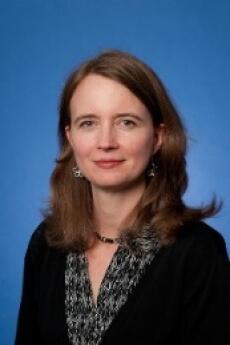
The science of cyber risk looks at a broad spectrum of risks across a variety of digital platforms. Often though, the work done within the field is limited by a failure to explore the knowledge of other fields, such as behavioral science, economics, law, management science, and political science. In a new Science Magazine article, “Cyber Risk Research Impeded by Disciplinary Barriers,” cyber risk experts and researchers at Stanford University make a compelling case for the importance of a cross-disciplinary approach. Gregory Falco, security researcher at the Program on Geopolitics, Technology, and Governance, and lead author of the paper, talked recently with the Cyber Policy Center about the need for a holistic approach, both within the study of cyber risk, and at a company level when an attack occurs.

CPC: Your recent perspective paper in Science Magazine highlights the issue of terminology when it comes to how organizations and institutions define a cyber attack. Why is it so important to have consistent naming when we are talking about cyber risk?

Falco: With any scientific discipline or field, there is a language for engaging with other experts. If there’s no consistent language or at least dialect for communication around cyber risk, it’s difficult to engage with scholars from different disciplines. For example: The phrase “cyber event” is contested and the threshold for what an organization considers to be a cyber event varies substantially. Some organizations consider someone pinging their network as a cyber event, others only consider something a cyber event once an intrusion has been publicly disclosed. So there’s a disparity when comparing metrics of cyber events from organization to organization because of the different thresholds of what’s considered an event.

CPC: We’ve all been sent one of those emails letting us know our data may have been compromised and your paper points out it’s nearly impossible to put foolproof protections into place; attacks are inevitable. Given that, how should companies weigh the various ways they can protect themselves?

Falco: The first exercise each organization should go through when they decide to be serious about cyber risk is to prioritize their assets. What is business critical? What is safety critical? Then, like all other risks, a cost-benefit analysis must be done for each asset based on its priority. If the asset is safety-critical, then resources should be allocated to help protect that asset or at least ensure its resilience. Trade-offs are inevitable, no company has unlimited resources. But starting with an understanding of where the priorities are, is critical.

CPC: In companies, cyber security often falls entirely to the Chief Information Security Officer (CISO). Your paper argues that’s shortsighted. What is gained when a company takes a more holistic approach?

Falco: Distributing responsibility across the organization catalyzes a security culture. A security culture is one where there is a constant vigilance or at least broad awareness of cybersecurity concerns throughout the organization. Fostering a security culture is often suggested as a mechanism to help reduce cyber risk in organizations. The problem with not distributing responsibility is that when something happens, it’s too easy to resort to finger-pointing at the CISO, and that’s counterproductive. Efforts after an attack should be on responding and being resilient, not finding the scapegoat.

CPC: Cyber risk largely focuses on prevention, but your paper argues that it’s what happens after an attack in that needs greater attention. Why is that?

Falco: Every organization will be attacked. However organizations can differentiate themselves from a cyber risk standpoint by appropriately managing the situation after an attack. Some of the most significant damages to organizations can be reputational if communication after an attack is unclear or botched. Poor communication after an attack can result in major regulatory fines or valuation adjustments as seen in cases like Yahoo and that can have major business implications. Communications aren’t the only important element of post-attack response. A thorough post-mortem of the organization’s response to the attack can be an important learning experience and a way to plan for future attacks.

CPC: Protecting against cyber attacks and the losses that go with them can obviously be costly for companies. You make a case for collaboration among different fields, say among data scientists and economists. How can that be encouraged?

Falco: We argue that cross-disciplinary collaboration rarely happens organically. Therefore, we call on funding agencies like the NSF or DARPA to specify a preference for cross disciplinary research when funding cyber risk projects. Typically, this isn’t currently a feature of calls for proposals, but for cyber risk programs it should be. We encourage researchers to explore cyber risk questions at the margins of their discipline. Those questions may lend themselves to potential overlap with other disciplines and foster a starting point for cross-disciplinary collaboration.

For more on these topics, see a full list of recent publications from the Cyber Policy Center and the Program on Geopolitics, Technology, and Governance.

Hero Image
Gregory Falco Rod Searcey
All News button
1
News Type
Commentary
Date
Paragraphs

"Ideologically, today’s autocrats are a more motley and pragmatic crew. They generally claim to be market friendly, but mainly they are crony capitalists, who, like Putin in Russia, Orban in Hungary, and Erdogan in Turkey, are first concerned with enriching themselves, their families, and their parties and support networks. Increasingly, they raise a common flag of cultural conservatism, denouncing the moral license and weakness of the “the liberal West” while advancing a virulent antiliberal agenda based on nationalism and religion," writes Larry Diamond. Read here

Hero Image
gettyimages 1180678440
All News button
1
-

Abstract:

At any given moment there are hundreds of international negotiations being undertaken in numerous institutions and forums, touching upon every legal and social aspect, including cyber, trade, terrorism, telecommunications, environment and human rights, just to name a few. International investigation and monitoring groups, and international committees and specialized bodies, are routinely created, subjecting states to investigations and reviews. States are subject to strict reporting requirements, having to submit hundreds of detailed reports a year to different institutions. International courts and over 160 international dispute settlement mechanisms are at work in their respective areas– creating new bodies of law, and thousands of professional committees whether in economic blocs, international institutions, or other forums, are revising and creating new international norms. Black lists are being formed, alliances changing, and new actors, including multinational corporations, are now an integral player of the international arena.

The challenges states are facing in building capacity and training personnel to deal with this vast and evolving international scene are formidable, requiring substantial funds, human capital, leadership, strategic planning, specialized education, and extensive inter ministerial cooperation, just to name a few. Ramifications for a state for lack of capacity may be huge.

This talk will seek to take a birds eye view of the evolving international arena, and focus on some of the challenges states, particularly developing countries, have in building their capacity to enable effective navigation in this sphere. The talk will showcase the International Rule Making Project, which seeks to assist in the development of global tools and policies. The talk will also address the increasing participation of China, who openly seeks to reshape global governance, as a strong player in the international space, and the possible interconnections between all of these issues.


Speaker Bio:

Image
shavit matias
Dr. Shavit Matias was Deputy Attorney General of Israel in charge of international issues. She and the teams she led formed and implemented a strategic plan for Israel to deal with globalization and the numerous international institutions and forums. She formed and headed the Department for International Agreements and International Litigation, which deals with policy and law, globalization, international institutions, negotiations of bilateral and multilateral international agreements, joining international organizations, international investigations, and international litigation and arbitration in international forums. She spearheaded changes in inter-ministerial cooperation, training, and decision-making processes throughout government.

Dr. Matias regularly advised Prime Ministers and the Government on policy and law regarding international matters. She was a member of Israeli National Security Council teams on a range of national security challenges, national strategy building, international law, Middle East policy, counter-terrorism, and international conflicts. She headed inter ministerial committees, and worked with colleagues from around the world to develop international mechanisms, international tools, and law.

Matias represented the State of Israel in United Nations committees, international investigations of Israel, international and foreign courts, and co-headed Israel’s inter ministerial task force on matters relating to universal jurisdiction and issues relating to the laws of war. She represented the state in numerous bilateral and multilateral negotiations, including complex trade matters with the EU, joining the OECD, permanent-status issues with the Palestinians, and as a member of Israeli-Palestinian joint committees. She was also a member of Israeli government teams working with the international donor community on matters of Palestinian institution and capacity building, and a member of numerous policy teams.

Since 2014 she heads the Global Affairs and Conflict Resolution program at the Lauder School of Government IDC, and teaches courses on globalization, diplomacy, law, and conflict resolution. She is also on the Professional Advisory Board of the International Institute for Counter Terrorism. She is a recipient of the 2008 Award from Georgetown University Law Center for Outstanding Achievements in the Profession, and in 2017-2018 served on the President of Israel’s Committee for Doctoral Grants for Academic Excellence and Scientific Innovation.

Between 2013-2018 she was a fellow at the Hoover Institution and since 2018 is a visiting scholar at CDDRL heading the International Rule Making Project geared at developing global international tools enhancing good governance, rule of law, capacity building, and economic growth particularly in developing countries and areas of conflict.

Matias is a member of the Israeli bar and the New York bar. She clerked at the Supreme Court of Israel, received her LLB from Tel-Aviv University, her LLM from Georgetown University, and her Doctorate in International Law (S.J.D.) from George Washington University under the supervision of Judge Thomas Buergenthal.


CDDRL Visiting Scholar
Seminars

Not in residence

0
rsd19_072_0369a.jpg

Andrew Shaver is an assistant professor of political science at the University of California, Merced. Prior to that, he completed postdoctoral research fellowships at Stanford University's Political Science Department and, separately, at Dartmouth College, where he was also a lecturer. Professor Shaver earned his PhD in Public Affairs (security studies) from Princeton University's School of Public and International Affairs and completed his final year of the doctoral program as a predoctoral fellow at Harvard University's John F. Kennedy School of Government. He is also the founding director of the Political Violence Lab. His research focuses broadly on contemporary sub-state conflict and appears in the American Political Science Review, American Economic Review, Annual Review of Sociology, and Journal of Politics, amongst other outlets. Professor Shaver previously served in different foreign affairs/national security positions within the U.S. Government, including spending nearly one and a half years in Iraq during the U.S.-led war with the Pentagon.

Affiliate
News Type
Commentary
Date
Paragraphs

In today’s Egypt, commitment to democracy appears scarce among actors both within the regime and in civil society, and public-opinion polls further suggest that demands for democratic governance have been abandoned. An undemocratic political understanding and disenchantment with the concept of democracy seemingly prevail among a majority of the population. Rather than seeking a return to democratic government, Egyptians are once again hoping that an authoritarian regime will succeed in raising the standard of living. Only a few groups of activists are gradually articulating a peaceful democratic culture of resistance, found in universities and professional associations as well as on social media and in the underground music scene. Their efforts offer grounds for hope. Read here.

Hero Image
international 2693131 1920
All News button
1
-

Image
Ashish Goel
Abstract:

While the Internet has revolutionized many aspects of our lives, there are still no online alternatives for making democratic decisions at large scale as a society. In this talk, we will describe algorithmic and market-inspired approaches towards large scale decision making that our research group is exploring. We will start with a model of opinion dynamics that can potentially lead to polarization, and relate that to commonly used recommendation algorithms. We will then describe the algorithms behind Stanford's participatory budgeting platform, and the lessons that we learnt from deploying this platform in over 70 civic elections. We will use this to motivate the need for a modern theory of social choice that goes beyond voting on candidates. We will then describe ongoing practical work on an automated moderator bot for civic deliberation (in collaboration with Jim Fishkin's group), and ongoing theoretical work on deliberative approaches to decision making. We will conclude with a summary of open directions, focusing in particular on fair advertising. 

Ashish Goel Bio

Lunch Seminar Series Flyer
  • E207, Encina Hall
  • 616 Jane Stanford Way, Stanford, CA 94305
 
0
ashish_goel.jpg
Ashish Goel is a Professor of Management Science and Engineering and (by courtesy) Computer Science at Stanford University, and a member of Stanford's Institute for Computational and Mathematical Engineering. He received his PhD in Computer Science from Stanford in 1999, and was an Assistant Professor of Computer Science at the University of Southern California from 1999 to 2002. His research interests lie in the design, analysis, and applications of algorithms; current application areas of interest include social networks, participatory democracy, Internet commerce, and large scale data processing. Professor Goel is a recipient of an Alfred P. Sloan faculty fellowship (2004-06), a Terman faculty fellowship from Stanford, an NSF Career Award (2002-07), and a Rajeev Motwani mentorship award (2010). He was a co-author on the paper that won the best paper award at WWW 2009, and an Edelman Laureate in 2014. Professor Goel was a research fellow and technical advisor at Twitter, Inc. from July 2009 to Aug 2014.
Ashish Goel Professor of Management Science and Engineering
Seminars
Authors
News Type
News
Date
Paragraphs

Two former Department of Defense (DoD) officials shared the stage at the Freeman Spogli Institute for International Studies (FSI), where they discussed the decision to remove U.S. troops from northern Syria, women in the military, and the importance of public service.

Ash Carter — who served as secretary of defense from 2015 to 2017 — told Joe Felter — former deputy assistant secretary of defense for South and Southeast Asia — that he emphasized the importance of tradition and had high standards for good conduct from his employees when he was at the head of the DoD, which had 1.3 million active-duty employees in 2016, and is the largest employer in the world.

[Get stories like this delivered to your inbox by signing up for FSI email alerts]

“Even if you come into an organization and take over and your judgement is that it’s really quite broken, it’s still worth finding the things that it is good at and making the people proud of the things that they are already good at,” Carter said.


Felter asked Carter about a topic on the minds of some in Silicon Valley — the possible development of autonomous weapons — and whether the liability for harm should lie with the developer of technology, or those who make the decision to execute the use of the weapon.

“It’s going to be a shared responsibility,” Carter said. “The key thing is not to get lost in AI is human responsibility — AI is an aid to human decision-making, but at the end of the day, somebody is responsible.”


When asked about the relationship between tech companies and the government, Carter said he had encountered some tech leaders who didn’t think government mattered during the earlier days of his government service, but added that he has noticed a different attitude from young people today.

“My students know that something’s wrong in the relationship between tech and society… it brings a lot of great stuff, but it has brought some real darkness too, and we need to get on top of that,” Carter said. “And that’s how they want to spend their lives.”


When Felter asked Carter what he would say to a graduating Stanford student to encourage him or her to pursue a career in public service, Carter didn’t have to think twice before responding.

“I’d say, ‘Look, the building smells like your high school, the pay is terrible, and work conditions can be awful. But the mission is the best. And you’ll wake up every morning and be a part of something that is meaningful.’”


[Find more upcoming events with experts on international affairs on the FSI website]

Hero Image
ash carter cropped
Former Secretary of Defense Ash Carter talks to former Deputy Assistant Secretary of Defense for South and Southeast Asia Joe Felter about his career in service at the Freeman Spogli Institute for International Studies. Photo: Alice Wenner
All News button
1
Authors
News Type
News
Date
Paragraphs

Following the death of ISIS leader Abu Bakr al-Baghdadi and the decision by President Donald Trump to remove U.S. troops from northern Syria, there are many questions surrounding the future of the region, which is controlled in part by Al-Qaeda-affiliated extremists, former Special Presidential Envoy for the Global Coalition to Defeat ISIS Brett McGurk told Freeman Spogli Institute for International Studies Director Michael McFaul on the World Class podcast.


ISIS initially gained momentum in Syria in 2012, when the government had eroded and a state of anarchy was developing, said McGurk, who is the Payne Distinguished Lecturer at the Center for International Security and Cooperation. “Starting in 2012 and 2013, thousands of foreign extremist fighters were pouring into Syria, looking for extremist groups to join. And Baghdadi’s guys — which became ISIS — basically took advantage of this.”

By 2014, ISIS controlled a territory with about eight million people and had revenues of about $1 billion a year, McGurk noted.

“I was an early advocate that we needed military force almost immediately,” he said. “To get someone recruited right into Syria, then go blow himself up at a kid’s soccer game, or an ice cream shop — if you have that pipeline, you know you have something pretty serious.” 

[Get stories like this delivered to your inbox by signing up for FSI email alerts]

The Anti-ISIS Strategy
In the summer of 2014, President Barack Obama decided to take action, with a few conditions: first, that the coalition against ISIS would be broad, and include countries outside of the United States; second, that U.S. troops would work with local partners in Iraq and Syria to fight the terror group; and third, that the coalition would share the costs and burdens associated with the military campaign.

“The campaign launched during the third week of August or so during that summer, and it was a real war,” McGurk said. “It was a very difficult, town-by-town struggle, but a successful war.”

The Death of al-Baghdadi
While al-Baghdadi will be replaced by a successor, the former ISIS leader is “somewhat irreplaceable,” said McGurk. He claimed to be a caliph — a religious leader in Islam believed to be a successor to the Prophet Mohammed — and in 2014 declared the territory controlled by ISIS in Iraq and Syria a caliphate, or Islamic state.

“People around the world who pledge allegiance to ISIS pledge allegiance to him — so Baghdadi is a unique figure,” McGurk said. “His removal from the scene is excellent news.”

Related: Read Brett McGurk’s thoughts on what it takes for U.S. foreign policy to succeed in the Middle East

Hero Image
Brett McGurk
Former Special Presidential Envoy for the Global Coalition to Counter ISIS Brett McGurk listens to questions from reporters during a Pentagon briefing May 19, 2017. Photo: Win McNamee - Getty Images
All News button
1
Authors
Amy Zegart
News Type
Commentary
Date
Paragraphs

Eighteen years ago, al-Qaeda operatives hijacked planes, toppled buildings, terrified an entire nation, and killed nearly 3,000 innocents. That the elaborate 9/11 plot went undetected will forever be remembered as one of the intelligence community’s worst failures. For many U.S. intelligence officials, memories of that day remain fresh, searing, and personal. Still hanging over the entrance to the CIA’s Counterterrorism Center is a sign that reads, “Today is September 12, 2001.” It’s a daily reminder of the agency’s determination to prevent future attacks—but also of the horrifying costs when intelligence agencies adapt too slowly to emerging threats.

For a decade after the Soviet Union’s collapse, the CIA and the FBI were mired in Cold War structures, priorities, processes, and cultures even as the danger of terrorism grew. My research has shown that even though many inside and outside U.S. intelligence agencies saw the terrorist threat coming and pressed for change years earlier, they could not get the necessary reforms enacted. The shock of 9/11 finally forced a reckoning—one that led to a string of counterterrorism successes, from foiled plots to the operation against Osama bin Laden. But now, nearly two decades later, America’s 17 intelligence agencies need to reinvent themselves once more, this time in response to an unprecedented number of breakthrough technologies that are transforming societies, politics, commerce, and the very nature of international conflict.


Read the Rest at The Atlantic.

Hero Image
gettyimages 552759489
All News button
1
Authors
News Type
Blogs
Date
Paragraphs

Representing 14 different countries, the Ford Dorsey Master’s in International Policy (MIP) first-year class is a diverse group. Of the 8 men and 21 women, some have worked in government, some have served in the military, and others just completed their undergraduate degrees. Their academic interests range from migration; to clean energy; to women’s, children’s and LGBTQIA rights; and they spend their free time woodworking, practicing Kung Fu, and listening to true-crime podcasts.

The Freeman Spogli Institute for International Studies spoke to five of the incoming first-year students about their backgrounds, passions, and dreams for the future. These are their stories.

Serage Amatory, 22. (Chouf, Lebanon) 

Image
serage1

“I’ve been living in Egypt for the last four years and attending American University in Cairo, where I double-majored in political science and multimedia journalism. My background is in human rights, and I plan to keep working in human rights after school. I worked as a journalist at one of the few nonpartisan TV stations in Lebanon, and I also worked at the Ministry of Foreign Affairs in Lebanon.

I’ve also made two documentary films — one is about the transgender community in Cairo, and the second film tells the stories of five male victims of rape and sexual assault in Cairo. I enjoy talking about issues that other people don’t want to talk about. I get a lot of disapproval from people all the time, but that's what motivates me — I want to be speaking about people who don’t have someone speaking about them. Someone has to bring attention to things that aren't in the mainstream, and that's what I like to do.

The Master’s in International Policy program here is amazing, and I love that you have the option to specialize in a topic — I’d like to study something concrete and know exactly what I'm going to be doing with it after I graduate. I studied really general topics in undergrad, and now I feel like it's time to augment my general education with something that's more specific. I came in with the expectation that I'm going to be specializing in governance and development, and while I still want to do that, I also really think I might want to take some cyber classes now. So we’ll see — I’m just really happy to be here.”

Maha Al Fahim, 21. (Vancouver, Canada and Abu Dhabi, United Arab Emirates) 

Image
maha1

“My interest in public policy started when I was 14. I wrote a nonfiction book about child abuse and gender discrimination, and it was based on my mother's story — she grew up in an abusive family. And in publishing that book, I really saw the power of writing to expose policy issues. When I went to Princeton for my undergraduate education, I wanted to hone my communication skills, because I saw communication as a really powerful tool. I wrote for the Daily Princetonian newspaper and Business Today magazine, and I was also chair of Princeton Writes, a program to promote writing among the community and celebrate the power of words.

Now I'm working on a novel. It's called "Shaolina", and it's set in China. The novel explores gender dynamics and financial and physical power. I traveled to China last summer to do research for the book, and I got to train with a Shaolin monk for 8 hours a day — we would wake up at 5 a.m. and run through the mountains, it was crazy. It was so cool to immerse myself in the experience like that. For me, Kung Fu is not just a sport, it’s a way of life. I've learned so many life lessons from Kung Fu: patience, perseverance, and balance, to name a few.

I love how Stanford is focusing on the future of policy, because as issues get more complex, you need not just qualitative skills, but also quantitative skills. And you need to be able to think creatively and innovatively. Our cohort is small — around 30 students — and I really like it. There are people here from very diverse backgrounds, and it has been really cool to hear so many different international perspectives.” 

Angela Ortega Pastor, 25. (Madrid, Spain) 

Image
angela1

“I studied economics at NYU Abu Dhabi, and then I worked for three years in Paris for the Organization for Economic Co-operation and Development (OECD) as an energy data manager in oil and gas topics. I worked a lot with the different countries within the OECD as well as with other organizations to help collect data, and we put all of that data into comprehensive reports so that other people and companies can use it for analysis. I really liked working there. I liked the international dynamic - everybody came from very different backgrounds and different places, so it was very congenial to learn from other people.

I'm an economist by training, and that impacts the way I like to look at the problems within the energy field. Such as, 'How can we get consumers and companies to want to transition to clean energy? Does it mean that we need to put policies in place, or regulate the market? Or are pure economic incentives going to do the trick?' There are a lot of professors at Stanford who have done research in that sphere, so that was also a big push for me to come here.

I really like Stanford so far. I've found that people here are very welcoming and happy to help. I was a bit worried about that - when you move somewhere new, you sometimes worry about cliques and how focused people will be on their own lives. But everyone that I've encountered has been really nice and helpful. It's made feel like, 'OK - I can figure out how this place works and eventually feel at home.'”

Craig Nelson, 37. (Minneapolis, Minnesota) 

Image
craig1

“I'm an infantry officer in the U.S. Army. I graduated from West Point in 2006, and I'm in my 14th year of service. I've done eight deployments across both Iraq and Afghanistan, and I've also spent a good amount of time stationed in Europe. My wife, Michelle, and I just moved to Palo Alto from Vicenza, Italy, with our 2-year-old son, Max. Michelle and I love to travel, we love being stationed abroad, and we think that the best way to complete a 20-year career in the Army is to be abroad as much as possible and see parts of the world that we would not otherwise be exposed to.

Overall what I hope to learn here is a better way for the American Army to help to implement the policy that I was a part of as the U.S. Army's forward-deployed unit in Europe. I was able to see where policy derived by our elected officials is actually implemented at a tactical level. I’d like to go back to the Army and implement that policy with a refined understanding of where it comes from and how it's generated.

Before social media became as ubiquitous as it is now, I think people were in groups based largely on where they're from - a certain area code, or a neighborhood, or a school. Now it's possible to identify with a group completely without respect to geographic location, and I think that's because of social media. I'm interested in how that drives security policy - how does that change cyber security policy, and how does that change the way that my country interfaces with its allies and its partners?

When I go back to the Army, I hope to be in a position of greater responsibility and leadership. And I think that this experience will broaden me in a way that I would not have achieved if I had stayed in the operational Army and done a more traditional job following what I just did in Italy.”

Sievlan Len, 23. (Toul Roveang Village, Cambodia) 

Image
sievlan1

“I earned my bachelor’s degree in global affairs from the American University of Phnom Penh in Cambodia. I did two internships before coming to Stanford: one was with a consulting firm, where I was working mainly on migration research and youth participation initiatives at the sub-national level. I also worked for a foundation that works on strengthening political parties in Cambodia. It was a really interesting experience, and it gave me the idea of doing my bachelor's thesis on migration.

My interests right now are in migration, development, and education. And I’m interested to learn about how the three interact, and how we can make the most out of migration. I'm so excited to explore the interdisciplinary aspects of the Master’s in International Policy program, because I've always felt that you can't separate these issues one from another — migration itself is very interdisciplinary, there is both a political and an economic side to it.

I come from a village in Cambodia, and I'm one of the luckiest in that I had the opportunity to pursue higher education. One of my dreams and goals is that everyone in Cambodia — including girls — have equal access to education, and at least to finish high school, and have the opportunity to pursue their dreams in universities if they’d like to. Where I grew up, I saw a lot of potential not being fulfilled because of people’s circumstances — poverty, or elders not valuing education. I really want to see that change. I want everyone to be able to reach their full potential.”

Hero Image
mipphotocropped
Vienna Exchange student Mourad Chouaki and Ford Dorsey Master’s in International Policy (MIP) first-year students Corie Wieland, Rehana Mohammed and Maria Fernanda Porras Jacobo on the grass of the Stanford Oval in September 2019. Photo: Maria Fernanda Porras Jacobo.
All News button
1
Subscribe to Middle East and North Africa