0
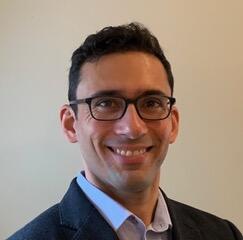
hazelton.jpg PhD

Jacqueline L. Hazelton is the executive editor of the journal International Security. She was previously an associate professor at the U.S. Naval War College and an associate of the International Security Program at the Belfer Center, Harvard Kennedy School. Hazelton's research ranges from grand strategy, great power military intervention, and U.S. foreign and military policy to counterinsurgency, terrorism, and the uses of military power. She recently published Bullets Not Ballots: Success in Counterinsurgency Warfare and is working on a manuscript about great powers, liberal values, and military intervention.

Prior to her faculty appointment at the Naval War College, Hazelton was a visiting assistant professor in the Department of Political Science at the University of Rochester and a research fellow with the Belfer Center's International Security Program. Earlier experience included a stint as an international journalist with the Associated Press where she analyzed and reported on world events from Tokyo to Kabul and covered U.S. news as well. She received M.A.’s in English Literature and in International Relations from the University of Chicago and her Ph.D. from Brandeis University's Department of Politics.

Affiliate
0
Postdoctoral Fellow, Stanford Internet Observatory (2021-2022)
Predoctoral Fellow, Stanford Internet Observatory (2020-2021)
Josh-Goldstein.jpeg

Josh A. Goldstein is a past postdoctoral scholar at the Stanford Internet Observatory. He received his PhD in International Relations from the University of Oxford, where he studied as a Clarendon Scholar. At the Stanford Internet Observatory, Dr. Goldstein investigated covert influence operations on social media platforms, studied the effects of foreign interference on democratic societies, and explored how emerging technologies will impact the future of propaganda campaigns. He has given briefings to the Department of Defense, the State Department, and senior technology journalists based on this work, and published in outlets including Brookings, Lawfare, and Foreign Policy.

Prior to joining SIO, Dr. Goldstein received an MPhil in International Relations at Oxford with distinction and a BA in Government from Harvard College, summa cum laude. He also assisted with research and writing related to international security at the Belfer Center, Brookings Institution, House Foreign Affairs Committee, and Department of Defense.

Paragraphs

A growing number of countries have established programs to attract immigrants who can contribute to their economy. Research suggests that an immigrant's initial arrival location plays a key role in shaping their economic success. Yet immigrants currently lack access to personalized information that would help them identify optimal destinations. Instead, they often rely on availability heuristics, which can lead to the selection of sub-optimal landing locations, lower earnings, elevated outmigration rates, and concentration in the most well-known locations. To address this issue and counteract the effects of cognitive biases and limited information, we propose a data-driven decision helper that draws on behavioral insights, administrative data, and machine learning methods to inform immigrants' location decisions. The decision helper provides personalized location recommendations that reflect immigrants' preferences as well as data-driven predictions of the locations where they maximize their expected earnings given their profile. We illustrate the potential impact of our approach using backtests conducted with administrative data that links landing data of recent economic immigrants from Canada's Express Entry system with their earnings retrieved from tax records. Simulations across various scenarios suggest that providing location recommendations to incoming economic immigrants can increase their initial earnings and lead to a mild shift away from the most populous landing destinations. Our approach can be implemented within existing institutional structures at minimal cost, and offers governments an opportunity to harness their administrative data to improve outcomes for economic immigrants.

All Publications button
1
Publication Type
Working Papers
Publication Date
Journal Publisher
Immigration Policy Lab (IPL) Working Paper Series
Authors
Number
20-06
Paragraphs

Time is the backdrop of historical inquiry, yet it is much more than a featureless setting for events. Different temporalities interact dynamically; sometimes they coexist tensely, sometimes they clash violently. In this innovative volume, editors Dan Edelstein, Stefanos Geroulanos, and Natasha Wheatley challenge how we interpret history by focusing on the nexus of two concepts—“power” and “time”—as they manifest in a wide variety of case studies. Analyzing history, culture, politics, technology, law, art, and science, this engaging book shows how power is constituted through the shaping of temporal regimes in historically specific ways. Power and Time includes seventeen essays on human rights; sovereignty; Islamic, European, Chinese, and Indian history; slavery; capitalism; revolution; the Supreme Court; the Anthropocene; and even the Manson Family. Power and Time will be an agenda-setting volume, highlighting the work of some of the world’s most respected and original contemporary historians and posing fundamental questions for the craft of history.

All Publications button
1
Publication Type
Books
Publication Date
Journal Publisher
University of Chicago Press
Authors
Authors
Daphne Keller
News Type
Q&As
Date
Paragraphs

Daphne Keller leads the newly launched Program on Platform Regulation a program designed to offer lawmakers, academics, and civil society groups ground-breaking analysis and research to support wise governance of Internet platforms.

Q: Facebook, YouTube and Twitter rely on algorithms and artificial intelligence to provide services for their users. Could AI also help in protecting free speech and policing hate speech and disinformation?   

DK: Platforms increasingly rely on artificial intelligence and other algorithmic means to automate the process of assessing – and sometimes deleting – online speech. But tools like AI can’t really “understand” what we are saying, and automated tools for content moderation make mistakes all the time. We should worry about platforms’ reliance on automation, and worry even more about legal proposals that would make such automated filters mandatory. Constitutional and human rights law give us a legal framework to push back on such proposals, and to craft smarter rules about the use of AI. I wrote about these issues in this New York Times op ed and in some very wonky academic analysis in the Journal of European and International IP Law.

Q: Can you explain the potential impacts on citizens’ rights when the platforms have global reach but governments do not?

DK: On one hand, people worry about platforms displacing the legitimate power of democratic governments. On the other hand, platforms can actually expand state power in troubling ways. One way they do that is by enforcing a particular country’s speech rules everywhere else in the world. Historically that meant a net export of U.S. speech law and values, as American companies applied those rules to their global platforms. More recently, we’ve seen that trend reversed, with things like European and Indian courts requiring Facebook to take user posts down globally – even if the users’ speech would be legally protected in other countries. Governments can also use soft power, or economic leverage based on their control of access to lucrative markets, to convince platforms to “voluntarily” globally enforce that country’s preferred speech rules. That’s particularly troubling, since the state influence may be invisible to any given users whose rights are affected.   

There is such a pressing need for thoughtful work on the laws that govern Internet platforms right now, and this is the place to do it... We have access to the people who are making these decisions and who have the greatest expertise in the operational realities of the tech platforms.
Daphne Keller
Director of Program on Platform Regulation, Cyber Policy Center Lecturer, Stanford Law School

Q: Are there other ways that platforms can expand state power? 

DK: Yes, platforms can let states bypass democratic accountability and constitutional limits by using private platforms as proxies for their own agenda. States that want to engage in surveillance or censorship are constrained by the U.S. Constitution, and by human rights laws around the world. But platforms aren’t. If you’re a state and you want to do something that would violate the law if you did it yourself, it’s awfully tempting to coerce or persuade a platform to do it for you. This issue of platforms being proxies for other actors isn’t limited to governments – anyone with leverage over a platform, including business partners, can potentially play a hidden role like this.

I wrote about this complicated nexus of state and private power in Who Do You Sue? for the Hoover Institution.    

Q: What inspired you to create the Program on Platform Regulation at the Cyber Policy Center right now?

DK: There is such a pressing need for thoughtful work on the laws that govern Internet platforms right now, and this is the place to do it. At the Cyber Policy Center, there’s an amazing group of experts, like Marietje Schaake, Eileen Donahoe, Alex Stamos and Nate Persily, who are working on overlapping issues. We can address different aspects of the same issues and build on each other’s work to do much more together than we could individually.

The program really benefits from being at Stanford and in Silicon Valley because we have access to the people who are making these decisions and who have the greatest expertise in the operational realities of the tech platforms. 

The Cyber Policy Center is part of the Freeman Spogli Institute for International Studies at Stanford University.

Hero Image
Q&A with Daphne Keller
All News button
1
Subtitle

Keller explains some of the issues currently surrounding platform regulation

Paragraphs

Nearly 120 million children in 37 countries are at risk of missing their measlescontaining vaccine (MCV) shots this year, as preventive and public health campaigns take a back seat to policies put in place to contain coronavirus disease 2019 (COVID-19). In March, the World Health Organization (WHO) issued guidelines indicating that mass vaccination campaigns should be put on hold to maintain physical distancing and minimize COVID-19 transmission. The disruption of immunization services, even for short periods, will lead to more susceptible individuals, more communities with less than the 95% MCV coverage needed for herd immunity, and therefore more measles outbreaks globally. A mere 15% decrease in routine measles vaccinations—a plausible result of lockdowns and disruption of health services—could raise the burden of childhood deaths by nearly a quarter of a million in poorer countries. Solutions for COVID-19, especially among the global poor, cannot include forgoing vaccinations.

All Publications button
1
Publication Type
Journal Articles
Publication Date
Journal Publisher
Science Magazine
Authors
Eran Bendavid
Number
2020
Authors
News Type
Commentary
Date
Paragraphs
Hero Image
Hagia Sophia interior
Built as a cathedral, Hagia Sophia in Istanbul, Turkey, has also been a mosque and a museum and is now again a working mosque.
Getty Images
All News button
1
Subtitle

Stanford history professor says conquest narratives don’t fully explain Hagia Sophia’s lasting legacy.

-

**Please note all CDDRL events are scheduled using the Pacific Time Zone


About the Event: How does the widespread frustration that often accompanies democratic transitions shape the political cleavages underlying the party systems that emerge from them? Nine years after the 2010–11 uprising, Tunisia’s 2019 elections took place against a backdrop of widespread frustration with the party system that emerged during the ensuing transition. The elections presented opportunities to a diverse set of outsiders, many of whom brandished antiparty system messages, including unapologetic boosters of the former ruling party, a would-be plutocrat jailed on charges of corruption, and a broad set of antiparty independents. Drawing upon campaign materials and a nationally representative postelection survey, this presentation will describe the differences in the antiparty system messages and the ways that nostalgia underlies them. Through this analysis, I will consider a set of theoretical propositions arising from the literature on the dynamics of political cleavages in party systems in new democracies. 


About the Speaker: 

Image
Nathan Grubman
Nate Grubman is a Postdoctoral Fellow at the Center on Democracy, Development, and the Rule of Law at Stanford University. In the fall, he will receive his PhD in political science from Yale University. His dissertation uses the case of postuprising Tunisia to explore the question of why party systems in many new democracies furnish few economic policy choices, as well as the consequences of this absence of choice. More broadly, his research focuses on political nostalgia, ideology, corruption, and authoritarian legacies in new democracies. 

Online, via Zoom: REGISTER

0
CDDRL Postdoctoral Scholar, 2020-21
nate.jpg

I am a teaching fellow in Civic, Liberal, and Global Education (COLLEGE) at Stanford University. I teach courses focused on democracy, citizenship, and the politics of development. My research focuses on party systems, ideology, nostalgia, and corruption during transitions from authoritarian rule, especially in North Africa. My book manuscript focuses on the question of why democratization in Tunisia failed to address the social and economic grievances that precipitated it. My work has appeared in the Journal of Democracy, MERIP Middle East Report Online, and Washington Post Monkey Cage

I received my PhD in political science (with specialties in comparative politics, quantitative methods, and political economy) from Yale University in December 2020. I have a BA in international relations from Tufts University, an MS in applied economics from Johns Hopkins University, and an MA and MPhil in political science from Yale. I have spent more than three years living in Egypt, Morocco, and Tunisia. My CV is available here.

Postdoctoral Fellow at the Center on Democracy, Development, and the Rule of Law at Stanford University.
Seminars
Authors
Scott D. Sagan
News Type
News
Date
Paragraphs

Just days before the 75th anniversary of the atomic bombing of Hiroshima and Nagasaki, the Bulletin hosted a global webinar featuring Scott Sagan, Bulletin SASB member and Caroline S.G. Munro Professor of Political Science at Stanford University; Allen Weiner, director of the Stanford Program in International and Comparative Law; led by Sara Kutchesfahani, director of N Square DC Hub.

Watch at the Bulletin of the Atomic Scientists

Hero Image
Two men photo headshot
All News button
1
Subtitle

The Bulletin hosted a global webinar featuring Scott Sagan, Bulletin SASB member and Caroline S.G. Munro Professor of Political Science at Stanford University; Allen Weiner, director of the Stanford Program in International and Comparative Law; led by Sara Kutchesfahani, director of N Square DC Hub.

-

**Please note all CDDRL events are scheduled using the Pacific Time Zone

About the Event:

Can intergroup contact build social cohesion after war? I randomly assigned Iraqi Christians displaced by the Islamic State of Iraq and Syria (ISIS) to an all-Christian soccer team or to a team mixed with Muslims. The intervention improved behaviors toward Muslim peers: Christians with Muslim teammates were more likely to vote for a Muslim (not on their team) to receive a sportsmanship award, register for a mixed team next season, and train with Muslims 6 months after the intervention. The intervention did not substantially affect behaviors in other social contexts, such as patronizing a restaurant in Muslim-dominated Mosul or attending a mixed social event, nor did it yield consistent effects on intergroup attitudes. Although contact can build tolerant behaviors toward peers within an intervention, building broader social cohesion outside of it is more challenging.


About the Speaker:

Image
mousa
Salma Mousa is an Egyptian scholar of migration, conflict, and social cohesion.  Prior to joining CDDRL, Salma held fellowships at the U.S. Institute of Peace, Stanford's Immigration Policy Lab, the Freeman Spogli Institute, the Stanford Center for International Conflict and Negotiation, the McCoy Center for Ethics in Society, and the Stanford Center on Philanthropy and Civil Society.  Her research is forthcoming as a cover article in Science, and has been covered by The Economist, the BBC, and Der Spiegel, and featured on the front page of the Times of London and PBS NOVA.  Salma received a PhD in Political Science from Stanford in 2020.


Online, via Zoom: REGISTER


0
CDDRL Postdoctoral Scholar, 2020-21
mousa.jpg

An Egyptian-Canadian raised in Saudi Arabia, the UAE, Qatar, and Canada, Salma Mousa received her PhD in Political Science from Stanford University in 2020. A scholar of comparative politics, her research focuses on migration, conflict, and social cohesion.  Salma's dissertation investigates strategies for building trust and tolerance after war. Leveraging field experiments among Iraqis displaced by ISIS,  American schoolchildren, and British soccer fans, she shows how intergroup contact can change real-world behaviors — even if underlying prejudice remains unchanged.   A secondary research agenda tackles the challenge of integrating refugees in the United States. Combining a meta-analytic review, ethnographic fieldwork, and field experiments with resettlement agencies, this project identifies risk factors and promising policies for new arrivals.  Salma has held fellowships at the U.S. Institute of Peace, Stanford’s Immigration Policy Lab, the Freeman Spogli Institute, the Stanford Center for International Conflict and Negotiation, the McCoy Center for Ethics in Society, and the Stanford Center on Philanthropy and Civil Society. Her work has been supported by the Abdul Latif Jameel Poverty Action Lab (JPAL), the Innovations for Poverty Action Lab (IPA), the King Center on Global Development, the Institute for Research in the Social Sciences (IRiSS), the Program on Governance and Local Development (GLD), and the Abbasi Program in Islamic Studies. Her research has been featured by The Economist, BBC, and Der Spiegel,  on the front page of the Times of London and on PBS NOVA.

CV
CDDRL Postdoctoral Scholar
Seminars
Subscribe to Middle East and North Africa