Authors
News Type
News
Date
Paragraphs

Born in the aftermath of World War II, the State of Israel has undergone remarkable development as a nation over the past 75 years, oscillating between periods of war and strained peace while building a vibrant multiethnic society, economy, and technology sector. Taught by Larry Diamond (Mosbacher Senior Fellow in Global Democracy at the Freeman Spogli Institute for International Studies, William L. Clayton Senior Fellow at the Hoover Institution, and professor, by courtesy, of sociology and of political science) and Amichai Magen (visiting professor and fellow in Israel Studies at the Freeman Spogli Institute for International Studies), this 10-week online course will offer an informed analysis of modern Israel. Each week, the professors will be joined by Stanford experts and other guest speakers who will analyze important dimensions of Israeli life.

This course will inevitably dedicate time to the ongoing Middle East conflict, which again exploded into violence last October, and to the continuing efforts to find a formula for Israeli-Palestinian peace. In this context, former Secretary of State Condoleezza Rice will discuss the emerging dynamics of geopolitics in the Middle East, and former Palestinian negotiator Ghaith al-Omari and Ambassador Dennis Ross will explore options for Israeli-Palestinian peacemaking. In addition, Israeli author Yossi Klein Halevi will revisit his New York Times bestselling book, Letters to My Palestinian Neighbor, in light of the October 7, 2023, Hamas terror attack and the subsequent Gaza war. But the course will also look beyond the conflict, venturing into other lesser-known areas of Israeli life and history, including lectures on the politics of historical memory in divided societies with Stanford professor of history James T. Campbell, and Zionism and anti-Zionism with Stanford professor of the humanities Russell Berman. UC Berkeley School of Law professor Masua Sagiv will discuss the constitutional questions central to Israel’s effort to have a Jewish and democratic state. As we proceed, Sophia Khalifa Shramko will share the experience of growing up as an Arab woman in Israel. Finally, Stanford professor of economics Ran Abramitzky and Stanford visiting professor Alon Tal will explore Israel’s modern economy and efforts to use innovation to achieve sustainability in an environmentally challenging region. 

Please note: There are no formal prerequisites for this course, though prior interest and engagement with topics related to Israel and the Middle East are an advantage. This course is co-sponsored by Stanford's Freeman Spogli Institute for International Studies (FSI), and it is an adaptation of a class offered to Stanford undergraduates.

Read More

Amichai Magen, Marshall Burke, Didi Kuo, Larry Diamond, and Michael McFaul onstage for a panel discussion at Stanford's 2023 Reunion and Homecoming
Commentary

At Reunion Homecoming, FSI Scholars Offer Five Policy Recommendations for the Biden Administration

FSI scholars offer their thoughts on what can be done to address political polarization in the United States, tensions between Taiwan and China, climate change, the war in Ukraine, and the Israel-Hamas war.
At Reunion Homecoming, FSI Scholars Offer Five Policy Recommendations for the Biden Administration
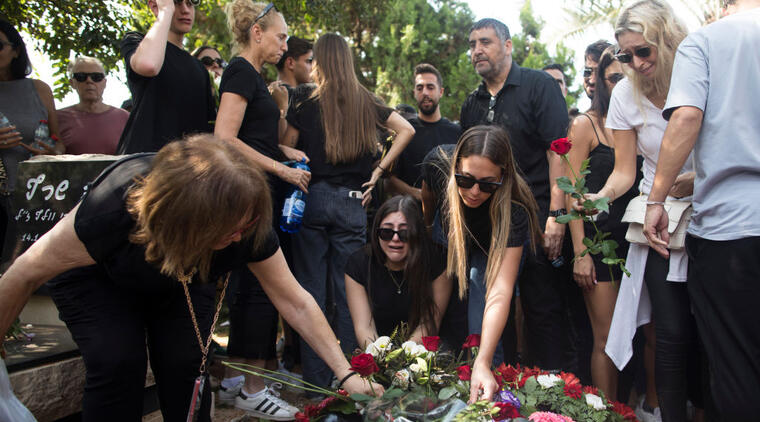
Family and friends of May Naim, 24, who was murdered by Palestinians militants at the "Supernova" festival, near the Israeli border with Gaza strip, react during her funeral on October 11, 2023 in Gan Haim, Israel. (Getty Images)
News

FSI Scholars Analyze Implications of Hamas’ Terror Attack on Israel

Larry Diamond moderated a discussion between Ori Rabinowitz, Amichai Magen and Abbas Milani on the effects of Hamas’ attacks on Israel and what the emerging conflict means for Israel and Middle Eastern geopolitics.
FSI Scholars Analyze Implications of Hamas’ Terror Attack on Israel
Protestors wave flags as thousands of Israelis attend a rally against Israeli Government's judicial overhaul plan on March 27, 2023 in Jerusalem, Israel.
Commentary

What’s Happening to Israel’s Democracy?

Law and governance expert Amichai Magen joins FSI Director Michael McFaul on the World Class podcast to discuss the judicial reforms recently passed by Israel’s legislature, and the implications these have for democracy in Israel and beyond.
What’s Happening to Israel’s Democracy?
Hero Image
Picture of the the Jerusalem Light Rail walking up Jaffa Street. Modern face of Jerusalem, Israel.
Picture of the the Jerusalem Light Rail walking up Jaffa Street. Modern face of Jerusalem, Israel. Photo credit: Laura Siegal via Unsplash | Laura Siegal via Unsplash
All News button
1
Subtitle

Open for enrollment now through Stanford Continuing Studies, "Modern Israel: Insights and Analysis from Stanford Scholars and Guests" will run online for ten weeks on Wednesdays, from April 3 through June 5.

Date Label
-
The Challenges of Governance in the Arab World

This talk overviews the state of governance in the Arab world and the conditions undermining governance improvement in the countries of the region, including corruption, rentier states, and social factionalism. The talk situates these realities in different conceptions and measurements of governance, including those informed by historical, governmental, economic, and sociocultural perspectives. Finally, it reflects on the prospects for a "governance renaissance" in the Arab world.

ABOUT THE SPEAKER

Raed H. Charafeddine was first vice-governor at Banque du Liban, Lebanon’s central bank, from April 2009 till March 2019 and served as alternate Governor for Lebanon at the International Monetary Fund. An expert in financial markets, his career spans thirty-five years in central and commercial banking. He is currently a partner and executive board director of Vita F&B Capital, a MEA-focused strategic advisory firm. Charafeddine served as a board member and advisor for several NGOs that focus on alleviating poverty, improving education, healthcare, social justice, and women's empowerment. He was also a volunteer consultant for the United Nations Development Program in Beirut on conflict transformation. He holds a BA and an MBA from the University of North Carolina at Charlotte.

Hesham Sallam
Hesham Sallam

Encina Hall E008 (Garden Level, East)     
616 Jane Stanford Way, Stanford, CA 94305

This is an in-person event.

Raed H. Charafeddine
Seminars
Date Label
-

Join the Visiting Fellows in Israel Studies Program for a discussion about the roots and causes of misinformation, disinformation, and fake news in times of war. Learn more about the informational contents of foreign and domestic actors when addressing the informational threats. How it must be faced for the future of democracy, and is at stake when protecting media freedoms and civil liberties in Israel.

***

Omer Benjakob is an investigative journalist for Haaretz, Israel's sole newspaper of record, focused on the intersection of politics and technology. He covers disinformation, cyber, and surveillance and has participated in several international investigations, including the Project Pegasus — the misuse of spyware made by the NSO Group — and “Team Jorge,” a groundbreaking undercover investigation into the private disinformation market and digital mercenaries offering election interference as a service. His investigation into the sale of spyware to a militia in Sudan was shortlisted for the EU's European Press Prize for investigative journalism (2023).

He is also a researcher and his writing on Wikipedia has been published in Wired UK, the Columbia Journalism Review and MIT Press, as well as academic journals. Born in New York and raised in Tel Aviv, he lives in Jaffa with his wife and teaches in a local college in Israel. He is also an associate research fellow at the Center for Research and Interdisciplinarity (LPI) in Paris, a research institute affiliated with the Université Paris Cité focused on open science.
 

Omer Benjakob

Omer Benjakob

Cyber and Disinformation Reporter for Haaretz
Full Profile


Tomer Naor is a father, educator, lawyer, and a well-known social activist in Israel. Tomer holds an LLB in Law from the Hebrew University in Jerusalem, and an LLM graduate degree in Public Law from Northwestern University and Tel Aviv University. For the past ten years Tomer has been working for The Movement for Quality Government in Israel, one of Israel’s leading grass roots organizations, fighting corruption and promoting the values of democracy, transparency, good governance and civic participation and volunteerism in Israeli society.

Tomer has led multiple legal cases discussed in the Supreme Court that are pertinent to the core issues of preserving democracy in Israel, and has frequently appeared before the Supreme Court to argue constitutional and administrative petitions as well as before Knesset committees on various issues. In 2020, Marker magazine named Tomer as one of their "40 Under 40" influencers, and he continues to feature as a regular guest in the Israeli and international media. In addition to his legal work, Tomer is involved in a variety of social initiatives in Israel and won the Civil Society Award in 2015.
 

Tomer Naor

Tomer Naor

Chief Legal Office at The Movement for Quality Government in Israe
Full Profile
Alon Tal

Online via Zoom

Tomer Naor
Omer Benjakob
Lectures
Date Label
Paragraphs

A decade has passed since General Abdel-Fattah al-Sisi assumed the Egyptian presidency. His reign has been marked by autocratic trial-and-error governance and the prioritization of personal desires and instincts over the needs of the Egyptian people. Sisi's focus on state-led infrastructure projects, such as the building of new cities and a new Suez Canal, initially stimulated economic growth but masked underlying economic weaknesses. His military-centered economic strategy expanded the military's role in the economy, leading to a precarious autocracy heavily reliant on coercion and external support. Sisi's economic policies, marked by heavy borrowing and austerity measures, have disproportionately impacted low- and middle-class citizens, leading to rising poverty and social discontent. Despite attempts at economic reform, Sisi's governance remains characterized by personalist rule, resistance to formal institutions, and a reliance on repression to suppress dissent, leaving Egypt in a precarious economic and political state.

All Publications button
1
Publication Type
Journal Articles
Publication Date
Subtitle

The Sisi Regime at 10

Journal Publisher
Journal of Democracy
Authors
Hesham Sallam
Number
Number 1
-
Shibley Telhami

In his recent co-edited book, The One State Reality: What is Israel/Palestine (Cornell University Press, 2023), Shibley Telhami and his colleagues have argued that what exists in Israel, the West Bank, and Gaza is already a one-state reality and that the invocation of a two-state solution by American and international policymakers has, in effect, served as a smoke screen to avoid addressing this deeply unjust reality. The Hamas attack on Israel on October 7, 2023, and the subsequent Israeli assault in Gaza have been on such a large and unprecedented scale that they are bound to impact, perhaps even transform, the existing reality. In his presentation, Telhami will assess the reality Israelis and Palestinians now face with an eye to what to expect ahead.

ABOUT THE SPEAKER

Shibley Telhami is the Anwar Sadat Professor for Peace and Development, the Director of the University of Maryland’s Critical Issues Poll, and a Distinguished Scholar-Teacher. He is also a Nonresident Senior Fellow at the Brookings Institution. Before coming to the University of Maryland, he taught at several universities, including the University of California at Berkeley, where he received his doctorate in political science. He has authored and edited numerous books, including one forthcoming book, Peace Derailed: Obama, Trump, Biden, and the Decline of Diplomacy on Israel/Palestine, 2011-2022 (co-authored). His most recent book is a co-edited with contributions volume, The One State Reality: What is Israel/Palestine?, published in March 2023 with Cornell University Press. He has advised every U.S. administration, from George H.W. Bush to Barack Obama. Telhami was selected by the Carnegie Corporation of New York along with the New York Times as one of the "Great Immigrants" for 2013, and Washingtonian Magazine listed him as one of the “Most Influential People on Foreign Affairs” in both 2022 and 2023. He is also the recipient of many awards, including the University of Maryland’s Distinguished Service Award and the University of Maryland’s Honors College Outstanding Faculty Award.

Only those with an active Stanford ID with access to Encina Commons - 123 may attend in person.

Hesham Sallam
Hesham Sallam

Only those with an active Stanford ID with access to Encina Commons - Room 123 may attend in person.

Shibley Telhami
Seminars
Paragraphs

This article is part of a symposium examining the left-wing politics in the MENA region. The symposium aims to shed light on important and timely issues, such as why the left-wing's power and influence has declined since the 1960s and the 1970s and what could be the future of the left in the region. These broad questions are further grounded in case studies that aim to shed light on individual countries and their left-wing movements. Egypt, Iran, Morocco, Israel and Turkey are among those case studies included. The symposium includes seven articles featuring Idriss Jebari, Sune Haugbolle, Hesham Sallam, Siavush Randjbar, Sevgi Adak, Avraham Shilon, Khalil Dahbi and an interview with Gilbert Achcar. 

All Publications button
1
Publication Type
Newsletters
Publication Date
Journal Publisher
APSA MENA Newsletter
Authors
Hesham Sallam
Number
Issue 2, fall 2023
Authors
News Type
News
Date
Paragraphs

In early October, Arab Barometer, a central resource for quantitative research on Arab countries, completed its most recent survey in Palestine, offering unique insight into the views of Palestinians living in the West Bank and Gaza. The next day, Oct. 7, Hamas launched its surprise attack on Israel.

On Wednesday, Nov. 29, Stanford’s Program on Arab Reform and Democracy presented the online event, “Public Opinion in Palestine Before the Conflict,” to discuss the survey findings in the context of the attacks. Amaney A. Jamal and Michael Robbins, two principal investigators at Arab Barometer, discussed how Palestinians view their government, their living conditions, the Israeli-Palestinian conflict, and international actors. The Program on Arab Reform and Democracy is housed at the Center on Democracy, Development and the Rule of Law (CDDRL).

Read the full article in the Stanford Report.

Hero Image
Michael Robbins and Amaney A. Jamal
Michael Robbins and Amaney A. Jamal are principal investigators at Arab Barometer, a nonpartisan research network that conducts public opinion surveys in the Middle East and North Africa. At a recent campus event, they offered insights from their most recent survey in Palestine.
All News button
1
Subtitle

Stanford’s Program on Arab Reform and Democracy – housed at the Center on Democracy, Development and the Rule of Law – hosted an event last Wednesday to discuss the Arab Barometer’s most recent survey, which concluded just as Hamas conducted its Oct. 7 attack on Israel.

-
2024 Payne Distinguished Lecture Series with Kumi Naidoo

The Center on Democracy, Development and the Rule of Law and the Freeman Spogli Institute for International Studies at Stanford University are pleased to welcome social justice and environmental activist Kumi Naidoo to deliver the 2024 Payne Distinguished Lecture Series in International Relations Theory and Practice.


As we veer ever closer to a global climate catastrophe, it has become clear that incremental tinkering with our systems — including political, environmental, social, and economic systems — will not be an adequate solution. Drawing on Martin Luther King’s idea of Creative Maladjustment, this lecture will argue that rather than responding to the polycrisis with an approach of system recovery, maintenance, and protection, what is urgently needed now is system innovation, redesign, and transformation.

It is imperative that we change the trajectory we are on as a species. Yet activism is failing to win at the scale and speed necessary to do so. The communications deficit that must be addressed by those seeking transformative change will likely need to be multilayered and imbued with intersectionality. This lecture posits the power of artivism — a fusion of art and activism — as a vital force capable of resonating with diverse audiences, instilling a sense of urgency, and fostering various pathways for participation. At this critical juncture, pessimism is a luxury we simply cannot afford. The pessimism that flows from our analysis, observations, and lived realities can best be overcome by the optimism of our thoughts, actions, and creative responses.

The Payne Lectureship is named for Frank E. Payne and Arthur W. Payne, brothers who gained an appreciation for global problems through their international business operations. Their descendants endowed the annual lecture series at the Freeman Spogli Institute for International Studies in order to raise public understanding of the complex policy issues facing the global community today and to increase support for informed international cooperation.

The Payne Distinguished Lecturer is chosen for his or her international reputation as a leader, with an emphasis on visionary thinking; a broad, practical grasp of a given field; and the capacity to clearly articulate an important perspective on the global community and its challenges.

ABOUT THE SPEAKER

Kumi Naidoo is a prominent South African human rights and environmental justice activist. At the age of fifteen, he organized school boycotts against the apartheid educational system in South Africa. His courageous actions made him a target for the Security Police, leading to his exile in the United Kingdom, where he remained until 1990. Upon his return to South Africa, Kumi played a pivotal role in the legalization of the African National Congress in his home province of KwaZulu Natal.

Kumi also served as the official spokesperson for the Independent Electoral Commission (IEC), responsible for overseeing the country's first democratic elections in April 1994. His dedication to democracy and justice led to notable international roles, including being the first person from the global South to lead Greenpeace International as Executive Director from 2009 to 2016. He later served as the Secretary General of Amnesty International from 2018 to 2020.

In the realm of education, Kumi has shared his expertise, lecturing at Fossil Free University and holding a Richard von Weizsäcker Fellowship at the Robert Bosch Academy until early 2022.

Currently, Kumi serves as a Senior Advisor for the Community Arts Network (CAN). He holds the position of Distinguished visiting lecturer at Stanford University’s Center on Democracy, Development and the Rule of Law, and is a Professor of Practice at the Thunderbird School of Global Management at Arizona State University. Additionally, he continues to represent global interests as a Global Ambassador for Africans Rising for Justice, Peace, and Dignity. He also holds positions as a Visiting Fellow at Oxford University and an Honorary Fellow at Magdalen College.

In a testament to his family's commitment to positive change, they have established the Riky Rick Foundation for the Promotion of Artivism, honoring the legacy of their son and brother, the now late South African rapper Rikhado “Riky Rick” Makhado through a commitment to supporting artivism and mental health in South Africa.

Kumi has authored and co-authored numerous books, the most recent being Letters To My Mother (2022), a personal and professional memoir that won the HSS 2023 non-fiction award by the National Institute Humanities and Social Sciences.

Michael A. McFaul
Michael A. McFaul

In-person: Bechtel Conference Center (Encina Hall, First floor, 616 Jane Stanford Way, Stanford)

Virtual: Zoom (no registration required)

0
kumi_headshot_-_kumi_naidoo.jpeg

Kumi Naidoo is a prominent South African human rights and environmental justice activist. At the age of fifteen, he organized school boycotts against the apartheid educational system in South Africa. His courageous actions made him a target for the Security Police, leading to his exile in the United Kingdom, where he remained until 1990. Upon his return to South Africa, Kumi played a pivotal role in the legalization of the African National Congress in his home province of KwaZulu Natal.

Kumi also served as the official spokesperson for the Independent Electoral Commission (IEC), responsible for overseeing the country's first democratic elections in April 1994. His dedication to democracy and justice led to notable international roles, including being the first person from the global South to lead Greenpeace International as Executive Director from 2009 to 2016. He later served as the Secretary General of Amnesty International from 2018 to 2020.

In the realm of education, Kumi has shared his expertise, lecturing at Fossil Free University and holding a Richard von Weizsäcker Fellowship at the Robert Bosch Academy until early 2022.

Currently, Kumi serves as a Senior Advisor for the Community Arts Network (CAN). He holds the position of Distinguished visiting lecturer at Stanford University’s Center for Democracy, Development and the Rule of Law, and is a Professor of Practice at the Thunderbird School of Global Management at Arizona State University. Additionally, he continues to represent global interests as a Global Ambassador for Africans Rising for Justice, Peace, and Dignity. He also holds positions as a Visiting Fellow at Oxford University and an Honorary Fellow at Magdalen College.

In a testament to his family's commitment to positive change, they have established the Riky Rick Foundation for the Promotion of Artivism, honoring the legacy of their son and brother, the now late South African rapper Rikhado “Riky Rick” Makhado through a commitment to supporting artivism and mental health in South Africa.

Kumi has authored and co-authored numerous books, the most recent being Letters To My Mother (2022), a personal and professional memoir that won the HSS 2023 non-fiction award by the National Institute Humanities and Social Sciences.

Payne Distinguished Lecturer, 2023-25
Date Label
Kumi Naidoo African Human Rights and Environmental Activist
Lectures
Subscribe to Middle East and North Africa