


Explaining Institutional Change: Policy Areas, Outside Options, and the Bretton Woods Institutions
Paragraphs
I propose and test a theoretical framework that explains institutional change in international relations. Like firms in markets, international institutions are affected by the underlying characteristics of their policy areas. Some policy areas are prone to produce institutions facing relatively little competition, limiting the outside options of member states and impeding redistributive change. In comparison, institutions facing severe competition will quickly reflect changes in underlying state interests and power. To test the theory empirically, I exploit common features of the Bretton Woods institutions—the International Monetary Fund and World Bank—to isolate the effect of variation in policy area characteristics. The empirical tests show that, despite having identical membership and internal rules, bargaining outcomes in the Bretton Woods institutions have diverged sharply and in accordance with the theory.
All Publications button
1
Publication Type
Journal Articles
Publication Date
Journal Publisher
American Journal of Political Science
Ukraine-Russia: What Next?
-
Due to the high interest in this event, we have moved it to a larger room. It is now in the Oksenberg Conference Room, Encina Hall, 3rd floor.
The February Minsk II agreement introduced a fragile ceasefire in eastern Ukraine, following a year of crisis and conflict between Kyiv and Moscow. Ukrainian President Poroshenko needs to grapple with a daunting list of critical economic and political reforms. Russian President Putin, however, appears intent on destabilizing the Ukrainian government and has the means, including military force, to do so. What can we expect next in the Ukraine-Russia stand-off, and how should the West respond?
Image

Steven Pifer is a senior fellow at the Brookings Institution, where his work focuses on arms control, Ukraine and Russia. A retired Foreign Service officer, his more than 25 years with the State Department included assignments as deputy assistant secretary of state with responsibilities for Russia and Ukraine (2001-2004), ambassador to Ukraine (1998-2000), and special assistant to the president and senior director for Russia, Ukraine and Eurasia on the National Security Council (1996-1997).
Co-sponsored by the Freeman Spogli Institute for International Studies and The Europe Center.
Steven Pifer
Senior Fellow
Speaker
the Brookings Institution
Lectures
The Europe Center April 2015 Newsletter
News Type
News
Date
Paragraphs
The Europe Center Graduate Student Grant Competition
Call for Spring 2015 Proposals:
The Europe Center is pleased to announce the Spring 2015 Graduate Student Grant Competition for graduate and professional students at Stanford whose research or work focuses on Europe. Funds are available for Ph.D. candidates from across a wide range of disciplines in the humanities and social sciences to prepare for dissertation research and to conduct research on approved dissertation projects. The Europe Center also supports early graduate students who wish to determine the feasibility of a dissertation topic or acquire training relevant for that topic. Moreover, funds are available for professional students whose interests focus on some aspect of European politics, economics, history, or culture; the latter may be used to support an internship or a research project. Grants range from $500 to $5000. Additional information about the grants, as well as the online application form, can be found here. The deadline for this Spring’s competition is Friday, April 17th. Recipients will be notified by May 4th.
Highlights from Fall 2014:
In Fall 2014, the Center awarded grants to 10 graduate students in departments ranging from History to Economics to Musicology. We would like to introduce you to some of the students that we support and the projects on which they are working. Our featured student this month is Adriane Fresh (Political Science).
Image

2015 Undergraduate Internship Program Winners Announced
A key priority of The Europe Center is to provide Stanford’s undergraduate student community with opportunities to develop a deep understanding of contemporary European society and affairs. By promoting knowledge about the opportunities and challenges facing one of the world’s most economically and politically integrated regions, the Center strives to equip our future leaders with the tools necessary to tackle complex problems both in Europe and in the world more broadly.
To this end, the Center recently solicited applications for the second annual The Europe Center Undergraduate Internship Program in Europe. The Center is sponsoring six undergraduate student internships with leading think tanks and international organizations in Europe in Summer 2015. Jacob (Jake) Leih (International Relations, 2016) and Eddy Rosales Chavez (International Relations, 2017) will work at The ALDE Group in the European Parliament. Ameena Tawakol (Public Policy, 2017), Eunhye (Grace) Choi (Economics, 2018), and Audrey (Hope) Sheils (International Relations, 2016) will work at Bruegel, a leading European think tank. Additionally, Kate Wilson (Public Policy, 2016) will work at the Centre for European Policy Studies (CEPS). The Europe Center is also actively seeking to develop ties with business, governmental, and non-governmental organizations in Europe that can participate in The Europe Center Undergraduate Internship Program in future years.
Save the Date: The Europe Center Lectureship on Europe and the World
Please mark your calendars for the second annual lectures in this series by Joel Mokyr, Robert H. Strotz Professor of Arts and Sciences, and Professor of Economics and History at Northwestern University.
Details: May 20 and May 21, 2015; 4:00 - 5:30 p.m.; Bechtel Conference Center, Encina Hall
Image

Featured Research: Cécile Alduy
The Europe Center serves as a research hub bringing together Stanford faculty members, students, and researchers conducting cutting-edge research on topics related to Europe. Our faculty affiliates draw from the humanities, social sciences, and business and legal traditions, and are at the forefront of scholarly debates on Europe-focused themes. The Center regularly highlights new research by faculty affiliates that is of interest to the broader community.
Image

Workshop Schedules
The Europe Center invites you to attend the talks of speakers in the following workshop series:
Europe and the Global Economy
Apr 23, 2015
Christina Schneider, University of California, San Diego
“Globalizing Electoral Politics: The Domestic Politics of European Cooperation”
RSVP by Apr 20, 2015
European Governance
Apr 9, 2015
Michael Becher, University of Konstanz
“Endogenous Credible Commitment and Party Competition Over Redistribution Under Alternative Electoral Institutions”
RSVP by Apr 6, 2015
Apr 16, 2015
Massimiliano Onorato, Institute for Advanced Studies, Lucca
“Military Conflict and the Rise of Urban Europe”
RSVP by Apr 13, 2015
May 7, 2015
Cliff Carrubba, Emory University
“Does Judicial Independence Matter for Judicial Influence?”
Apr 7, 2015
Douglas Lute, United States Ambassador to NATO
“Wales to Warsaw: NATO and the Current State of Transatlantic Security”
RSVP by Apr 2, 2015
Apr 8, 2015
Nicholas Crafts, University of Warwick, UK
“A Vision of the Growth Process in a Technologically progressive Economy: the United States, 1899-1941”
RSVP by Apr 7, 2015
April 10-11, 2015
"2015 Stanford-University of Vienna Conference on Innovative Experiential Pedagogy"
Apr 13, 2015
Andrea Vindigni, IMT, Lucca Institute for Advanced Studies
“Soldiers and Rebels: Coups and Civil Wars in Weakly Institutionalized and Fragmented States”
Apr 22, 2015
Sascha Becker, University of Warwick, UK
“Religion, Division of Labour and Conflict: Anti-Semitism in German Regions over 700 Years”
RSVP by Apr 21, 2015
Apr 23, 2015
Robert Beachy, Yonsei University in Seoul, South Korea
“The Rise and Fall of Ernst Röhm: Männerbund, National Revolution, and the Coming of the Third Reich”
RSVP by Apr 21, 2015
May 11, 2015
Ivo H. Daalder, The Chicago Council on Global Affairs
“Perspectives from Ivo H. Daalder”
RSVP by May 7, 2015
May 14, 2015
Renata Salecl, Faculty of Law, University of Ljubljana
Keynote Lecture: “From Srebrenica to St. Louis: War Trauma 20 Years Later”
RSVP by May 13, 2015
May 15, 2015
Conference: “Yugoslav Space Twenty Years After Srebrenica”
RSVP by May 14, 2015
May 18, 2015
Laurent Cohen-Tanugi, International Lawyer
“What’s Wrong With France?”
RSVP by May 13, 2015
May 20-21, 2015
TEC Lectureship on Europe and the World
“Culture of Growth: Origins of the Modern Economy”
Joel Mokyr, Robert H. Strotz Professor of Arts and Sciences, Northwestern University
RSVP by May 15, 2015; Additional Details
Save the Date
Apr 15, 2015
Scott Kilner, Career Diplomat with U.S. State Department
“A Career in American Foreign Policy: Reflections of a U.S. Diplomat on Wester Europe, Turkey, and Afghanistan” (Open to Stanford Students Only)
Apr 15, 2015
Julian Weiss, King's College, London
“Between Subversion and Containment: Flavius Josephus, the Jews, and 1492” (Additional Details)
May 1, 2015
Talk by Gérard Araud
French Ambassador to the United Sates
May 1, 2015
Seminar with Karen Dawisha
Author of Putin's Kleptocracy: Who Owns Russia (2014).
We welcome you to visit our website for additional details.
All News button
1
Political disruptions generated economic collapses in post-communist states
News Type
News
Date
Paragraphs
Political fragmentation early on exacerbated the post-communist economic transitions in the Soviet Union and Eastern Europe, new Stanford research shows.
In a new paper, Stanford sociology professor Andrew Walder says that the neoliberal economic policies introduced in those former communist countries did not cause their economic collapses. Neoliberal is a modified form of liberal policies tending to favor free-market capitalism.
In an interview, Walder said, "Policy choices mattered, but they did not create the initial problems that they were intended to solve."
Rather, the longer the decline of the communist system before regime change and the greater the uncertainty over state ownership of assets, the more likely the country fell into prolonged decline.
The lesson for surviving communist or socialist regimes is that future transitions will be less economically damaging if they are rapid and political certainty exists about the ownership of state-owned assets, wrote Walder and co-authors Andrew Isaacson and Qinglian Lu, both Stanford graduate students in sociology.
The worldwide transformation of state socialism during the 1990s saw many of those countries plunge into recession, usually far beyond initial expectations, he said. Most analysts originally expected short-run hardships as those societies and their economies were restructured. It did not happen that way.
"Sharp recessions in the first states to emerge from the revolutions of 1989 were followed by much deeper economic crises in new states that emerged from the breakup of the Soviet Union," said Walder, the Denise O'Leary and Kent Thiry Professor in the Humanities and Sciences and a senior fellow at the Freeman-Spogli Institute for International Studies.
The few surviving communist autocracies that retooled their economies avoided recessions and grew more rapidly, despite once being considered the least promising places for market reform. China and Vietnam are two examples.
Recessions and politics
The researchers examined economic and growth-rate data from 31 countries for the period from 1989 to 2007. They analyzed three competing explanations for post-socialist economic performance – policy choice, initial economic circumstances and reform-era political institutions.
They found that by far the largest differences in growth rates across some 31 transitioning economies were due to wide differences in the initial years of the 1990s. After these initial crises passed in the mid-1990s, growth rates were similar.
They studied those countries that experienced no regime change, like China; those that experienced rapid regime change, like Poland; and those that experienced a prolonged and deep deterioration of political institutions before their eventual collapse.
The initial recessions were a result of the political disruption that accompanies regime change, and state socialist economies were particularly vulnerable to the collapse of communist parties. The political nature of state socialism makes it unusually vulnerable to this problem, Walder said.
"Communist parties played a central role in defining and enforcing the state's property rights over assets – especially important because almost all assets were the property of the state," the authors wrote.
So, when a communist party's ability to perform this function declined for a prolonged period, the economy was undermined by uncertainty over ownership claims.
"This was a problem in all communist regimes that collapsed shortly after 1988, but the political decline of the Soviet Union in its final years was far more protracted and severe than in other communist regimes, where regime change was much more abrupt," they wrote.
The big picture
In the big picture, Walder noted that at the time of the collapse of many post-Soviet economies in the 1990s, everyone's attention was focused on "what is to be done," and this pitted proponents of Chinese style "gradualism" versus "big bang" reforms prescribed by many Western economists.
"It later led to charges that neoliberal policy advice led to the collapse of economies, and to counter-arguments that it was a failure to properly carry out these policies – or something about a country's fundamentals – that was actually the cause of economic collapse," according to Walder.
In retrospect, he said, the worst economic crises were well advanced before any of these policy approaches were carried out, and the real causes were political in nature and rooted in different patterns of decline of communist parties in the prior period, something that eluded the attention of those on both sides of these debates.
It also shows that the heated debates about privatization – its speed and extent – were of secondary importance during the initial years of post-communism.
Walder said, "What mattered most was the capacity of a state to define and enforce property rights of any kind. This is the root cause of the economic collapse in so many of the former Soviet republics."
And so, the alleged merits of Chinese-style "gradualism" were confused with the advantage of not having political institutions collapse, he added.
Soviet Union collapse
The Soviet decline was far more prolonged and pronounced than in all of the other states where communist parties eventually surrendered power, said Walder. Two factors contributed to this:
One was a set of ill-conceived economic reforms that undermined the communist party's control over state assets several years before the Soviet collapse. The other factor was the fall of the Soviet communist party-state. By 1989, the party was already disintegrating, so ownership claims over state assets became unclear, Walder said.
"When communist parties deteriorated deeply over the medium run – as in the USSR – it set off a struggle to control assets, leading to deep economic crises that were intensified in states that broke apart into new entities, which in turn often led to hyperinflation and armed warfare," said Walder.
Clifton Parker is a writer for the Stanford News Service.
Hero Image

All News button
1
Doomsday Vaults, Genebanks and Plant Breeding in the Age of Climate Change
-
Read a full event summary here.
Agricultural crops are on the front lines of climate change. Can we expect increased food production in the context of global warming? Do our crops come pre-adapted to a climate not seen since the dawn of agriculture, or must we take bold measures to prepare agriculture for climate change? This talk will focus on the role that crop diversity must necessarily play in facilitating the adaptation of agricultural crops to new climates and environments. Genebanks, the “Doomsday Vault” near the North Pole, and possible new roles for plant breeders and farmers will be explored.
Image

Dr. Cary Fowler is perhaps best known as the “father” of the Svalbard Global Seed Vault, which UN Secretary General Ban Ki-Moon has described as an “inspirational symbol of peace and food security for the entire humanity.” Dr. Fowler proposed creation of this Arctic facility to Norway and headed the international committee that developed the plan for its establishment by Norway. The Seed Vault provides ultimate security for more than 850,000 unique crop varieties, the raw material for all future plant breeding and crop improvement efforts. He currently chairs the International Council that oversees its operations.
In 2005 Dr. Fowler was chosen to lead the new Global Crop Diversity Trust, an international organization cosponsored by Food and Agriculture Organization of the UN (FAO) and the Consultative Group on International Agricultural Research (CGIAR). This position carried international diplomatic status. During his tenure, he built an endowment of $130 million and raised an additional $100 million (including the first major grant given for agriculture by the Gates Foundation) for programs to conserve crop diversity and make it available for plant breeding. The Trust organized a huge global project to rescue 90,000 threatened crop varieties in developing countries – the largest such effort in history - and is now engaged in an effort Dr. Fowler initiated with the Royal Botanic Gardens (Kew) to collect, conserve and pre-breed the wild relatives of 26 major crops. He oversaw development of a global information system to aid plant breeders and researchers find appropriate genetic materials from genebanks around the world. These initiatives at the Crop Trust, positioned the organization as a major path-breaking player in the global effort to adapt crops to climate change.
Prior to leading the Global Crop Diversity Trust, Dr. Fowler was Professor at the Norwegian University of Life Sciences in Ås Norway. He headed research and the Ph.D. program at the Department of International Environment and Development Studies and was a member of the university committee that allocated research funding to the different departments.
The U.N.’s FAO recruited him in the 1990s to lead the team to produce the UN’s first global assessment of the State of the World’s Plant Genetic Resources. He was personally responsible for drafting and negotiating the first FAO Global Plan of Action on the Conservation and Sustainable Utilization of Plant Genetic Resources, formally adopted by 150 countries in 1996. Following this, Dr. Fowler served as Special Assistant to the Secretary General of the World Food Summit (twice) and represented the Consultative Group on International Agricultural Research (CGIAR/World Bank) in negotiations on the International Treaty on Plant Genetic Resources. He chaired a series of Nordic government sponsored informal meetings of 15 countries to facilitate negotiations for this treaty. And, he represented Norway on the Panel of Experts of the Convention on Biological Diversity.
Cary Fowler was born in 1949 and grew up in in Memphis, Tennessee, the son of a judge and a dietician. He studied at Simon Fraser University in Canada where he received a B.A. (honors – first class) degree. He earned his Ph.D. at Uppsala University in Sweden with a thesis on agricultural biodiversity and intellectual property rights. Dr. Fowler has lectured widely, been a visiting scholar at Stanford University and a visiting professor at the University of California – Davis. He is the author or co-author of more than 100 articles and several books including the classic Shattering: Food, Politics and the Loss of Genetic Diversity (University of Arizona Press), Unnatural Selection, Technology, Politics and Plant Evolution (Gordon & Breach Science Publishers) and The State of the World’s Plant Genetic Resources (UN-FAO).
Dr. Fowler currently serves on the boards of Rhodes College, the NY Botanical Garden Corporation, the Lillian Goldman Charitable Trust and Amy Goldman Charitable Trust. He remains associated with the Global Crop Diversity Trust as Special Advisor. He is a former member of the U.S. National Plant Genetic Resources Board (appointed by the Secretary of Agriculture) and former board and executive committee member of the International Maize and Wheat Improvement Center in Mexico. He has served as chair of the national Livestock Conservancy. He is the recipient of several awards: Right Livelihood Award, Vavilov Medal, the Heinz Award, Bette Midler’s Wind Beneath My Wings Award, the William Brown Award of the Missouri Botanical Garden and two honorary doctorates. He is one of two foreign elected members of the Russian Academy of Agricultural Sciences and is a member of the Russian Academy of Sciences.
Dr. Cary Fowler
Speaker
Senior Advisor, Global Crop Diversity Trust
Symposiums
A global perspective on food systems
All Publications button
1
Publication Type
Journal Articles
Publication Date
Journal Publisher
Journal of Agriculture, Food Systems and Community Development
External URL
LAD Case Studies
The case studies below are integral teaching tools for the Leadership Academy for Development workshops conducted around the world.
Wales to Warsaw: NATO and the Current State of Transatlantic Security
-
At the NATO Summit in Wales in September 2014, NATO leaders were clear about the security challenges on the Alliance’s borders. In the East, Russia’s actions threaten our vision of a Europe that is whole, free and at peace. On the Alliance’s southeastern border, ISIL’s campaign of terror poses a threat to the stability of the Middle East and beyond. To the south, across the Mediterranean, Libya is becoming increasingly unstable. As the Alliance continues to confront theses current and emerging threats, one thing is clear as we prepare for the 2016 Summit in Warsaw: NATO will adapt, just as it has throughout its 65-year history.
Image
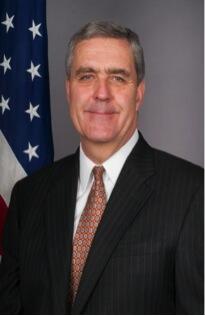
In August 2013, Douglas E. Lute was sworn-in as the Ambassador of the United States to the North Atlantic Treaty Organization (NATO). From 2007 to 2013, Lute served at the White House under Presidents Bush and Obama, first as the Assistant to the President and Deputy National Security Advisor for Iraq and Afghanistan, and more recently as the Deputy Assistant to the President focusing on Afghanistan, Pakistan and India. In 2010, AMB Lute retired from the U.S. Army as a Lieutenant General after 35 years on active duty. Prior to the White House, he served as the Director of Operations on the Joint Staff, overseeing U.S. military operations worldwide. He served multiple tours in NATO commands including duty in Germany during the Cold War and commanding U.S. forces in Kosovo. He holds degrees from the United States Military Academy and Harvard University.
A light lunch will be provided. Please plan to arrive by 11:30am to allow time to check in at the registration desk, pick up your lunch and be seated by 12:00 noon.
Co-sponsored by The Europe Center, the Freeman Spogli Institute for International Studies, the Center for International Security and Cooperation and the Center for Russian, East European and Eurasian Studies.
Douglas Lute
United States Ambassador to NATO
Speaker
Lectures
Stanford Berkeley PE Workshop
-
Private Workshop organized by Prof. Ken Scheve.
Workshops