-

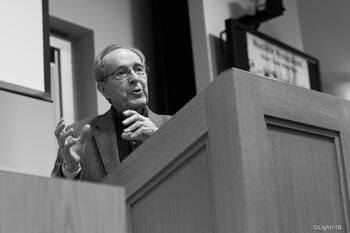
Join Amb. Karl Eikenberry, Prof. Stephen Krasner, and FSI senior scholars for a discussion of the new volume of Daedalus, the journal of the American Academy of Arts and Sciences and a product of the Academy's Civil Wars, Violence and International Responses Project.

More than 30 countries around the world today are engulfed in civil wars, and the consequences are global. From policy to pandemics, the impacts of internal conflict reverberate across oceans and generations.

To introduce the latest volume of Daedalus, co-edited by Amb. Eikenberry and Prof. Krasner, the Freeman Spogli Institute for International Studies is pleased to join the Academy in hosting a panel discussion featuring seven of the eight FSI co-authors on the volume. FSI director Michael McFaul, former US ambassador to Russia, will introduce the panel.

A reception will follow the panel at 5:30 p.m.

Featuring:

Ambassador Michael McFaul (Director of the Freeman Spogli Institute for International Studies, Stanford University), Opening
Dr. Michele Barry (Senior Associate Dean for Global Health, Stanford School of Medicine), Featured Author
Ambassador Karl W. Eikenberry (Oksenberg-Rohlen Distinguished Fellow, Shorenstein Asia-Pacific Research Center at Stanford; Freeman Spogli Institute for International Studies; Center for International Security and Cooperation; Faculty Member, Stanford University), Featured Author
Professor James D. Fearon (Theodore and Frances Geballe Professor in the School of Humanities and Sciences, Stanford University), Featured Author
Dr. Francis Fukuyama (Olivier Nomellini Senior Fellow, Freeman Spogli Institute for International Studies), Featured Author
Professor Stephen D. Krasner (Graham H. Stuart Professor of International Relations, Stanford University; Senior Fellow, Hoover Institution, Stanford University), Featured Author
Professor Stephen Stedman (Senior Fellow, Freeman Spogli Institute for International Studies, Stanford University), Featured Author
Dr. Paul Wise (Richard E. Behrman Professor of Child Health and Society, Stanford University), Featured Author

The Stanford Faculty Club, The Gold Lounge
439 Lagunita Drive
Stanford, CA

Encina Hall
616 Jane Stanford Way
Stanford, CA 94305-6055

0
Senior Fellow, Freeman Spogli Institute for International Studies
Ken Olivier and Angela Nomellini Professor of International Studies, Department of Political Science
Peter and Helen Bing Senior Fellow, Hoover Institution
mcfaul_headshot_2025.jpg PhD

Michael McFaul is the Ken Olivier and Angela Nomellini Professor of International Studies in Political Science, Senior Fellow at the Freeman Spogli Institute for International Studies, and the Peter and Helen Bing Senior Fellow at the Hoover Institution, all at Stanford University. He joined the Stanford faculty in 1995 and served as FSI Director from 2015 to 2025. He is also an international affairs analyst for MSNOW.

McFaul served for five years in the Obama administration, first as Special Assistant to the President and Senior Director for Russian and Eurasian Affairs at the National Security Council at the White House (2009-2012), and then as U.S. Ambassador to the Russian Federation (2012-2014).

McFaul has authored ten books and edited several others, including, most recently, Autocrats vs. Democrats: China, Russia, America, and the New Global Disorder, as well as From Cold War to Hot Peace: An American Ambassador in Putin’s Russia, (a New York Times bestseller) Advancing Democracy Abroad: Why We Should, How We Can; and Russia’s Unfinished Revolution: Political Change from Gorbachev to Putin.

He is a recipient of numerous awards, including an honorary PhD from Montana State University; the Order for Merits to Lithuania from President Gitanas Nausėda of Lithuania; Order of Merit of Third Degree from President Volodymyr Zelenskyy of Ukraine, and the Dean’s Award for Distinguished Teaching at Stanford University. In 2015, he was the Distinguished Mingde Faculty Fellow at the Stanford Center at Peking University.

McFaul was born and raised in Montana. He received his B.A. in International Relations and Slavic Languages and his M.A. in Soviet and East European Studies from Stanford University in 1986. As a Rhodes Scholar, he completed his D. Phil. in International Relations at Oxford University in 1991. 

CV
Date Label

CISAC
Stanford University
Encina Hall
Stanford, CA 94305-6165

(650) 725-1314
0
Senior Fellow at the Freeman Spogli Institute for International Studies
Theodore and Frances Geballe Professor in the School of Humanities and Sciences
Professor of Political Science
rsd26_013_0052a.jpg PhD

James Fearon is a senior fellow at the Freeman Spogli Institute for International Studies, where he is also the social science co-director at its Center for International Security and Cooperation. He is the Theodore and Frances Geballe Professor in the School of Humanities and Sciences and a professor of political science, as well as an affiliate at the institute's Center on Democracy, Development, and the Rule of Law. His research interests include civil and interstate war, ethnic conflict, the international spread of democracy and the evaluation of foreign aid projects promoting improved governance. Fearon was elected to the National Academy of Sciences in 2012 and the American Academy of Arts and Sciences in 2002. Some of his current research projects include work on the costs of collective and interpersonal violence, democratization and conflict in Myanmar, nuclear weapons and U.S. foreign policy, and the long-run persistence of armed conflict.

Co-director, Center for International Security and Cooperation
Affiliated faculty at the Center on Democracy, Development, and the Rule of Law
CV
Date Label

Encina Hall, C148
616 Jane Stanford Way
Stanford, CA 94305

0
Olivier Nomellini Senior Fellow at the Freeman Spogli Institute for International Studies
Director of the Ford Dorsey Master's in International Policy
Research Affiliate at The Europe Center
Professor by Courtesy, Department of Political Science
yff-2021-14290_6500x4500_square.jpg

Francis Fukuyama is the Olivier Nomellini Senior Fellow at Stanford University's Freeman Spogli Institute for International Studies (FSI), and a faculty member of FSI's Center on Democracy, Development and the Rule of Law (CDDRL). He is also Director of Stanford's Ford Dorsey Master's in International Policy, and a professor (by courtesy) of Political Science.

Dr. Fukuyama has written widely on issues in development and international politics. His 1992 book, The End of History and the Last Man, has appeared in over twenty foreign editions. His book In the Realm of the Last Man: A Memoir will be published in fall 2026.

Francis Fukuyama received his B.A. from Cornell University in classics, and his Ph.D. from Harvard in Political Science. He was a member of the Political Science Department of the RAND Corporation, and of the Policy Planning Staff of the US Department of State. From 1996-2000 he was Omer L. and Nancy Hirst Professor of Public Policy at the School of Public Policy at George Mason University, and from 2001-2010 he was Bernard L. Schwartz Professor of International Political Economy at the Paul H. Nitze School of Advanced International Studies, Johns Hopkins University. He served as a member of the President’s Council on Bioethics from 2001-2004. He is editor-in-chief of American Purpose, an online journal.

Dr. Fukuyama holds honorary doctorates from Connecticut College, Doane College, Doshisha University (Japan), Kansai University (Japan), Aarhus University (Denmark), the Pardee Rand Graduate School, and Adam Mickiewicz University (Poland). He is a non-resident fellow at the Carnegie Endowment for International Peace. He is a member of the Board of Trustees of the Rand Corporation, the Board of Trustees of Freedom House, and the Board of the Volcker Alliance. He is a fellow of the National Academy for Public Administration, a member of the American Political Science Association, and of the Council on Foreign Relations. He is married to Laura Holmgren and has three children.

(October 2025)

CV
Date Label

CDDRL
Stanford University
Encina Hall
Stanford, CA 94305-6055

(650) 723-0676 (650) 724-2996
0
Senior Fellow at the Freeman Spogli Institute for International Studies, Emeritus
Graham H. Stuart Professor of International Relations
Senior Fellow at the Hoover Institution, Emeritus
krasner.jpg MA, PhD

Stephen Krasner is the Graham H. Stuart Professor of International Relations. A former director of CDDRL, Krasner is also an FSI senior fellow, and a fellow of the Hoover Institution.

From February 2005 to April 2007 he served as the Director of Policy Planning at the US State Department. While at the State Department, Krasner was a driving force behind foreign assistance reform designed to more effectively target American foreign aid. He was also involved in activities related to the promotion of good governance and democratic institutions around the world.

At CDDRL, Krasner was the coordinator of the Program on Sovereignty. His work has dealt primarily with sovereignty, American foreign policy, and the political determinants of international economic relations. Before coming to Stanford in 1981 he taught at Harvard University and UCLA. At Stanford, he was chair of the political science department from 1984 to 1991, and he served as the editor of International Organization from 1986 to 1992.

He has been a fellow at the Center for Advanced Studies in the Behavioral Sciences (1987-88) and at the Wissenschaftskolleg zu Berlin (2000-2001). In 2002 he served as director for governance and development at the National Security Council. He is a fellow of the American Academy of Arts and Sciences and a member of the Council on Foreign Relations.

His major publications include Defending the National Interest: Raw Materials Investment and American Foreign Policy (1978), Structural Conflict: The Third World Against Global Liberalism (1985), Sovereignty: Organized Hypocrisy (1999), and How to Make Love to a Despot (2020). Publications he has edited include International Regimes (1983), Exploration and Contestation in the Study of World Politics (co-editor, 1999),  Problematic Sovereignty: Contested Rules and Political Possibilities (2001), and Power, the State, and Sovereignty: Essays on International Relations (2009). He received a BA in history from Cornell University, an MA in international affairs from Columbia University and a PhD in political science from Harvard.

CV

CDDRL
Encina Hall, C152
616 Jane Stanford Way
Stanford, CA 94305-6055

(650) 725-2705 (650) 724-2996
0
Senior Fellow at the Freeman Spogli Institute for International Studies
Professor, by courtesy, of Political Science
Stedman_Steve.jpg PhD

Stephen Stedman is a Senior Fellow at the Freeman Spogli Institute for International Studies (FSI) and the Center on Democracy, Development and the Rule of Law (CDDRL), an affiliated faculty member at CISAC, and professor of political science (by courtesy) at Stanford University. He is director of CDDRL's Fisher Family Honors Program in Democracy, Development and Rule of Law, and will be faculty director of the Program on International Relations in the School of Humanities and Sciences effective Fall 2025.

In 2011-12 Professor Stedman served as the Director for the Global Commission on Elections, Democracy, and Security, a body of eminent persons tasked with developing recommendations on promoting and protecting the integrity of elections and international electoral assistance. The Commission is a joint project of the Kofi Annan Foundation and International IDEA, an intergovernmental organization that works on international democracy and electoral assistance.

In 2003-04 Professor Stedman was Research Director of the United Nations High-level Panel on Threats, Challenges and Change and was a principal drafter of the Panel’s report, A More Secure World: Our Shared Responsibility.

In 2005 he served as Assistant Secretary-General and Special Advisor to the Secretary- General of the United Nations, with responsibility for working with governments to adopt the Panel’s recommendations for strengthening collective security and for implementing changes within the United Nations Secretariat, including the creation of a Peacebuilding Support Office, a Counter Terrorism Task Force, and a Policy Committee to act as a cabinet to the Secretary-General.

His most recent book, with Bruce Jones and Carlos Pascual, is Power and Responsibility: Creating International Order in an Era of Transnational Threats (Washington DC: Brookings Institution, 2009).

Director, Fisher Family Honors Program in Democracy, Development and Rule of Law
Director, Program in International Relations
Affiliated faculty at the Center for International Security and Cooperation
Date Label
0
Richard E. Behrman Professor of Child Health and Society
Senior Fellow, Freeman Spogli Institute for International Studies
rsd15_081_0253a.jpg MD, MPH

Dr. Paul Wise is dedicated to bridging the fields of child health equity, public policy, and international security studies. He is the Richard E. Behrman Professor of Child Health and Society and Professor of Pediatrics, Division of Neonatology and Developmental Medicine, and Health Policy at Stanford University. He is also co-Director, Stanford Center for Prematurity Research and a Senior Fellow in the Center on Democracy, Development, and the Rule of Law, and the Center for International Security and Cooperation, Freeman Spogli Institute for International Studies, Stanford University. Wise is a fellow of the American Academy of Arts and Sciences and has been working as the Juvenile Care Monitor for the U.S. Federal Court overseeing the treatment of migrant children in U.S. border detention facilities.

Wise received his A.B. degree summa cum laude in Latin American Studies and his M.D. degree from Cornell University, a Master of Public Health degree from the Harvard School of Public Health and did his pediatric training at the Children’s Hospital in Boston. His former positions include Director of Emergency and Primary Care Services at Boston Children’s Hospital, Director of the Harvard Institute for Reproductive and Child Health, Vice-Chief of the Division of Social Medicine and Health Inequalities at the Brigham and Women’s Hospital and Harvard Medical School and was the founding Director or the Center for Policy, Outcomes and Prevention, Stanford University School of Medicine. He has served in a variety of professional and consultative roles, including Special Assistant to the U.S. Surgeon General, Chair of the Steering Committee of the NIH Global Network for Women’s and Children’s Health Research, Chair of the Strategic Planning Task Force of the Secretary’s Committee on Genetics, Health and Society, a member of the Advisory Council of the National Institute of Child Health and Human Development, NIH, and the Health and Human Secretary’s Advisory Committee on Infant and Maternal Mortality.

Wise’s most recent U.S.-focused work has addressed disparities in birth outcomes, regionalized specialty care for children, and Medicaid. His international work has focused on women’s and child health in violent and politically complex environments, including Ukraine, Gaza, Central America, Venezuela, and children in detention on the U.S.-Mexico border.  

Core Faculty, Center on Democracy, Development and the Rule of Law
Affiliated faculty at the Center for International Security and Cooperation
Date Label
Panel Discussions
-
We contend that contemporary support for populist parties stems from a set of economic and cultural developments that have severed the connections that usually bind people to their society. Building on an important ethnographic literature, we assess whether populism can be seen as a problem of social integration through an examination of political attitudes and electoral behavior in 26 developed democracies. Using subjective social status as an indicator for the social integration of individuals, we find that people who feel more marginal to society, because they lack social engagement or a sense of social respect, are more likely to be alienated from mainstream politics and to not vote or vote for parties of the populist right or left. The implication is that support for parties of the populist right and left has both economic and cultural roots and should be addressed, not only as an issue of economic deprivation requiring redistribution, but also as an issue of social integration requiring efforts to expand social recognition.
 
Noam Gidron image
Noam Gidron
 is fellow at the Niehaus Center for Globalization and Governance at Princeton. Noam received his Ph.D. from Harvard University in May 2016. His research focuses on political sociology and electoral politics in advanced democracies. It draws on multiple methods, including survey analysis, experiments, text analysis, and elite interviews. Geographically, Noam’s work covers member states of the European Union, the United States and Israel. Next year, Noam will join the faculty of the political science department at the Hebrew University of Jerusalem.


Co-sponsored by the Global Populisms Project

Noam Gidron Princeton University
Lectures
Authors
News Type
News
Date
Paragraphs

At 90, William J. Perry has seen a lot in this world.

Maybe, in fact, too much. When it comes to nuclear warfare and annihilation, few people alive have contemplated such tragic outcomes quite like Perry, a senior fellow at the Center for International Security and Cooperation (CISAC), a former U.S. secretary of defense, and one of the world’s top nuclear weapons experts.

Perry, who becomes a nonagenarian on Oct. 11, has been called America’s “nuclear conscience.” He has sometimes referred to himself as a “prophet of doom,” and certainly not in a congratulatory sense, but more as a scientist on a mission. A brilliant mathematician who's worked with nearly every administration since Eisenhower, Perry's been up-close to nuclear weapons and near-miss crises for the last several decades.

Today, Perry is devoted to education on the subject of nuclear weapons – he understands exactly how much horror they would wreak on humanity and beyond.

And while no one would call Perry a crusader type (he is pragmatic, modest and private), there’s no doubt he’s on an energetic crusade for a nuclear-free world. Reaching young minds – those who will inherit the leadership of this world – is his calculus in the formula of world peace.

So, Perry reaches out in ways that resonant with youth. Last year created a series of virtual lectures, "Living at the Nuclear Brink," known as a MOOC, or massive open online course. His new online course, "The Threat of Nuclear Terrorism," launches Oct. 17.  

“Nuclear weapons may seem like 20th century history, but the choices we make about these weapons in the 21st century will decide your future in truly fundamental ways,” Perry wrote in the earlier course's introduction.

Conversations with conscience

An engineer and policy maker, Perry has academic affiliations that range widely across the Stanford campus. He is the Michael and Barbara Berberian Professor (emeritus), a senior fellow at the Freeman Spogli Institute for International Studies, and a senior fellow at the Hoover Institution. He's always in demand for a panel discussion or speaker event.

On Nov. 1, he's the featured subject of a CISAC event, "A Conversation with William J. Perry: Assessing Nuclear Risk in a New Era." That talk will include a Perry discussion with CISAC co-director Amy Zegart and another panel discussion, led by CISAC co-director Rod Ewing, with scholars Siegfried Hecker, David Holloway and Scott Sagan.

Perry's been known to participate in “Ask Me Anything” chats on Reddit, a place popular with youth. He connects with all types of audiences, conveying in direct encounters the exact nature of the nuclear dangers now facing civilization, and what can be done to reduce those dangers. This mission to educate led him to write a memoir, My Journey at the Nuclear Brink, all the while giving countless media interviews and delivering major speeches before major think tanks, nongovernmental organizations and policymakers.

One core Perry message is that U.S. foreign policies do not reflect the existing danger of nuclear threats -- the reason is that this risk isn’t widely recognized across society. And young people need to understand this dynamic that creates a distorted, too complacent view of a very real nuclear weapons problem throughout the world.

Perry, with the help of both his daughter, Robin Perry, his son, David Perry, granddaughter, Lisa Perry, and grandson Patrick Allen, established the William J. Perry Project, which informs the public about the role of nuclear weapons in today's world, while urging the elimination of these weapons.

It’s a family on a mission, and the Perrys believe the only way to avoid nuclear war is by directly contemplating the scenario in a personal, direct sense through learning and education.

"We're really just out there trying to reach a generation that isn't engaged on this issue right now," said Lisa Perry in an article on the Perry Project web site. She is the digital media manager for the project. "It's something we learned in history class. There was no conversation about what's happening now."

As her grandfather explained, "The dangers will never go away as long as we have nuclear weapons. But we should take every action to lower the dangers, and I think it can be done."

Early entrepreneurship days

Perry was born in Vandergrift, Pennsylvania, in 1927, the year that Charles Lindbergh completed the first solo flight across the Atlantic.

As a child, Perry fell in love with math. Math for him represented analytical discipline and the beauty of overcoming challenge. By solving math problems, one can master not only numerical problems, but other seemingly all-too difficult challenges. The key, as Perry discovered, was breaking down the larger problem into smaller parts. This evolved complexity into simplicity, which is more easily understood. Perry went on to cultivate this problem-solving mindset the rest of his life.

Image
13890188286 6fd142cd4b k
Perry saw the world as a young man – he left college at 18 to enlist in the U.S. Army, serving in the army of occupation of Japan. There he witnessed firsthand the devastating aftermath of the conventional and nuclear bombings in Japan. Those experiences in Japan shaped his perspectives forever on issues like arms control and national security.

After his military service, Perry received his B.S. (1949) and M.A. (1950) degrees from Stanford, and a Ph.D. in mathematics from Pennsylvania State University in 1957. He chose a career in defense electronics, and became one of the Silicon Valley’s early entrepreneurs, founding a company that pioneered digital technologies to analyze the Soviet nuclear missile arsenal. And so, he was often asked to counsel the federal government on national security.

In October 1962 during the Cuban missile crisis, Perry received an urgent request from the U.S. government to help analyze U-2 photos of the Soviet installation of nuclear-armed missiles in Cuba. Perry later recollected that he thought the world could end during that crisis, and that those days might well be his last.

From 1977 to 1981 during the Carter administration, Perry served as the Pentagon’s undersecretary of defense for research and engineering, where he oversaw weapon systems and research. After leaving the Pentagon in 1981 to work in the private sector, Perry became a Stanford engineering professor and a co-director of the Preventive Defense Project at Stanford's Center for International Security and Cooperation (CISAC).

He was the co-director of CISAC from 1988 to 1993. Today, he is the Michael and Barbara Berberian Professor emeritus at Stanford, with a joint appointment at the Freeman Spogli Institute for International Studies and the School of Engineering. He is also a senior fellow at the Hoover Institution.

In 1994, President Bill Clinton tapped Perry to become the 19th U.S. Secretary of Defense. However, it was not so easy for the White House to recruit him.

Perry treasured his privacy so much that he originally turned down the job of defense secretary. Only when Clinton and Al Gore assured him that his family’s privacy could be maintained, he finally accepted the offer. With the Cold War having ended a fear years earlier, he found it would become a historic time to serve as America’s defense secretary.

Years later he recalled standing with his Russian and Ukrainian counterparts as their teams destroyed missile silos in the former Soviet Union. By the end of the 1980s, Perry thought the world had survived the horrific prospect of nuclear annihilation – and that it was behind everyone, left in the ashes of the Cold War.

Not so fast. Welcome to 2017.

Beyond doomsday

Today, Perry believes, the world is arguably more dangerous than ever before. His view is supported by The Bulletin of Atomic Scientists, which announced in January 2017 that the Doomsday clock now stands at two-and-a-half minutes to midnight, suggesting that existential threats now pose a greater danger to humanity than they have at any time since the height of the Cold War.

In fact, in 2016, Perry warned that the Doomsday clock should stand at five minutes to midnight for nuclear war – but only one minute to midnight for the threat of nuclear terrorism. He said during that press conference that the clock now issued a “more dangerous, more ominous forecast than two thirds of the years during the Cold War.”

As a result, Perry’s profile has risen higher than ever as the world confronts increasingly unsettling nuclear threats like a war between the U.S. and North Korea, reckless nuclear rhetoric by state leaders, and the possibility that terrorists may use nukes.

On North Korea in particular, Perry has urged a return to deterrence on the part of the United States:

“The threat to use nuclear weapons has always been tied to deterrence or extended deterrence; historical U.S. policy is that the use of nuclear weapons would only be in response to the first use of nuclear weapons against the United States or an ally covered by our extended deterrence,” he said in a statement.

With North Korea, Perry notes that the U.S. should not make empty threats, because empty threats weaken America’s credibility and reduce the ability to actually take strong action. “As Theodore Roosevelt said, ‘Speak softly but carry a big stick,’” he said.

During the early Cold War, he said, when the Soviets used “shrill” language, U.S. presidents like Eisenhower merely responded in tempered, moderate tones. “Just as in those tense times, today’s crisis also calls for measured language,” Perry said.

On top of this, Perry said the U.S. and Russians seem to be “sleepwalking into this new nuclear arms race,” and that while a new Cold War and arms race may look different than the prior one in U.S.-Soviet history, they are both dangerous and “totally unnecessary.”

Whether on the North Korean peninsula or elsewhere, a miscalculation could be catastrophic, Perry warns. That’s one reason he joined other former "Cold Warriors" like George Schulz, Henry Kissinger and Sam Nunn to write an op-ed in the Wall Street Journal in 2007. They argued that the goal of U.S. nuclear policy should be not merely the reduction and control of atomic arms, but the ultimate elimination of all nuclear weapons everywhere.

What type of world does Perry dream about in his brightest visions? One without nuclear weapons. He believes collective humanity must “delegitimize” nuclear war as an acceptable risk of modern civilization. A safer world, one that requires great purpose, persistence, and patience to make a reality, is possible, if people understand the threats and take action to reduce them, Perry has said.

“This global threat requires unified global action,” Perry wrote in July 2017 in support of a new United Nations treaty banning the use of nuclear weapons.

Education and knowledge – that’s how Perry believes humanity can safely evolve past its nuclear phase.

MEDIA CONTACT:

Clifton B. Parker, Center for International Security and Cooperation: (650) 725-6488, cbparker@stanford.edu


Hero Image
9151555321 239e92093f k
William J. Perry talks with Stanford students in 2013. Perry, who turns 90 on Oct. 11, has been called America’s “nuclear conscience." The Stanford professor emeritus has led a decades-long educational effort to teach people, especially the young, about nuclear dangers. | Courtesy of CISAC
All News button
1
Authors
News Type
News
Date
Paragraphs

Sunday’s referendum vote in Catalonia, a northeast region of Spain seeking independence, was marred with violence as police forces from the Spanish government, which deemed the referendum illegal, clashed with Catalonians attempting to vote.

From 2011 to 2016, Francois Diaz-Maurin, a visiting scholar at Stanford University’s Center for International Security and Cooperation, lived and studied in Barcelona, Catalonia’s largest city. He offers his perspective on the events that unfolded over the weekend, why the Spanish government reacted so severely and what effects Catalonia’s quest for independence may have on Europe.

What are Catalonia’s motivations for independence?

The Catalonian pro-independence movement has historic, cultural and economic roots. Historically, pro-independence Catalans want to recover their sovereignty that was lost during the War of the Spanish Succession, a major European conflict of the early 18th century.

Culturally, there is a popular slogan: “Catalonia is not Spain.” Catalonia really has a very different culture from Spain. It has its own language, celebrations, traditions and historic references – which were all prohibited under Francisco Franco’s dictatorship (1939-1975). After the Catalan self-determination referendum was shockingly repressed by the Spanish police, it seems that Catalonia and Spain do not even share the same definition of democracy.

The independence of Catalonia also has some pragmatic motivations. Catalonia, one of the wealthiest regions in Spain, wants to be able to take full control of its economy. Indeed, after almost a decade of political gridlock – Spain’s Prime Minister Mariano Rajoy still does not have a majority at the Parliament after two elections. With a wave of austerity measures and multiple cases of corruption affecting Spain’s ruling party, the right-wing Partido Popular, Catalonia is looking for a way out of the economic and political crises.

Why was the reaction from the Spanish government so severe?

Although the Catalan independence referendum was considered anticonstitutional under Spanish law, what happened was an absolute shock. It gives a very sad image of a so-called advanced democracy. We should have been counting the ballots, not the numbers of people having received urgent care at hospitals – about 1,000 people, according to the Catalan government.

Yet, what is behind the Spanish brutality is much more trivial than it appears. In a situation of stalled political process, Rajoy, who has long lost legitimacy in Catalonia where the Partido Popular is not well-represented, could risk his seat if Catalonia becomes an independent state. So, in my view, the harsh reaction of the Spanish government is at the crossroad between a long tradition of brutality and the fear of one to lose power.

Rajoy said that the rule of law was still reigning in Spain, which remained unified, and called for opening negotiations. But negotiating was never an option for the Spanish government, which refused to discuss the possibility of a referendum. That is no longer an option for the Catalan government after this violation of its sovereignty and fundamental rights of its people.

Despite all the troubles, yesterday’s Catalan referendum resulted in more than 2.2 million citizens – out of 5.3 million voters – voting at 90 percent in favor of the independence, although 770,000 ballots could not be counted due to the Spanish police operations, which seized and destroyed ballot boxes, according to news reports. Catalonia government’s President Carles Puigdemont said in a communiqué that an independent state in the form of a republic will be proclaimed after approval of the referendum’s results by the Catalonian Parliament.

What impacts could these events have on Europe in terms of other regions following Catalonia’s actions?

The situation of Catalonia has always been intertwined with the history of Europe, and there is no surprise that the current situation in Catalonia is getting much attention from outside of Spain. So, one can expect that the referendum in Catalonia will certainly reinforce the pro-independence movements in other regions of Europe, such as Scotland, Basque Country, Flanders, Belgium, and Veneto, Italy. Yet, the repression of the Spanish government also poses some dilemma.

The Catalan referendum has some deeper implications as far as the definition of democracy. The Catalans’ fundamental rights were violated by the same institutions that should be protecting their fellow citizens. Of course, this happens in numerous countries every day with some complacency. But those countries do not pretend to be the flagships of democracy. That makes a big difference.

What happened in Catalonia clearly does not show the best image of Europe as a unified community. Only very few state officials and foreign observers from Europe condemned the repression of the Spanish government, despite the fact that it clearly violated the European charter of fundamental rights. What we are seeing is clearly the end of the European model as we know it. In days like the one we just have witnessed we clearly see that democracy is much more fragile than it seems. What we take for granted such as the right to deliberate over a political project can encounter the brutality of dictatorial regimes.

Milenko Martinovich is the deputy director for social science communications in the Stanford News Service. He wrote this story for the Stanford News Service.

Francois Diaz-Maurin also wrote this story on Catalonia for the Freeman Spogli Institute's Medium site. 

Hero Image
catalonia 2 795x530
Catalan demonstrators participating at a rally for the independence of Catalonia in Barcelona on Sept. 11. | DinoGeromella/Getty Images
All News button
1
Authors
News Type
News
Date
Paragraphs

Colin Kahl, a top national security expert and veteran White House advisor, has been named to a new senior fellowship at Stanford.

Starting in January 2018, Kahl will be the inaugural Steven C. Házy Senior Fellow, an endowed faculty chair at Stanford's Freeman Spogli Institute for International Studies (FSI). He will be affiliated with the Center for International Security and Cooperation (CISAC). 

Kahl most recently was an associate professor in the Security Studies Program at Georgetown University’s Edmund A. Walsh School of Foreign Service. From 2014 to 2017, he was deputy assistant to the U.S. president and national security advisor to the vice president. In that position, he served as a senior advisor to President Obama and Vice President Biden on all matters related to U.S. foreign policy and national security affairs, and represented the Office of the Vice President as a standing member of the National Security Council Deputies’ Committee. 

Michael McFaul, director of FSI, said, “Professor Colin Kahl is a terrific hire for FSI and Stanford University as a whole. Very few scholars in the United States have both deep scholarly interests and credentials as well as experience and expertise in policymaking. Colin is that rare professor who truly bridges the gap between theory and policy. We are very lucky to have him at Stanford. "

Amy Zegart, co-director at CISAC, said, “Colin Kahl is a tremendous addition to CISAC in every way – a distinguished scholar and educator who has served in senior policy positions at one of the most challenging junctures in U.S. foreign policy. His wide-ranging work spans nuclear risk reduction, U.S. grand strategy, and Middle Eastern politics, and promises to enhance and enrich nearly everything we do at CISAC.”

Kahl said his Stanford plans include conducting research on a range of contemporary international security challenges, including writing a book examining American grand strategy in the Middle East after 9/11. He is also doing research on the implications of emerging technologies for strategic stability and nuclear rivalry. 

For Kahl, joining Stanford is both an intellectual opportunity and a homecoming of sorts.

“Stanford is one of the top universities in world,” Kahl wrote in an email, “with a diverse faculty in the social sciences and natural sciences working at the cutting edge of international affairs and national security. I can think of no better intellectual community to be part of. I also grew up in the Bay Area, so this is a great opportunity to come home.”

National, global security

Many of the issues dominating national security conversations over the past few decades continue to matter today, Kahl said.

“These include nuclear proliferation, threats from international terrorist organizations and other transnational actors, and the competition between the United States and rising global and regional powers,” he said.

Kahl noted that in a “globalized, hyper-connected world,” other critical issues are becoming increasingly important. This includes climate change and environmental sustainability, and the social, economic, and security implications of the digital revolution. It is time to for a scholarly examination of cyber, big data, robotics, A.I., autonomous systems, 3-D printing, and synthetic biology, for example.

“No university in the world is better positioned to help policy makers understand these challenges and craft creative solutions than Stanford,” he added.

From February 2009 to December 2011, Kahl was the deputy assistant secretary of defense for the Middle East at the Pentagon. In this capacity, he served as the senior policy advisor to the U.S. defense secretary for Egypt, Iran, Iraq, Israel, the Palestinian territories, Saudi Arabia, Syria, Yemen, and six other countries in the Levant and Persian Gulf region.

In June 2011, Kahl was awarded the Secretary of Defense Medal for Outstanding Public Service by Defense Secretary Robert Gates. In 2007-2009 and 2012-2014, he was a senior fellow at the Center for a New American Security, a nonpartisan Washington, DC-based think tank.

Publications, research

Kahl wrote the 2006 book, States, Scarcity, and Civil Strife in the Developing World, and has published articles in Foreign Affairs, Foreign Policy, International Security, the Los Angeles Times, Middle East Policy, the New Republic, the New York Times, Politico, and the Washington Post, for example.

He has analyzed the causes and consequences of violent civil and ethnic conflict in developing countries, as well as U.S. intervention practices in those conflicts, with a particular focus on the Middle East.

From 2000 to 2007, Kahl was an assistant professor of political science at the University of Minnesota. In 2005-2006, he served as a Council on Foreign Relations International Affairs Fellow in the Office of the Secretary of Defense, where he worked on issues related to counterinsurgency, counterterrorism, and responses to failed states.

Kahl received his bachelor’s degree in political science from the University of Michigan in 1993, and his doctorate in political science from Columbia University in 2000.

Donor background

The gift for the position was made by Christine and Steven F. Hazy in honor of their son, Steven C. Hazy, who was a CISAC honors student and is now a vice president at Aviation Capital Group, one of the largest commercial aircraft leasing firms in the world. A leader in the aviation industry, Steven F. is the founder of two Los Angeles-based air leasing companies.  In addition to many civic leadership roles in Los Angeles and Washington DC, Christine is a current Stanford trustee and former co-chair of The Stanford Challenge. 

It was CISAC core faculty member Scott D. Sagan's engaging and productive mentorship of their son that inspired the family to establish the new senior fellowship. Steven received his bachelor’s degree from Stanford in International Relations in 2004 and his MBA from the Stanford Graduate School of Business in 2011. Steven serves on the FSI Council.

MEDIA CONTACTS:

Clifton B. Parker, Center for International Security and Cooperation: (650) 725-6488, cbparker@stanford.edu

Hero Image
img 3363
Colin Kahl, second from the right, talks with President Barack Obama, far left, Vice President Joe Biden, second from the left, U.S. Secretary of State John Kerry, middle, and National Security Advisor Susan Rice, far right. | Courtesty of Colin Kahl
All News button
1
0
Visiting Scholar, Ukrainian Emerging Leaders Program, 2017-18
slava_hs.jpg

Vakarchuk is a Ukrainian civic activist, musician and the lead vocalist and founder of the band “Okean Elzy.“ He will be in residence at CDDRL this fall to attend courses and study with some of the leading intellectuals and academics at CDDRL. He holds a doctorate degree in theoretical physics from the Ivan Franko National University of Lviv.

Vakarchuk is also the founder of a charity fund called “Lyudi Maybutnyogo” (People of the Future) and co-founder of the Center for Economic Strategy, an independent policy think tank dedicated to supporting reforms and sustainable economic growth in Ukraine. He served as a Yale World Fellow in 2015.

0
Visiting Scholar, Ukrainian Emerging Leaders Program 2017-18
dmytro.jpg

Dmytro Romanovych works at the Reform Delivery Office for the Cabinet of Ministers of Ukraine. With a team of project managers, they work directly with the prime minister by facilitating reforms, monitoring progress and coordinating across ministries. The Reform Delivery Office focuses on issues of public administration reform, business climate improvement, industrial policy and innovations, healthcare reform and privatization. Romanovych is also an advisor to the Minister of Economy, and is responsible for deregulation and improving the business climate in Ukraine. In addition, he is an economic expert in the largest NGO coalition in Ukraine, the Reanimation Package of Reforms, which is the most influential non-governmental reform advocate in the country.

Romanovych's key responsibility is to ensure the Cabinet of Ministers and Verkhovna Rada (Ukraine’s Parliament) both adopt Ukraine's deregulation agenda. This includes developing the concept of the deregulation documents, involvement and coordination of the stakeholders, passing documents through approval process, public promotion, etc. Due largely in part to its deregulation reform, the Ministry of Economic Development and Trade was recognized as a leader in the reform process in comparison with other ministries Over the last year, Romanovych has organized several high-level meetings that have resulted in the adoption of 30 deregulation documents, the abolishment of 500 regulations and the passing of draft laws on state control system reform by the Verkhovna Rada. Prior to this he was among the creators of the Better Regulation Delivery Office institution, which is now is the key think-tank and task force for business climate improvement and restructuring of the government policy-making process. Romanovych graduated from Kharkiv State Economic University with a Master’s Degree in Economic Cybernetics.

0
Visiting Scholar, Ukrainian Emerging Leaders Program 2017-18
oleksandra_hs.jpg

Oleksandra Matviichuk is a human rights defender who works on issues in Ukraine and the OSCE region. At present she heads the human rights organization Center for Civil Liberties, and also coordinates the work of the initiative group Euromaidan SOS. The activities of the Center for Civil Liberties are aimed at protecting human rights and establishing democracy in Ukraine and the OSCE region. The organization is developing legislative changes, exercises public oversight over law enforcement agencies and judiciary, conducts educational activities for young people and implements international solidarity programs. 

The Euromaidan SOS initiative group was created in response to the brutal dispersal of a peaceful student rally in Kyiv on November 30, 2013. During three months of mass protests that were called the Revolution of Dignity, several thousand volunteers provided round-the-clock legal and other aid to persecuted people throughout the country. Since the end of the protests and beginning of Russian aggression in Ukraine, the initiative has been monitoring political persecution in occupied Crimea, documenting war crimes and crimes against humanity during the hybrid war in the Donbas and conducting the “LetMyPeopleGo” international campaign to release political prisoners detained by the Russian authorities. 

Oleksandra Matviichuk has experience in creating horizontal structures for massive involvement of people in human rights activities against attacks on rights and freedoms, as well as a multi-year practice of documenting violations during armed conflict. She is the author of a number of alternative reports to various UN bodies, the Council of Europe, the European Union, the OSCE and the International Criminal Court. In 2016 she received the Democracy Defender Award for "Exclusive Contribution to Promoting Democracy and Human Rights" from missions to the OSCE.

0
Visiting Scholar, Ukrainian Emerging Leaders Program 2017-18
oleksandars_copy.jpg

Olexandr Starodubtsev is a Ukrainian reformer who is deeply involved in the creation of a new electronic public procurement system Prozorro, which is one of the most famous reforms in the country. Currently Starodubtsev is the Head of the Public Procurement Regulation Department in The Ministry of Economic Development and Trade of Ukraine, and is an official policy maker in the spheres of public procurement and economic development in Ukraine.

The Prozorro system is famous for its different approaches to bottom-up reform based on the close collaboration between government, business and civil society. In 2016, the Prozorro system won several distinguished international awards, such as the Open Government Partnership Award, the Public Procurement Award, and was also recognized by the European Bank of Reconstruction and Development and Open Contracting Partnership. Moreover, Prozorro and its principles became an inspirational example for other Ukrainian reforms.

Starodubtsev was born in Kharkiv, Ukraine in 1979. He graduated from Kharkiv National University in 2002. Previously he worked on the stock market where he made his career as a back-office specialist up to a managing partner of a Ukrainian branch of a multinational financial institution. He received an MBA degree from the Kyiv-Mohyla Business School and became Alumnus of the Year in its first competition in 2015. He is married and has a son and a daughter.


Authors
News Type
News
Date
Paragraphs

As the new deputy director for the Center for International Security and Cooperation, Harold Trinkunas will assume more day-to-day management duties of the center in addition to his research scholarship.

Trinkunas, who starts his new role Oct. 1, will provide additional oversight over CISAC’s core operations, from research and fellowships to administration and finance. He was previously CISAC’s associate director for research; he will continue to be a senior research scholar affiliated with the center.

In his new capacity, Trinkunas will work to ensure that CISAC remains on a sustainable footing as its faculty, scholars and fellows generate knowledge to build a safer world and educate the next generation of security experts. This will contribute to maintaining CISAC’s position as a global thought leader on meeting the most pressing challenges for international security and international cooperation.

CISAC’s associate director position for administration and finance will report to Trinkunas, who joined CISAC in September 2016. Previously, that position (under recruitment now) reported to CISAC’s co-directors.  

The new organizational structure brings CISAC into alignment with other centers at the Freeman Spogli Institute for International Studies. It will also allow co-directors Amy Zegart and Rod Ewing  to focus more time on CISAC’s external relationships – with CISAC supporters, policy makers and media. These are key audiences for the Center’s scholarly findings and education programs.

Zegart, CISAC co-director for the social sciences, said, "I couldn't be more delighted that Harold has agreed to become CISAC's deputy director. Creating this deputy director position will enable us to bring together longer-range strategic planning and day-to-day operations -- and Harold is ideally suited to the task, with deep experience in university administration at the Naval Postgraduate School, Brookings, and Stanford as well as an active and exciting scholarly research agenda."

Ewing, CISAC co-director for the sciences, said, “Harold’s expanded role in CISAC will allow for a better coordination of administrative and budgetary decisions on a day-to-day basis.  I certainly look forward to working with Harold as we continue to expand the impact of CISAC scholarship on policy issues.”

Management, research

Trinkunas joined CISAC last year from the Brookings Institution, where he was the Charles W. Robinson Chair and senior fellow as well as director of the Latin America Initiative in the Foreign Policy program.

“This is a great opportunity to work in collaborative ways with exceptional scholars around some very important international security challenges facing today’s world,” Trinkunas said then.

Born and raised in Venezuela, Trinkunas earned his doctorate in political science from Stanford in 1999; he was also a predoctoral fellow and later a visiting professor at CISAC.  His first exposure to CISAC took place when he served as a teaching assistant to Scott Sagan in 1992.

Through the years, CISAC has evolved and adjusted its focus to reflect the global security realities, Trinkunas said. Research at CISAC spans biosecurity and global health, terrorism, cybersecurity, governance, and nuclear risk and cooperation, among others.

Trinkunas said he enjoys the mentoring aspect of working with emerging scholars in the CISAC fellowship program, which he oversees.

Security, governance

Trinkunas’ most recent book, Aspirational Power: Brazil's Long Road to Global Influence, co-authored with David Mares of UC San Digo, was published last year by the Brookings Institution Press.  Aspirational Power was chosen as one of Foreign Affair’s “best books of 2016.”

Trinkunas studies the intersection of security and governance. In his research, he has examined civil-military relations, ungoverned spaces, terrorist financing, emerging power dynamics, and global governance.

MEDIA CONTACTS:

Harold Trinkunas, Center for International Security and Cooperation: (650) 725-8035, antanas@stanford.edu

Clifton B. Parker, Center for International Security and Cooperation: (650) 725-6488, cbparker@stanford.edu


Hero Image
15245421688 ff04a3e3e8 b
As the new deputy director for the Center for International Security and Cooperation, Harold Trinkunas will assume more day-to-day management duties of the center in addition to his research scholarship. | Courtesy of CISAC
All News button
1
Subscribe to Europe