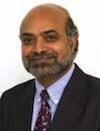
Diamond provides recommendations for a post-Mubarak world
Two decades after the fall of Soviet-bloc dictatorships, popular movements for democracy are erupting in the last regional bastion of authoritarianism: the Arab world.
So far, only Tunisia's dictator, Zine el-Abidine Ben Ali, has been toppled, while Egypt's President Hosni Mubarak - who has ruled that ancient land longer than many pharaohs - announced Tuesday that he will step down in September. But other Arab autocrats are bound to go. From Algeria to Syria to Jordan, people are fed up with stagnation and injustice, and are mobilizing for democratic change.
So, what happens when the autocrat is gone? Will the end of despotism give way to chaos - as happened when Mobutu Sese Seko was toppled in 1997 after more than 30 years in power in Zaire? Will the military or some civilian strongman fill the void with a new autocracy - as occurred after the overthrow of Arab monarchs in Egypt and Iraq in the 1950s, and as has been the norm in most of the world until recently? Or can some of the Arab nations produce real democracy - as we saw in most of Eastern Europe and about half the states of sub-Saharan Africa? Regime transitions are uncertain affairs. But since the mid-1970s, more than 60 countries have found their way to democracy. Some have done so in circumstances of rapid upheaval that offer lessons for reformers in Tunisia, Egypt and other Arab countries today.
Unite the democratic opposition.
When a dictatorship is on the ropes, one thing that can rescue it is a divided opposition. That is why autocrats so frequently foster those divisions, secretly funding a proliferation of opposition parties. Even extremely corrupt rulers may generate significant electoral support - not the thumping majorities they claim, but enough to steal an election - when the opposition is splintered.
In the Philippines in 1986, Nicaragua in 1990 and Ukraine in 2004, the opposition united around the candidacies of Corazon Aquino, Violeta Chamorro and Viktor Yushchenko, respectively. Broad fronts such as these - as well as the Concertacion movement that swept Christian Democrat Patricio Aylwin to power in Chile in 1989 after the departure of Gen. Augusto Pinochet - often span deep personal and ideological differences. But the time for democratic forces to debate those matters is later, once the old order is defeated and democratic institutions have been established.
Egypt is fortunate - it has an obvious alternative leader, Mohamed ElBaradei, whom disparate opposition elements seem to be rallying around. Whether the next presidential election is held on schedule in September or moved up, ElBaradei, or anyone like him leading a broad opposition front, will probably win a resounding victory over anyone connected to Mubarak's National Democratic Party.
Make sure the old order really is gone.
The exit of a long-ruling strongman, such as Ben Ali, does not necessarily mean the end of a regime. Fallen dictators often leave behind robust political and security machines. No autocrat in modern times met a more immediate fate than Romania's Nicolae Ceausescu, who was executed by a firing squad of his own soldiers in 1989 just three days after a popular revolution forced him to flee the capital. Yet his successor, Ion Iliescu, was a corrupt former communist who obstructed political reform. Most of the former Soviet states, such as Georgia and Kazakhstan, had similar experiences.
Countries are much more likely to get to democracy quickly if they identify and embrace political leaders who are untainted by the old order and are ready to roll it back.
But also come to an understanding with the old order.
Victorious democrats won't be able to completely excise the pillars of the authoritarian order. Instead, for their country to turn toward democracy, those pillars must be neutralized or co-opted. This old order may descend into violence when, as in Iraq, broad classes of elites are stigmatized and ousted from their positions. In a successful bargain, most old-regime elites retain their freedom, assets and often their jobs but accept the new rules of the democratic game.
Unless the military collapses in defeat, as it did in Greece in 1974 and in Argentina after the Falklands War, it must be persuaded to at least tolerate a new democratic order. In the short run, that means guaranteeing the military significant autonomy, as well as immunity from prosecution for its crimes. Over time, civilian democratic control of the military can be extended incrementally, as was done masterfully in Brazil in the 1980s and in Chile during the 1990s. But if the professional military feels threatened and demeaned from the start, the transition is in trouble.
The same principle applies to surviving elements of the state security apparatus, the bureaucracy and the ruling party. In South Africa, for example, old-regime elements received amnesty for their human rights abuses in exchange for fully disclosing what they had done. In this and other successful transitions, top officials were replaced, but most state bureaucrats kept their jobs.
Rewrite the rules.
A new democratic government needs a new constitution, but it can't be drawn up too hastily. Meanwhile, some key provisions can be altered expeditiously, either by legislation, interim executive fiat or national consensus.
In Spain, the path to democratization was opened by the Law for Political Reform, adopted by the parliament within a year of dictator Francisco Franco's death in 1975. Poland adopted a package of amendments in 1992, only after it had elected a new parliament and a new president, Lech Walesa; a new constitution followed in 1997. South Africa enacted an interim constitution to govern the country while it undertook an ambitious constitution-writing process with wide popular consultation - which is the ideal arrangement.
An urgent priority, though, is to rewrite the rules so that free and fair elections are possible. This must happen before democratic elections can be held in Egypt and Tunisia. In transitions toward democracy, there is a strong case for including as many political players as possible. This requires some form of proportional representation to ensure that emerging small parties can have a stake in the new order, while minimizing the organizational advantage of the former ruling party. In the 2005 elections in Iraq, proportional representation ensured a seat at the table for smaller minority and liberal parties that could never have won a plurality in individual districts.
Isolate the extremes.
That said, not everyone can or should be brought into the new democratic order. Prosecuting particularly venal members of a former ruling family, such as those tied to the Philippines' Ferdinand Marcos, Indonesia's fallen strongman Suharto or now Tunisia's Ben Ali, can be part of a larger reconciliation strategy. But the circle of punishment must be drawn narrowly. It may even help the transition to drive a wedge between a few old-regime cronies and the bulk of the establishment, many of whom may harbor grievances against "the family."
A transitional government should aim for inclusion, and should test the democratic commitment of dubious players rather than inadvertently induce them to become violent opponents. However, groups that refuse to renounce violence as a means of obtaining power, or that reject the legitimacy of democracy, have no place in the new order. That provision was part of the wisdom of the postwar German constitution.
Transitions are full of opportunists, charlatans and erstwhile autocrats who enter the new political field with no commitment to democracy. Every democratic transition that has endured - from Spain and Portugal to Chile, South Africa and now hopefully Indonesia - has tread this path.
Fragile democracies become stable when people who once had no use for democracy embrace it as the only game in town.

Larry Diamond: Prospects for Egypt's political transition
After nearly 30 years on the throne, Egypt's modern-day pharaoh, Hosni Mubarak, will soon follow in the footsteps of Tunisia's dictator, Ben Ali. The only question is not whether he will leave the presidency of Egypt, or even when, but how. In the face of persistent and growing mass protests-and a newfound sense of civic empowerment on the part of Egypt's long demoralized youthful masses-it is difficult to imagine Mubarak surviving in office for more than another week to ten days. The only question is whether he will see the inevitable and do one last service to his country-leave office gracefully-or whether he will have to be pushed out by the military or a deepening climate of chaos on the streets.
Egypt is very far from being "ready" institutionally or civically for democracy, but it is perched at an interesting point that could make a transition to democracy feasible.
First, the naming of a Vice-President, after the office sat vacant throughout Mubarak's presidency, leaves open the possibility of an orderly transitional succession. Should the savvy former intelligence chief, Omar Suleiman, read his country's mood shrewdly and decide to preside over a free and fair contest for the presidential election six months hence, he could go down as a hero in Egyptian history, negating the central role he played in a now widely reviled regime. Parallels to the now valued transitional role played by Indonesia's Vice President, Habibie, after the fall of Suharto in 1998 come to mind. However, as the public mood shifts toward demand for a thorough house-cleaning, it is possible that nothing less than a broad-based interim government will satisfy popular demands for change.
Second, in contrast to Tunisia, there is an obvious democratic alternative to Mubarak (or Suleiman, or any other regime stalwart): the Nobel-prize-winning former IAEA head, Mohamed ElBaradei. As a political novice who has lived outside Egypt for most of the last few decades, ElBaradei is far from an ideal founding president of a new democracy (but then, few countries in a situation of regime turmoil, or even after a carefully planned transition, wind up with a leader of the vision and political skill of Nelson Mandela). Yet ElBaradei has a number of assets, including a keen understanding of the international environment, wide international contacts, experience in running a large organization, a personal history that is untainted by association with the repression and corruption of the Mubarak era, and the apparent ability to unite disparate elements of the opposition, religious and secular, behind his candidacy.
Beyond ElBaradei, the emergence of a broad opposition effort (including ElBaradei and former opposition presidential candidate Ayman Nour) to negotiate the terms of a transition and a new national unity government also augur hopefully for the near-term future.
If a reasonably free and fair contest for the presidency could be organized on schedule in September 2011, there is little doubt that the long-ruling NDP would be dealt a crushing defeat. To ensure that, however, would not only require institutional changes to allow a fully open and free presidential contest, but also to ensure a fresh registration of voters and neutral administration of the electoral process. These changes would need to be implemented fairly quickly to enable a credible and reasonably fair process as soon as September. The first such change will need to be a constitutional amendment to remove the condition that requires a party to have 5 percent of the seats in parliament in order to field a presidential candidate.
If the September election timetable can be adhered to, the democratic election of a new president of Egypt would be the beginning, not the end, of a democratic transition in Egypt. The parliament will need to be completely reelected, as the elections of late 2010 were even more farcical and outrageously rigged than previous ones. As a result, the ruling NDP won 81 percent of the seats, and no opposition party won more than a small sliver of seats in an election that at least three-quarters of eligible voters (and probably many more) boycotted.
A new democratically elected president would thus need to preside over a far-reaching transitional process, which would require the rewriting of the constitution; the reform and renewal of the electoral system, the judiciary, and other government institutions, especially the police; and the training and empowerment of democratic political parties, mass media, and civil society organizations, which have been heavily constrained during the Mubarak era. Egyptians might want to consider the next presidential term as a deliberately transitional and power-sharing government, under a relatively spare interim constitution, while a democratic process of dialogue and deliberation drafted a new permanent constitution. South Africa could serve as a model here; a newly elected democratic parliament could also serve as a Constituent Assembly to draft a new constitution with wide popular participation and consultation.
Forging the rules and institutional arrangements of a transitional period will not be easy. Political stability will require a broadly inclusive process of negotiations that brings all key political stakeholders to the table, and that forges a political pact that ensures the loyalty of the army and security apparatus while gradually renewing its officer ranks and establishing civilian democratic control. No doubt there will be calls for retrospective justice to investigate the many abuses of human rights during the Mubarak era, but the historical experience of other transitions suggest that this task should be addressed with caution and deliberation, in a way that does not drive the surviving elements of the old regime into a posture of resistance and sabotage.
The challenge for the U.S. is to align itself squarely behind Egypt's aspirations for democracy without being so public, clumsy and abrupt in abandoning Mubarak that we provoke an anti-American backlash from among other regional allies. But if we have to choose between rulers and their people, it is time we started choosing the people. We need to quickly develop a strategy and commit new resources to assist Egyptian political parties, non-governmental organizations, civic education groups, and independent media to help them prepare the country for a period of protracted and unprecedented democratic change.
Egypt is entering the end of an era. The exit from power of Hosni Mubarak under pressure of volcanic popular protests will have wide repercussions throughout the Arab world. It will accelerate the momentum of democratic change in the region, and open the possibility of electoral democracy emerging in the Arab world's largest and most influential country. If Mubarak can be induced to exit peacefully and soon, and the way can be paved to a free and credible presidential election in September, the authoritarian exceptionalism of the Arab world may begin drawing to an end.
Climate volatility and poverty vulnerability in Tanzania
Climate volatility could change in the future, with important implications for agricultural productivity. For Tanzania, where food production and prices are sensitive to climate, changes in climate volatility could have severe implications for poverty. This study uses climate model projections, statistical crop models, and general equilibrium economic simulations to determine how the vulnerability of Tanzania's population to impoverishment by climate variability could change between the late 20th Century and the early 21st Century. Under current climate volatility, there is potential for a range of possible poverty outcomes, although in the most extreme of circumstances, poverty could increase by as many as 650,000 people due to an extreme interannual decline in grain yield. However, scenarios of future climate from multiple climate models indicate no consensus on future changes in temperature or rainfall volatility, so that either an increase or decrease is plausible. Scenarios with the largest increases in climate volatility are projected to render Tanzanians increasingly vulnerable to poverty through impacts on staple grains production in agriculture, with as many as 90,000 additional people entering poverty on average. Under the scenario where precipitation volatility decreases, poverty vulnerability decreases, highlighting the possibility of climate changes that oppose the ensemble mean, leading to poverty impacts of opposite sign. The results suggest that evaluating potential changes in volatility and not just the mean climate state may be important for analyzing the poverty implications of climate change.
Emerging Land Issues in African Agriculture: Toward the identification of appropriate rural development strategies
Thom Jayne, Professor of International Development from Michigan State University will answer the following questions: What are the trends in land access? How can smallholder farmers get higher value out of scarce land and how does that relate to food and non-food markets? Smallholder vs. large enterprises in Africa. Derek Byerlee, independent scholar and director of the 2009 World Development Report will provide additional commentary.
Thomas Jayne's professional career has been devoted to promoting effective policy responses to poverty and hunger in Africa. Jayne is Professor, International Development, in the Department of Agricultural, Food, and Resource Economics and a member of the Core Faculty of the African Studies Center at Michigan State University. He is involved in research, outreach, and capacity building programs in collaboration with African universities and government agencies, mainly focusing on food marketing and trade policies and their effects on sustainable and equitable development. Jayne's secondary research focus has been on measuring the current and long-term effects of HIV/AIDS on African agriculture. Jayne sits on the editorial boards of two development journals, received a top paper award in 2004 by the International Association of Agricultural Economists, co-authored a paper (with graduate student Jacob Ricker-Gilbert) awarded the T.W. Schultz Award at the 2009 International Association of Agricultural Economists Triennial Meetings, and received the 2009 Best Article Award in Agricultural Economics (with co-authors Xhying Xu, William Burke, and Jones Govereh). Jayne's work has also been recognized at the 1996 World Food Summit in Rome and the Secretariat of Global Agricultural Science Policy for the Twenty-First Century.
Bechtel Conference Center