Many authoritarian regimes use the threat of repression to suppress dissent. Theory from psychology suggests that emotions should affect how citizens perceive and process information about repression risk, and ultimately how they behave. I test the implications of this view for understanding dissent in autocracy by running a lab-in-the-field experiment with 671 opposition supporters in Zimbabwe. In the experiment, I randomly assign some participants to an exercise that induces a state of fear. The fear treatment reduces participation in a behavioral measure of dissent by 14-23%, and increases pessimism and risk aversion. These effects may lead to variation in real participation in dissent: self-efficacy, a psychological characteristic that influences emotional reactions to threats, is a better predictor of dissent than access to information and communication technology or strength of identification with the opposition. These effects suggest that fear may be used strategically by autocrats to suppress dissent.
Speaker Bio:
Image
Lauren Young is a Postdoctoral Fellow at CDDRL. Her research aims to understand how citizens make decisions when faced with the threat of political violence. Her dissertation uses a mix of experimental, quasi-experimental, and qualitative methods with more than 2,100 total participants to investigate how emotions influence decisions to participate in pro-democracy dissent using the case of Zimbabwe. Lauren is currently working on projects that test for similar effects in the context of narco-trafficking, violent crime, and police abuse. Lauren received her PhD in Political Science with distinction from Columbia University in May 2016 and holds a BA from Stanford University with honors in International Security Studies. She is also a non-resident postdoctoral scholar at the Center for Global Development.
Stanford researchers have determined that more than 15 million children are living in high-mortality hotspots across 28 Sub-Saharan African countries, where death rates remain stubbornly high despite progress elsewhere within those countries.
The study, published online Oct. 25 in The Lancet Global Health, is the first to record and analyze local-level mortality variations across a large swath of Sub-Saharan Africa.
These hotspots may remain hidden even as many countries are on track to achieve one of the U.N. Sustainable Development Goals: reducing the mortality rate of children under 5 to 25 per 1,000 by 2030. National averages are typically used for tracking child mortality trends, allowing left-behind regions within countries to remain out of sight — until now.
The authors note that the ongoing decline in under-5 mortality worldwide ranks among the most significant public and population health successes of the past 30 years. Deaths of children under the age of 5 years have fallen from nearly 13 million a year in 1990 to fewer than 6 million a year in 2015, even as the world’s under-5 population grew by nearly 100 million children, according to the Institute for Health Metrics and Evaluation.
“However, the amount of variability underlying this broad global progress is substantial,” the authors wrote.
“Mortality numbers are typically tracked at the national level, with the assumption that national differences between countries, such as government spending on health, are what determine progress against mortality,” Bendavid said. “The goal of our work was to understand whether national-level mortality statistics were hiding important variation at the more local level — and then to use this information to shed light on broader mortality trends.”
The authors used data from 82 U.S. Agency for International Development surveys in 28 Sub-Saharan African countries, including information on the location and timing of 3.24 million births and 393,685 deaths of children under 5, to develop high-resolution spatial maps of under-5 mortality from the 1980s through the 2000s.
Using this database, the authors found that local-level factors, such as climate and malaria exposure, were predictive of overall patterns, while national-level factors were relatively poor predictors of child mortality.
Image
Temperature, malaria exposure, civil conflict
“We didn’t see jumps in mortality at country borders, which is what you’d expect if national differences really determined mortality,” said co-author Sam Heft-Neal, PhD, a postdoctoral scholar in Earth System Science. “But we saw a strong relationship between local-level factors and mortality.”
For example, he said, one standard deviation increase in temperature above the local average was related to a 16-percent higher child mortality rate. Local malaria exposure and recent civil conflict were also predictive of mortality.
The authors found that 23 percent of the children in their study countries live in mortality hotspots — places where mortality rates are not declining fast enough to meet the targets of the U.N. Sustainable Development Goals. The majority of these live in just two countries: Nigeria and the Democratic Republic of Congo. In only three countries do fewer than 5 percent of children live in hotspots: Benin, Namibia and Tanzania.
As part of the research, the authors have established a high-resolution mortality database with local-level mortality data spanning the last three decades to provide “new opportunities for a deeper understanding of the role that environmental, economic, or political conditions play in shaping mortality outcomes.” The database, available at http://fsedata.stanford.edu, is an open-source tool for health and environmental researchers, child-health experts and policymakers.
“Our hope is that the creation of a high-resolution mortality database will provide other researchers new opportunities for deeper understanding of the role that environmental, economic or political conditions play in shaping mortality outcomes,” said Bendavid. “These data could also improve the targeting of aid to areas where it is most needed.”
An HIV positive mother of six boys and one girl, poses with her children in her shelter in Juba on April 28, 2016. According to UN AIDS, nearly 3% of the adult population in South Sudan is HIV positive, with 13,000 deaths every year and 18,000 new infections annually. However, these figures should be likely higher if there was a more accurate evaluation among the rural population. | Albert Gonzalez Farran/AFP/Getty Images
Encina Hall
616 Jane Stanford Way
Stanford, CA 94305-6055
0
Senior Fellow, Freeman Spogli Institute for International Studies
Ken Olivier and Angela Nomellini Professor of International Studies, Department of Political Science
Peter and Helen Bing Senior Fellow, Hoover Institution
mcfaul_headshot_2025.jpg
PhD
Michael McFaul is the Ken Olivier and Angela Nomellini Professor of International Studies in Political Science, Senior Fellow at the Freeman Spogli Institute for International Studies, and the Peter and Helen Bing Senior Fellow at the Hoover Institution, all at Stanford University. He joined the Stanford faculty in 1995 and served as FSI Director from 2015 to 2025. He is also an international affairs analyst for MSNOW.
McFaul served for five years in the Obama administration, first as Special Assistant to the President and Senior Director for Russian and Eurasian Affairs at the National Security Council at the White House (2009-2012), and then as U.S. Ambassador to the Russian Federation (2012-2014).
He is a recipient of numerous awards, including an honorary PhD from Montana State University; the Order for Merits to Lithuania from President Gitanas Nausėda of Lithuania; Order of Merit of Third Degree from President Volodymyr Zelenskyy of Ukraine, and the Dean’s Award for Distinguished Teaching at Stanford University. In 2015, he was the Distinguished Mingde Faculty Fellow at the Stanford Center at Peking University.
McFaul was born and raised in Montana. He received his B.A. in International Relations and Slavic Languages and his M.A. in Soviet and East European Studies from Stanford University in 1986. As a Rhodes Scholar, he completed his D. Phil. in International Relations at Oxford University in 1991.
International Working Group on Russian Sanctions
The International Working Group on Russian Sanctions aims to provide expertise and experience to governments and companies around the world by assisting with the formulation of sanctions proposals that will increase the cost to Russia of invading Ukraine, and support democratic Ukraine in the defense of its territorial integrity and national sovereignty.
CDDRL Mosbacher Director Francis Fukuyama participated the screening of the Children of Men, the 2006 film adaptation of PD James’ dystopian novel, at the event organized by the Future Tense - “My Favorite Movie” series, in which thought leaders host screenings and discussions on their favorite movies with science and technology themes. Children of Men is set in the year 2027, 18 years after the last child was born, due to worldwide infertility. In the video at the top of this post, filmed Sept. 21, Fukuyama expanded on the thoughts he shared at the screening. Watch here.
The consequences of state collapse anywhere in the world can be devastating and destabilizing for neighboring and even distant countries.
The complexity of each situation demands a tailored response, according to Stanford scholars embarking on a new American Academy Arts & Sciences project to identify the best policy responses to failing states embroiled in civil wars.
A failed state is that whose political or economic system has become so weak that the government is no longer in control. Such instability has already threatened or affected Syria, Libya, Yemen and other polities.
The project, Civil Wars, Violence and International Responses, is led by Stanford’s Karl Eikenberry and Stephen Krasner. Eikenberry is a faculty affiliate at Stanford’s Center for International Security and Cooperation (CISAC) and the former U.S. ambassador to Afghanistan. Krasner is a faculty member in the political science department and a senior fellow at the Freeman Spogli Institute for International Relations and Hoover Institution.
Other Stanford scholars involved include Francis Fukuyama and Steve Stedman of the Center on Democracy, Development, and the Rule of Law; CISAC's Martha Crenshaw, political scientist James Fearon; Paul Wise of the Center for Health Policy and the Center for Health Policy and the Center for Primary Care and Outcomes Research; and Michele Barry, the senior associate dean for global health at the medical school.
The effort will culminate in a two-volume issue in AAAS’s journal Dædalus. On Nov. 2-4, the academy will hold an authors’ workshop in Cambridge, Mass., to discuss journal content.
Different approaches
In an interview, Eikenberry said the problematic U.S. interventions in Iraq and Afghanistan make it clear that different approaches must be used for different countries.
“The robust counterinsurgency campaign that the U.S. employed for periods of time in both Afghanistan and Iraq was premised on the viability of the standard development model that aims to put countries on the path to economic well-being and consolidated democracy,” he said.
However, such an approach assumes that decision makers in those states have the same objectives as the intervening states, which typically seek to improve the lives of people in those countries, said Eikenbery. Prior to serving as the U.S. ambassador to Afghanistan from 2009 until 2011, Eikenberry had a 35-year career in the U.S. Army, retiring in 2009 with the rank of lieutenant general.
As Krasner points out, when intervention occurs, the hope is that improvements in one area – such as the quality of elections, rule of law, economic growth, or military recognition of civilian authority – would lead to improvements in other areas, according to Eikenberry.
But opposition and a constrained sense of “limited opportunities” can arise to thwart a well-meaning intervention, Eikenberry said.
He added, “Information asymmetries and the absence of mutually compatible interests between national and external elites, make it impossible to put target countries on a rapid path to prosperity and consolidated democracy. External actors must have much more modest goals.”
Syrian consequences
As for the case of Syria, Eikenberry noted that such civil wars can actually become more lethal and dangerous to global order than inter-state conflicts.
These types of conflicts like that in Syria tend to escalate into high levels of violence because of the costs that the losing parties believe they will incur, he said.
“This in turn leads to state fragmentation and the possibility of transnational groups with international ambitions getting involved,” he said. “Civil wars can result in an enormous number of civilian casualties, which generates large scale refugee flows” and puts huge pressure on neighboring states.
Eikenberry said Syria is being “internationalized by entangling regional and great powers in proxy wars,” which is exacerbating that conflict beyond Syria and throughout the greater Middle East. As for the immediate, direct threat to the U.S., that debate still continues, he added.
On that note, one project goal is to assess risks to other countries that may emanate from civil wars and protracted intrastate violence like that in Syria, Eikenberry said. He and his colleagues will examine the effects of international terrorism, massive displacements of people, proxy wars that escalate to interstate warfare, criminal organizations that displace governments, and pandemics.
Policy implications
Eikenberry is hopeful the project influences policy and practice toward countries experiencing civil war and violence.
“Facilitating dialogue among a variety of constituencies with knowledge on the dynamics and impact of civil wars that might not normally or directly interact, including government and military officials, human rights organizations, academic and scholarly experts, and the media, will be one outcome of the project,” he said.
The idea is to allow “new ideas to emerge” regarding how to handle such states, as well as methods of applying such findings, he said.
“Exploring ways to create stability and more lasting peace, taking into consideration voices from academic and practical fields, should prove valuable to the policy community,” Eikenberry said.
Following publication of the volumes, the project will convene international workshops aimed at developing better regional perspectives. Such outreach activities will provide the feedback for the publication of another AAAS paper aimed at informing U.S. and international policy and research on the subject. A series of roundtable discussions in Washington is also planned.
Hero Image
Syrians walk amid the rubble of destroyed buildings following air strikes in Douma, Syria, in 2015. Stanford scholars Karl Eikenberry and Stephen Krasner are leading an American Academy Arts & Sciences project that seeks to understand the consequences of civil wars and state collapses and how best to respond to them through policy. | ABD DOUMANY/AFP/Getty Images
As he explained during the recent Rosenkranz Prize Symposium, Stefano M. Bertozzi used this slogan to promote health reform in the Mexico City prison system. By encouraging inmates to step up and get themselves tested for HIV and other chronic illnesses, Bertozzi, dean and professor of health policy and management at the UC Berkeley School of Public Health, was able to decrease the spread of illnesses in Mexican prisons and the surrounding communities.
The Rosenkranz Prize Symposium celebrated research projects that—like Bertozzi’s—address the health care needs of the world’s most vulnerable populations. With support from the Rosenkranz Prize for Health Care Research in Developing Countries, Stanford scholars have stepped up to tackle health issues in regions in need.
Since 2010, the award has funded six young Stanford researchers who aim to improve health in developing countries. The symposium celebrated their achievements.
The award honors the work of Dr. George Rosenkranz who spent his career reducing health disparities around the globe. Rosenkranz, who was the first to synthesize cortisone and the active ingredient in the first oral contraceptive, also celebrated his 100th birthday at the symposium.
Producing research that will increase care for vulnerable populations globally is the ultimate goal of the Rosenkranz Prize.
Andrés Moreno-Estrada, the 2012 winner, has used the award to study genetics in Latin American and Caribbean populations, aiming to increase knowledge of potential genetic illnesses. He said, “The Rosenkranz Prize is a clear, important step forward to demonstrate that we can do cutting edge science in developing countries that is of international relevance.”
Other winners include Eran Bendavid, Sanjay Basu, Marcella Alsan, Jason Andrews and Ami Bhatt. Their projects range from the effect of AIDS relief efforts on health care delivery to the treatment of diabetes in India to low-cost diagnostic tools for regions lacking infrastructure.
“I can’t think of a better way to celebrate (my father’s) birthday than listening to the bright future of science,” said Ricardo T. Rosenkranz, son of Dr. George Rosenkranz and a prize donor. “We can’t wait to hear what the next Rosenkranz Prize winners tell us.”
Dr. George Rosenkranz celebrated his 100th birthday at the symposium. The first to synthesize cortisone as well as the active ingredient in the first oral contraceptive, Rosenkranz spent his life reducing health disparities around the globe. | Ryan Zhang
The 12th annual Draper Hills Summer Fellows Programgathered 25 democracy leaders from around the developing world for a three-week training program on democracy, good governance, and the rule of law reform. Selected from a large pool of applicants, the fellows have diverse backgrounds across sectors and geographies, working in civil society, public service, social enterprise, media and technology.
Fellows were instructed by an all-star roster of Stanford scholars and policy experts, including former U.S. Secretary of State Condoleezza Rice; FSI Director and former U.S. Ambassador to Russia Michael McFaul; CDDRL Mosbacher Director Francis Fukuyama and Larry Diamond, senior fellow at the Freeman Spogli Institute for International Studies. Fellows also met industry leaders such as Eric Schmidt of Google, democracy leaders such as Carl Gershman of the National Endowment for Democracy and others. During the program, they shared their personal stories about the struggle in their home countries, but also stories of their fight for justice, equality, and democracy, stories of optimism and endurance.
You can find some of their talks below and for more videos visit our YouTube channel.
Kasha Nabagesera (Uganda)
The founding member of Uganda's LGBTI Movement
"I am the only founding member of Uganda's LGBTI movement who is still based in the country"
Kasha Nabagesera is the executive director of Kuchu Times Media Group, the first LGBTI media platform in Africa. She is known as the “founding mother” of the LGBTI movement in Uganda - where homosexuality is illegal - advocating for equal rights and the eradication of all forms of discrimination based on sexual orientation. Listen to her story about big losses and big wins, everyday dangers and hope.
Rafael Marques de Morais (Angola)
Investigative reporter, MakaAngola
"Why the government is after you when you are sleeping so much?"
Rafael Marques de Morais is an award-winning journalist and human rights activist in Angola, working to investigate corruption and abuse of power by the country’s ruling family. He founded Makaangola, a watchdog website dedicated to exposing corruption and human rights abuses in Angola. Find out why his son thinks that his father is harmless for the government.
Belabbes Benkredda (Algeria)
The founder of Munathara Initiative
"Debate is the central part of the democratic equation."
Belabbes Benkredda is an award-winning social innovator and the founder of the Munathara Initiative, the Arab world’s largest online and television debate forum highlighting voices of youth, women, and marginalized communities. Operating in 11 Arab countries, Munathara’s monthly prime-time TV debates are the only civil society-run, independent political talk program on Arabic television. Munathara Initiative organized over 650 workshops with more than 10 thousand participants from 12 countries. They have around 90 thousand of registered users. More importantly, Munathara Initiative provided safe public space for young women to voice their opinions and mark their presence in public, traditionally dominated by the middle-aged men.
This event has reached capacity. Please join us to watch the live-stream at this link.
The symposium will focus on the key questions that impact health through the year 2020. How could the 2016 election affect health care in the U.S.? How will payment reform affect health systems, physicians and patients? Are the insurance exchanges viable? What challenges pose the biggest threat to global health? Experts from Stanford and beyond address these topics and more as they discuss the future of health policy.
Lloyd Minor, Dean, Stanford University School of Medicine
Image
Minor, MD, is a scientist, surgeon and academic leader. He is the Carl and Elizabeth Naumann Dean of the Stanford University School of Medicine, a position he has held since December 2012. Minor leads more than 1,500 faculty and 1,000 students at the oldest medical school in the West and has made precision health — the prevention of disease before it strikes — a hallmark of research, education and patient care at Stanford Medicine.
Bob Kocher,a partner at the Silicon Valley venture capital firm, Venrock
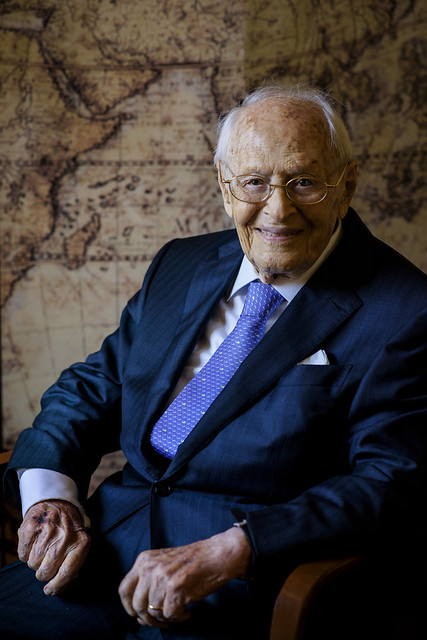
Bob Kocher
Kocher, MD, is a partner at Venrock who focuses on healthcare IT and services investments and is a consulting professor at Stanford University School of Medicine. He served in the Obama Administration as special assistant to the president for health care and economic policy and was one of the key shapers of the Affordable Care Act.
David Entwistle, President and CEO, Stanford Health Care
Image
Entwistle joined Stanford Health Care as its President and CEO in July, bringing extensive executive experience at leading academic medical centers. Most recently he served as CEO of the University of Utah Hospitals & Clinics, the only academic medical center in the Intermountain West region. While serving at UUHC, Entwistle received the Modern Healthcare “Up and Comers Award,” for significant contributions in health-care administration, management or policy.
Chris Dawes, President and CEO, Lucile Packard Children’s Hospital
Image
Christopher G. Dawes became President and Chief Executive Officer of Lucile Packard Children’s Hospital Stanford in 1997 after five years of service as Chief Operating Officer. Under his guidance, the hospital, research center and regional medical network has been ranked as one of the best in the nation, as an industry leader in patient safety and innovation in providing a full complement of services for children and expectant mothers.
Panelists:
Marcella Alsan, Assistant Professor of Medicine, Stanford University
Marcella Alsan’s research focuses on the relationship between health and socioeconomic disparities with a focus on infectious disease. Another vein of research focuses on the microfoundations of antibiotic overuse and resistance. She received a BA degree in cognitive neuroscience from Harvard University, a master’s degree in international public health from Harvard School of Public Health, a medical degree from Loyola University, and a PhD in economics from Harvard University. She is board-certified in both internal medicine and infectious disease. She trained at Brigham and Women’s Hospital, completing the Hiatt Global Health Equity Residency Fellowship in internal medicine. She combined her PhD with an Infectious Disease Fellowship at Massachusetts General Hospital. She currently is an infectious disease specialist at the Department of Veterans Affairs, Palo Alto.
Laurence Baker, Chair of Health Research and Policy, Stanford University
Laurence Baker is an economist interested in the organization and economic performance of the U.S. health-care system, and his research has investigated a range of topics including financial incentives in health care, competition in health-care markets, health insurance and managed care and health-care technology adoption. Baker is a past recipient of the ASHE medal from ASHEcon and the Alice Hersch Award from AcademyHealth. He received his BA from Calvin College, and his MA and PhD in economics from Princeton University.
Eran Bendavid, Assistant Professor of Medicine, Stanford University
Eran Bendavid is an infectious diseases physician. His research interests involve understanding the relationship between policies and health outcomes in developing countries. He explores how decisions about foreign assistance for health are made, and how those decisions affect the health of those whom assistance aims to serve. Dr. Bendavid is also a disease modeler, and uses that skill to explore issues of resource allocation in low and middle-income countries with cost-effectiveness analyses. His recent research projects include an impact evaluation of the US assistance program for HIV in Africa, and an exploration of the association between drug prices, aid and health outcomes in countries heavily affected by HIV.
Jay Bhattacharya, Professor of Medicine, Stanford University
Jay Bhattacharya’s research focuses on the constraints that vulnerable populations face in making decisions that affect their health status, as well as the effects of government policies and programs designed to benefit vulnerable populations. He has published empirical economics and health services research on the elderly, adolescents, HIV/AIDS and managed care. Most recently, he has researched the regulation of the viatical-settlements market (a secondary life-insurance market that often targets HIV patients) and summer/winter differences in nutritional outcomes for low-income American families. He is also working on a project examining the labor-market conditions that help determine why some U.S. employers do not provide health insurance.
M. Kate Bundorf, Associate Professor of Medicine, Stanford University
M. Kate Bundorf is a Faculty Research Fellow at the National Bureau of Economic Research. She received her M.B.A. and M.P.H. degrees from The University of California at Berkeley and her Ph.D. from The Wharton School. She was a Fulbright Lecturer and Visiting Professor at Fudan School of Public Health in Shanghai, China in 2009 and 2010. Her research, which focuses on health insurance markets, has been published in leading economics and health policy journals and has received funding from the U.S. National Institutes of Health, the Agency for Health Care Research and Quality and the Robert Wood Johnson Foundation. She received the 13th Annual Health Care Research Award from The National Institute for Health Care Management in 2007.
David Chan, Assistant Professor of Medicine, Stanford University
David Chan is a physician and economist whose research focuses on productivity in US health care. His research draws on insights from labor and organizational economics. He is particularly interested in studying what drives physician behavior, how this explains differences in productivity in health care delivery, and what the implications are for the design of health care. He is the recipient of the 2014 NIH Director’s High-Risk, High-Reward Early Independence Award to study the optimal balance of information in health information technology for patient care. David Chan is also an investigator at the Department of Veterans Affairs and a Faculty Research Fellow at the National Bureau of Economic Research.
Kathryn M. McDonald, Executive Director of the Center for Health Policy and the Center for Primary Care and Outcomes Research, Stanford University
Kathryn McDonald, MM, is the Executive Director of the Center for Health Policy (CHP) and Center for Primary Care and Outcomes Research (PCOR) and a senior scholar at the Centers. She is also Associate Director of the Stanford-UCSF Evidence-based Practice Center (under RAND). Her work focuses on measures and interventions to achieve evidence-based patient-centered healthcare quality and patient safety. Mrs. McDonald has served as a project director and principal investigator on a number of research projects at the Stanford School of Medicine, including the development and ongoing enhancement of the Quality and Patient Safety Indicators for the Agency for Healthcare Research and Quality. She has authored numerous peer reviewed articles and government reports, including several with wide enough followership to merit recent updates: Care Coordination Measures Atlas, Closing the Quality Gap, and Patient Safety Practices.
Michelle Mello, Professor of Law and of Health Research and Policy, Stanford University
Michelle Mello is Professor of Law at Stanford Law School and Professor of Health Research and Policy at Stanford University School of Medicine. She conducts empirical research into issues at the intersection of law, ethics, and health policy. She is the author of more than 150 articles and book chapters on the medical malpractice system, medical errors and patient safety, public health law, research ethics, the obesity epidemic, pharmaceuticals, and other topics. From 2000 to 2014, Dr. Mello was a professor at the Harvard School of Public Health, where she directed the School’s Program in Law and Public Health. In 2013-14 she completed a Lab Fellowship at Harvard University’s Edmond J. Safra Center for Ethics. Dr. Mello teaches courses in torts and public health law. She holds a J.D. from the Yale Law School, a Ph.D. in Health Policy and Administration from the University of North Carolina at Chapel Hill, an M.Phil. from Oxford University, where she was a Marshall Scholar, and a B.A. from Stanford University. In 2013, she was elected to the National Academy of Medicine (formerly known as the Institute of Medicine).
Grant Miller, Associate Professor of Medicine, Stanford University
Grant Miller is Director of the Stanford Center for International Development, an Associate Professor of Medicine at the Stanford University School of Medicine, a Core Faculty Member at the Center for Health Policy/Primary Care and Outcomes Research, a Senior Fellow at the Freeman Spogli Institute for International Studies (FSI) and the Stanford Institute for Economic Policy Research (SIEPR), and a Research Associate at the National Bureau of Economic Research (NBER). His primary interests are health economics, development economics, and economic demography. As a health and development economist based at the Stanford Medical School, Dr. Miller’s overarching focus is research and teaching aimed at developing more effective health improvement strategies for developing countries. His agenda addresses three major interrelated themes. (1) First, what are the major causes of population health improvement around the world and over time? (2) Second, what are the behavioral underpinnings of the major determinants of population health improvement? (3) Third, how can programs and policies use these behavioral insights to improve population health more effectively?
Douglas K. Owens, Director of the Center for Health Policy and the Center for Primary Care and Outcomes Research, Stanford University
Douglas K. Owens, MD, MS, is the Henry J. Kaiser, Jr., Professor at Stanford University, where he is a professor of medicine. He is director of the Center for Health Policy in the Freeman Spogli Institute for International Studies and director of the Center for Primary Care and Outcomes Research (PCOR) in the Department of Medicine. He is a general internist and associate director of the Center for Innovation to Implementation at the Veterans Affairs Palo Alto Health Care System. A past member of the U.S. Preventive Services Task Force, he has helped lead the development of national U.S. guidelines on screening for HIV, hepatitis C, hepatitis B, lung cancer, colorectal cancer, breast cancer, and use of aspirin and statins to prevent cardiovascular disease.
Maria Polyakova, Assistant Professor of Health Research and Policy, Stanford University
Maria Polyakova, PhD, is an Assistant Professor of Health Research and Policy at the Stanford University School of Medicine. Her research investigates questions surrounding the role of government in the design and financing of health insurance systems. She is especially interested in the relationships between public policies and individuals’ decision-making in health care and health insurance, as well as in the risk protection and re-distributive aspects of health insurance systems. She received a BA degree in Economics and Mathematics from Yale University and a PhD in Economics from MIT.
David M. Studdert, Professor of Medicine and of Law, Stanford University
David M. Studdert is a leading expert in the fields of health law and empirical legal research. His scholarship explores how the legal system influences the health and well-being of populations. A prolific scholar, he has authored more than 150 articles and book chapters, and his work appears frequently in leading international medical, law and health policy publications. Professor Studdert has received the Alice S. Hersh New Investigator Award from AcademyHealth, the leading organization for health services and health policy research in the United States. He was awarded a Federation Fellowship (2006) and a Laureate Fellowship (2011) by the Australian Research Council. He holds a law degree from University of Melbourne and a doctoral degree in health policy and public health from the Harvard School of Public Health.
The availability of accurate and reliable information on the location of impoverished zones is surprisingly lacking for much of the world. Applying machine learning to satellite images could identify impoverished regions in Africa.
One of the biggest challenges in providing relief to people living in poverty is locating them. The availability of accurate and reliable information on the location of impoverished zones is surprisingly lacking for much of the world, particularly on the African continent. Aid groups and other international organizations often fill in the gaps with door-to-door surveys, but these can be expensive and time-consuming to conduct.
Image
In the current issue of Science, Stanford researchers propose an accurate way to identify poverty in areas previously void of valuable survey information. The researchers used machine learning – the science of designing computer algorithms that learn from data – to extract information about poverty from high-resolution satellite imagery. In this case, the researchers built on earlier machine learning methods to find impoverished areas across five African countries.
“We have a limited number of surveys conducted in scattered villages across the African continent, but otherwise we have very little local-level information on poverty,” said study coauthor Marshall Burke, an assistant professor of Earth system science at Stanford and a fellow at the Center on Food Security and the Environment. “At the same time, we collect all sorts of other data in these areas – like satellite imagery – constantly.”
The researchers sought to understand whether high-resolution satellite imagery – an unconventional but readily available data source – could inform estimates of where impoverished people live. The difficulty was that while standard machine learning approaches work best when they can access vast amounts of data, in this case there was little data on poverty to start with.
“There are few places in the world where we can tell the computer with certainty whether the people living there are rich or poor,” said study lead author Neal Jean, a doctoral student in computer science at Stanford’s School of Engineering. “This makes it hard to extract useful information from the huge amount of daytime satellite imagery that’s available.”
Because areas that are brighter at night are usually more developed, the solution involved combining high-resolution daytime imagery with images of the Earth at night. The researchers used the “nightlight” data to identify features in the higher-resolution daytime imagery that are correlated with economic development.
“Without being told what to look for, our machine learning algorithm learned to pick out of the imagery many things that are easily recognizable to humans – things like roads, urban areas and farmland,” said Jean. The researchers then used these features from the daytime imagery to predict village-level wealth, as measured in the available survey data.
They found that this method did a surprisingly good job predicting the distribution of poverty, outperforming existing approaches. These improved poverty maps could help aid organizations and policymakers distribute funds more efficiently and enact and evaluate policies more effectively.
“Our paper demonstrates the power of machine learning in this context,” said study co-author Stefano Ermon, assistant professor of computer science and a fellow by courtesy at the Stanford Woods Institute of the Environment. “And since it’s cheap and scalable – requiring only satellite images – it could be used to map poverty around the world in a very low-cost way.”
Co-authors of the study, titled “Combining satellite imagery and machine learning to predict poverty,” include Michael Xie from Stanford's Department of Computer Science and David Lobell and W. Matthew Davis from Stanford's School of Earth, Energy and Environmental Sciences and the Center on Food Security and the Environment. For more information, visit the research group's website at: http://sustain.stanford.edu/
A key concern weighing heavily on those attending this week’s global conference on AIDS is the diminishing donor support to fight the communicable disease, which has claimed an estimated 35 million lives since the beginning of the epidemic.
“That’s on everybody’s mind now — how to continue facing the epidemic with the shrinking resources,” said Eran Bendavid, a core faculty member at Stanford Health Policy and assistant professor at Stanford Medicine attending the conference in Durban, South Africa.
Donor government funding to support HIV efforts in low- and middle-income countries fell for the first time in 2015, decreasing from $8.6 billion in 2014 to $7.5 billion last year, according to a new report by the Kaiser Family Foundation and UNAIDS.
Funding for HIV treatment declined for 13 of 14 major donor governments, with the U.S. continuing to provide more donor funding for HIV than any other country or organization.
“There’s a sense of panic about how we’re going to fill the shortfall in funding,” Bendavid said. “All the major donors are here, PEPFAR, the Global Fund, and everyone is saying `We need more to continue the fight.’
“But, in my mind,” Bendavid continued, “the conversation that is mostly missing is the one between the organizations on the front lines and the national ministries of health and finance. See what they can do to get domestic resources to fill the gap.”
PEPFAR — the President’s Emergency Plan for AIDS Release — is the U.S. government initiative to help those suffering from HIV/AIDS.
Bendavid, an infectious disease physician, joins 18,000 global leaders, researchers, activists and front-line health workers attending the conference July 18-22.
The U.N. General Assembly last month pledged to end the AIDS epidemic by 2030. But more than half of the nearly 37 million people around the world infected with HIV still have no access to the antiretroviral therapy that is saving so many lives.
U.S. Secretary-General Ban Ki-moon said on the opening day of AIDS2016 that when the conference was last held in Durban 16 years ago, less than 1 percent of all people living with HIV in developing countries had access to treatment.
“Today, the world has proven that when we come together, we can transform lives,” Ban said, noting that of the 36.7 million people living with HIV today, about 46 percent of infected adults have access to antiretroviral treatment.
[[{"fid":"223460","view_mode":"crop_870xauto","fields":{"format":"crop_870xauto","field_file_image_description[und][0][value]":"21st International AIDS Conference (AIDS 2016), Durban, South Africa","field_file_image_alt_text[und][0][value]":"","field_file_image_title_text[und][0][value]":"","field_credit[und][0][value]":"International AIDS Society/Abhi Indrarajan","field_caption[und][0][value]":"21st International AIDS Conference (AIDS 2016), Durban, South Africa","field_related_image_aspect[und][0][value]":"","thumbnails":"crop_870xauto"},"type":"media","attributes":{"width":"870","class":"media-element file-crop-870xauto"}}]]
“In addition, medicines are more effective and less toxic, technology allows diagnosis in 20 minutes or less, generic medicines reduced the cost of treatment to just a dollar a day and great international finance has been made available,” Ban said.
Still, the secretary-general warned, “the gains are inadequate — and fragile,” when you consider that more than half of all people living with HIV still lack access to treatment.
Bendavid, who spoke by telephone from Durban, gave a symposium at the conference on Tuesday that summarizes his research and provides his conclusions on the most effective approaches to use donor resources.
He said the while the global burden of noncommunicable diseases, such as heart disease and cancer, is greater than HIV, malaria, or TB, the interventions available to combat infectious diseases are more cost-effective.
“Basically, the resource constraints are forcing us to think carefully about what to invest in, and we want to invest in what works,” Bendavid said, adding that donor funding typically goes straight to the disease rather than the local health system infrastructure.
“The scarce donor resources should not be directed towards interventions that are either inefficacious or costly,” he argued. “The opportunity cost of investing in costly or ineffective interventions is very high when you consider the millions who could benefit from inexpensive, simple interventions such as bed nets and drugs for TB.”
He conceded that he typically gets push back on this line of reasoning.
“But when you’re talking about what you can do with very limited resources, investing in noncommunicable diseases, in my mind, jeopardizes the premise of donor funding: There are many people who would be happy to shut down PEPFAR and the Global Fund if they were shown to be ineffective.”
He published a paper earlier this year that found the U.S. government has invested $1.4 billion in HIV prevention programs that promote sexual abstinence and marital fidelity. But there is no evidence that the programs have been effective at changing sexual behavior and reducing HIV Risk.
Bendavid said his presentation at the symposium was received with a mix of understanding and concern.
“People mentioned that funding health systems could have averted Ebola, and that the fight against HIV needs to address health systems,” he said. “I agree, but also think governments should step up and help fill some of those gaps.”
Hero Image
21st International AIDS Conference (AIDS 2016), Durban, South Africa | International AIDS Society/Abhi Indrarajan





 Bob Kocher


