
Authors
News Type
News
Date
Paragraphs

By using high-res images taken by the latest generation of compact satellites, Stanford scientists have developed a new capability for estimating crop yields from space. Measuring yields could improve productivity and eventually reduce hunger.

Stanford researchers have developed a new way to estimate crop yields from space, using high-resolution photos snapped by a new wave of compact satellites.

The approach, detailed in the Feb. 13 issue of Proceedings of the National Academy of Sciences, could help estimate agricultural productivity and test intervention strategies in poor regions of the world where data are currently extremely scarce.

“Improving agricultural productivity is going to be one of the main ways to reduce hunger and improve livelihoods in poor parts of the world,” said study-coauthor Marshall Burke, an assistant professor of Earth system science at Stanford’s School of Earth, Energy & Environmental Sciences. “But to improve agricultural productivity, we first have to measure it, and unfortunately this isn’t done on most farms around the world.”

Improved satellites

Earth-observing satellites have been around for over three decades, but most of the imagery they capture has not been of high enough resolution to visualize the very small agricultural fields typical in developing countries. Recently, however, satellites have shrunk in both size and cost while simultaneously improving in resolution, and today there are several companies competing to launch into space refrigerator- and shoebox-sized satellites that take high-resolution images of Earth.

“You can get lots of them up there, all capturing very small parts of the land surface at very high resolution,” said study-coauthor David Lobell, an associate professor of Earth system science. “Any one satellite doesn’t give you very much information, but the constellation of them actually means that you’re covering most of the world at very high resolution and at very low cost. That’s something we never really had even a few years ago.”

Accurate predictions

In the new study, Burke and Lobell set out to test whether the images from this new wave of satellites are good enough to reliably estimate crop yields. The pair focused on an area in western Kenya where there are a lot of smallholder farmers that grow maize, or corn, on small, half-acre or one-acre lots. “This was an area where there was already a lot of existing field work,” Lobell said. “It was an ideal site to test our approach.”

The scientists compared two different methods for estimating agricultural productivity yields using satellite imagery. The first approach involved “ground truthing,” or conducting ground surveys to check the accuracy of yield estimates calculated using the satellite data, which was donated by the company Terra Bella. For this part of the study, Burke and his field team spent weeks conducting house-to-house surveys with his staff, talking to farmers and gathering information about individual farms.

“We get a lot of great data, but it’s incredibly time consuming and fairly expensive, meaning we can only survey at most a thousand or so farmers during one campaign,” said Burke, who is also a Center Fellow at the Stanford Woods Institute for the Environment. “If you want to scale up our operation, you don’t want to have to recollect ground survey data everywhere in the world.”

For this reason, the team also tested an alternative “uncalibrated” approach that did not depend on ground survey data to make predictions. Instead, it uses a computer model of how crops grow, along with information on local weather conditions, to help interpret the satellite imagery and predict yields.

“Just combining the imagery with computer-based crop models allows us to make surprisingly accurate predictions, based on the imagery alone, of actual productivity on the field,” Burke said.

The researchers have plans to scale up their project and test their approach across more of Africa. “Our aspiration is to make accurate seasonal predictions of agricultural productivity for every corner of sub-Saharan Africa,” Burke said. “Our hope is that this approach we’ve developed using satellites could allow a huge leap in in our ability to understand and improve agricultural productivity in poor parts of the world.”

Lobell is also the deputy director of Stanford’s Center on Food Security and the Environment and a senior fellow at the Stanford Woods Institute for the Environment.

Funding for the study, titled “Satellite-based assessment of yield variation and its determinants in smallholder African systems,” was provided by AidData at the College of William and Mary, the USAID Global Development Lab and the Center for Effective Global Action.

Hero Image
crops mapmerge
All News button
1
-


This event is co-sponsored by the WSD HANDA Center for Human Rights and International Justice and the Center on Democracy, Development, and the Rule of Law. 


Abstract:

Unchecked greed is the primary driver of conflict and mass atrocities in Africa. Most often, it manifests itself in the form of violent kleptocracies, in which governments are hijacked by networks of senior officials, military officers, bankers, mining and oil company representatives, and arms dealers. Conventional foreign policy approaches have failed to address the hell on earth that these networks have created. The principal vulnerability of the networks is their exposure in the international financial system, as most corrupt actors use that system to move their money and hide their wealth. The tools of financial pressure that have been honed in the aftermath of 9/11 hold great promise for countering the kleptocrats that are destroying parts of Africa through war and resource pillaging. Examining how those policies can be used and how a hopeful political constituency is being built is a major focus of this presentation.


Speaker Bio:

Image
john prendergast headshot 1
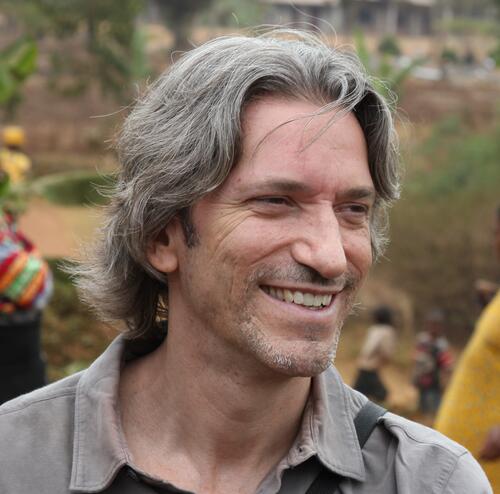
John Prendergast is a human rights activist and New York Times best-selling author who has focused on peace in Africa for over thirty years. He is the Founding Director of the Enough Project, an initiative to end genocide and crimes against humanity. With George Clooney, he also co-founded The Sentry, a new investigative initiative focused on dismantling the networks financing conflict and atrocities. John has worked for the Clinton White House, the State Department, two members of Congress, the National Intelligence Council, UNICEF, Human Rights Watch, the International Crisis Group, and the U.S. Institute of Peace.  He has been a Big Brother for three decades, as well as a youth counselor and a basketball coach.  John is the author or co-author of ten books. John also co-founded the Satellite Sentinel Project, which used satellite imagery to spotlight mass atrocities.  With NBA stars, John launched the Darfur Dream Team Sister Schools Program to fund schools in Darfuri refugee camps. He also created Enough’s Raise Hope for Congo Campaign, highlighting the issue of conflict minerals, and its student arm the Conflict-Free Campus Initiative. John also runs Not On Our Watch, the organization founded by Matt Damon, Don Cheadle, Brad Pitt and George Clooney.  John has been awarded six honorary doctorates. He has been a visiting professor at Yale Law School, Stanford University, Columbia University, Dartmouth College, Duke University, and others. John has appeared in four episodes of  60 Minutes, for which the team won an Emmy Award, and helped create African stories for two episodes of Law and Order: Special Victims Unit. John has also traveled to Africa with NBC’s Dateline, ABC’s Nightline, PBS’ NewsHour, CNN’s  Inside Africa, and Newsweek and The Daily Beast. He also appears in the motion picture “The Good Lie,” starring Reese Witherspoon and Emmanuel Jal, as well as documentaries including Merci Congo, When Elephants Fight, Blood in the Mobile, Sand and Sorrow, Darfur Now, 3 Points, and  War Child.


[[{"fid":"225275","view_mode":"crop_870xauto","fields":{"format":"crop_870xauto","field_file_image_description[und][0][value]":"","field_file_image_alt_text[und][0][value]":false,"field_file_image_title_text[und][0][value]":false,"field_credit[und][0][value]":"","field_caption[und][0][value]":"","field_related_image_aspect[und][0][value]":"","thumbnails":"crop_870xauto"},"type":"media","field_deltas":{"1":{"format":"crop_870xauto","field_file_image_description[und][0][value]":"","field_file_image_alt_text[und][0][value]":false,"field_file_image_title_text[und][0][value]":false,"field_credit[und][0][value]":"","field_caption[und][0][value]":"","field_related_image_aspect[und][0][value]":"","thumbnails":"crop_870xauto"}},"attributes":{"width":"870","class":"media-element file-crop-870xauto","data-delta":"1"},"link_text":null}]]


John Prendergast Human Rights Activist
Seminars
Authors
News Type
News
Date
Paragraphs

Stanford University has expressed its views on the recent executive order on immigration, and is offering resources for students who could be affected. News accounts indicate that as many as 17,000 students across the country fall into this category. On Jan. 27, President Trump signed an executive order restricting travel to the United States of people from seven largely Muslim countries -- Syria, Iran, Iraq, Libya, Somalia, Sudan and Yemen.

Amy Zegart, co-director of the Center for International Security and Cooperation, said CISAC's "mission is generating knowledge to build a safer world. We bring scholars, ideas from everywhere. And always will."

Looking ahead, Stanford is planning campus events and initiatives on this issue. Some information already to note: 

• Stanford launched a new website on immigration issues for students and scholars. This includes centralized campus information about international travel guidance and other information. Stanford will continue to add content to this site.

• A letter to the campus community from Stanford president Marc Tessier-Lavigne, provost John Etchemendy, and incoming provost Persis Drell affirming the university's support for international students. "As events unfold, the university intends to continue vigorously advocating before Congress, the Executive Branch, and beyond for policies consistent with its commitment to members of our community who are international, undocumented and those who are impacted by the recent executive order."

• A letter to the White House by Tessier-Lavigne and 47 other higher education leaders describing the impact the travel ban will have on students and scholars from those seven countries. "We write as presidents of leading American colleges and universities to urge you to rectify or rescind the recent executive order closing our country’s borders to immigrants and others from seven majority-Muslim countries and to refugees from throughout the world. If left in place, the order threatens both American higher education and the defining principles of our country."
 
• The Bechtel International Center remains an ongoing resource for international students and scholars at Stanford who have questions or concerns. Vaden Health Center’s Counseling and Psychological Services (CAPS) is collaborating with the Bechtel International Center and with the Markaz Resource Center. They will offer special drop-in hours for the next six Friday afternoons for students and scholars. Both student and scholar advisors will be present to offer guidance. Here is the schuedule:
Location: Bechtel International Center
Time: 2-4 p.m.
When: Feb. 10, in the Assembly Room; Feb. 17, in the Assembly Room; Feb. 24, in the Conference Room; March 3, in the Conference Room; March 10, in the Assembly Room; and March 17, in the Assembly Room.
 
• A statement by Stanford regarding its principles of immigration. "As an academic institution and as a community, Stanford welcomes and embraces students and scholars from around the world who contribute immeasurably to our mission of education and discovery."
 
• A Q&A with Stanford law professors Jayashri Srikantiah and Shirin Sinnar discussing the implications of the travel ban.
Hero Image
gettyimages 584206614
Getty Images
All News button
1
Authors
News Type
News
Date
Paragraphs

Today, the Bulletin of Atomic Scientists’ “doomsday clock” moved 30 seconds forward to 2 and a half minutes to midnight. The closer the minute hand gets to midnight, the closer the bulletin predicts humankind is to destroying itself. The symbolic clock was created in 1947 when Albert Einstein and Robert Oppenheimer (the father of the U.S. nuclear program) founded the publication.

The following experts from the Center for International Security and Cooperation and the Freeman Spogli Institute for International Studies offered these perspectives:

William J. Perry, a former U.S. Secretary of Defense and senior fellow at the Center for International Security and Cooperation (CISAC), said: "Last year the Doomsday clock was set at 3 minutes to midnight, the closest it has been to global 'midnight' since the iciest days of the Cold War. This ominous pronouncement reflected my own fears that we were now in greater danger of nuclear catastrophe than we were during the Cold War, with the growing threat of nuclear terrorism, the continued risk of accidents and miscalculation, and the possibility of regional nuclear war and continued nuclear proliferation around the world."

He added, "Today the Bulletin of Atomic Scientists announced that we have moved closer to global catastrophe, for the first time setting the clock 30 seconds ahead to 2 and a half minutes to midnight, approaching a time not seen since the United States and Soviet Russia first developed the H-bomb. We must heed this dire warning as a call to action. There are concrete steps that we can take to reduce the risk of nuclear annihilation, but we must start today."

Siegfried Hecker, the former director of the Los Alamos National Laboratory and senior fellow at CISAC, said, "The bulletin’s keepers of the clock made the correct call to move the clock 30 seconds closer to midnight. The disregard for fact-based analysis of issues such as global climate change during the recent presidential campaign is truly alarming. However, my immediate concerns focus on the world having become a more dangerous nuclear place."

He said, "Developments in North Korea top the list: 2016 was a very bad year as Pyongyang greatly expanded its nuclear complex to increase the size of its arsenal to perhaps as many as 20 to 25 weapons, conducted two more nuclear tests to enhance the sophistication of its weapons, and launched two dozen missile tests. All of this while Washington cut all communications with a regime about which we know so little, while continuing the failed policies of sanctions and leaning on China to solve the problem."

"Confrontation," Hecker said, "has replaced cooperation between Russia and the United States. For the first time since the end of the Cold War the specter of a nuclear arms race was raised in 2016. President Putin put the finishing touches on suspending or terminating most of the cooperative nuclear threat reduction programs with the United States. Nuclear safety and security concerns appear to have taken a back seat to nuclear saber rattling and cyber attacks."

He noted, "Tensions between China and the United States have increased substantially over Beijing’s more muscular role in international affairs, particularly with its actions in the South China Sea. Moreover, tensions over Taiwan prompted by President Trump’s comments about the One-China policy renew the possibility of conflict."

"South Asia has inched closer to potential nuclear confrontation between India and Pakistan. India’s expanding economy and its concerns about Chinese military expansion has prompted it to strengthening its nuclear arsenal by moving toward a full triad – land, air and sea-based nuclear weapons. Pakistan, its much smaller and weaker neighbor, feels increasingly threatened by India’s expanding military. It has moved to what is called a posture of full-spectrum nuclear deterrence, which includes very dangerous tactical battlefield nuclear weapons that lower the nuclear threshold," Hecker said.

"Preventing and responding to potential acts of nuclear terrorism require close international cooperation. Unfortunately, all signs point in the opposite direction at a time when the atrocities perpetrated by terrorists are increasing. Greatest among these pullbacks was President Putin’s decision not to participate in the 2016 Nuclear Security Summit held in Washington, DC. With President Obama’s tenure having ended, this very effective collaborative international effort is now in limbo," he said.

MEDIA CONTACTS

Clifton B. Parker, Center for International Security and Cooperation: (650) 725-6488, cbparker@stanford.edu

Chaney Kourouniotis, Freeman Spogli Institute for International Relations: (6650) 724-9842, chaney.kourouniotis@stanford.edu


Hero Image
gettyimages 632763374
Members of the Bulletin of Atomic Scientists deliver remarks on the 2017 time for the 'Doomsday Clock' Jan. 26, 2017 in Washington, DC. For the first time in the 70-year history of the Doomsday Clock, the Bulletin of Atomic Scientists moved the clock forward 30 seconds to two and a half minutes before midnight, citing 'ill-considered' statements by U.S. President Donald Trump on nuclear weapons and climate change, developments in Russia, North Korea, India and Pakistan. | Win McNamee/Getty Images
All News button
1
Authors
News Type
News
Date
Paragraphs

Space is more important than ever for the security of the United States, but it’s almost like the Wild West in terms of behavior, a top general said today.

Air Force Gen. John Hyten, commander of the U.S. Strategic Command, spoke Jan. 24 at Stanford’s Center for International Security and Cooperation. His talk was titled, “U.S. Strategic Command Perspectives on Deterrence and Assurance.”

Hyten said, “Space is fundamental to every single military operation that occurs on the planet today.” He added that “there is no such thing as a war in space,” because it would affect all realms of human existence, due to the satellite systems. Hyten advocates “strategic deterrence” and “norms of behavior” across space as well as land, water and cyberspace.

Otherwise, rivals like China and Russia will only threaten U.S. interests in space and wreak havoc for humanity below, he said. Most of contemporary life depends on systems connected to space.

Hyten also addressed other topics, including recent proposals by some to upgrade the country’s missile defense systems.

“You just don’t snap your fingers and build a state-of-the-art anything overnight,” Hyten said, adding that he has not yet spoken to Trump administration officials about the issue. “We need a powerful military,” but a severe budget crunch makes “reasonable solutions” more likely than expensive and unrealistic ones.

On the upgrade front, Hyten said he favors a long-range strike missile system to replace existing cruise missiles; a better air-to-air missile for the Air Force; and an improved missile defense ground base interceptor.

‘Critically dependent’

From satellites to global-positioning systems (GPS), space has transformed human life – and the military – in the 21st century, Hyten said. In terms of defining "space," the U.S. designates people who travel above an altitude of 50 miles as astronauts.

As the commander of the U.S. Strategic Command, Hyten oversees the control of U.S. strategic forces, providing options for the president and secretary of defense. In particular, this command is charged with space operations (such as military satellites), information operations (such as information warfare), missile defense, global command and control, intelligence, surveillance, and reconnaissance, global strike and strategic deterrence (the U.S. nuclear arsenal), and combating weapons of mass destruction.

Hyten explained that every drone, fighter jet, bomber, ship and soldier is “critically dependent” on space to conduct their own operations. All cell phones use space, and the GPS command systems overall are managed at Strategic Command, he said.

“No soldier has to worry about what’s over the next hill,” he said, describing GPS capabilities, which have fundamentally transformed humanity’s way of life.

Space needs to be available for exploration, he said.

“I watch what goes on in space, and I worry about us destroying that environment for future generations.” He said that too many drifting objects and debris exist – about 22,000 right now. A recent Chinese satellite interception created a couple thousand more debris objects that now circle about the Earth at various altitudes and pose the risk of striking satellites.

“We track every object in space” now, Hyten said, urging “international norms of behavior in space.”

He added, “We have to deter bad behavior on space. We have to deter war in space. It’s bad for everybody. We could trash that forever.”

But now rivals like China and Russia are building weapons to deploy in the lower levels of space. “How do we prevent this? It’s bigger than a space problem,” he said.

Deterring conflict in the cyber, nuclear and space realms is the strategic deterrence goal of the 21st century, Hyten said.

“The best way to prevent war is to be prepared for war,” he said.

Hyten believes the U.S. needs a fundamentally different debate about deterrence. And it all starts with nuclear weapons.

“In my deepest heart, I wish I didn’t have to worry about nuclear weapons,” he said. Hyten described his job as “pretty sobering, it’s not easy.”

But he also noted the mass violence of the world prior to 1945 when the first atomic bomb was used. Roughly 80 million people died from 1939 to 1945 during World War II. Consider that in the 10-plus years of the Vietnam War, 58,000 Americans were killed. That’s equivalent to two days of deaths in WWII, he said.

In a world without nuclear weapons, a rise in conventional warfare would produce great numbers of mass casualties, Hyten said. About war, he said, “Once you see it up close, no human will ever want to experience it.”

Though America has “crazy enemies” right now, in many ways the world is more safe than during WWII, Hyten said. The irony is that nuclear weapons deterrence has kept us from the type of mass killings known in events like WWII. But the U.S. must know how to use its nuclear deterrence effectively.

Looking ahead, Hyten said the U.S. needs to think about space as a potential war environment. An attack in space might not mean a response in space, but on the Earth.

Hyten describes space as the domain that people look up at it and still dream about. “I love to look at the stars,” but said he wants to make sure he’s not looking up at junk orbiting in the atmosphere.

‘Space geek’

Hyten has served in the Air Force for 35 years. He originally wanted to be an astronaut, but his eyesight was too bad. He got a waiver, and graduated Harvard in 1981 with an engineering degree on a ROTC scholarship. He entered the Air Force thinking he would only do four years. But then he had a close-up view of what a young Air Force officer could find in the last frontier of space as satellites and military space science were booming.

“God, I love space,” he said.

In introducing Hyten, Amy Zegart, co-director of CISAC, described him as a person of unwavering dedication and profound insights who understands the gravity of situations. “A self-described space geek,” she said.

Hyten lauded CISAC for its research and educational work on national security, and said he enjoyed being around people willing to test out new ideas and discuss potential solutions for vexing problems.

Earlier in the day on campus, Hyten met with William J. Perry, a former U.S. Secretary of Defense and senior fellow at CISAC; George Shultz, a former U.S. Secretary of Defense and senior fellow at the Hoover Institution; and Condoleezza Rice, a senior fellow at the Freeman Spogli Institute for International Studies and Hoover Institution.

General Hyten was nominated for reassignment to head the U.S. Strategic Command on Sept. 8, 2016. He commanded Air Force Space Command from 2014 to 2016.

Follow CISAC at @StanfordCISAC and  www.facebook.com/StanfordCISAC

MEDIA CONTACTS

Clifton B. Parker, Center for International Security and Cooperation: (650) 725-6488, cbparker@stanford.edu


Hero Image
c2 jkqeukaaw4p  jpg large
Air Force Gen. John Hyten, commander of the U.S. Strategic Command, spoke Jan. 24 at Stanford’s Center for International Security and Cooperation. | Rod Searcey
All News button
1
Authors
News Type
News
Date
Paragraphs

The Trump administration’s reinstatement of a policy that bans U.S. foreign aid to agencies that provide abortion counseling abroad was a predictable move that could have unintended consequences, Stanford researchers say.

The move freezes funding to nongovernmental organizations that provide abortion services or discuss abortions as a legitimate  family-planning option. It revives what is known as the “Mexico City Policy,” so called because it was announced by President Regan in 1984 during a U.N. population conference in Mexico City. It’s a highly partisan policy, which has been implemented under Republican administrations and suspended by Democratic presidents.

From that standpoint, the move to revive the policy was no surprise, said Grant Miller, PhD, an associate professor of medicine at Stanford and core faculty member at Stanford Health Policy. But Miller’s research has shown that the policy actually appears to have the unintended effect of increasing, not decreasing, abortions in the developing world.

“The bottom line is that it doesn’t matter what you think about abortion and the morality and ethics of it,” Miller told me. “I don’t think either side of the disagreement would think a good policy is one that leads to an increase in abortions. Neither side wants to see more abortions.”

In 2011, Miller published a study with Eran Bendavid, MD, on the impact of the policy between 1994 and 2008 in sub-Saharan Africa, a region in which family planning services are heavily financed by U.S. foreign aid. Family planning agencies provide a range of family planning services, including contraception, so when their funding is cut, the availability of contraception declines, said Bendavid, the study’s lead author and another faculty member at Stanford Health Policy. This results in declining use of safe contraception and an increase in abortion rates, the researchers found.

“Sure enough, where you see this relative decline in use of contraception is where you see this uptick in abortion,” said Bendavid, an assistant professor of medicine. “Our theory of what is underlying this is this notion that when women have more restricted access to modern contraception, they rely on abortion. If the intention was to curb abortion, then what we observe is that cutting support to family planning organizations led to the  opposite effect.”

Miller followed that up with another study published in 2016 that focused on Nepal during the period when the government legalized abortion, making it more widely available. The policy change gave him the opportunity to test the idea of abortion and contraception as substitutes — i.e. that use of one method to limit family size reduces use of the other. In fact, as the number of abortions rose, use of contraception declined, he found.

“What is remarkable is that this is clear evidence on this interchangeable use that women make in use of contraceptives and abortion services,” Miller said.

In other words, women are trying to control the number of children they have and will use one or the other, depending in part upon what is most available. “If contraception is available, they won’t have to resort to abortion,” Bendavid said.

He said these results have subsequently been corroborated in other studies in sub-Saharan Africa.


Hero Image
family planning
A woman sits by her stall in the Jorkpan market at Sinkor district in Monrovia, on May 2, 2016. Family planning services, like contraceptives and counselling are available in the markets in Liberia, an initiative that is aimed at tackling the high adolescent pregnancy rate in the younger population. | Marco Longari/AFP/Getty Images
All News button
1
-

Abstract:

Commentators have vigorously debated whether international criminal justice mechanisms favor conflict or peace. Others have debated whether decapitation (i.e., assassination of leaders) strengthens or weakens militias, insurgencies, and terrorist groups. This study examines how arrests of, and threats to arrest, militia leaders pursuant to international criminal warrants have affected demobilization of Rwandan militias in the eastern Democratic Republic of the Congo.


Speaker Bio:

Image
rsteinberg

Richard Steinberg  writes and teaches in the areas of international law and international relations. He currently teaches International Trade Law, International Business Transactions, and Theories of International Law, and directs Law School clinics that work with the Office of the Prosecutor of the International Criminal Court and conduct research in conflict and post-conflict zones.  He is also Director of the Sanela Diana Jenkins Human Rights Project, and Editor-in-Chief of the award-winning  www.ICCforum.com (link is external). In addition to his UCLA appointment, Professor Steinberg is currently Visiting Professor of Stanford Global Studies at the WSD Handa Center for Human Rights and International Justice, and the Center on Democracy, Development, and the Rule of Law at Stanford.


Co-sponsor:  HANDA Center for Human Rights & International Justice


Richard Steinberg Visiting Professor at Stanford Global Studies and on faculty at UCLA School of Law
Seminars
Authors
News Type
News
Date
Paragraphs

Why is terrorism such a vexing problem for policy makers to solve?

The details – and not sloganeering – are important in grappling with the terrorist threat against the U.S. and West, a Stanford scholar suggests. One reason is that the study of terrorism is often confused and contentious, and the study of counterterrorism can be even more frustrating, says Martha Crenshaw, a Stanford terrorism expert and senior fellow at the Center for International Security and Cooperation.

“The conceptual and empirical requirements of defining, classifying, explaining, and responding to terrorist attacks are more complex than is usually acknowledged by politicians and academics, which complicates the task of crafting effective counterterrorism policy,” wrote Crenshaw in a new book, Countering Terrorism, with her co-author Gary LaFree, a criminal justice professor at the University of Maryland.

The researchers examined about 157,000 terrorist attacks that have occurred around the world since 1970. These are catalogued in the Global Terrorism Database at the University of Maryland. Crenshaw founded the Mapping Militant Organizations project at Stanford to identify militant organizations globally and trace how they arise, their root causes and their connections. Understanding the nature of terrorism, the diverse groups and ever-changing aspect of how they adapt is a key theme in her research.

Crenshaw said the stakes in fighting terrorism today are especially high since the consequences of missteps and miscalculations can be catastrophic. While research in what is now known as terrorism studies has made significant strides, more progress is needed on the analytical and academic fronts.

“Terrorist attacks are rare, yet they encourage immediate and far-reaching responses that are not easily rolled back. Most attempts actually fail or are foiled, so that examining only successful terrorist attacks gives an incomplete picture,” the scholars wrote.

Obstacles and hindrances

After 9/11, the U.S. reshaped its policies and institutions to deal with terrorism. Fifteen years later, Crenshaw and LaFree analyzed the lessons learned from 9/11 and how governments responded. Both authors are participating in a Jan. 25 panel discussion at Stanford on the subject of their book. Crenshaw and Lafree suggest three key principles emerge from their research. Countries like the U.S. should prepare for change, disruption, and surprise from terrorist groups.

Second, countries should resist the temptation to magnify the image of the destructive power of terrorism as well as the vulnerability of its targets. Finally, the U.S. needs to accept limits to its ability to totally manage and control the jihadist threat. As Crenshaw and LaFree noted, “Even superpowers cannot completely control their environments. Terrorist threats are constantly evolving, never static.”

A realistic understanding of the actual extent of terrorist capacity to harm national security interests is the best approach, she said. “Governments, especially the American government, should avoid both overreacting and promising or threatening overreaction, which means entertaining modest expectations about what can be accomplished in an extremely complex and uncertain threat environment that requires constant adaptation and adjustment,” they wrote.

Counterterrorism policy should be reasonable, practical, and balanced – in a word, sensible, Crenshaw said.

“There is no perfect solution,” she and LaFree said.

The top priority of the U.S. government is to prevent attacks on American soil, she said. While this is a clear goal, no one in political leadership can guarantee the public absolute security. “If the goal is set as the complete absence of terrorist attacks, then policymakers become so anxious that a terrorist will slip through the preventive security net that they risk panic or overreaction. Fear of being blamed in the aftermath of an attack starts to take precedence over all other considerations,” they wrote.

Policy paradoxes

Crenshaw and Lafree’s research revealed some policy paradoxes. One involved counterterrorism: policymakers tend to set overly ambitious policies to eradicate terrorism completely, rather than risk being called “reactive” rather than “proactive.” But Crenshaw said such goals lack clarity and realism, and can lead to unwise and unattainable objectives. For example, in the wake of 9/11, the U.S. government believed that overthrowing authoritarian regimes in countries like Afghanistan, Iraq, Syria, Libya and Yemen in favor of “democratic change” would serve as the antidote to terrorism.

However, the change did not take place, and the U.S. has since had to intervene militarily to restore or establish security and stability for weak and embattled allies facing terrorism. One aim for American policy should be greater precision about the strategic goals of military action abroad and that connection to security at home, said Crenshaw and LaFree.

“If the contradictions behind the paradox cannot be resolved, policymakers must find a middle ground between the tactical and strategic,” they wrote.

Another problem is measuring progress against terrorism, Crenshaw and LaFree said. Significant skepticism exists about what the metrics mean in regard to drone strikes, bombs dropped, targets struck, arrests made and cases prosecuted, convictions secured, territory seized or regained, plots foiled, websites taken down, Facebook postings and Twitter accounts deleted, and so on.

“Are these measures of success against terrorism or measures of the extent of the government’s efforts? These metrics calculate what government has done, not necessarily the effect of its actions on adversaries’ calculations and capabilities,” the researchers said, adding that government measures may be taken before a specific adversary exists.

Finally, the real agents behind terrorism are extremely difficult to identify, Crenshaw and LaFree said, because there is no standard “terrorist organization,” and groups evolve, mutate and adapt. Meanwhile, governments and researchers often struggle to establish responsibility for specific attacks. 

Follow CISAC at @StanfordCISAC or  www.facebook.com/StanfordCISAC

MEDIA CONTACTS

Martha Crenshaw, Freeman Spogli Institute for International Studies: (650) 723-0126, crenshaw@stanford.edu

Clifton B. Parker, Center for International Security and Cooperation: (650) 725-6488, cbparker@stanford.edu


Hero Image
gettyimages 484710528
The study of terrorism is often confused and contentious, and the study of counterterrorism can be even more frustrating, says Martha Crenshaw, a Stanford terrorism expert and senior fellow at the Center for International Security and Cooperation. | Zabelin/Getty Images
All News button
1
Paragraphs

Temperature data are commonly used to estimate the sensitivity of many societally relevant outcomes, including crop yields, mortality, and economic output, to ongoing climate changes. In many tropical regions, however, temperature measures are often very sparse and unreliable, limiting our ability to understand climate change impacts. Here we evaluate satellite measures of near-surface temperature (Ts) as an alternative to traditional air temperatures (Ta) from weather stations, and in particular their ability to replace Ta in econometric estimation of climate response functions. We show that for maize yields in Africa and the United States, and for economic output in the United States, regressions that use Ts produce very similar results to those using Ta, despite the fact that daily correlation between the two temperature measures is often low. Moreover, for regions such as Africa with poor station coverage, we find that models with Ts outperform models with Ta, as measured by both R 2 values and out-of-sample prediction error. The results indicate that Ts can be used to study climate impacts in areas with limited station data, and should enable faster progress in assessing risks and adaptation needs in these regions.

All Publications button
1
Publication Type
Journal Articles
Publication Date
Journal Publisher
Environmental Research Letters
Authors
Sam Heft-Neal
David Lobell
Authors
News Type
News
Date
Paragraphs

The following essay by CISAC's Amy Zegart -- "Trump vs. the Spies: In defense of the Intelligence Community" -- appeared in The Atlantic on Jan. 6.

Something stunning happened on Capitol Hill yesterday: Republican and Democratic members of the Senate Armed Services Committee practically stood shoulder to shoulder with senior officials from the U.S. intelligence community as they declared that America’s spies were right after all: The Russian government sought to interfere in the U.S. presidential election by hacking into election-related email and leaking information. It was a striking bipartisan rebuke to President-elect Donald Trump, who has consistently cast skepticism on allegations of Russian involvement and seemed to disparage the intelligence community. Perhaps in anticipation of that committee hearing, Trump was already backpedaling on Twitter before it started, declaring, “The media lies to make it look like I am against ‘Intelligence’ when in fact I am a big fan!”

Trump’s “never mind” tweet is unlikely to repair the dangerous breach between the incoming president and the intelligence agencies that serve him. Presidents often throw intelligence agencies under the bus when they fail. Never before has a president-elect thrown them under the bus for succeeding. But that’s exactly what Trump has been doing for weeks, in an unrelenting frenzy. Since his election, Trump has spent more time fighting Langley than ISIS. He has called the CIA’s assessment of the Russian government’s role in election hacking “ridiculous” and has insisted, repeatedly, that the culprit could be anyone, including a 400-pound hacker or “somebody sitting in a bed some place.” His transition team has disparaged and discredited the CIA as “the same people who thought Saddam Hussein had weapons of mass destruction”—even though they aren’t the same people, Russian cyber hacking isn’t the same intelligence target as Iraq WMD, the Iraq failure was 14 years ago, and intelligence agencies have radically overhauled their analytic process since then. The president-elect has also said he won’t bother getting daily intelligence briefings—making him the first president since 9/11 to skip them—because he’s smart. And just a day before Trump declared himself an intelligence fan, The Wall Street Journal reported that his team was cooking up a Nixon-esque scheme to purge the CIA and the Office of the Director of National Intelligence of suspected politicization in the ranks by trimming and reorganizing both agencies. (The Trump team has denied this report, which was based on the accounts of sources “familiar with the planning,” including at least one close to the transition.)

With fans like this, who needs enemies?

Some skepticism toward intelligence is healthy. And tension between presidents and their intelligence agencies is nothing new. Lyndon Johnson was said to compare the intelligence community to his boyhood cow, Bessie, who would swing her “shit smeared” tail through a bucket of milk as soon as he’d finished milking her. Bill Clinton met so infrequently with his CIA Director, Jim Woolsey, that when a plane crashed on the White House lawn, aides joked that it was Woolsey trying to get a meeting. (Woolsey, incidentally, had been advising the Trump transition team until resigning yesterday, reportedly due to “growing tensions over Trump’s vision for intelligence agencies.”) Nearly all presidents leave office disappointed and disgruntled with their intelligence apparatus, for two reasons: because presidents want crystal balls and even the CIA’s smartest people don’t have them; and because presidents resort to covert operations for the toughest of problems, when all else fails—which is why covert operations usually fail, too. But no president until now has entered office with such a profound, publicly vented distrust of his own intelligence establishment.

Trump’s doubts are both understandable and alarming. Understandable because we live in an era where threats are moving faster than bureaucrats, and where hacks, tweets, leaks, and internet “news” (both real and fake) make information available everywhere, all the time, instantly. In this digital age, it is reasonable to ask just what America’s intelligence community still brings to the table.

The answer is a lot. U.S. intelligence agencies have one overriding mission: giving the president decision-making advantage in a dangerous and deceptive world. Intelligence officials risk their lives to recruit foreign assets, they intercept foreign email and cell-phone communications, they build and deploy spy satellites, they track obscure foreign government reports and trends for vital clues about the stability of a regime or the health of a foreign economy. Sure, you can find a Wikipedia page on just about anything these days. Where intelligence agencies add value is by integrating the best open-source information and integrating it with the secret nuggets they gather. All intelligence is information. But not all information is intelligence. Agencies like the CIA or NSA sort through a crushing daily stream of information and marry it with secrets to yield insights that keep Americans safe and advance the country’s national interests.

Do they get it wrong sometimes? Of course. In 1962, just weeks before an American U-2 spy plane discovered unmistakable evidence of Soviet nuclear missile installations in Cuba, the intelligence community completed an assessment that concluded the Soviets would not dare place missiles in Cuba. Today Americans remember the U-2 photos but forget the intelligence failure that preceded them and led the United States to the nuclear brink. The intelligence failures of 9/11 and Iraq WMD are still fresh and searing.

But castigating intelligence officials because they don’t succeed every time is like saying Stephen Curry is a terrible NBA basketball player because he doesn’t make every 3-point shot he takes. Intelligence agencies are paid to pierce the fog of the future as best they can. They tackle the toughest targets—trying to divine the capabilities and intentions of adversaries who hide in caves, send children to be suicide bombers, enrich uranium in secret underground facilities, seek space weapons that could destroy GPS and every digital system people use, and would detonate a nuclear bomb in a New York minute to take out New York City if they ever got one. As one former senior intelligence official told me, if the intelligence community is getting it right 100 percent of the time, then they should be fired because they aren’t asking hard enough questions.

This is serious business, and intelligence agencies take it deadly seriously. They are the silent warriors of America. There’s no holiday in their honor. There’s no big public memorial on the National Mall. There are no Air Force flyovers or standing ovations at football games for them. There are only unmarked stars on the walls at Langley and Fort Meade honoring those at CIA and NSA who died in silent service to their country. Mr. Trump should visit those walls and feel their sacrifice. Better yet, he should honor America’s intelligence professionals by listening to what they have to say—starting with the daily intelligence briefing.

The president cannot afford to delegate intelligence briefings to underlings in today’s threat environment, for three reasons that Mr. Trump should know well from his experience in the business world. First, nothing generates knowledge and results like face-to-face meetings. That’s why CEOs fly around the world to meet in person instead of Skyping. Whether in the boardroom or the Oval Office, good briefings are two-way interactions that build trust and insight. They’re golden moments for a senior intelligence official to converse with the nation’s leader, to better understand what’s on his mind, what he wants to know, what he finds unconvincing, and how the vast assets of the intelligence community can better serve him. Second, good briefings inform—they arm the commander-in-chief with a view of what matters right now and what could matter tomorrow, so that he isn’t surprised. Because in foreign policy, surprises are never the good kind. Third and finally, the daily briefing boosts morale. It says to the men and women of the intelligence community, “you matter.” Nothing signals importance like minutes of the president’s schedule. Given the dangers America confronts, the nation needs the intelligence community now more than ever. The 45th president needs to show that he thinks so, too.

Amy Zegart is the co-director of the Center for International Security and Cooperation and a senior fellow at the Hoover Institution and the Freeman Spogli Institute at Stanford University. She is the author of three books examining U.S. intelligence challenges, including Spying Blind: The CIA, the FBI, and the Origins of 9/11.

Hero Image
gettyimages 631024334
Defense Undersecretary for Intelligence Marcell Lettre II, Director of National Intelligence James Clapper and United States Cyber Command and National Security Agency Director Admiral Michael Rogers testify before the Senate Armed Services Committee in the Dirksen Senate Office Building on Capitol Hill, Jan. 5, 2017 in Washington, DC. The intelligence chiefs testified to the committee about cyber threats to the United States and fielded questions about effects of Russian government hacking on the 2016 presidential election. | Chip Somodevilla/Getty Images
All News button
1
Subscribe to Sub-Saharan Africa