Authors
News Type
News
Date
Paragraphs

Every summer, the Draper Hills Summer Fellows Program brings together international leaders who are pioneering new approaches to advance social and political change in some of the most challenging global contexts. The fellows spend three weeks living and taking classes on the Stanford campus, visiting Silicon Valley tech companies and building a network.

Representing business, government and the nonprofit sector, fellows are working on the frontlines of democratic change to combat the global rise of authoritarianism and populism. The Freeman Spogli Institute for International Studies spoke to five of the fellows about the impact of the Draper Hills program on their work and activism. These are their stories.

Shaili Chopra, India

shaili3 Shaili Chopra, founder of SheThePeopleTv. Photo: Alice Wenner
“I run a platform called SheThePeopleTv. It's a platform for women, and it aims to share news, opinions, data and statistics through a gendered lens. Women are a critical part of democracy — from where I come, in India, we have 600 million women. That's half of the country's population. I think they must also have half of the country’s voice, which they don't.

“I think a big plus of a program like Draper Hills is that when we are all working in the general construct of democracy, we have shared problems, and we also look for shared solutions. It's very empowering to be around people who understand these situations, or have found solutions or overcame them in their countries, or are going through similar problems. You can discuss them and get a sense of solidarity and a sense of empathy.”

Wiem Zarrouk, Tunisia

wiem1 Wiem Zarrouk, senior advisor to the Minister of Development, Investment and International Cooperation in Tunisia. Photo: Alice Wenner

“I’ve been working for the Tunisian government for three years as an advisor to the Minister of Development, Investment and International Cooperation. I am leading the government reforms to improve Tunisia's ranking in the World Bank Competitiveness Report - Doing Business.

“In Tunisia, we’ve set up most of our democratic institutions, and now we want to improve the business environment to attract more investment in local businesses. Eight years ago, the people went into the streets demanding more jobs. The challenge in Tunisia right now is economic, that’s why economic reforms are important to our government.

“I think the impact of the Draper Hills program will be immediate. I’ve learned a lot here about the link between development and democracies, so it really covers the scope of my work. And it's been great to learn about the theoretical side — the professors are really speaking about things that impact our daily work.” 


Ujwal Thapa, Nepal

ujwal1 Ujwal Thapa, president of the BibekSheel Nepali youth movement. Photo: Alice Wenner

“Bibeksheel Nepali is basically a political startup. It’s a youth-led movement, and we’re focused on changing the norms and mindsets of the culture in Nepal. We work a lot with citizens to instill the values of transparency, empathy and humility because we think democracy needs to be more emotional instead of just logical. I think liberal democracy needs to be understood more in the context of humanity. So it’s an experiment that we're doing in Nepal.

“When we started with the experiment, we decided not to focus only on the state, but thought about a few more components: one is our citizens, another is the society and the third is the government. Nepal recently came out of a violent civil war, and we just built a new constitution that is much more tolerant. Transparency is another value that we want to instill, because of the long isolationist and autocratic dictatorship that has existed in the past.

“Draper Hills is bringing all of these practitioners together who are experimental and innovative. And the world needs better collaboration from people who really believe in the ideals of the 21st century, which are liberal, democratic and more humanistic. That’s one of the strongest aspects of the Draper Hills program.”


N.S. Nappinai, India

nappinai1 N.S. Nappinai, senior practitioner in the Supreme Court of India and Bombay High Court. Photo: Alice Wenner

“I'm a lawyer — I specialize in cyber laws. My work throughout my career has been focused on ensuring responsible technology and the use of technology to fight crime. Two years ago I was appointed by the Supreme Court of India as Amicus Curiae on a matter related to protecting against the uploading of videos and images of gang rape and child pornography online.

“Some of the social media platforms had very good reporting mechanisms, whereas it was more hidden on other platforms. So we ensured that this issue was brought to the forefront so that people know that these are things that can be reported and some action can be taken. The whole idea was that as long as you identify such content at the earliest possible time, then you help the victim that much more.

“For me, balancing victims' rights with free speech is very important. This was a big dilemma that I faced, in terms of ‘How much of what I am doing is likely to stifle free speech?’ A lot of discussions at Draper Hills have helped formulate and structure my thoughts, and it's very nice to get the perspective from people from 26 other countries.”


Hinda Bouddane, Morocco

hinda1 Hinda Bouddane, the first vice president of the elected provincial council of the city of Fez. Photo: Alice Wenner

“I'm involved in women's empowerment and education for girls in Morocco. And especially for women in rural areas — they are less privileged, and many of them don't know their rights. So my fight through JA Worldwide and my activism is to empower these women and to raise awareness about their rights and the importance of education for girls.

“Education for girls is really important in fighting discrimination against women. Education empowers women to become financially independent, say no to violence, and to get engaged in the public sphere. Through that, women can be a part of the democratic process not only by voting, but also by taking part from within and running for office.

At Draper Hills, we're deepening our knowledge about topics like the rule of law, democracy and human rights, and hearing many different perspectives. And importantly, we are building a great network to connect many intelligent people from around the world, and we will work together to foster democratic values.”


Hero Image
draper hills for web
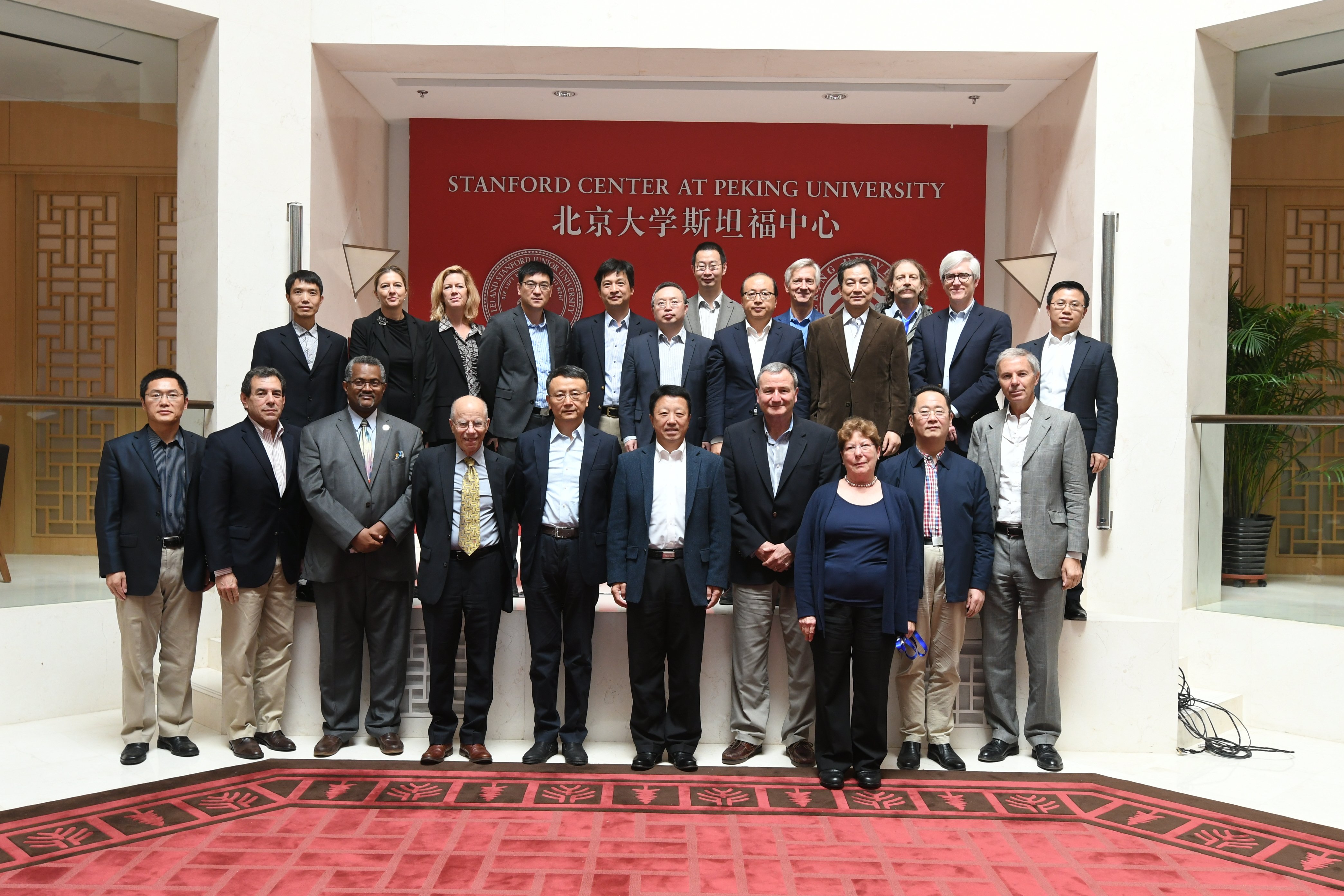
The 2019 Draper Hills Class of 2019 at the Freeman Spogli Institute for International Studies. Photo: Stanford Center on Democracy, Development and the Rule of Law
All News button
1
Authors
Beth Duff-Brown
News Type
News
Date
Paragraphs

Armed conflict continues its brutal march in Syria, Yemen, Southeast Asia and South Sudan — to name a few of the international hotspots that contributed to an 11% increase in political violence around the world in 2018.

Nearly 10 million Yemenis are facing famine this year; Syria was the deadliest place on earth for civilians last year, with more than 7,100 fatalities.

Many of those killed — and even more who face starvation — are children. And that’s when Stanford professor of pediatrics Paul Wise finds it hard to stand on the sidelines. Wise, who has traveled to Guatemala annually for the last 40 years to treat children in rural communities, also travels to the frontlines of global calamities.

As part of a small team of physicians, Wise went to Mosul, the northern city in Iraq once controlled by ISIS, in 2017 to evaluate the World Health Organization-led system to treat civilians injured in the brutal battle for the city. 

Working with colleagues at the Freeman Spogli Institute for International Studies, Wise has collaborated with the U.S. military, non-governmental organizations and the United Nations on the interaction of humanitarian and security challenges.

So, it should come as no surprise that the American Academy of Arts & Sciences — of which he is a member — recently appointed him and two other global health experts to lead a new initiative to develop new strategies to protect civilians, health care and cultural heritage in areas of extreme violence. 

The initiative, Rethinking the Humanitarian Health Response to Violence Conflict, will be a collaboration among political scientists, international human rights lawyers, physicians, academics and even the curators of major museums. They will develop strategies to prevent civilian harm and deliver critical health services in areas plagued by violent conflict, most notably in the Middle East, central and north Africa and parts of Asia. 

“We also want to address the humanitarian and protective frameworks that operate in areas that are extremely violent but wouldn’t necessarily be defined as being in armed conflict, like in the northern triangle of Central America. The human toll in these areas is at least as great as some of these other more traditionally defined areas,” Wise said.

Image
wise guatemala

Another of those areas is Myanmar, where nearly 700,000 ethnic Rohingya Muslims have fled to neighboring Bangladesh amid sectarian violence in the northern Rakhine province, in what the United Nations calls a “textbook example of ethnic cleansing.”

Rethinking is also headed up by global health expert Jaime Sepulvedaof the University of California, San Francisco, and Jennifer M. Welsh, a global governance and security expert at   McGill University in Canada. Their work will result in a series of publications, blog posts, videos, podcasts and op-eds as a means to reach not only a general audience but also local and field-based humanitarian health providers. The initiative will also seek the engagement of those directly victimized by violence in the areas of greatest concern. 

“We will come up with new strategies to protect civilians and deal with their needs when protection fails in the real world,” Wise said. “The goal is to make a difference in the real world. That’s a much more ambitious goal of course, but it’s the only goal that’s worthy of this kind of initiative.” 

A professor of pediatrics in the Medical School and core faculty member at Stanford Health Policy, Wise is also appointed in several international security programs at Stanford, including the Center on Democracy, Development and the Rule of Law,and the Center for International Security and Cooperation,and is a senior fellow at the Freeman Spogli Institute for International Studies.

Wise said he is particularly excited about the prospect of working with those who curate and protect cultural heritage sites and objects.

“The other thing about the American Academy of Arts & Sciences is that we are not just academics, but artists, musicians, novelists — and we expect to take full advantage of breaking out into these disciplines that aren’t normally part of these conversations,” Wise said.

When fire nearly toppled Notre Dame in Paris three months ago, Parisians gathered near the French Gothic cathedral to pray and to sing. When al-Qaida seized control of the North African country of Mali in 2012, a band of librarians undertook a dangerous mission to protect 350,000 centuries-old Arabic texts and smuggled them out of the library in Timbuktu.

At a recent meeting at the Getty Museum in Los Angeles, Wise met with museum directors, archeologists and political scientists about the preservation of cultural heritage.

“It was very clear that there were enormous areas of overlap between the efforts to protect cultural heritage and the efforts to protect people,” he said. “They’re just pragmatically connected because when you start destroying things of cultural importance, it tends to be associated ultimately with atrocities against people.”

Hero Image
gettyimages rohingya child
COX'S BAZAR, BANGLADESH: A Rohingya Muslim refugee boy is carried in a basket after crossing the border from Myanmar into Bangladesh close to the Naf River on November 2, 2017, near Anjuman Para in Cox's Bazar, Bangladesh.
Getty Images/Kevin Frayer
All News button
1
Authors
News Type
News
Date
Paragraphs

A U.S. foreign policy that cuts money to nongovernmental organizations performing or promoting abortions abroad has actually led to an increase in abortions, according to Stanford researchers who have conducted the most comprehensive academic study of the policy’s impact.

Eran Bendavid and Grant Miller — both associate professors at Stanford University School of Medicine and core faculty members at Stanford Health Policy — and doctoral candidate Nina Brooks find that abortions increased among women living in African countries where NGOs, such as the International Planned Parenthood Federation, were most vulnerable to the policy’s requirements.

The policy, widely known as the Mexico City Policy, explicitly prohibits U.S. foreign aid from flowing to any NGO that will not abide by the policy’s main condition: no performing or discussing abortion as a method of family planning, even if just in the form of education or counseling.

The policy has been a political hot potato since its inception. Enacted under Ronald Reagan in 1984, it’s been enforced by subsequent Republican administrations while Democrats in the White House revoked the policy within days of taking office.

The study by Brooks, Bendavid and Miller, published June 27 in The Lancet Global Health, looked at the policy’s effects in more than two dozen African countries over a span of 20 years under three presidents: Bill Clinton, George W. Bush and Barack Obama. It finds that, when the policy was in place during the Bush years, abortions were 40 percent higher relative to the Clinton and Obama administrations.

When the policy was suspended during Obama’s two terms, the research shows that the upward trend in abortion rates reversed.

“Our research suggests that a policy that is supported by taxpayers ostensibly wishing to drive down abortion rates worldwide does the opposite,” said Bendavid, a faculty affiliate of the Stanford King Center on Global Development, which is part of the Stanford Institute for Economic Policy Research (SIEPR).

A key reason for the uptick in abortions is that many NGOs affected by the policy also provide contraceptives – and funding cuts mean birth control is harder to get, said Brooks.

“By undercutting the ability to supply modern contraceptives, the unintended consequence is that abortion rates increase,” she said.

And the policy’s scope has expanded under the Trump administration. While it originally restricted aid directed only toward providing family planning and reproductive health services, President Trump has extended the policy to cover any group engaged in global health, including organizations providing services for HIV or child health – not just family planning.

Groundbreaking Research

The stakes are high. America is the world’s largest provider of development assistance and spent about $7 billion on international health aid in 2017. Many women in sub-Saharan Africa depend on this aid for contraceptives.

In sub-Saharan Africa, NGOs are often primary providers of family planning services. Two of the world’s largest family planning organizations – International Planned Parenthood Federation and Marie Stopes International – have forfeited large sums of U.S. cash for refusing to comply with the policy, according to news reports.

The research findings were based on records of nearly 750,000 women in 26 sub-Saharan African countries from 1995 to 2014. When the policy was in effect under George W. Bush, contraceptive use fell by 14 percent, pregnancies rose by 12 percent and abortions rose by 40 percent relative to the Clinton and subsequent Obama years – an impact sharply timed with the policy and in proportion to the importance of foreign assistance across sub-Saharan Africa.

The paper is the second study of the rule’s impact by Bendavid and Miller, who are both faculty members of Stanford Health Policy. The research is also one of the very few evidence-based analyses of the policy.

Their earlier research, the first quantitative, large-scale effort to examine the policy’s impacts, looked at a smaller set of African countries during the Clinton and Bush administrations and also found an increase in abortion rates when the policy was enacted in 2001.

“Our latest study strengthened our earlier findings because we were able to look at what happens when the rule was turned off, then on, and then off again,” said Bendavid, referring to the policy’s whipsawing under Clinton, Bush and then Obama.

Miller, who is the director of the King Center and a SIEPR senior fellow, says the team’s research reveals a deeply flawed policy.

“We set out to provide the best and most rigorous evidence on the consequences of this policy,” he said. “What we found is a clear-cut case of government action that everyone on all sides of the abortion debate should agree is not desirable.”

Signs of a Global Pushback

Brooks also notes that their findings may underestimate the rule’s full impact.

“The excess abortions performed due to the policy are more likely to be performed unsafely, potentially harming women beyond pregnancy terminations,” she said.

Under Trump, the international response to U.S. funding cuts has shifted. Norway, Canada and several other countries have pledged to increase funding of international NGOs affected by the policy – though not by enough to cover the expected shortfall, says Miller.

“This shows us,” he said, “that despite the intense partisanship in the U.S. over the rule and its implementation, there are ways that policymakers around the world can offset its effects – by ensuring higher levels of family planning funding, for example.”

Hero Image
gettyimages sudanese women Getty Images-Sudanese Women
All News button
1
Paragraphs

We examine the effect on service delivery outcomes of a new information communication technology (ICT) platform that allows citizens to send free and anonymous messages to local government officials, thus reducing the cost and increasing the efficiency of communication about public services. In particular, we use a field experiment to assess the extent to which the introduction of this ICT platform improved monitoring by the district, effort by service providers, and inputs at service points in health, education and water in Arua District, Uganda. We find suggestive evidence of a short-term improvement in some education services, but these effects deteriorate by year two of the program, and we find little or no evidence of an effect on health and water services at any period. Despite relatively high levels of system uptake, enthusiasm of district officials, and anecdotal success stories, we find that relatively few messages from citizens provided specific, actionable information about service provision within the purview and resource constraints of district officials, and users were often discouraged by officials’ responses. Our findings suggest that for crowd-sourced ICT programs to move from isolated success stories to long-term accountability enhancement, the quality and specific content of reports and responses provided by users and officials is centrally important.

All Publications button
1
Publication Date
Journal Publisher
World Development
Authors
Jonathan Rodden
Number
112
Paragraphs

Authors Christensen and Laitin argue that an interplay of geographic, historical, and demographic factors undergird sub‑Saharan states’ post‑independence struggles to eradicate poverty, establish democratic accountability, and quell civil unrest. They set out the founding fathers’ challenges in transforming their postcolonial states, many of which are ethnically diverse, geographically diffuse, sparsely populated, and lacking in administrative capacity. With the legacies of the slave trade, partition, Christian missionaries, and extractive colonial institutions complicating their efforts, many African states faced stagnation, authoritarianism, and civil strife. Recent years have seen promising attempts to restore democracy to states under authoritarian rule and to liberalize their economies, suggesting that the region is moving toward a new era.
 
Relying on the best statistical data and richly illustrated with case material, this book is an indispensable source for scholars and policy analysts seeking to understand Africa’s post‑independence political trajectories.

All Publications button
1
Publication Type
Books
Publication Date
Journal Publisher
Yale University Press
Authors
David Laitin
News Type
Commentary
Date
Paragraphs

In the honor of publication of Larry Diamond's "Ill Winds: Saving Democracy from Russian Rage, Chinese Ambition, and American Complacency" Foreign Affairs are providing past the paywall article "Democracy Demotion: How the Freedom Agenda Fell Apart" by Larry Diamond. Read here


Hero Image
iraqi voters inked fingers
All News button
1
Authors
News Type
News
Date
Paragraphs


A new study by Stanford economists shows that giving fathers flexibility to take time off work in the months after their children are born improves the postpartum health and mental well-being of mothers.

In the study, slated for release by the National Bureau of Economic Research on June 3, Petra Persson and Maya Rossin-Slater examined the effects of a reform in Sweden that introduced more flexibility into the parental leave system. The 2012 law removed a prior restriction preventing a child’s mother and father from taking paid leave at the same time. And it allowed fathers to use up to 30 days of paid leave on an intermittent basis within a year of their child’s birth while the mothers were still on leave.

The policy change resulted in some clear benefits toward the mother’s health, including reductions in childbirth-related complications and postpartum anxiety, according to their empirical analysis.

“A lot of the discussion around how to support mothers is about mothers being able to take leave, but we often don’t think about the other part of the equation — fathers,” says Rossin-Slater, an assistant professor of health research and policy.

“Our study underscores that the father’s presence in the household shortly after childbirth can have important consequences for the new mother's physical and mental health,” says Persson, an assistant professor of economics.

Rossin-Slater and Persson are both faculty fellows at the Stanford Institute for Economic Policy Research.

Among their main findings of effects following the reform: Mothers are 14 percent less likely to need a specialist or be admitted to a hospital for childbirth-related complications — such as mastitis or other infections — within the first six months of childbirth. And they are 11 percent less likely to get an antibiotic prescription within that first half-year of their baby’s life.

There is also an overall 26 percent drop in the likelihood of any anti-anxiety prescriptions during that six-month postpartum period — with reductions in prescriptions being most pronounced during the first three months after childbirth.

What’s more, the study found that the average new father used paid leave for only a few days following the reform — far less than the maximum 30 days allowed — indicating how strong of a difference a couple of days of extra support for the mother could make.

“The key here is that families are granted the flexibility to decide, on a day-to-day basis, exactly when to have the dad stay home,” said Persson. “If, for example, the mom gets early symptoms of mastitis while breastfeeding, the dad can take one or two days off from work so that the mom can rest, which may avoid complications from the infection or the need for antibiotics.”

These indirect benefits from giving fathers workplace flexibility are not trivial matters when you consider the health issues mothers often face after childbirth and after they get home from the hospital, says Rossin-Slater, who is also a faculty member of Stanford Health Policy.

Infections and childbirth complications lead to one out of 100 women getting readmitted to the hospital within 30 days in the United States, according to the study.

Meanwhile, postpartum depression occurs for about one out of nine women, and maternal mortality has also been a rising trend over the past 25 years in the U.S.

The study comes as a growing number of lawmakers in the United States vocalize support for paid family leave but have failed to pass federal legislation.

Washington, D.C., and six states have adopted various paid family leave laws, but the U.S. remains the only industrialized nation in the world that does not have a national mandate guaranteeing a certain amount of paid parental leave.

Some federal lawmakers are working on family leave measures and have proposed such legislation over the past few years — including The Family Act, The New Parents Act — but none of them have ever gained enough traction to proceed in Congress.

This new study can help broaden the policy discussions, the researchers say.

The larger context around paid family leave policies is often framed today as a way to help narrow the gender wage gap by giving women more workplace flexibility and fewer career setbacks.

This study, however, shines a light on maternal health costs and how a policy on paid family leave — that includes workplace flexibility for the father — offers more benefits than previously thought, Rossin-Slater says.

“It's important to think not only about giving families access to some leave, but also about letting them have agency over how they use it,” she says.

And when it comes to concerns that fathers might use paid parental leave to goof off instead of spending the time as intended, the researchers say their study should assuage those worries.

“It's not like fathers are going to end up using a whole month to just stay home and watch TV. We don't find any evidence of that,” Rossin-Slater says. “Instead they only use a limited number of days precisely when the timing for that seems most beneficial for the family.”

“For all these reasons,” Persson says, “giving households flexibility in how to use paternity leave makes a lot of sense.”

Hero Image
gettyimages dadbaby Getty Images
All News button
1
Authors
Beth Duff-Brown
News Type
News
Date
Paragraphs

U.S. government aid for treating children and adults with HIV and malaria in developing countries has done more than expand access to lifesaving interventions: It has changed how people around the world view the United States, according to a new study by researchers at the School of Medicine.

Compared with other types of foreign aid, investing in health is uniquely associated with a better opinion of the United States, improving its “soft power” and standing in the world, the study said.  

Favorability ratings of the United States increased in proportion to health aid from 2002 to 2016 and rose sharply after the implementation of the President’s Emergency Plan for AIDS Relief in 2003 and the launch of the President’s Malaria Initiative in 2005, the researchers report.

Their findings were published this week in the American Journal of Public Health. The lead author is postdoctoral scholar Aleksandra Jakubowski, PhD, MPH. The senior author is Eran Bendavid, MD, associate professor of medicine and a core faculty member at Stanford Health Policy.

“Using data on aid and opinions of the United States, we found that investments in health offer a unique opportunity to promote the perceptions of the United States abroad, in addition to disease burden relief,” the authors wrote. “Our study provides new evidence to support the notion that health diplomacy is a net win for the United States and recipient countries alike.”

The Trump administration, however, has proposed a 23% cut in foreign aid in its 2020 budget, including large reductions to programs that fight AIDS and malaria overseas.

The Stanford researchers believe their study is the first to add heft to the argument that U.S. health aid boosts the “soft power” that wins the hearts and minds of foreign friends and foes.

“Our study shows that investing in health aid improves our nation’s standing abroad, which could have important downstream diplomatic benefits to the United States,” Jakubowskisaid. “Investments in health aid help the United States accumulate soft power. Allowing the U.S. reputation to falter would be contrary to our own interests.” 

A Policy Debate

Many politicians and economists consider spending U.S. tax dollars on foreign aid as an ineffective, and possibly harmful, enterprise that goes unappreciated and leads to accusations of American meddling in other countries’ national affairs.

The U.S. government, for the past 15 years, has contributed more foreign health aid than any other country, significantly reducing disease burden, increasing life expectancy and improving employment in recipient countries, the authors wrote. Still, this generosity has historically constituted less than 1% of the U.S. gross domestic product.

“Our results suggest that the dollars invested in health aid offer good value for money,” the researchers wrote. “That is, the relatively low investment in health aid (in terms of GDP) has provided the United States with large returns in the form of improved public perceptions, which may advance the U.S. government’s ability to negotiate international policies that are aligned with American priorities and preferences.”

The researchers used 258 Global Attitudes Surveys, based on interviews with more than 260,000 respondents, conducted by the Pew Research Center in 45 low- to middle-income countries between 2002 and 2016.

Their analysis focused on the health sector, which includes several large programs for infectious disease control, but also support for nutrition, child health and reproductive health programs. They compared health aid to other major areas of U.S. investment: governance, infrastructure, humanitarian aid and military aid. They also constructed a database of news stories that mentioned the President’s Emergency Plan for AIDS Relief or the President’s Malaria Initiative by crawling through the online archives of the top three newspapers by circulation in each of the 45 countries.

They found that the probability of populations holding a very favorable opinion of the United States was 19 percentage points higher in the countries where and years when U.S. donations for health care were highest, compared with countries where and years when health aid donations were lowest. Using another metric, the researchers found that every additional $100 million in health aid was associated with a nearly 6 percentage-point increase in the probability of respondents indicating they had a “very favorable” opinion of the United States. 

In contrast, the researchers found, aid for governance, infrastructure, humanitarian and military purposes was not associated with a better opinion of the United States.

Bendavid, an infectious diseases physician and core faculty member of Stanford Health Policy, said that when he set out to conduct this research, he believed it would result “in a resounding thud” — that the “soft power” of health aid would have no impact on public opinion.

“For me, the notion that this program — hatched and headquartered in D.C. — would have impacts among millions in Nairobi and Dakar, seemed farfetched,” Bendavid said. “I was incredulous until all the pieces were in place.”

The ‘America First’ Agenda

The Trump administration’s “America First” agenda is calling for significant cuts to global health aid, particularly to the highly successful AIDS relief program, which was established by President George W. Bush. The administration’s budget, released in March, proposed a $860 million cut to the program; the President’s Malaria Initiative is facing a $331 million reduction in federal funding. That’s a decline of 18% and 44%, respectively.

The U.S. contribution to the Global Fund to Fight AIDS, Tuberculosis and Malaria would also decline by 17%, or $225 million, according to the Kaiser Family Foundation.

Yet beyond the reputational damage to the United States, such cuts could be a major setback to improving health outcomes in developing countries, the researchers said. After all, HIV knows no borders, and having more resilient health care systems is instrumental when facing public health crises, such as the Ebola outbreak in the Democratic Republic of Congo, Jakubowski said.

“The most direct impact of cutting the United States’ health aid allocations is the potential to undermine or reverse the progress that has been enabled by U.S. aid in curbing mortality and the spread of disease,” Bendavid said. “However, this study suggests there are also repercussions to the United States: the relationships the U.S. has built with recipient nations could also be undermined.”            

Other Stanford co-authors are Steven Asch, MD, MPH, professor of medicine, and former graduate student Don Mai.

Stanford’s Department of Medicine supported the work.

Hero Image
gettyimages usaid
HARBEL, LIBERIA—Workers unload medical supplies to fight the Ebola epidemic from a USAID cargo flight on August 24, 2014 in Harbel, Liberia.
Photo by John Moore/Getty Images
All News button
1
Subscribe to Sub-Saharan Africa