


#BlackLivesMatter Beyond Borders
-
The Racial Equity, Diversity, and Inclusion (REDI) Task Force invites you to the second event in the "Critical Conversations: Race and Global Affairs" series. This panel discussion and Q&A will explore the resonance of Black internationalist research, past and present, to offer new insights on the Black Lives Matter movement .
Please register in advance here: https://stanford.zoom.us/meeting/register/tJ0ld-upqD4pGNIpEJJMBq-D2JQO_7J1GC62
Online, via Zoom: REGISTER
Sonita Moss
Research Associate
Panelist
REDI
Gabrielle Hecht
Moderator
FSI Senior Fellow, REDI Chair
Clay Carson
Panelist
Director, Martin Luther King, Jr., Research and Education Institute
Matt Randolph
Panelist
Ph.D. Student, Department of History
Seminars
International Research and Racism
-
About the Event: The Racial Equity, Diversity, and Inclusion (REDI) Task Force invites you to the first event in the "Critical Conversations: Race and Global Affairs" series focused on international research and racism. This conversation is an open dialogue featuring Dr. Christian Davenport, author of one of the pre-selected articles:
- C. Davenport, "Researching while Black: Why Conflict Research Needs More African Americans (Maybe)."
- G. Bhambra et al, "Why is Mainstream International Relations Blind to Racism?"
About the Speaker: Christian Davenport is a Professor of Political Science and Faculty Associate at the Institute for Social Research at the University of Michigan, Research Professor at the Peace Research Institute Oslo and Elected Fellow at the American Association for the Arts and Sciences. Primary research interests include political conflict, measurement, racism and popular culture. He is the author of seven books and author of numerous articles appearing in the American Political Science Review, the American Journal of Political Science and the Annual Review of Political Science (among others). He is the recipient of numerous grants (e.g., 12 from the National Science Foundation) and awards.
Please register in advance here: https://stanford.zoom.us/meeting/register/tJUlcumpqDksHtTZFndLWMnSN5YUUKRcJxyv
Online, via Zoom: REGISTER
Gabrielle Hecht
FSI Senior Fellow
REDI
Christian Davenport
Professor of Political Science
University of Michigan
Seminars
Student Documentary Celebrates Transnational Brain Linkages
News Type
News
Date
Paragraphs
Film Studies major Dexter Sterling Simpson, ’21, dreams of entering the documentary industry after graduation. To test the waters, he moved to New York City for two quarters last year to pursue an internship with a professional documentary house. One recent highlight of his documentary experience, though, occurred while working as a research assistant with Stanford sociologist and the William J. Perry Professor of Contemporary Korea Gi-Wook Shin.
The research assistant job, available through the Shorenstein Asia-Pacific Research Center (APARC), which Shin directs, provided Simpson with the opportunity to produce a film that documents how high-skilled migrants to the United States, including several Stanford scholars, continue to make significant contributions to their home countries and create mutually beneficial ties — or “brain linkages” — between the United States and their home countries. The documentary, called Brain Bridges and now available on APARC’s YouTube channel, showcases research that is part of Shin’s multiyear project studying global talent flows, brain hubs, and socioeconomic development in Asia.
A Positive-Sum Approach
“I started working on the project last summer and then continued remotely from New York before remote work became the new norm in the time of COVID-19,” says Simpson. “Surprisingly enough, the pandemic seemed to speed things up for us rather than slow them down. I would meet regularly with Professor Shin and the research team via Zoom to exchange updates and notes on my work. Several weeks ago, we held an outdoor, socially distanced interview shoot to close the film. It has been a unique challenge to work around the abrupt life changes caused by the pandemic, but it is deeply rewarding to emerge with a finished product that, I hope, is inspiring and informative.”
What we find is that brain drain offers opportunities for brain circulation and brain linkage, that is, home-host interactions that create a win-win, positive-sum situation for both sides.
Gi-Wook Shin
Director, APARC
The film traces the stories of several Stanford scholars and Silicon Valley entrepreneurs who demonstrate that the migration of high-skilled professionals is not a zero-sum game in which the host country (in this case, the United States) receives a net inflow of human capital from the home country. “Rather than simply enhancing the competitiveness of the host country at the home country’s expense — a phenomenon commonly referred to as ‘brain drain’ for the home country and ‘brain gain’ for the host country — what we find is that brain drain offers opportunities for brain circulation and brain linkage, that is, home-host interactions that create a win-win, positive-sum situation for both sides,” explains Shin.
From Human Capital to Social Capital
The story of Indo-American entrepreneur and venture investor Kanwal Rekhi is a case in point. When Rekhi came to the United States from India for graduate studies, he encountered prejudice in American society and criticism of his “unpatriotic” move in his home country. Undaunted, he advanced through the engineering ranks in several technology companies and in 1982, cofounded the computer networking company Excelan in Silicon Valley. Five years later, he became the first Indo-American entrepreneur to list a venture-backed company on the NASDAQ.
When high-skilled migrants stay engaged with the home countries, both home and host countries gain from the productive capacity embodied in the ties and networks linking many individuals and organizations.
Gi-Wook Shin
Director, APARC
From a human capital perspective, Rekhi’s journey is a case of brain drain for India. Following his success, however, he became an advocate for border-bridging entrepreneurs, pushed Indian legislators to reform venture regulations, and cofounded The Indus Entrepreneur (TiE), a nonprofit with a mission to foster entrepreneurship globally. His efforts in Silicon Valley and India helped create a whole new generation of entrepreneurs and a tangible impact on the economies in both countries.
“In considering brain linkage, we must shift from a view that regards labor primarily as human capital to a new model of labor as social capital,” notes Shin. “When educated professionals permanently leave their home countries, it is true that those countries lose the totality of education, skills, and experience embodied by these individuals. But when they stay engaged with the home countries, both home and host countries gain from the productive capacity embodied in the ties and networks linking many individuals and organizations.”
Featuring Stanford Scholars and Silicon Valley Entrepreneurs
Simpson’s documentary film follows the transnational brain bridging stories of several other accomplished academics and industry leaders in Silicon Valley, including Hongbin Li, the James Liang Director of the China Program at the Stanford King Center on Global Development and a Senior Fellow of Stanford Institute for Economic Policy Research; Kyle Loh, assistant professor of developmental biology who heads the Loh laboratory at the Stanford Institute for Stem Cell Biology and Regenerative Medicine; Arogyaswami Paulraj, professor emeritus at Stanford’s Department of Electrical Engineering; Sievlan Len, Stanford graduate student in international policy studies; Gen Isayama, general partner and CEO at venture capital fund World Innovation Lab; Asha Jadeja, an entrepreneur, investor, and philanthropist; Young Song, CEO of desktop virtualization company NComputing; Mariko Yang, cofounder of STEAM education organization SKY Labo; and Eugene Zhang, a founding partner of early-stage venture capital fund TSVC.
The documentary film brings to life the powerful lesson from the research by Shin and his colleagues: that transnational social capital and ties spanning geographic and cultural distance remain vital to today’s global market economy, even more so in a time of political tensions at home and abroad.
Related Research
Talent Flows, Brain Hubs, and Socioeconomic Development in AsiaRead More


Hero Image

All News button
1
Subtitle
‘Brain Bridges,’ a documentary produced by senior Dexter Sterling Simpson, illustrates the positive gains of global talent flows.
SPICE Webinar: “Angel Island Immigration Station: The Hidden History”
-
Webinar recording: https://youtu.be/ou4OpF-8j-g
Connie will speak about how the Chinese detention barracks on Angel Island were saved from demolition in the 1970s, opening the door to the hidden history of the immigration station. She will recount the experience of her grandmother, Mrs. Lee Yoke Suey, who was detained in the barracks for 15 and a half months starting in 1924 and how the United States Court of Appeals for the Ninth Circuit ruled on her grandmother’s case.
The Stanford Program on International and Cross-Cultural Education (SPICE), which is a program of the Freeman Spogli Institute for International Studies, worked with graphic artist Rich Lee to publish Angel Island: The Chinese-American Experience. Its author, Jonas Edman, will share activities and materials from this graphic novel that tells the story of Chinese immigrants who were detained at Angel Island Immigration Station in San Francisco Bay between 1910 and 1940.
This webinar is a joint collaboration between the Center for East Asian Studies and SPICE at Stanford University.
Featured Speakers:
Connie Young Yu

Connie Young Yu is a writer, activist and historian. She is the author of Chinatown, San Jose, USA, co-editor of Voices from the Railroad: Stories by Descendants of Chinese Railroad Workers, and has written for many exhibits and documentaries on Asian Americans. She was on the citizens committee (AIISHAC) that saved the Angel Island immigration barracks for historical preservation and was a founding member of Asian Americans for Community Involvement (AACI). Connie is board member emeritus of the Chinese Historical Society of America and historical advisor for the Chinese Historical and Cultural Project (CHCP).
Jonas Edman
Image

Jonas Edman is an Instructional Designer for the Stanford Program on International and Cross-Cultural Education (SPICE). In addition to writing curricula, Jonas coordinates SPICE’s National Consortium for Teaching About Asia (NCTA) professional development seminars on East Asia for middle school teachers, and teaches online courses for high school students. He also collaborates with Stanford Global Studies on the Education Partnership for Internationalizing Curriculum (EPIC) Fellowship Program. Prior to joining SPICE in 2010, Jonas taught history and geography in Elk Grove, California, and taught “Theory of Knowledge” at Stockholm International School in Stockholm, Sweden.
Via Zoom Webinar. Registration Link: https://bit.ly/3g9qnPc.
Connie Young Yu, independent historian and author
Jonas Edman
Stanford University
Workshops
SPICE Webinar: "Chinese Railroad Workers in North America Project at Stanford University"
-
Webinar recording: https://youtu.be/9eyHTMF2L7w
Upwards of 15,000 to 20,000 individual migrant Chinese laborers performed the bulk of the work constructing the Central Pacific span of the Transcontinental Railroad. Between 1864 and 1869, these Chinese also crossed the Pacific Ocean in what was then, and may still rank among the largest transnational labor migration movements. How do we find sources to uncover this forgotten and deliberately erased history? How did they live their daily lives? What kinds of enterprise did they innovate? How did their work on the railroad shape their lives in communities on both sides of the Pacific? We will look together at digital resources available at: http://web.stanford.edu/group/chineserailroad/cgi-bin/website/.
In 2018, the Stanford Program on International and Cross-Cultural Education (SPICE), which is a program of the Freeman Spogli Institute for International Studies, published four lessons on the Chinese Railroad Workers. These units adapt the research, primary sources, and insights of the Chinese Railroad Workers in North America Project for high school students and classes. Together, we'll engage in several activities from these lessons which are free for download from the SPICE website.
This webinar is a joint collaboration between the Center for East Asian Studies and SPICE at Stanford University.
Featured Speakers:
Roland Hsu, Ph.D.
 Dr. Roland Hsu
Roland Hsu is Director of Research for the Chinese Railroad Workers in North America Project at Stanford University. Hsu’s publications address migration and ethnic identity formation. His is the author of multiple essays in international scholarly collections, and in policy journals including Le Monde Diplomatique. Hsu’s most recent book is Migration and Integration. His writing focuses on the history of migration, and on contemporary immigration policy questions, combining humanistic and social science methods and materials to answer what displaces peoples, how do societies respond to migration, and what are the experiences of resettlement. Hsu earned his Ph.D. in Modern European History at the University of Chicago. He holds an M.A. in Art History from the University of Chicago, and a dual B.A. in Art History and also English Literature from the University of California, Berkeley.
Greg Francis
Image

Greg Francis is a Curriculum Consultant for SPICE. Previously, he was Director of Impact Programs for Net Impact. In that role, he led a team that designed and executed experiential learning programs for college students. Before that, Greg was a director for The Broad Superintendents Academy, where he oversaw an executive training program for leaders of urban school districts. With SPICE, Greg has authored or co-authored 10 curriculum units, including Along the Silk Road; Security, Civil Liberties, and Terrorism; International Environmental Politics; and China’s Cultural Revolution. In 2007, Greg received the Franklin Buchanan Prize, which is awarded annually by the Association for Asian Studies to honor an outstanding curriculum publication on Asia at any educational level. Greg received a B.A. in International Relations from Stanford University and M.A. in Latin American Studies from the Universidad Andina Simón Bolívar in Ecuador.
Via Zoom Webinar. Registration Link: https://bit.ly/37XYffc.
Roland Hsu, Ph.D.
Stanford University
Greg Francis
Stanford University
Workshops
Ninth Annual Korean Studies Writing Prize Awarded
News Type
News
Date
Paragraphs
Won-Gi Jung (BA '20, History and East Asian Studies) has been awarded the ninth annual Korea Program Prize for Writing in Korean Studies for his paper, "The Making of Chinatown: Chinese migrants and the production of criminal space in 1920s Colonial Seoul." "Jung has written a thoroughly researched, beautifully crafted and convincingly argued honors thesis, that was sparked by his interest in colonial Korea’s articulation of its ‘Chinese problem,’ a crisis that resulted in anti-Chinese riots and massive relocation of migrants back to China," notes Dafna Zur, Associate Professor, Korean Literature and Culture and Director of the Center for East Asian Studies. The details of the annoucement are available here.
Sponsored by the Korea Program and the Center for East Asian Studies, the writing prize recognizes and rewards outstanding examples of writing by Stanford students in an essay, term paper or thesis produced during the current academic year in any discipline within the area of Korean studies, broadly defined. The competition is open to both undergraduate and graduate students.
Past Recipients:
8th Annual Prize (2019)
7th Annual Prize (2018)
6th Annual Prize (2017)
5th Annual Prize (2016)
4th Annual Prize (2015)
3rd Annual Prize (2014)
2nd Annual Prize (2013)
1st Annual Prize (2012)
Hero Image

All News button
1
Subtitle
Won-Gi Jung (BA '20) is awarded the ninth annual Writing Prize in Korean Studies for his paper, "The Making of Chinatown: Chinese migrants and the production of criminal space in 1920s Colonial Seoul."

SPICE Webinar: “Visualizing the Essential: Mexicans in the U.S. Agricultural Workforce”
-
Webinar recording: https://youtu.be/FLKbADCk1o8
During multiple periods of economic crises, the U.S. economy has depended on Mexican labor. From World War II to the present, agricultural workers have been deemed essential to harvest our fruits and vegetables across the United States.
The Bracero Program began during World War II during a massive labor shortage due to the war and internment of Japanese Americans. It was the largest guest worker program agreement in United States history. Over 4.5 million contracts were awarded to young male Mexican immigrants from 1942 to 1964 to work in the railroad and agriculture industries.
Moreover, during the current health pandemic, agricultural workers have been categorized as “essential workers” by the federal government. Yet, many workers lack legal status to work in the United States.
Dr. Ignacio Ornelas Rodriguez has conducted extensive research and oral histories with former Braceros. In this seminar, he will discuss significant topics in Mexican American history, including the history of the Bracero Program, agricultural history in California, and the current H2-A Guest Worker Program. The webinar will broaden educators’ understanding of Mexican and Mexican American history and help to prepare them to provide instruction that is culturally inclusive.
This webinar is a joint collaboration between the Center for Latin American Studies at Stanford University and SPICE.
Featured Speaker:
Image

Ignacio Ornelas Rodriguez, Ph.D.
Ornelas is a historian, and currently a visiting scholar at the University of California, Berkeley. His work and research focuses on California history, and in particular, Chicano history and Chicano/Latino studies and Latino politics. Much of his work has focused on archival research that documents Mexican and Mexican American history. The history of Mexican labor in the United States necessarily includes the study of civil and voting rights and the generations of Mexicans who advocated for those rights. Ornelas is currently rewriting for publication his dissertation, titled The Struggle for Social Justice in the Monterey Bay Area 1930-2000: The Transformation of Mexican and Mexican American Political Activism. Dr. Ornelas Rodriguez currently serves on the board of directors of the California Institute for Rural Studies. His areas of expertise include U.S. and California History, Political Science, and Latino Politics.
Via Zoom Webinar. Registration Link: https://tinyurl.com/yc7j6qdd.
Dr. Ignacio Ornelas Rodriguez
Stanford University
Workshops
Hostile Environments: Immigration Enforcement and State Infrastructural Power in Western Europe
-
The phrase “immigration enforcement” often calls to mind efforts to detain and deport undocumented migrants. Yet, governments increasingly employ strategies of exclusion – denying migrants access to public and private resources in the hope this will encourage them to voluntarily leave and deter future arrivals. This talk will discuss these practices as a way to improve our understanding of how state power operates in Europe today. Drawing on and developing the concept of infrastructural power, this talk examines how immigration enforcement requires both administrative coordination and linkages to social groups. Infrastructural power is particularly essential when it comes to exclusionary policies, which attempt to steer the behavior of individual human beings in decentralized, complex economies and societies. In the course of instituting these measures, state officials have augmented their capacities for overseeing non-migrants as well, so that all citizens and denizens are subject to increased supervision.
Image
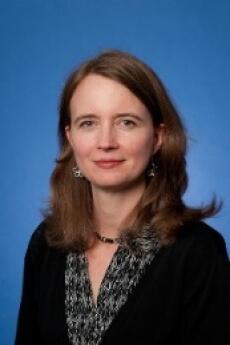
Kimberly J. Morgan is a Professor of Political Science and International Affairs at George Washington University. Her work examines the politics shaping public policies in Western Europe and the United States, with particular interests in migration and social welfare. She is the author of two books, Working Mothers and the Welfare State: Religion and the Politics of Work-Family Policy in Western Europe and the United States (Stanford 2006) and The Delegated Welfare State: Medicare, Markets, and the Governance of American Social Policy (Oxford 2011), and co-editor of two volumes, the Oxford Handbook of US Social Policy (Oxford 2015) and The Many Hands of the State: Theorizing Political Authority and Social Control (Cambridge 2017).
Co-sponsored by the Global Populisms Program
Kimberly J. Morgan
Professor of Political Science and International Affairs
Speaker
George Washington University
Lectures