Culture
-

This series of talks will explore a number of issues which have arisen from a study of ethnogenesis, identity formation, state building, religious reform, and socio-economic "modernization" in selected regions of insular and peninsular Southeast Asia in the (late) modern period (late 19th century to the present).  Clearly, none of these broad thematic areas can be adequately studied on its own.

This talk is the first in a series of 3 lectures and explores the theme of modernity, specifically by asking whether we can or should speak of a distinctively Southeast Asian form, pattern, structure or trajectory of modernity - a question which arises out of the ‘revisionist' literature on so-called alternative modernities.

Among Joel S. Kahn's many books are Other Malays (2006), Modernity and Exclusion (2001), Southeast Asian Identities (ed., 1998), Culture, Multiculture, Postculture (1995), and Constituting the Minangkabau (1993). His other writings include "State, Region, and the Politics of Recognition" (forthcoming in National Integration and Regionalism in Indonesia and Malaysia). He is an elected Fellow of the Academy of the Social Sciences in Australia and has held appointments at Monash University and University College London, among other institutions. He serves or has served as an editorial board member of Critique of Anthropology, Current Anthropology, and Ethnicities. His doctorate is from the London School of Economics and Political Science.

Philippines Conference Room

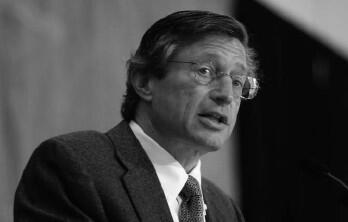
Joel Kahn 2008 NUS-Stanford Lee Kong Chian Distinguished Lecturer and Professor of Anthropology Emeritus Speaker La Trobe University
Lectures

Shorenstein APARC
Stanford University
Encina Hall E301
Stanford, CA 94305-6055

(650) 725-5781 (650) 723-6530
0
Visiting Scholar, 2008-09
Kwon.JPG

Oh Eul Kwon has been the Policy Deputy-Chairman of the Grand National Party in Korea and served in many committees of the party: the Chairman of Agriculture, Forestry, Marine Affairs and Fisheries Committee; Member of Government Administration and Local Autonomy Committee; Chief of Politics Reform Special committee of Grand National Party; Member of Culture & Tourism Committee.

Authors
News Type
News
Date
Paragraphs

The Environmental Ethics Working Group has embarked on two distinct and experimental approaches to environmental ethical research. One approach explores the normative dimensions of quantitative environmental research. The other approach seeks either to integrate scientific data into normative arguments or to examine the real world quantitative implications of such arguments. The combination of quantitative and normative work is an exciting new interdisciplinary adventure.

Last quarter's environmental ethics working group kicked off with Marilyn Cornelius (1st year PhD student in the Interdisciplinary Program in Environment and Resources -- IPER) presenting a paper on global identity and climate justice. Last quarter's presentations were made by graduate students and post-docs in Education, Public Policy, Global Justice, Ethics and Society, Philosophy, and IPER on topics including national savings and sustainability, national obligations to prevent catastrophic climate change, how moral and political values affect research, the security impacts of climate change, who should bear the costs of Indian energy policy changes and what drinking water standards are appropriate for rural areas.

The group meets once a week to discuss a member's research and is funded through Woods Institute Environmental Venture Project and the Program on Global Justice Program. Debra Satz, Joshua Cohen and Kenneth J. Arrow serve as faculty advisors. Aside from eventually publishing the papers, the group is organizing a workshop for Winter 2009.

Hero Image
EEWG2
All News button
1
Authors
Donald K. Emmerson
News Type
News
Date
Paragraphs
National Identity - Shallow or Deep? Nationalist Education - Top Down or Bottom-up? Politeness Campaigns - Smiles or Frowns? Entrepreneurial Culture - Transplanting Silicon Valley? Environmental Policy - Selfishly Green? Renewable Energy - What about Sunshine?

The inaugural (March 2008) issue of PRISM, an undergraduate journal published by the University Scholars Programme (USP) of the National University of Singapore (NUS), carries a dozen essays. Six were written by Stanford undergraduates for a Stanford Overseas Seminar taught in Singapore in September 2006, and six by NUS undergrads in the USP for an NUS course taught at Stanford in May 2007.

The Stanford students, their paper topics, and brief summaries of their conclusions follow:

Jenni Romanek examined Singapore’s national identity. She found that Singaporeans “embody certain shared attributes of national identity, but they do so on a superficial level … If the government truly wishes to impart upon citizens a Singaporean identity, it must allow them to cultivate and define it, at least in part, by themselves. This necessitates a level of self-expression that is not currently acceptable by government standards.” She ended her essay by asking, “Without free speech, whose identity are Singaporeans representing?”

François Jean-Baptiste examined Singapore’s efforts to inculcate national identity through the school curriculum. He found the education ministry’s top-down methods “generally unsuccessful” and recommended a more student-and-teacher-driven approach. “The real and representative Singapore narrative,” he wrote, involved the ambitions of a wide range of Asian immigrants including “Filipina maids,” “Malay Muslims,” and “opposition leaders like J.B. Jeyaretnam and Slyvia Lim.” Education in the city-state’s secondary schools, he concluded, “should and can incorporate that story.”

Lauren Peate studied the “Four Million Smiles” campaign launched in the run-up to the annual meetings of the International Monetary Fund and the World Bank held in Singapore in September 2006 while the Stanford seminar was in progress. She found general public support for the campaign except among “young, [more] educated, and electronically connected” Singaporeans, one of whom told her, “We trust the government but it doesn’t trust us [to smile without being told to].” She ended by wondering how the authorities would choose to deal with a young generation of bloggers with critical minds.

Jon Casto explored Singapore’s efforts to instill an entrepreneurial culture despite a general aversion to risk (and a preference for state employment) “perpetuated through cultural norms, the labor market and [government-linked corporations].” He also, however, found entrepreneurship in Singapore “slowly on the rise” and argued that “today’s experiences” in promoting it “may bear tremendous fruit” if and when the economic climate because problematic enough to demand “that Singaporean individuals, not just the [People’s Action Party] government, provide solutions.”

Alexander Slaski researched the implications of illiberal politics for environmental policy in Singapore. He credited the government with having provided its citizens with a high quality of life, including “excellent environmental governance” from the top down. But he was struck by an artifact of the government’s relatively authoritarian approach to being green: the virtual absence in the city-state of a bottom-up or civil-society movement for conservation. To that extent, he concluded, “the authoritarian elements of the government have kept environmental protection from being as strong as it could be.”

Sam Shrank investigated the status and future of renewable energy. Singapore had previously managed to secure for itself “a constant and assured flow of oil and natural gas from abroad at reasonable.” But “peak oil—the year in which the supply of oil peaks—is in sight, and the end of natural gas is not far behind.” Oil and gas prices, he warned, will rise as demand outpaces supply. Amply sunlit as it is, Singapore could and should be doing much more to exploit sources of renewable energy sources, and solar (photovoltaic) energy in particular.

Compared with these essays, the Singaporean students’ essays in PRISM were no less diverse. If the Americans concentrated single-mindedly on Singapore, in keeping with the focus of the Stanford seminar, the Singaporean contributors were more inclined to compare American conditions and experiences with those in their own country.

Dan Goh, the NUS professor who taught the Singaporeans at Stanford, introduced the student essays. His thoughts are excerpted here:

"Reflections on Western civilization have often found themselves seduced by the idea of the American exception. … It seems ironic therefore that a group of American students would travel to this island to study what they have termed as the Singapore exception. Seen in the immediate context of Southeast Asia, Singapore is indeed an exception [whose] culturally diverse [im]migrants [have transformed the city-state] into a forward-looking nation. With little historical gravitas except for founding moments and fathers, it is a young nation filled with anxieties and self-doubt. Yet, it is resolute in forming its citizenry through clever ideological campaigns and in engineering visionary technological and economic projects based on successful foreign examples. For all its democratic institutions, it is beset by political elitism and illiberal tendencies. Despite its Edenic ideals and scientific prowess, it is reluctant to pursue environmental sustainability. These are the themes and contradictions tackled in the articles by the six young American scholars featured in this inaugural volume."

"But if we look closer, these themes and contradictions describe America as well. I have always suspected that the study of the exceptional other is always the study of our self as normal when the two are actually much more similar than they are different. Irony has a way of turning in on itself. However, the American students’ essays show that there is a major difference at the heart of comparing the American and Singapore exceptions."

"Given the American political culture of suspicion of state authority, it is not surprising that [in the Stanford students’ essays] the state sticks out visibly in the landscape of Singapore society. For the Singaporean students traveling to the Bay Area however, the feeling is best described by the excitement and trepidation of a Western naturalist traveling from sedate urban London to the rich jungles of Borneo. The state monolith fades and vibrant cultural diversities, intriguing identity evolutions and self-organizing chaos beckon. But always with Singapore in their minds, the young scholars reflected their study of Silicon Valley and San Francisco back unto Singapore. What they found was that the same diversities, evolutions and chaos were also evident in Singapore, but with the roots of the state apparatus sunk deeper into the rich soil here."

"Singapore is not anything like America and yet is everything American, except for the leviathan that stands over our shoulders. Nonetheless, the diversities and hybridities of vernacular everyday life continue to grow as ideas, images and identities speed around the global circuits of capitalism, … connecting young people across the deep Pacific …"


In his own preface to the PRISM issue, SEAF Director Donald Emmerson, who taught the Stanford seminar in Singapore, had this to say:

“In Praise of Bad Teaching.” Years ago at the University of Wisconsin-Madison I pinned a page of text under that title to a bulletin board next to my office door. The author argued that bad teachers were really good teachers because their boring lectures drove their students out of the classroom and into the real world where real learning could occur.

The argument is not wholly facetious. Conventional undergraduate education is notoriously indirect. Independent field work is the preserve of professors and graduate students. Undergraduates sit, listen, read, take notes, and take exams. Technology—the ability to google—has reduced the teacher’s ability to control information. But in standard classrooms, it is still the teacher who selects, interprets, and conveys knowledge, and who then tests and grades its retention. In humdrum pedagogy at its worst, the professor and the student are, respectively, faucet and sponge. A charismatic lecturer—a supposedly “good” teacher—may fill lecture hall seats only to reinforce the enthralled passivity of the sitters.

Fortunately, the National University of Singapore and Stanford University are not conventional institutions. Both campuses encourage their students to go abroad. Professors are not dispensed with. But by affording students direct contact with foreign cultures, NUS and Stanford necessarily challenge the teacher’s span of control. In that loss of unquestioned professorial authority lies a chance for serious learning by students and teacher alike. …

For lack of space, alas, we could not [publish in PRISM] all thirty essays written for our seminars. But those that are printed herein should give readers a feel for what happened when two sets of undergraduate students were “turned loose” on each other’s turf. I am grateful to [Dan Goh and the other individuals who made this issue and the seminars possible] and above all to both complements of students, including those not represented in these pages, for giving me one of the most enjoyable and memorable “teaching”—that is to say, learning—experiences of my life.

PRISM is not available on line, but it can be ordered (stock permitting) from

The Editor, PRISM
University Scholars Programme
National University of Singapore
BLK ADM, Level 6,
10 Kent Ridge Crtescent
Singapore 119260

All News button
1
Authors
Roland Hsu
News Type
News
Date
Paragraphs

The Forum on Contemporary Europe (FCE) is sponsoring long-term research on questions of European integration. This year FCE has conducted a series of seminars and international conferences to bring European authors and policy leaders together with forum researchers and Stanford centers to investigate the challenges of social integration. The series has combined the study of European Union (EU) policy toward its newest members, East-West and trans-Atlantic relations, crime and social conflict, and European models of universal citizenship. The directors of the forum plan multiple publications. Here is a preview of the forthcoming anthology on Ethnicity in Today’s Europe (Stanford University Press) edited and with an introduction by FCE Assistant Director Roland Hsu.

In periods of EU expansion and economic contraction, European leaders have been pressed to define the basis for membership and for accommodating the free movement of citizens. With the lowering of internal borders, member nations have asked whether a European passport is sufficient to integrate mobile populations into local communities. Addressing the European Parliament on the eve of the 1994 vote on the European Constitution, Vaclav Havel, then president of the Czech Republic, defined national membership in terms of a particular tradition of civic values:

The European Union is based on a large set of values, with roots in antiquity and in Christianity, which over 2,000 years evolved into what we recognize today as the foundations of modern democracy, the rule of law and civil society. This set of values has its own clear moral foundation and its obvious metaphysical roots, whether modern man admits it or not.

Havel’s claim for the continuing efficacy of Greco- Roman and Christian values can be read as a prescription for founding policy and even sociability. In today’s multicultural Europe his definition has been repeated, but also challenged, in debates over the most effective response to increasing heterogeneity and social conflict. For those who endorse or reject Havel’s binding moral roots, this new anthology reveals surprising positions.

The scale of change since Havel’s 1994 speech challenges confidence in European traditions for new Europe. During 1995–2005, EU immigration grew at more than double the annual rate of the previous decade. European immigrant employment statistics are difficult to aggregate but show a steep downward trend. EU Eurostat figures show the Muslim community is the fastest growing resident minority.

The violence in recent years also presses us to revise theory and practice. In the east: How will Balkan communities resume relations after massacres and ethnic cleansing? Does EU recognition of Kosovo validate claims for Flanders independence and Basque ethnic heritage? Can Roma immigrants look to Italian governments to enforce ethnic safeguards? In the west, the widespread riots in France in 2005 and 2007 by urban youths of mainly North and West African descent against military police have ruptured public security and social cohesion. France’s official response was aimed more to excise rather than reintegrate the protesters. In 2005, then Interior Minister Nicolas Sarkozy announced “zero tolerance” for those he termed racaille (scum). The descriptor was effectively deployed to shape public opinion and the ministry declared a national state of emergency, invoking a law dating from the 1954–1962 War of Algerian independence, applied previously only against ethnic uprisings in French Algeria and New Caledonia, for searches, detainments, house arrests, and press censorship without court warrant.

Based on the ministry’s own records, the violence did not catch the government by complete surprise. Researchers, including Alec Hargreaves in Ethnicity in Today’s Europe, have revealed a study conducted in 2004 by the French interior ministry that documented more than 2 million citizens living in districts of social alienation, racial discrimination, and poor community policing. The ministry’s document admits that youth unemployment in what journalists referred to as quartiers chauds (neighborhoods boiling over) surpassed 50 percent. Constitutionally barred from conducting ethnic surveys, the report nevertheless acknowledges what most already understood: that the majority of the unemployed and disenfranchised youth were French-born whose parents or grandparents were of African descent.

Post-war era immigration, from the 1950s European reconstruction through the 1960s and 1970s decolonization, is best defined as post-colonial migration. European governments created neighborhoods for immigrants who moved from periphery to metropole. The new residents’ education, language, and collective memory were shaped by colonial administrations, and that background was roughly familiar to the host communities. Since 1990, however, based on projections in this anthology, we have entered a period, for lack of a better name, of post-post-colonial diaspora.

The peoples immigrating to Europe are increasingly coming from lands without characteristic European colonial heritage. While few countries of origin have no instance of European intervention, the new arrivals are adding rapidly growing numbers of émigrés of global diasporas from Iraq, Iran, Afghanistan, Egypt, Syria, and Israel, as well as the Indonesian archipelago and sub- Saharan and East Africa. This most recent demographic trend takes Europe, and the larger trans-Atlantic west, into an era not well served by existing models.

In this anthology, nine prominent authors substantiate this shift. The essays create an unusual and productive dialogue between social scientist modeling and humanist cultural studies to confront assumptions about immigrant origin, European identity, and policies of tolerance. Bassam Tibi (International Relations, University of Gottingen/Cornell) criticizes European multiculturalism, which, he argues, inadvertently enables European Islamist fundamentalism. Tibi’s essay challenges his fellow Muslim immigrants to embrace traditional European civic values (which he dates neither from antiquity nor the Christian era, but rather from the French Revolution) as the foundation not for multiculturalism, but for a cultural pluralism that fosters social integration. The result, in his terms, would replace Islamist fundamentalism with a Euro-Islam capable of Euro-integration. Kadar Konuk (German Studies, University of Michigan) sets Tibi’s insight on European- Muslim ethnicity into the history of European-Turkish relations. Readers questioning Turkey’s EU candidacy will find that the two essays shift the common critique of Turkish policy toward a more pressing question of Europe’s social capacity to integrate prospective Turkish-EU citizens.

Contributions by Alec Hargreaves (French Studies, Florida State), Rogers Brubaker (Sociology, UCLA), and Saskia Sassen (Sociology, Columbia) — all leading authors on European political culture and social theory — rethink Western European responses to minority integration. Articles by Carole Fink (History, Ohio State), Leslie Adelson (German Studies, Cornell), and Salvador Cardús Ros (Sociology, Autonomous University of Barcelona) reveal cultural expressions that are often overlooked in studies of European minority identity. The final article by Pavle Levi (Art and Art History, Stanford University) focuses on the case of post-ethnic war Balkans, to test the ability of mass media and film to influence the creation of cross-border inclusive cultures.

Ethnicity in Today’s Europe was developed from the fall 2007 conference on the topic sponsored by FCE and the Stanford Humanities Center.

To sign up for upcoming FCE programming, and for an alert from the Stanford University Press when this anthology and works on this topic are released, plese visit the Stanford University Press website.

All News button
1
News Type
News
Date
Paragraphs

As the world’s most dynamic and rapidly advancing region, the Asia-Pacific has commanded global attention. Business and policy leaders alike have been focused on the rise of China, tensions on the Korean peninsula, Japan’s economic recovery and political assertiveness, globalization and the outsourcing of jobs to South Asia, Indonesia’s multiple transitions, competing forces of nationalism vs. regionalism, and the future of U.S.-Asia relations.

What is the near-term outlook for change in the region? How might developments in the economic, political, or security sphere affect Asia’s expected trajectory? And how will a changing Asia impact the United States? These were among the complex and challenging issues addressed by a faculty panel from the Shorenstein Asia-Pacific Research Center (Shorenstein APARC) and the Eurasia Group at the Asia Society in New York on January 23, 2006.

Image
1607 small 4 1
Moderated by director of the Freeman Spogli Institute for International Studies Coit D. Blacker, the Olivier Nomellini Family University Fellow in Undergraduate Education, the panel included Michael H. Armacost, the Shorenstein Distinguished Fellow, former Under Secretary of State for Political Affairs, and former Ambassador to Japan and the Philippines; Donald K. Emmerson, the director of the Southeast Asia Forum at Shorenstein APARC and noted expert on Indonesia; Harry Harding, the director of research and analysis at the Eurasia Group in New York and University Professor of International Affairs at George Washington University; and Gi-Wook Shin, the director of Shorenstein APARC, founding director of the Korean Studies Program, and associate professor of sociology at Stanford.

Q. COIT BLACKER: WHAT IS THE MOST DIFFICULT, CHALLENGING ISSUE YOU SEE?

Image
1607 small 4 2

A. HARRY HARDING:

In China, we are seeing a darker side of the Chinese success story. Millions of people have been lifted out of poverty, China's role in international affairs is on the rise, and China is an increasingly responsible stakeholder in an open, liberal global economy. Yet, the world is now seeing the problems China's reform program has failed to resolve. China's new five-year plan seeks to address a number of these issues, providing a plan for sustainable economic development that is environmentally
responsible and addresses chronic pollution problems, for a harmonious society that
addresses inequalities and inadequacies in the provision of medical care, insurance
and pension systems, and for continuing technological innovation, as part of China's
quest to become an exporter of capital and technology.

Image
1607 small 4 3
A. GI-WOOK SHIN:

The world should be deeply concerned about developments on the Korean peninsula. Two pressing issues are U.S. relations with South Korea and the nuclear crisis with the North. It is not clear when or whether we will see a solution. Time may be against the United States on the issue. China and South Korea are not necessarily willing to follow the U.S. approach; without their cooperation, it is difficult to secure a successful solution. The younger generation emerging in South Korea does not see North Korea as a threat. Our own relations with South Korea are strained and we are viewed as preoccupied with Iraq and Iran, as North Korea continues to develop nuclear weapons.

Image
1607 small 4 4
A. DONALD EMMERSON:

In Southeast Asia, a key problem is uneven development, both in and between the political and economic spheres. Potentially volatile contrasts are seen throughout the region. Vietnam is growing at 8 percent per year, but will it become a democracy? It has not yet. Indonesia has shifted to democracy, but absent faster economic growth, that political gain could erode. Indonesia's media are among the freest in the region;
multiple peaceful elections have been held--a remarkable achievement--and nearly all Islamists shun terrorism. Older Indonesians remember, however, that the economy
performed well without democracy under President Suharto. Nowadays, corruption
scandals break out almost daily, nationalist and Islamist feelings are strong, and the
climate is not especially favorable to foreign investment. While Burma's economy
lags, its repressive polity embarrasses the Association of Southeast Asian Nations
(ASEAN). How long can the generals in Rangoon hold on? Disparities are also
international: dire poverty marks Laos and Cambodia, for example, while the
Malaysian and Thai economies have done well.

Image
1607 small 4 5
A. MICHAEL ARMACOST:

Japan is a "good news/bad news" story. The good news is that Japan has found a new security niche since the end of the Cold War. Previously, when a security problem loomed "over the horizon," they expected us to take care of it while, if prodded, they increased their financial support for U.S. troops stationed in Japan. During the first post-Cold War conflict in the Persian Gulf, Japan had neither the political consensus nor the legal framework to permit a sharing of the risks, as well as the costs, and this cost them politically. Since then, they have passed legislation that permits them to participate in U.N. peacekeeping activities, contribute noncombat, logistic, and other services to "coalition of the willing" operations, and even dispatch troops to join reconstruction activities in Iraq. Clearly, their more ambitious role is helping to make the U.S.-Japan alliance more balanced and more global.The bad news is a reemergence of stronger nationalist sentiment in Japan and more generally in Northeast Asia. In part this is attributable to the collapse of the Left in Japanese politics since the mid-1990s. This has left the Conservatives more dominant, and they are less apologetic about Japanese conduct in the 1930s and 1940s, more inclined to regard North Korea and China as potential threats, more assertive with respect to territorial issues, less sensitive to their neighbors’ reactions to Prime Ministerial visits to Yasukuni Shrine, and more eager to be regarded as a “normal” nation. Many Asians see the United States as pushing Japan to take on a more active security role and, in the context of rising Japanese nationalism, are less inclined to view the U.S.-Japan alliance as a source of reassurance.

Q. COIT BLACKER: WHAT ARE THE COMPETING AND CONFLICTING TENSIONS BETWEEN REGIONALISM AND NATIONALISM?

A. HARRY HARDING:

In China, there has been a resurgence of nationalism over the past 10 to 15 years. Since the end of the Maoist era and the beginning of the reform movement, the leadership has embraced nationalism as a source of legitimacy, but this is a double-edged sword. It places demands on the government to stand up for China’s face, rights, and prestige in international affairs, especially vis-à-vis Japan, the United States, and Taiwan, at times pushing Beijing in directions it does not wish to go.

A. DONALD EMMERSON:

In Indonesia, it is important to distinguish between inward and outward nationalism. Outward nationalism was manifest in Sukarno’s policy of confrontation with Malaysia. ASEAN is predicated on inward nationalism and outward cooperation. Nationalist feelings can be used inwardly to motivate reform and spur development. But there are potential drawbacks. Take the aftermath of the conflict in Aceh. The former rebels want their own political party. Hard-line nationalists in the Indonesian parliament, however, are loath to go along, and that could jeopardize stability in a province already exhausted by civil war and damaged by the 2004 tsunami.

A. GI-WOOK SHIN:

Korea is a nation of some 70 million people, large by European standards, but small in comparison to the giants of Asia, especially China, India, and Russia, making Korea very concerned about what other countries are doing and saying. Korea is currently undergoing an identity crisis. Until the 1980s, the United States was seen as a “savior” from Communism and avid supporter of modernization. Since then, many Koreans have come to challenge this view, arguing that the United States supported Korean dictatorship. Koreans are also rethinking their attitudes toward North Korea, seeing Koreans as belonging to one nation. This shift has contributed to negative attitudes toward both the United States and Japan

Q. COIT BLACKER: GENERATIONAL CHANGE IS ALSO A MAJOR ISSUE IN CHINA, THE DPRK, AND JAPAN. WHAT DOES IT BODE FOR POLITICAL CHANGE?

A. MICHAEL ARMACOST:

Japan has had a “one and a half party system” for more than half a century. Yet the Liberal Democratic Party has proven to be remarkably adaptive, cleverly co-opting many issues that might have been exploited by the opposition parties. It is clearly a democratic country, but its politics have not been as competitive as many other democracies. As for the United States, we have promoted lively democracies throughout the region. But we should not suppose that more democratic regimes will necessarily define their national interests in ways that are invariably compatible with ours. In both Taiwan and South Korea, to the contrary, democratic leaderships have emerged which pursue security policies that display less sensitivity to Washington’s concerns, and certainly exhibit little deference to U.S. leadership.

A. GI-WOOK SHIN:

In both North and South Korea, a marked evolution is under way. In the South, many new members of the parliament have little knowledge of the United States. Promoting mutual understanding is urgently needed on both sides. In the North, the big question is who will succeed Kim Jong Il—an issue with enormous implications for the United States.

A. DONALD EMMERSON:

Indonesians have a noisy, brawling democracy. What they don’t have is the rule of law. Judges can be bought, and laws are inconsistently applied. The Philippines enjoyed democracy for most of the 20th century, but poverty and underdevelopment remain rife, leading many Filipinos to ask just where democracy has taken their nation.

A. HARRY HARDING:

China has seen a significant increase in rural protests. There has been an increase in both the number of incidents and the level of violence. People are being killed, not just in rural areas, but also in major cities like Chengdu. We are seeing a new wave of political participation by professional groups, such as lawyers and journalists, galvanizing public support on such issues as environmental protection, failure to pay pensions, confiscation of land, and corruption. A new generation has been exposed to the Internet, the outside world, and greater choice, but it is not yet clear at what point they will demand greater choice in their own political life.


WHAT WOULD YOU ADVISE THE PRESIDENT ON U.S. POLICY TOWARDS ASIA?

In the lively question-and-answer session, panelists were asked, "Given the chance to talk to the U.S. President about change and improvement in U.S.-Asia policy, what would you say?"

MICHAEL ARMACOST: I am struck by a mismatch between our interests and our strategy in Asia. In some respects our Asia policy has become something of an adjunct of our policy toward the Middle East-where we confront perhaps more urgent, if not more consequential, concerns. Asia is still the most dynamic economic zone in the world; it is the region in which the most significant new powers are emerging; and it is where the interests of the Great Powers intersect most directly. Also, it is an area where profound change is taking place swiftly. We are adapting our policies in Asia to accommodate current preoccupations in the Muslim world, rather than with an eye to preserving our power and relevance in Asia.

HARRY HARDING: It is striking how much Asian nations still want us around- as an offshore balancer and a source of economic growth. Yet they want us to understand the priorities on their agenda as well as our own. We are seen as obsessed with terrorism and China. We should exhibit more support for Asian institution building, as we have with the European Union. We also need to get our own economic act together-promoting education, stimulating scientific research and technological innovation, and reducing our budget deficits-and quit resting on past laurels. Requiring Japan to accept U.S. beef exports and then sending them meat that did not meet the agreed-upon standards has been a setback for our relations, since the Japanese public regards the safety of its food supply as critically important.

DONALD EMMERSON: Most opinion-makers in Southeast Asia are tired of Washington's preoccupation with terrorism. To be effective in the region, we must deal-and appear to be dealing-with a wider array of economic, social, and political issues, and not just bilaterally. The United States is absent at the creation of East Asian regionalism. For various reasons, we were not invited to participate in the recent East Asia Summit. Meanwhile, China's "smile diplomacy" has yielded 27 different frameworks of cooperation between that country and ASEAN. We need to be more, and more broadly, engaged.

MICHAEL ARMACOST:
The establishment of today's European community began with the historic reconciliation between France and Germany. I doubt that a viable Asian community can be created without a comparable accommodation between China and Japan. Some observers believe that current tensions between Tokyo and Beijing are advantageous insofar as they facilitate closer defense cooperation between the United States and Japan. I do not share that view. A drift toward Sino-Japanese strategic rivalry would complicate our choices as well as theirs, and I hope we can find ways of attenuating current tensions.

All News button
1
Authors
News Type
News
Date
Paragraphs

On November 16, 2006, FSI convened its annual international conference, A World at Risk, devoted to systemic and human risk confronting the global community. Remarks by Stanford Provost John Etchemendy, FSI Director Coit D. Blacker, former Secretary of State Warren Christopher, former Secretary of Defense William J. Perry, and former Secretary of State George Shultz set the stage for stimulating discussions. Interactive panel sessions encouraged in-depth exploration of major issues with Stanford faculty, outside experts, and policymakers.

Image
1592 small 1man
“When I was a child, the world was a simpler place,” stated Stanford Provost John Etchemendy. “What has changed is not the risk, but the number and complexity of problems that face the world today.” The complex challenges of the 21st century require that universities change, as well. The International Initiative, led by FSI, was launched “to identify key challenges of global importance and to contribute to their solutions by leveraging the university’s academic strength and international reach.”

Invoking Jane and Leland Stanford’s desire to educate students to become useful, contributing citizens, Etchemendy said, “We can best serve that mission today by producing graduates well-versed in the complex problems of a world at risk and willing to make the difficult choices that might lead to their solution.”

“It has been acutely apparent to us at FSI that we must actively engage a world at risk,” stated FSI director Coit D. “Chip” Blacker, “risk posed by the growing number of nuclear issues on the international agenda; the insurgency in Iraq; global poverty, hunger, and environmental degradation; the tensions of nationalism versus regionalism in Asia; infectious diseases; terrorism; and the geopolitical, financial, and ecological risks of the West’s current energy policies, especially its voracious appetite for oil.”

Introducing three Stanford luminaries, Blacker said, “One of the remarkable things about Stanford is the privilege of working with some of the outstanding intellects and statesmen of our time. Warren Christopher, William Perry, and George Shultz tower among them.”

“As Stanford University’s primary forum for the consideration of the major international issues of our time, we at FSI are dedicated to interdisciplinary research and teaching on some of the most pressing and complex problems facing the global community today.” – Coit D. “Chip” Blacker, Director, Freeman Spogli Institute“The Middle East has descended into hate, violence, and chaos,” said Warren Christopher, the nation’s 63rd secretary of state. “It really is a dangerous mess.” Discussing the Israeli incursion into Lebanon, the war in Iraq, and Iran’s regional and nuclear ambitions, he said the U.S. has aggravated these threats by “action and inaction.” Nonetheless, the U.S. remains the most influential foreign power in the region. “We must not give up on the Middle East,” he said. “We have to return to old-fashioned diplomacy with all its frustrations and delays.”

“We live in dangerous times,” stated William J. Perry, the nation’s 19th secretary of defense and an FSI senior fellow. “Last month about 1,000 of our service personnel in Iraq were killed, maimed, or wounded; the Taliban is resurging in Afghanistan; North Korea just tested a nuclear bomb; and Iran is not far behind. China’s power is rising and Russia’s democracy is falling.” As Elie Wiesel wrote, he said, “Peace is not God’s gift to its children. Peace is our gift to each other.” Comparing major security issues of 1994 to today, Perry assessed the nuclear arms race, North Korea, Iran, and Iraq. He noted that the Clinton administration had eliminated more than 10,000 nuclear weapons and urged that the work continue, because “the danger of terrorists getting a nuclear bomb is very real.”

Citing North Korea’s 2006 missile and nuclear tests, Perry said he was concerned that a robust North Korean nuclear program will stimulate a “dangerous arms race in the Pacific” and increase “the danger of a terrorist group getting a nuclear bomb.” “Iran is moving inexorably toward becoming a nuclear power,” Perry said. “We are facing new dangers,” he concluded, “and we must adjust our thinking accordingly.”

“The world has never been at a more promising moment than it is today,” said George Shultz, the nation’s 60th secretary of state. “All across the world, economic expansion is taking place. The U.S. is giving fantastic leadership to the global economy.” For Shultz, the imperative is to prevent the security challenges “from aborting all these fantastic opportunities.”

“The Middle East has descended into hate, violence, and chaos. The U.S. remains the most influential foreign power in the region. We have to return to old-fashioned diplomacy with all its frustrations and delays.” – Former Secretary of State Warren ChristopherU.S. leadership should inspire the world, Shultz said, advocating four initiatives. We should aspire to have a world with no nuclear weapons. We should take a different approach to global warning, based on the Montreal Protocols. “This is a gigantic problem we need to do something about and can do something about,” he said. We should build greater understanding of the world of Islam. We must combat rising protectionism. The postwar system reduced tariffs and quotas, promoting trade and growth. “The best defense is a good offense,” Shultz stated. “We need a lot of leadership in that arena.”

Plenary I, chaired by Chip Blacker, examined systemic risk. Elisabeth Paté-Cornell, Burton and Deedee McMurtry Professor and Chair of Management Science and Engineering, discussed how scientists measure risk, asking what can happen, what are the chances it will, and what are the consequences? “The good news is that the worst is not always the most certain,” she noted. Citing challenges of intelligence analysis, she said, “Certainty is rare; signals are imperfect; there is a tendency to focus on one possibility (groupthink) and underestimate others; and it is difficult to assess and communicate uncertainties.” “Success is not guessing in the face of uncertainties,” she said. “It is describing accurately what is known, what is unknown, and what has changed.”

Scott D. Sagan, professor of political science and director of CISAC, examined “Iran and the Collapse of the Global Non-proliferation Regime?” The crux of the issue, Sagan noted, is the emergence of two dangerous beliefs, “deterrence optimism” and “proliferation fatalism.” In Sagan’s view, too little attention has been given to why Iran seeks a nuclear weapon. Arguing that U.N. sanctions are unlikely to work and military options are problematic, Sagan said a negotiated settlement is still possible if the U.S. offers security guarantees to Iran, contingent on Tehran’s agreement to constraints on future nuclear development. As Sagan concluded, “Instead of accepting what appears inevitable, we should work to prevent the unacceptable.”

Siegfried S. Hecker, CISAC co-director, tackled the challenge of “Keeping Fissile Materials out of Terrorist Hands.” Although nuclear terrorism is an old problem, today there is easier access to nuclear materials, greater technological sophistication, and a greater proclivity toward violence. The greatest risk, he said, “is an improvised nuclear device built from stolen or diverted fissile materials.” “Given a few tens of kilograms of fissile material, essentially a grapefruit-sized chunk of plutonium,” he stated, “terrorists will be able to build and detonate an inefficient, but devastating Hiroshima- or Nagasaki-like bomb.” The most likely threat is a so-called “dirty bomb,” he said, which would be a “weapon of mass disruption, not destruction,” but still able to cause panic, contamination, and economic disruption, making risk analysis imperative to mitigate its consequences.

“We are facing new dangers and we must adjust our thinking accordingly. As President Lincoln said, ‘The occasion is piled high with difficulty, and we must rise with the occasion. As our case is new, so we must think anew, and act anew.’” – Former Secretary of Defense William J. PerryTurning to human risk, Michael Osterholm, director of the University of Minnesota’s Center for Infectious Disease Research and Policy, addressed “Pandemic Influenza: Harbinger of Things to Come?” “The risk is one that a pandemic is going to happen,” he told a riveted audience. Comparing the great influenza of 1918 with the pandemics of 1957 and 1968, he noted that pandemics have differed in season of onset, mortality rates, and number of cases. Avian influenza has a 65 percent mortality rate and could affect 30–60 percent of the world’s 6.5 billion people, producing 1.6 billion deaths worldwide and 1.9 million deaths in the U.S. Inevitably, mutation will reduce its lethality.

“It is not a matter of if, just when and where” the pandemic will strike, said Osterholm. Noting that vaccines will not be available in numbers needed, he argued for measures to safeguard families, communities, and essential infrastructure, such as police, firefighters, and health-care workers. Just-in-time inventory practices, he said, have increased vulnerability to disruptions in food supply, transportation, equipment, and communications, making it vital to plan in earnest, now.

Plenary II, chaired by FSI deputy director Michael A. McFaul, assessed risks to humans from “Natural, National, and International Disasters.” Stephen E. Flynn, Jeane J. Kirkpatrick Senior Fellow at the Council on Foreign Relations and a trade and transportation security expert, decried the “artificial firewalls between homeland and national security.” The Hart-Rudman Commission of 1998 warned of a catastrophic attack on U.S. soil, yet we did not rethink national security even after 9/11. We must approach security as a transnational issue, with no clear “domestic” and “international” lines, he urged. More than 65 percent of critical infrastructure is privately owned and has been given inadequate attention by federal authorities. Hurricane Katrina exposed the vulnerabilities. “We face more threats from acts of God than acts of man,” Flynn stated. We need to move from a concept of “security” to one of “resiliency,” he said, greatly improving our ability to withstand a man-made or natural disaster.

David G. Victor, FSI senior fellow and professor of law, addressed three faces of energy security: oil, natural gas, and climate change. Oil prices are volatile, future fields are in places difficult to do business, and the global supply infrastructure is vulnerable, posing the risk of a one- to six-month supply disruption. For Victor, who directs FSI’s Program on Energy and Sustainable Development, the big threat is less supply than a potential demand-side shock, driven by the U.S. and China. Europe relies on an unreliable Russia for 25–30 percent of its natural gas needs, making it imperative to switch to cheaper, more reliable LNG from North Africa and the Middle East. Oil and gas price volatility has driven further dependence on coal-fired plants, with dire consequences for carbon emissions. New coal plant lifetime emissions, Victor said, are equal to all historic coal emissions, making it critical to invest in advanced technology to protect the environment.

“The world has never been at a more promising moment than it is today. All across the world economic expansion is taking place. Poverty is being reduced dramatically as China and India expand, along with Brazil.” – Former Secretary of State George ShultzPeter Bergen, CNN terrorism analyst and producer of Osama bin Laden’s first television interview, offered the dinner keynote, “Successes and Failures of the War on Terrorism Since 9/11.” Assessing negatives, Bergen noted that al Qaeda continues to carry on attacks from its base in Pakistan; Afghanistan is beset by instability; more than 20 million Muslims in Europe remain dangerously un-integrated; bin Laden has not been apprehended and continues to inspire followers through terrorist attacks; Iraq is an unstable breeding ground for jihad; and anti-Americanism is on the rise. Enumerating positives, there has been no follow-on attack on the U.S.; the government has made the country safer; many Muslims have rejected jihad; plots have been foiled and suspects apprehended across the globe. Weighing whether fighting the terrorists abroad has made the U.S. safer here, Bergen was equivocal: The U.S. can identify and eliminate only so many people and cannot stay in Bagdad forever. A network of educated, dedicated terrorists remains, he warned, capable of bringing down commercial aircraft or deploying a radiological bomb.

All News button
1
Authors
Roland Hsu
News Type
News
Date
Paragraphs

The Forum on Contemporary Europe (FCE) achieved two major goals in 2006–2007, by developing FCE into a trans-Atlantic hub for policy and academic leaders and guiding research affiliates to answer pressing questions about European Union membership. To do so the forum launched and greatly expanded research and public programs on Europe’s Eastern, Scandinavian, and Iberian regions and addressed dramatic change and instability in the west in governing coalitions and the social fabric of Europe’s traditional powers.

Forum projects addressed several important, interrelated questions. Can the EU integrate its members into a unified polity and civic society, or should it retreat to a sole project of a common market? Should and can the EU Commission form a European foreign policy? How far should Europe’s union extend—to Turkey, to the former Soviet republics, to the North African Maghreb? Answers to these questions have implications for trans-Atlantic and EU-NATO-UN relations and for postindustrial labor, immigration, and welfare policy, democratization and human rights initiatives, and regional crisis intervention. An engaging and productive year of analyzing Europe’s policy dilemmas has clarified the benefits and burdens of the emerging European model of political, social, and economic membership.

Western Europe: Elections and Uncertain Promise

On Jan. 1, 2007, Europe enlarged its union to 27 nations. As Europe extended its borders from Portugal to Bulgaria, and from Sweden to Greece, the EU Council of Ministers reiterated its commitment to shepherd seven more nations, including Turkey, to meet the Copenhagen Criteria for membership. However, elections, resignations, and new leaders in Europe’s traditional powers have clouded this optimistic vision, and the forum addressed pressing concerns along with the promise of expansion.

Four highly anticipated forum events—the French presidential election roundtable, a Europe Now: Integration, Society, and Islam in a New Europe lecture by Daniel Cohn-Bendit, a Payne Lecture by Ian McEwan, and an address by German Ambassador Klaus Scharioth—raised issues for all forum programs. Throughout the year, the forum invited a spectrum of research centers to co-sponsor its events, including CISAC, CDDRL, the Program on Global Justice, the Woods Institute, the France-Stanford Center, Humanities Center, Abbasi Program on Islamic Studies, Mediterranean Forum, Stanford Law School, and the Graduate School of Business.

On prospects for integrating Europe’s polity and society, Cohn-Bendit and McEwan spoke on separate occasions to overflow FSI audiences. Cohn-Bendit, head of the European Parliament Greens/New Alliance party, noted the diverse political cultures in Western and Eastern Europe, as well as the region’s significant Muslim community, and envisioned the EU as the institution to create a polity governed federally and based nevertheless on commonly agreed upon European values. McEwan, delivering a preview of a work to be published soon, characterized post-9/11 Western modernity by tracing a history of fundamentalism since the origin of the Christian West. Communalism and exclusive claims to truth, in McEwan’s reading, are organic to the West and may plague the rationalizing project of a new Europe. Scharioth discussed German Chancellor Angela Merkel’s ambition to revive a European constitution. Merkel, the first German post-war leader to have been a citizen of the GDR, sees integration not as an option but as a necessity after 1989 and is brokering with a group of European partners to carry the project forward. The chancellor may gain support from new French President Nicolas Sarkozy, who proposes to move forward by avoiding popular referenda in favor of parliamentary treaties.

On post-election France, five affiliated researchers from Stanford and UC Berkeley, representing different disciplines across the humanities and social sciences, joined for a roundtable discussion of the conduct and consequences of the French presidential election. Speaking to a standing-room-only audience, the panel debated voting patterns and the future of the main parties and offered an insider’s early look at where France is headed and the implications of the Sarkozy presidency for Francophone, EU, and trans-Atlantic relations.

France, of course, is one of the last of Europe’s major powers to elect a leader with no personal memory of World War II. Sarkozy, like Merkel, Blair, and Zapatero, also held government posts during Europe’s paralysis in the Balkan genocide. The boast that the EU eliminated war from Europe may therefore be increasingly less compelling for Europe’s new generation of leaders. Without articulating the origins of his policy, this new French president makes it difficult to divine his view of Europe. It has been noted that Sarkozy, in his inaugural speech, declared that “France is back in Europe”; however he confused both sides of the Atlantic on what “in Europe” means to him by categorically rejecting the EU Commission’s commitment to pursue Turkish accession. It remains to be explained how he understands what France is in a European polity and economy, who the French are in a post-colonial immigrant society, and how France will position itself as both a global actor and a trans-Atlantic partner.

The forum planned the faculty roundtable as the first pillar of a multi-year study of European elections, to continue in 2007–2008 with a major address on reform at the heart of European political culture. Next year, the forum will host an address by the president of France’s École Normale Supérieure on the vision of a new European liberalism—a political philosophy responding to European post-war socialism and U.S. neo-conservativism and labeled by some political theorists as “social liberalism.” This will coincide with programs on the United Kingdom and its run-up to elections and what could amount to a referendum on the earliest of the post-war generation governments—the Blair administration and Britain’s New Labor. Also planned is the forum’s 2007–2008 “Europe Now” lecture by Sweden’s former foreign minister Jan Eliasson, who currently serves as the U.N. special envoy for Darfur.

New Europe: Expansion and Global Reach

Finally, this author is conducting a study of European Union international intervention missions. The initiative to form a common European security and defense policy (ESDP), and to marshal member nation troops, is perhaps the greatest challenge confronting European ambition to address global issues. In 2007, the EU Council noted, “The idea that the European Union should speak with one voice in world affairs is as old as the European integration process itself.” Our study investigates case studies of EU missions in Kosovo, Congo, and Darfur, in which EU policies fluctuated between robust and tentative goals, revealing divisions on the goal of acting as one within and beyond Europe.

Hero Image
1582 small forumlogo
All News button
1
Authors
News Type
News
Date
Paragraphs

What are the preconditions for democracy? National identity? Economic wealth? Relative economic equality? How does an unstable, illiberal democracy become a well-functioning, stable one? And what role can assistance play in a country that is transitioning to democracy?

On March 5–6, 2007, the Center on Democracy, Development, and the Rule of Law (CDDRL) and The National Academies co-sponsored a conference at Stanford that opened with just such questions. The conference, Understanding Democratic Transitions and Consolidation from Case Studies: Lessons for Democracy Assistance, brought scholars on democracy and development together with democracy assistance practitioners from organizations such as the U.S. Agency for International Development (USAID), National Endowment for Democracy, and Freedom House. Their goal: to review research and methodologies in the field of “applied democratic development.”

“Mobilize democracy as a feminist movement and you mobilize half the population worldwide. It is the same for farmers.”

Applied democratic development is a relatively new field, one that “melds insights from the academic, policy, and practitioner worlds,” according to USAID. Although democracy and governance programs have a 20-year history in U.S. foreign policy, there are few comparative analyses of the effectiveness of this programming, the various factors that interact with it, and how these factors affect each program’s likelihood of success. Recognizing the limited rigor in best-practice handbooks and in-house program evaluations, USAID turned to the academic community to help assess and improve methodologies for cross-national research—research that will ultimately provide recommendations for improving existing programs and identify optimal conditions for future ones.

Commissioned to help with this outreach, The National Academies asked scholars including CDDRL and CISAC faculty member Jeremy M. Weinstein to join a Committee on the Evaluation of USAID Democracy Assistance Programs (CEUDAP). The six-member committee will oversee an independent, third-party study on how to apply quantitative political science research to on-the-ground democracy assistance programs. In addition to ongoing committee meetings in Washington D.C., CEUDAP held a workshop on democracy and governance indicators and the Understanding Democratic Transitions and Consolidation From Case Studies conference in order to draw on the work and insight of a larger academic community.

At the end of the yearlong project, CEUDAP will have produced three field studies and a set of recommendations for USAID and other democracy assistance organizations and will incorporate the conference proceedings into the final CEUDAP report. This information will help not only democracy assistance practitioners but also policymakers weighing which programs to support, in what countries.

CDDRL director Michael A. McFaul, who co-authored Revolution in Orange: The Origins of Ukraine's Democratic Breakthrough (2006) with Anders Aslund, opened the conference with an overview of the CEUDAP project and goals for the discussion over the next two days. He also outlined CDDRL’s own research project, sponsored by the Smith Richardson Foundation, which seeks to assess all external dimensions of democratization, including European efforts as well as democracy assistance programs conducted by private actors. “We in academia have to do a better job of helping our colleagues in government understand what works and what does not,” McFaul remarked. “Democracy assistance is simply too important an enterprise to continue to do without learning from past successes and failures.”

In the first morning session, CEUDAP chair and George Mason University professor Jack Gladstone moderated a panel discussion on democratic transitions that included McFaul and CDDRL senior research scholar Terry L. Karl. Two more afternoon panels also looked at various factors in transitions. Does research support a connection between state strength and regime type? What does democratization in Germany, France, and Spain tell us about preconditions for democratic transitions? Can external actors manipulate the impact of wealth distributions, since countries with highly stratified economies have the hardest time making a transition to democracy?

Jennifer Windsor, executive director of Freedom House, a nonprofit organization that promotes democracy and political transparency, wanted to know what the discussion’s implications were for a democracy practitioner. Even in the non-applied fields of democratic development and “quality of democracy,” someone offered, researchers are often working toward a shifting target with incomplete information. Risto Volanen, state secretary in the Finnish Prime Minister’s Office, suggested changing how we frame democratization. “Democracy is a long historical process that happens in the mind of ordinary humans,” he said. “On both sides of the Atlantic, we misunderstand the condition of our democracies.”

The second morning examined procedures that work better in consolidating, rather than transitioning to, democracy—stabilizing new democracies rather than trying to “move countries from column A, undemocratic, to column B, democratic,” for example. Weinstein suggested looking at indicators of growth rather than growth itself and trying to define a “set of different transition paths we could imagine each country taking.”

In the panel that followed, CDDRL democracy program coordinator Larry Diamond and CDDRL predoctoral fellow Amichai Magen discussed combining democratic assistance with other forms of aid to promote consolidation. “Beware,” Diamond told the room. “None of this works without political will.” He draws from experience as well as research; Diamond was senior advisor to the Coalition Provisional Authority in Iraq, perhaps one of the highest-profile experiments in democracy intervention this decade.

While participants disagreed on specific, ground-level dynamics of democratic development, a few points of consensus broadly took shape. Most people in the room —scholars, policymakers, and practitioners alike— recognized the need to have realistic expectations and to take a long view of democratization. Another area of agreement was that intervention seemed to work best in countries where internal forces are already moving. Finally, a precondition for new democracies seemed to be the development of the “democratic mind”—a democratic culture marked by a robust and engaged civil society. “Mobilize democracy as a feminist movement and you mobilize half the population worldwide,” Volanen pointed out. “It is the same for farmers.”

Kathryn Stoner, CDDRL associate director for research, moderated the first of two roundtables that concluded the conference. Seeking consensus on factors at work in democratization, many in the room realized just how elusive a precise set of guidelines for democracy assistance and intervention actually was. But there are many more months left on the CEUDAP project timetable and many more angles to come at the issue from.

“This is not physics,” Diamond said. “It’s virtually impossible to control for all forms of data.”

Hero Image
1578 small womenlogo
All News button
1
Authors
Daniel C. Sneider
News Type
News
Date
Paragraphs

The 70th anniversary of the 1937 Japanese attack on the Chinese capital of Nanjing, and the mass atrocities that followed, were marked in relatively low-key fashion in China. At a time when the Chinese government is anxious to improve its ties with Japan, it sent only junior officials to the commemoration ceremony unveiling a refurbished museum that attempts to document an event that has become emblematic, for the Chinese at least, of the war with Japan.

Despite the decision to downplay the anniversary, a wave of films, many of them backed by the Chinese government, had already been set in motion, begun at a time when Sino-Japanese tensions were high. Almost a dozen new movies on the “Nanjing Massacre,” including some supported by U.S. and European money, are in production. In Japan, a documentary supported by a group of conservative lawmakers and academics that claims there is no evidence of a Japanese massacre is also slated for release.

This is the latest indication of how Asia’s wartime past bedevils its present. From relations between governments to the interactions of ordinary citizens, disputes over past wrongs continue to occupy newspapers, cinema screens, and school textbooks. All nations in the region, rather than taking responsibility, have some sense of victimization and often blame others. Anti-Japanese sentiments seem undiminished in China and Korea, even among the younger generation with no experience of war or colonialism. The Japanese suffer from “apology fatigue,” questioning why they must continue to repent for events that took place six or seven decades ago.

The failure to address historical injustice and to reconcile differing views of the past has strained Sino-Japanese relations and friction between Japan and South Korea about Japan’s colonial past remains intense. Even South Korea and China are sparring over the history of the ancient kingdom of Koguryo . Taiwan as well is immersed in a re-examination of the historical past. The history question touches upon the most sensitive issues of national identity and now fuels the fires of nationalism in Northeast Asia.

There is widespread recognition of the need for reconciliation and the final resolution of historical injustices. But the existence of divided, even conflicting, historical memories is a fundamental obstacle to such reconciliation. All of the nations involved are bound by distinct, often contradictory perceptions of history and separated by different accounts of past events. These perceptions are deeply imbedded in public consciousness, transmitted by education, popular culture, and the mass media.

At the Shorenstein Asia-Pacific Research Center, we have embarked on the “Divided Memories and Reconciliation” project that seeks to tackle the history issue from a comparative perspective. Rather than trying to forge a common historical account or to reach a consensus among scholars on specific events, we believe that a more fruitful approach lies in understanding how historical memory is formed in each country. Recognizing how each country engages in the selective creation of its own, divided memory can lead to mutual understanding. Ironically, the very realization that there is no absolute historical truth on which everyone can agree creates a path to reconciliation.

These divided memories are a foundation of national identity—and the formation of national myths that have a powerful role to this day. Whether it is Japanese atrocities in China or the decision to drop atomic weapons on Japan, no nation is immune from the charge that they have formed a less than complete view of the past. All share a reluctance to fully confront the complexity of that past and tend to blame others.

The United States is no less guilty of forming its own divided memory of these historical events—witness the response to the controversy surrounding the Enola Gay exhibit at the Smithsonian Institution. And the United States had a key role to play in shaping the failure to confront these historical issues in a timely fashion, through its handling of the postwar justice issues for example and the troubling legacy of the problems left unresolved by the 1951 San Francisco Treaty.

Our research project compares the formation of these divided memories in China, Japan, South Korea, Taiwan, and the United States. The project has begun with a comparative examination of high school history textbooks in those five places, focusing on the period from the beginning of the Sino-Japanese war in 1931 until the formal conclusion of the Pacific war with the San Francisco Peace Treaty. This will be followed by a second comparative study of popular cinema dealing with historical subjects from roughly the same period. In parallel with these two comparative studies, Shorenstein APARC plans to design and carry out a comprehensive survey of the views of elite opinion-makers in all five countries on these historical issues. The project has garnered important support from donors in Asia and the United States, among them Korea’s Northeast Asia History Foundation, the Taiwan Foundation for Democracy, and the U.S.-Japan Foundation.

The translations of the most widely circulated high school history textbooks— both national and world history textbooks—have been completed. In February 2008, Shorenstein APARC will convene an international conference of historians and other scholars to conduct a comparative analysis of the textbooks and to discuss, from personal experience, the process of textbook writing and revision. Stanford historians Peter Duus and Mark Peattie, the authors of numerous volumes on this historical period, will lead the comparative analysis. Textbook authors from all five countries will also offer their views.

Textbooks have been a subject of particular controversy in Asia since the 1950s, though focused almost entirely on the content of Japanese textbooks and complaints from China, Korea, and elsewhere that they offer a distorted account of wartime events. One approach to solving this problem has been to form joint committees to study history and to create jointly written textbooks. These efforts are ongoing but they have proved so far to be a very difficult path to reconciliation. A Japan-South Korea joint committee to create a shared history was launched in 2001 but has made little real headway. A similar Sino-Japanese joint committee of 20 prominent historians was formed in October 2006 but it also quickly bogged down in disagreements over what to include in a joint history.

These official efforts only reinforce the value of the “Divided Memories and Reconciliation” project. As an effort by scholars, without official involvement, and as the first attempt to treat this issue comparatively, with the inclusion of the United States, it breaks new ground. The February conference will produce not only a book but also will be reproduced in workshops in all the participating Asian countries, held in collaboration with scholarly institutions. Together with our partners, Shorenstein APARC hopes to generate a public dialogue, not only with scholars but also with the general public through media and other venues. The project is also intended to provide policymakers in Northeast Asia and the United States with data and analysis that will aid their own efforts at easing tensions over the history issue.

Hero Image
1566 small 5
All News button
1
Subscribe to Culture