

Call for papers: Conference on the economics of ageing
News Type
News
Date
Paragraphs
The Asia Health Policy Program at Stanford’s Shorenstein Asia-Pacific Research Center, in collaboration with scholars from Stanford Health Policy's Center on Demography and Economics of Health and Aging, the Stanford Institute for Economic Policy Research, and the Next World Program, is soliciting papers for the third annual workshop on the economics of ageing titled Financing Longevity: The Economics of Pensions, Health Insurance, Long-term Care and Disability Insurance held at Stanford from April 24-25, 2017, and for a related special issue of the Journal of the Economics of Ageing.
The triumph of longevity can pose a challenge to the fiscal integrity of public and private pension systems and other social support programs disproportionately used by older adults. High-income countries offer lessons – frequently cautionary tales – for low- and middle-income countries about how to design social protection programs to be sustainable in the face of population ageing. Technological change and income inequality interact with population ageing to threaten the sustainability and perceived fairness of conventional financing for many social programs. Promoting longer working lives and savings for retirement are obvious policy priorities; but in many cases the fiscal challenges are even more acute for other social programs, such as insurance systems for medical care, long-term care, and disability. Reform of entitlement programs is also often politically difficult, further highlighting how important it is for developing countries putting in place comprehensive social security systems to take account of the macroeconomic implications of population ageing.
The objective of the workshop is to explore the economics of ageing from the perspective of sustainable financing for longer lives. The workshop will bring together researchers to present recent empirical and theoretical research on the economics of ageing with special (yet not exclusive) foci on the following topics:
- Public and private roles in savings and retirement security
- Living and working in an Age of Longevity: Lessons for Finance
- Defined benefit, defined contribution, and innovations in design of pension programs
- Intergenerational and equity implications of different financing mechanisms for pensions and social insurance
- The impact of population aging on health insurance financing
- Economic incentives of long-term care insurance and disability insurance systems
- Precautionary savings and social protection system generosity
- Elderly cognitive function and financial planning
- Evaluation of policies aimed at increasing health and productivity of older adults
- Population ageing and financing economic growth
- Tax policies’ implications for capital deepening and investment in human capital
- The relationship between population age structure and capital market returns
- Evidence on policies designed to address disparities – gender, ethnic/racial, inter-regional, urban/rural – in old-age support
- The political economy of reforming pension systems as well as health, long-term care and disability insurance programs
Submission for the workshop
Interested authors are invited to submit a 1-page abstract by Sept. 30, 2016, to Karen Eggleston at karene@stanford.edu. The authors of accepted abstracts will be notified by Oct. 15, 2016, and completed draft papers will be expected by April 1, 2017.
Economy-class travel and accommodation costs for one author of each accepted paper will be covered by the organizers.
Invited authors are expected to submit their paper to the Journal of the Economics of Ageing. A selection of these papers will (assuming successful completion of the review process) be published in a special issue.
Submission to the special issue
Authors (also those interested who are not attending the workshop) are invited to submit papers for the special issue in the Journal of the Economics of Ageing by Aug. 1, 2017. Submissions should be made online. Please select article type “SI Financing Longevity.”
About the Next World Program
The Next World Program is a joint initiative of Harvard University’s Program on the Global Demography of Aging, the WDA Forum, Stanford’s Asia Health Policy Program, and Fudan University’s Working Group on Comparative Ageing Societies. These institutions organize an annual workshop and a special issue in the Journal of the Economics of Ageing on an important economic theme related to ageing societies.
More information can be found in the PDF below.
Hero Image

All News button
1
Guatemala project inspires and motivates Stanford medical student
News Type
News
Date
Paragraphs
“Vic-TOR-ia!” Fátima cried, a grin lighting up her face. The 5-year-old had become fast friends with Stanford medical student Tori Bawel almost instantly after Bawel arrived in San Lucas Tolimán. After giving piggy-back rides to Fátima, a career in global pediatrics changed from a distant wish to a developing reality for Bawel.
Bawel is one of a few lucky medical students to travel with Stanford pediatrician Paul Wise, MD, MPH, to San Lucas Tolimán, a town in the mountains of rural Guatemala that serves as a base for his work to improve nutrition for local children. Once she completes her medical training, Bawel plans to devote her life to improving health in underserved areas.
“As an elementary school student, I was really compelled by issues of social justice,” she said. “I hope that over the course of my lifetime, I’m able to make a difference like physicians have done here in Guatemala and around the world.”
Every summer, Wise, a professor of pediatrics and a Stanford Health Policy core faculty member, takes a handful of undergraduates to the communities around San Lucas to learn about the Rural Guatemala Child Health and Nutrition Program. A collaboration between Stanford and a group of local health promoters, the program uses nutritional supplements and health education to save the lives of children under five. The students follow the promoters on house visits, help them measure the weight and height of children and gain an understanding of how the program helps the rural communities.
“We feel it is part of our educational mission,” said Wise. “We want to grow people who will make a difference, and part of that is providing them opportunities to do so.”
Bawel’s experience reinforced her desire to engage in global health work: “It’s inspired me and motivated me to want to give my life, like Wise, to… serving in areas of the world with the greatest need.”
Meeting Guatemalan students who overcame economic difficulties to study medicine — like Flor Julajuj — was also deeply moving for Bawel. Very few in rural Guatemala have the opportunity to pursue higher education or good health care. But with some help from Wise, Julajuj was able to attend medical school; just this month, she graduated from the University of San Carlos in Guatemala City.
Image
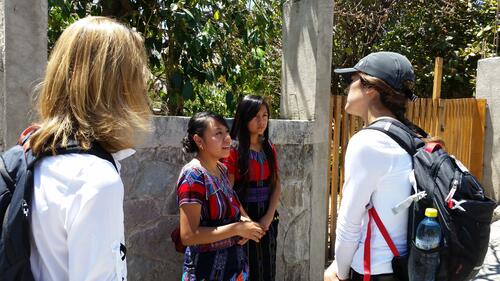
“It’s been a great opportunity,” said Julajuj. “It’s changed my life.”
Most, though, are not so lucky; Bawel also encountered two young women who dream of becoming physicians but cannot afford medical school. Meeting the young, ambitious women “makes me want to empower them with the education and opportunities I have had,” said Bawel.
Wise, meanwhile, will continue to each Stanford students about ways to help these communities.
“They see the poverty, but they also begin to understand why being a great doctor or a great diplomat or a great economist will serve the interests of people down here if done well,” he said. “We want them to go back to whatever field they’re interested in, committed to gaining skills and then using them to serve the needs and the rights of people in places like San Lucas.”
Hero Image

All News button
1
“Doctor Pablo’s” Children in Crisis Initiative creates app to improve child health
News Type
News
Date
Paragraphs
Stanford pediatrician Paul Wise stooped below the black tarp roof of a cinderblock house in Guatemala to offer his condolences to a mother who had just lost her child.
“Doctor Pablo,” as he is known in the communities around San Lucas Tolimán, talked softly as he relayed his sympathies to the mother, whose 9-year-old son had been a patient of his.
Stanford’s Children in Crisis Initiative seeks to save the lives of children in areas of poor governance. In Guatemala, their efforts work toward eliminating death by malnutrition for children under 5.
The boy’s genetic disorder would have been terminal anywhere, but thanks to Wise and local health promoters, the boy’s family had years with him instead of months.
They found the doctor through the Guatemala Rural Child Health and Nutrition Program, a collaboration between Wise and the health promoters to eliminate death by malnutrition for children under 5.
While Wise spoke to the heartbroken mother, his Stanford research assistant Alejandro Chavez helped the promoters set up inside a local community center to measure the weight and height of local kids to determine their nutrition level.
Chavez and the promoters had worked together for months to create an app for tablets that will make it easier to find malnourished children.
The app they designed will decrease training time for new health promoters and allow the program to expand. The goal is to distribute the app globally to help programs in other countries tackle malnutrition.
Children in crisis
As recently as 2005, about one of every 20 children in this rural area of Guatemala died before their 5th birthday. Almost half the deaths were associated with severe malnutrition.
“The death of any child is always a tragedy, but the death of any child from preventable causes is always unjust,” said Wise, a Stanford Health Policy core faculty member.
Along with other faculty from the Freeman Spogli Institute for International Studies (FSI) and the School of Medicine, Wise created the Children in Crisis Initiative to save the lives of children in areas of poor governance. The program brings together Stanford researchers and students across disciplines.
Nowhere are their efforts better illustrated than in the rural communities around San Lucas Tolimán, in the central mountains of Guatemala.
The program’s effectiveness rests on a deep respect for the local communities merged with innovation by Stanford researchers.
“It’s absolutely essential to any program that the people in need be part of the solution,” said Wise. Unlike many nongovernmental organizations and health programs, Wise believes the way to create a sustainable health system is for the locals to run it, so the health promoters manage the program’s day-to-day activities.
Image
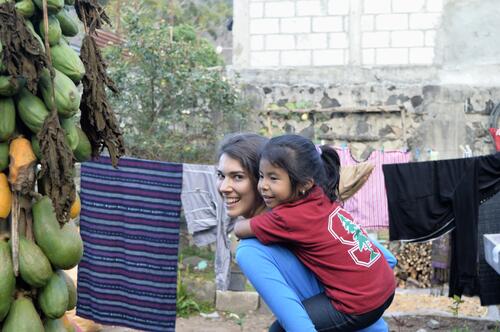
This leaves the Stanford team free to focus on innovation – such as the new app. They believe the technology could change child health programs around the world. Wise’s team has partnered with Medic Mobile – a nonprofit that creates open-source software for health care workers – which plans to distribute the app to other areas suffering from malnutrition.
The six Android tablets purchased by Children in Crisis are enough to monitor the program’s 1,500 kids through the app.
Role of nutrition
When done well, nutrition surveillance is very effective at decreasing child mortality in poor countries.
“Nutrition contributes enormously to health and well-being,” Wise said as he walked through Tierra Santa, a small community near San Lucas, making house calls. “So the focus of our work turned to improving young child nutrition. It’s not an easy thing to do in a place that’s extremely poor.”
Wise and his colleagues – Stanford medical student Tori Bawel and Stanford professor of pediatrics Lisa Chamberlain – made their rounds during their visit in March. Evidence of poverty was everywhere.
Here, clean tap water is a dream and even the sturdier homes often lack four walls or paned windows, though the children were neatly dressed in T-shirts or colorful traje, traditional Mayan clothing.
It’s hard to provide proper nutrition when most families can’t find enough work to buy adequate food. But a little help can make a big difference.
Bawel, a first-year medical student who plans a career improving health in areas of poverty, was struck by the impact the promoter program has had on the community.
“There are children who need supplements and nutrition to stay alive,” she said. “Without this program, that infrastructure does not exist.”
With FSI’s assistance, the nutrition program distributes Incaparina, a supplement of cornmeal, soy and essential nutrients. The sweet, mealy drink helps the program’s most malnourished children get back on track.
Image
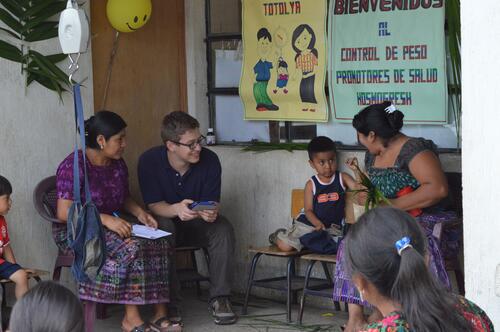
Every two months, the promoters gather each community’s children to measure their weight and height. Children and their mothers sit patiently, waiting for their turn. The children enjoy a cup of Incaparina, and their mothers eagerly listen to the promoters’ tips for keeping their children healthy.
“It’s very important to me,” said Elsira Rosibel Samayoa, who brought her 2-year-old to be measured. “There are mothers who don’t understand the importance of monitoring their children’s weight, but I do.”
Since its implementation in 2009, the Stanford program has slashed nutrition-based mortality in the participating communities by about 80 percent and decreased severe malnutrition by more than 60 percent – saving hundreds of children’s lives.
However, nutrition surveillance and intervention isn’t easy. Tracking nutrition takes training and expertise, and when the local population rarely exceeds a fourth-grade education, learning these skills is especially challenging. Detailed graphs on a standard growth chart are essential to identifying malnourished children.
“The community health workers are extremely capable and smart, but some have never seen a graph before,” said Wise. “Think about what it is to try to explain a graph to someone for the first time.”
It takes the health workers about three years to learn to graph and then interpret the results for intervention.
Wise said, “So we all got together and said, ‘How do we make this easier to do?’”
The app was the answer.
‘Let’s create an app’
Enter Alejandro Chavez, a recent Stanford computer science graduate and Stanford Health Policy research assistant. He developed the app to collect child health data, then determine the child’s degree of malnutrition and suggest intervention.
“The major goal was to lower training requirements and make programs like this simpler to start and maintain,” said Chavez, who now lives and works in Guatemala, where he gets daily feedback from the health promoters.
“I feel like they’ve been very honest with me about things I need to improve,” he said.
Cesia Lizeth Castro Chutá is a senior coordinator for the program who has worked with Chavez to ensure that the app meets the promoters’ needs.
“The tablet automatically generates the information we need to know,” she said. “It becomes easier to confirm that a child is malnourished and needs supplements.”
Looking forward
Image

Image
With the app’s launch, it looks like training time for the promoters will be reduced from three years to less than six months. That means new communities can be incorporated into the program quickly, creating broader access to care.
Meanwhile, many health programs around the world are waiting to see how well the Stanford app works in Guatemala.
Josh Nesbit, a Stanford alumnus and Medic Mobile CEO, said, “As more health programs recognize the importance of nutrition and implement community-based interventions, screening and surveillance tools will be critical. We must learn from Dr. Wise’s success.”
Hero Image

All News button
1
New guidelines on screening for colorectal cancer, second deadliest cancer
News Type
Q&As
Date
Paragraphs
Colorectal cancer is the second leading cause of death from cancer in the United States, after lung cancer, yet many Americans are still loathe to be screened for the disease.
The U.S. Preventive Services Task Force strongly recommended adults ages 50 to 75 to be screened for colon cancer and suggested adults 76 to 85 make individual decisions about whether to be screened, depending on their overall health and prior screening history. The recommendation and several accompanying editorials were published Wednesay in the Journal of the American Medical Association (JAMA).
The independent body of national experts in prevention and evidence-based medicine emphasized colonoscopy is not the only valid test out there. There are multiple screening options available to the one-third of Americans over 50 who have never been screened.
We pose five key questions about the Task Force recommendations to Douglas K. Owens, the Henry J. Kaiser, Jr., Professor of Medicine at Stanford and director of the Center for Health Policy and Center for Primary Care and Outcomes Research. He is an author of the recommendation and was a member of the Task Force when the guidelines were developed.
What is the most significant finding of this final recommendation?
Colorectal cancer is the second leading cause of death from cancer in the United States. The good news is that evidence convincingly shows screening for colorectal cancer works. The Task Force strongly recommends screening adults 50 to 75 for colorectal cancer, as it reduces the risk of dying from the disease. Unfortunately, one-third of people 50 to 75 have never been screened, so we are missing an important opportunity to prevent deaths from colorectal cancer.
There are multiple screening options for colorectal cancer. What are they and how should individuals decide which is best for them?
What really matters is that people get screened. There are several options that are effective, so we recommend that people discuss the options with their clinician. There are direct visualization tests, like colonoscopy, and stool-based tests, like fecal immunochemical testing (FIT). Each test has different strengths and limitations, and people may prefer one approach over another. For example, colonoscopy can be done every 10 years, but FIT testing should be done every year. But the real message is, choose an approach in consultation with your clinician and get screened.
The Task Force found that once adults reach 76 years old, the benefits of screening become smaller and the potential for harm is greater. Why is this and how should older Americans determine which test is best for them?
We recommend individual decision making for patients 76 to 85. The benefits are smaller because a person’s chance of dying of other causes goes up as they get older. The harms are still small but increase with age, primarily because the risks of the potential complications of colonoscopy (bleeding, perforation, and infection) go up with age. Still, some people in this age group will benefit from screening. People most likely to benefit are those who have not been screened before, people who are healthy enough to undergo treatment for CRC should it be found, and people who do not have other diseases or conditions that limit their life expectancy substantially.
Owens explains the Task Force's recommendations to JAMA
Image

JAMA Network | JAMA | USPSTF Recommendation Statement: Screening for Colorectal Cancer
African-Americans have the highest incidence of and mortality rates from colorectal cancer among all racial and ethnic subgroups. Why are African-Americans more susceptible and does this mean that the screening recommendations differ for them?
The Task Force recognizes the burden that colorectal cancer has on African-Americans, who are at higher risk of being diagnosed with and dying from the disease than other racial/ethnic subgroups. We don’t know why this is — more research is needed in this area. The Task Force did not find enough evidence to conclusively support that making a different recommendation specific to African-Americans would result in a greater net benefit for this population. So our recommendations are intended to apply to all racial/ethnic groups. More robust efforts are needed to ensure that at-risk populations actually receive the screening tests and the follow-up treatments or interventions they need, as people are dying unnecessarily from this disease.
What data did the Task Force use to come to its conclusions?
The Task Force commissioned a comprehensive systematic review of the available evidence on the benefits and harms of colorectal cancer screening. The Task Force also commissioned a modeling study from the Cancer Intervention and Surveillance Modeling Network (CISNET) to help it better understand different screening strategies, such as the optimal age to start or stop screening, and the length of time between screenings. The evidence is convincing that screening reduces the risk of dying from colorectal cancer.
Who is at high risk for colorectal cancer?
The Task Force’s recommendation is for people at average risk of colorectal cancer. People at high risk include those with a history of genetic predisposition to colorectal cancer (including people with Lynch syndrome and familial adenomatous polyposis), and people with a personal history of inflammatory bowel disease, a previous adenomatous polyp, or previous colorectal cancer. Other groups have developed guidelines for people a high risk, including the U.S. Multisociety Task Force and the American Cancer Society.
How can precision health help colorectal cancer prevention?
The Task Force did not address how precision health might play a role in the future. However, we do know that although most cases of colorectal cancer are sporadic, with about 75 percent developing in average risk persons, there are inherited syndromes that increase the risk of colorectal cancer. The inherited familial syndromes, defined by a mutation in a known high-risk cancer susceptibility gene, that increase the risk of colorectal cancer include Lynch syndrome and familial adenomatous polyposis. Family history that is not linked to a known inherited risk syndrome is also a risk factor for colorectal cancer, with an average two- to four-fold increase in risk compared to those people who do not have a family history of colorectal cancer. Understanding more about the causes of this increase in risk is an important area for future research.
What can help reduce one’s risk for colorectal cancer?
The Task Force released a final recommendation in April 2016 on the use of aspirin to prevent colorectal cancer in people with an elevated risk of cardiovascular disease. For adults ages 50 to 59 years with a greater than 10 percent risk of a cardiovascular event, a life expectancy of at least 10 years, who are not at increased risk for bleeding, and who are willing to take a daily aspirin for at least 10 years, the Task Force recommends the daily use of low-dose aspirin. In this group, aspirin reduces both the risk of cardiovascular disease and the risk of colorectal cancer. It’s important to recognize that the Task Force’s recommendation on colorectal cancer screening is a complement to this recommendation, but neither is a replacement for the other. The Task Force is not suggesting that anyone should use aspirin in place of colorectal cancer screening. Colorectal cancer screening is an important, well-proven preventive intervention that reduces the risk of dying from colorectal cancer.
What symptoms usually present for patients with polyps or colorectal cancer?
It’s important to understand that people with colorectal cancer may have no symptoms whatsoever, and the Task Force’s recommendations are for people without symptoms. Symptoms can include blood in the stool or a change in bowel habits. If people have such symptoms, they should discuss them with their clinician.
What treatment options are available for people diagnosed with colorectal cancer? How have these options changed over time?
The Task Force did not examine treatment options in its final recommendations, as its focus is solely on preventive services such as screening. However, based on my professional experience I can attest that treatment depends on the extent of cancer and may involve surgery, chemotherapy, and radiation therapy.
Hero Image

All News button
1
To fight superbugs, fight poverty
News Type
News
Date
Paragraphs
Could out of pocket drug costs be responsible for pandemics? In this Public Health Perspectives article, Marcella Alsan discusses how copayments for antibiotics can cause people in poor areas to turn to unregulated markets.
On May 26, 2016, researchers at the Walter Reed National Military Medical Center reported the first case of what they called a “truly pan-drug resistant bacteria.” By now, the story has been well-covered in the media: a month earlier, a 49 year old woman walked into a clinic in Pennsylvania with what seemed to be a urinary tract infection. But tests revealed something far scarier—both for her and public health officials. The strain of E. Coli that infiltrated her body has a gene that makes it bulletproof to colistin, the so-called last resort antibiotic.
Most have pinned the blame for the impending doom of a “post-antibiotic world” on the overuse of antibiotics and a lack of new ones in the development pipeline. But there’s another superbug incubator that hasn’t gotten the attention it deserves: poverty.
Last month at the IMF meeting in Washington, D.C., UK Chancellor George Osborne warned about the potentially devastating human and economic cost of antimicrobial resistance. He called for “the world’s governments and industry leaders to work together in radical new ways.” But Gerry Bloom, a physician and economist at the Institute for Development Studies, argued that any measures to stop overuse and concoct new drugs must be “complemented by investments in measures to ensure universal access to effective antibiotic treatment of common infections.”
“In many countries, poor people obtain these drugs in unregulated markets,” Bloom said. “They often take a partial course and the products may be sub-standard. This increases the risk of resistance.”
For at least fifteen years, we’ve known about these socioeconomic origins of antimicrobial resistance. Other studies have revealed problems with mislabeled or expired or counterfeit drugs. But the clearest link between poverty and the rise of antimicrobial resistance is that poor people may not see a qualified health care provider or complete a course of quality antibiotics. Instead, they might turn to unregulated markets for substandard drugs.
But why do people resort to unregulated markets or take drugs that aren’t that great if they are available? Marcella Alsan, an assistant professor of medicine at the Stanford School of Medicine who studies the relationship between socioeconomic disparities and infectious diseases, led a study that answered this question. In last October’s Lancet Infectious Diseases, Alsan and her colleagues showed that it might have a lot to do with requiring copayments in the public sector. To show this, they analyzed the WHO’s 2014 Antibacterial Resistance Global Surveillance report with an eye toward the usual suspects, such as antibiotic consumption and antibiotic-flooded livestock.
Hero Image

All News button
1
Research in Progress (RIP): "Screening for Breast Cancer: New Guidelines, Old Controversies"
-
Please note: All research in progress seminars are off-the-record. Any information about methodology and/or results are embargoed until publication.
Summary
In this talk I’ll provide a history of the breast cancer screening controversies and discuss the new guidelines from the US Preventive Services Task Force and the American Cancer Society.
Douglas K. Owens
Encina Commons, Room 201
615 Crothers Way Stanford, CA 94305-6006
Executive Assistant: Soomin Li, soominli@stanford.edu
Phone: (650) 725-9911
0
owens@stanford.edu
Henry J. Kaiser, Jr. Professor
Professor, Health Policy
Senior Fellow, Freeman Spogli Institute for International Studies
Professor, Management Science & Engineering (by courtesy)
Douglas K. Owens is the Henry J. Kaiser, Jr. Professor, Chair of the Department of Health Policy in the Stanford University School of Medicine and Director of the Center for Health Policy (CHP) in the Freeman Spogli Institute for International Studies (FSI). He is a general internist, a Professor of Management Science and Engineering (by courtesy), at Stanford University; and a Senior Fellow at the Freeman Spogli Institute for International Studies.
Owens' research includes the application of decision theory to clinical and health policy problems; clinical decision making; methods for developing clinical guidelines; decision support; comparative effectiveness; modeling substance use and infectious diseases; cardiovascular disease; patient-centered decision making; assessing the value of health care services, including cost-effectiveness analysis; quality of care; and evidence synthesis.
Owens chaired the Clinical Guidelines Committee of the American College of Physicians for four years. The guideline committee develops clinical guidelines that are used widely and are published regularly in the Annals of Internal Medicine. He was a member and then Vice-Chair and Chair of the U.S. Preventive Services Task Force, which develops national guidelines on preventive care, including guidelines for screening for breast, colorectal, prostate, and lung cancer. He has helped lead the development of more than 50 national guidelines on treatment and prevention. He also was a member of the Second Panel on Cost Effectiveness in Health and Medicine, which developed guidelines for the conduct of cost-effectiveness analyses.
Owens also directed the Stanford-UCSF Evidence-based Practice Center. He co-directs the Stanford Health Services Research Program, and previously directed the VA Physician Fellowship in Health Services Research, and the VA Postdoctoral Informatics Fellowship Program.
Owens received a BS and an MS from Stanford University, and an MD from the University of California-San Francisco. He completed a residency in internal medicine at the University of Pennsylvania and a fellowship in health research and policy at Stanford. Owens is a past-President of the Society for Medical Decision Making. He received the VA Undersecretary’s Award for Outstanding Achievement in Health Services Research, and the Eisenberg Award for Leadership in Medical Decision Making from the Society for Medical Decision Making. Owens also received a MERIT award from the National Institutes on Drug Abuse to study HIV, HCV, and the opioid epidemic. He was elected to the American Society for Clinical Investigation (ASCI) and the Association of American Physicians (AAP.)
Chair, Department of Health Policy, School of Medicine
Director, Center for Health Policy, Freeman Spogli Institute for International Studies
CV
Document
owens_cv-2025.pdf
(672.58 KB)
Hide publication sections
On
Seminars
Guatemala Rural Child Health and Nutrition Program
The primary goal of the Guatemala Rural Child Health and Nutrition Program is to use the capacities of Stanford University to save young children’s lives in Guatemala and other areas of the world plagued by conflict and political instability. Part of the Children in Crisis Initiative, this Stanford effort in Guatemala has been focused on young child malnutrition, the central contributor to child mortality and life-long disability in these regions.
Measuring return on investment in health care
News Type
News
Date
Paragraphs
What is the best way to measure returns on investments in health care?
Does the World Health Organization’s approach help developing countries allocate their limited health-care resources wisely?
What are the economic implications of the global rise in non-communicable diseases?
These are just a few of the global challenges taken up by health economics experts at the third annual Global Health Economics Consortium Colloquium at the University of California, San Francisco.
At the core of the conference is the growing field of health economics, and why cost-effectiveness analysis is fast becoming the underpinning of successful health policies.
Not only is the field expanding, so is the collaboration among researchers and faculty at Stanford Health Policy, UCSF Global Health Sciences, and the UC Berkeley School of Public Health, co-sponsors of the Feb. 12 event.
“It’s been great to see the meeting evolve from a show-and-tell to a platform where we can have nuanced discussions about the challenges and controversies in the field,” said Dhruv Kazi, an assistant professor of medicine at UCSF who helped organize and moderate the event.
Some 180 health policy experts, researchers and speakers representing 11 universities, six non-profit organizations and five for-profit outfits attended the daylong conference on the UCSF Mission Bay campus.
“By building bridges between our universities, we create a space where thought-leaders and students alike can engage in discussions to challenge working assumptions and also spearhead innovate strategies and solutions,” said James Kahn, a professor of health policy and epidemiology at UCSF and the director of the consortium.
The Consortium — known as GHECon — was awarded a five-year cooperative agreement of up to $8 million by the CDC to conduct economic modeling of disease prevention in five areas: HIV, hepatitis, sexually transmitted diseases, tuberculosis and school health.
 Taking a break during the third annual Global Health Economics Consortium Colloquium at UCSF on Feb. 13, 2016. Photo by UCSF/Cindy Chew.
As global economies remain turbulent, Kazi said, governments and donors have become increasingly cost-sensitive and want to better understand the societal returns they are getting for their investments in health.
“That enhances the influence of our work, but also increases the scrutiny it receives, creating an opportunity for the community to have an honest discussion about the challenges and opportunities that lie ahead,” he said. “And that is precisely the platform GHECon sees itself becoming.”
Some of the tough challenges consortium members are undertaking:
- The World Health Organization recommends using per capita GDP as a benchmark for how much money countries should be willing to spend on health-care interventions. GHECon researchers have shown that this approach is problematic and does not always help countries allocate their limited health-care resources optimally.
- Economic evaluations have typically only considered health-care costs, overlooking the lost income of patients or caregivers during hospital stays. GHECon researchers are working on ways to value this lost productivity in an effort to estimate the true cost of a disease and, conversely, the benefit of its alleviation.
- Cost-effectiveness evaluations traditionally are concerned with how efficiently health-care resources are utilized by asking questions like: How many lives can I save per million dollars invested? But society may care about other benefits that go beyond efficient use of resources, such as reducing disparities by helping the most vulnerable sections of society and alleviating poverty.
Image

Mark Sculpher, one of the leading health economists in the world, gave the keynote address about his efforts in the UK to use cost-effectiveness analysis to inform decisions at the National Institute for Health and Care Excellence.
He said there are two big challenges today: defining cost-effectiveness thresholds that are meaningful, and determining how policymakers, donors and payers make decisions when there are multiple criteria and perspectives.
“The realities of decision-making inevitably involve a whole host of considerations,” said Sculpher, who is director of the Program on Economics Evaluation and Health Technology Assessment at the University of York. “Ultimately it’s about what is this measure of benefit that we want to maximize — and how do we invest in it.”
Stanford Health Policy’s Douglas K. Owens, director of the Center for Health Policy at the Freeman Spogli Institute for International Studies and the Center for Primary Care and Outcomes Research at the Department of Medicine, presented his influential economic modeling research about the need for routine HIV screening.
“We determined that HIV screening is cost-effective in virtually all health-care settings,” Owens told the audience, noting that the findings became policy at the Centers for Disease Control and Prevention and other national health policy organizations. It has become an example of how economic modeling can inform crucial policy decisions — and help save lives.
There were also robust panel discussions about the challenges of doing cost-effectiveness analysis in developing countries with limited resources; the difficult paths to universal health care; and how economics can help address disparities in health care and financial protection.
“The consortium is particularly valuable because it fosters collaborations among a broad group of global health experts,” Owens said.
Image

Hero Image

All News button
1
Health policy wonks love this season of Downton Abbey
News Type
News
Date
Paragraphs
This season, “Downton Abbey's” plot line has health policy wonks on the edge of their seats: a heated debate about hospital consolidation that closely parallels what’s going on in the U.S. health care system today.
If you’re not a Downton fan, here’s a quick plot recap by Kaiser Health News reporter Jenny Gold: It’s 1925 for the lords and ladies at Downton Abbey. Think flapper dresses, cocktail parties and women’s rights. And a big hospital in the nearby city of York is making a play to take over the Downton Cottage Hospital next to the posh estate.
As Maggie Smith’s character, the Dowager Countess of Grantham, sees it, “The Royal Yorkshire county hospital wants to take over our little hospital, which is outrageous!”
Stanford Health Policy’s Kathy McDonald — an unabashed fan of the popular PBS period piece — says things haven’t changed that much today. There has been an uptick in hospital consolidations since 2010, with about 100 taking place each year, she says.
You can listen to McDonald’s interview with Gold, who took the Downton debate to the American Public Media radio show, “Marketplace.”
Image

Hero Image

All News button
1