It has been five years since the 2011 Great Tohoku Earthquake and Tsunami and associated nuclear meltdown at the Fukushima Daiichi nuclear power plant. Three experts will re-examine the impact of these events on Japan and the world. What was the ultimate legacy of the disaster? What was the impact on political discourse, nuclear policy, disaster response, society, and culture? What lessons have we learned?
Panelists
Image
Daniel Aldrich is Professor of Political Science, Public Policy and Urban Affairs and is the Co-Director of the Masters Program in Security and Resilience at Northeastern University. He has published four books, single-authoring Site Fights (Cornell University Press, 2008) and Building Resilience (University of Chicago Press, 2012) which won the Japan NPO Research Association Award for Outstanding Book; both were translated into Japanese and the latter into Chinese as well. He co-authored and co-edited the books Resilience and Recovery in Asian Disasters (Springer Publishers, 2014) and Healthy, Resilient and Sustainable Communities after Disasters (Institute of Medicine / National Academy of Sciences, 2015). He has also published more than thirty peer reviewed articles in journals such as Social Science and Medicine, Public Administration Review, British Journal of Political Science, Natural Hazards and the Journal of Asian Studies along with 20 book chapters and OpEds in the New York Times, CNN, the Washington Post, and the Asahi Shinbun. Aldrich is Chair of the American Political Science Association’s Working Group on Disasters and Crises and sits on the editorial board of several journals. He has won, among other awards, two Fulbright fellowships, an Abe Fellowship, an American Association for the Advancement of Science (AAAS) Science and Technology fellowship, the Kinley Trust Fellowship, and the Pi Sigma Alpha Best Professor Award (2011).
Takahashi Research Associate in Japanese Studies,
Shorenstein APARC
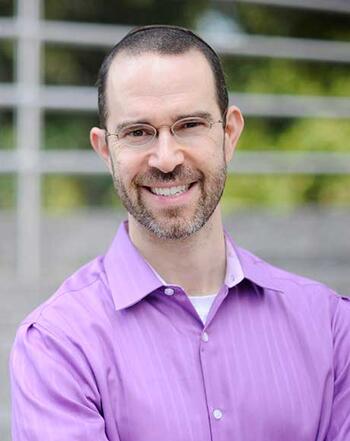
Kenji E. Kushida is the Japan Program Research Associate at the Walter H. Shorenstein Asia-Pacific Research Center and an affiliated researcher at the Berkeley Roundtable on the International Economy. Kushida’s research interests are in the fields of comparative politics, political economy, and information technology. He has four streams of academic research and publication: political economy issues surrounding information technology such as Cloud Computing; institutional and governance structures of Japan’s Fukushima nuclear disaster; political strategies of foreign multinational corporations in Japan; and Japan’s political economic transformation since the 1990s. Kushida has written two general audience books in Japanese, entitled Biculturalism and the Japanese: Beyond English Linguistic Capabilities (Chuko Shinsho, 2006) and International Schools, an Introduction (Fusosha, 2008). Kushida holds a PhD in political science from the University of California, Berkeley. His received his MA in East Asian studies and BAs in economics and East Asian studies, all from Stanford University.
Image
Kyoko Sato is the STS Associate Director and lecturer. Her research explores how cultural meanings, politics, and institutional frameworks intersect in the development of technology. She is currently completing a book manuscript, The Making of Genetically Modified Food: Culture, Politics and Policy in France, Japan and the United States, and conducting a comparative study that examines cultural politics of nuclear energy after World War II and the effect of the 2011 Fukushima disaster in Japan and the United States. Her fields of teaching include the politics and culture of food, environmental politics, globalization, social theory, and methods of social sciences. Dr. Sato received her PhD in sociology from Princeton University, MA in journalism from New York University, and BA in English from the University of Tokyo. She was a postdoctoral associate at the Institute for the Social Sciences at Cornell University and taught as a lecturer in the Committee on Degrees in Social Studies and in the Department of Sociology at Harvard University. Before entering the academia, Dr. Sato worked as a reporter for The Japan Times, an English-language daily in Tokyo.
Daniel Aldrich, Professor of Political Science, Public Policy and Urban Affairs and Co-Director of the Masters Program in Security and Resilience- Northeastern University
Kenji Kushida, Shorenstein Asia-Pacific Research Center Japan Program Research Associate- Stanford University
Kyoko Sato, The Program in Science, Technology, and Society Associate Director- Stanford University
Pilot program was designed to first ground students in the basics of empirical research, then provide an opportunity to apply that knowledge while conducting fieldwork in an international setting.
The Freeman Spogli Institute for International Studies (FSI) and Office of International Affairs (OIA) launched a pilot collaboration last year to provide a rigorous, immersive teaching and training program for students interested in international fieldwork. The result was a program that included a quarter-long course in the spring of 2015 followed by three weeks in Mexico during the summer to design and conduct a field research study. OIA spoke with Frank Wolak, the Holbrook Working Professor of Commodity Price Studies in Economics and Senior Fellow at FSI, to learn more about the project, titled International Field Research Training: Energy Reform in Mexico.
What was the impetus for designing a program for students with a field research component?
While students at Stanford have many opportunities to pursue independent research projects, they rarely have the opportunity to receive first-hand training in conducting interviews, research design and field implementation. With that in mind, we set out to design a program that would carry the students through the basics of empirical research and then give them the opportunity to apply that knowledge under close faculty supervision. Taking students out of the classroom and giving them the opportunity to see textbook methods in action is invaluable.
Our hope is that this training equips the students with the academic and logistical skills they need to execute their own robust research, be that for an honors thesis, a capstone project or an advanced degree.
How did the prerequisite course prepare students for working in the field?
The Stanford course taught the basics of the design, implementation and interpretation of social science field research. Building on a basic knowledge of statistical methods and economics, the course first introduced observational field research and compared it with experimental field research. Significant attention was devoted to explaining what can and cannot be learned through each type of field research.
Topics covered included sample size selection, power and size of statistical hypothesis tests, sample selection bias and methods for accounting for it. Examples of best practice field research studies were presented as well as examples of commonly committed experimental design and implementation errors. Practical aspects of fieldwork were also covered, including efficient and cost-effective data collection, data analysis, teamwork and common ethical considerations.
After completing the quarter-long course on statistical research methods, the students, under the guidance of the Program on Energy and Sustainable Development's research team, adapted an education-based research intervention for the Mexican electricity sector. The purpose was to see if providing individuals with information about how their energy bill was calculated and simple ways to reduce household electricity consumption would cause household energy bills to go down.
What was a typical day for the students gathering research?
Research was carried out in the city of Puebla, a city of 1.5 million people about 150 kilometers (93 miles) southeast of Mexico City. The Stanford students collaborated with students from the Universidad Popular Autónoma del Estado de Puebla (UPAEP). For the first few days, the students all met at an UPAEP classroom space to design and review the survey tool, making revisions and conducting practice interviews.
Once oriented in Puebla, the students set out daily in research teams to interview randomly selected households in middle-income neighborhoods in Puebla. The students branched out from a central meeting place in teams of three, pairing two Stanford students with one UPAEP student.
In the field, the students all wore nametags and UPAEP baseball caps to make themselves identifiable as surveyors to households. They worked in the field for eight to 10 hours a day, taking about an hour break for lunch. In the first few days, they were able to collect 15-20 surveys a day, but as they became more comfortable with their pitch and knocking on doors, they were able to increase their yield to a high of 44 surveys in one day. At the end of two weeks, they completed over 260 surveys in just 10 days of fieldwork.
The students were also active on social media documenting their daily activities. For more on the student perspective, their activities and impressions of the project, check out their blog on the FSI website.
What are the benefits for getting in-country field research experience?
There are a variety of situation-specific problems that are hard for any researcher to know fully without being immersed in the field. For example, one of the students' recommendations to improve energy efficiency was to switch household light bulbs from incandescent to compact fluorescents (CFL). This is a valid recommendation in the United States where most people still use incandescent bulbs in their homes, but – surprisingly to the team – most of the people interviewed had already converted to all CFLs in their home.
I was amazed with the students; the level of intellectual curiosity and engagement was impressive with ongoing discussions into the evening at times. The students were not only getting an in-country immersive experience while conducting research, but they were also developing critical thinking skills along the way.
Research aside, the in-country experience gave the students a keen understanding of how local residents live. The methodology employed for gathering data allowed the students to connect with many types of families, ranging from senior citizens living alone to multi-generational families living under one roof. Through direct contact with the community, the students developed an understanding of the local culture and learned local customs.
Conducting international research at Stanford can be challenging. Where did you turn to for advice on how to structure your activity?
At FSI, we have a great wealth of experiential knowledge on conducting field research all over the world. In addition to consulting with faculty and research managers at FSI, OIA had been enormously helpful in connecting us with resources across campus and facilitating some of the trickier logistics, such as processing stipend payments to our international collaborators and navigating the human subjects approval process. OIA was also able to discern that Puebla was a viable option as a research site.
How would you characterize the success of the pilot program?
The pilot program exceeded our expectations in the best possible ways. Much of its success was due to the work of Elena Cryst ,'10, program manager for FSI's Global Student Fellows Program, who also accompanied us on our trip. She was an invaluable team leader and organizer and worked tirelessly to ensure that both the research and logistical aspects of the trip ran smoothly.
We will definitely be offering the field research course and research project again. We hope to go to another part of Latin America next, such as Chile or Colombia. We are also still active in Mexico, with three of the students that went on the trip working for us as research assistants this academic year, analyzing the data as it comes in and developing a self-administered online version of the survey instrument with which we hope to reach thousands of households in Puebla.
In addition, Elena will be using our experiences from the Mexico pilot to inform other FSI field research programs in China, Guatemala, India and potentially new sites for next year.
This article was originally published in The Stanford Report on October 27, 2015.
Professor Frank Wolak was recently interviewed by Julian Spector of CityLab regarding the use of nuclear energy in a zero-carbon grid. According to Professor Wolak, "It makes very little economic sense to phase [nuclear energy] out, particularly given how successful the U.S. nuclear industry has been over the past 30 years". Professor Wolak also points out that American nuclear generators are safer than ever while still boasting an impressive capacity factor.
Stanford students, under the guidance of the Stanford Program on Energy and Sustainable Development and in partnership with the Freeman Spogli Institute and the Universidad Popular Autónoma del Estado de Puebla (UPAEP), are currently administering surveys throughout Puebla, Mexico. The surveys primarily consist of three stages: determining a household's energy consumption, educating the household on how their electricity bill is calculated, and suggesting at least one cost-saving strategy the household could adopt. The research project is a continuation of the work that the students began in Econ 121: Social Science Field Research Methods and Applications, taught by Ognen Stojanovski, Frank Wolak, and Mark Thurber. The trip to Mexico will last for four weeks.
You can follow the experiences of the students at their blog
In addition, the students have been posting pictures from their trip on the FSI Instagram
The Stanford Center for Sustainable Development and Global Competitiveness (CSDGC) held its 2015 Annual Partner Meeting on May 16 at SCPKU. The meeting included a discussion on innovation-driven sustainable industrial development and upgrades with a focus on smart learning, the application of green technology in building a smarter society, and smart manufacturing and operation in the industrial transformation. Participants also exchanged ideas about CSDGC's future development in China. Attendees included CSDGC Affiliate companies, representatives from collaborating universities, and visiting scholars.
It is August again, and my wife and I are back on our farm. We have a medium-sized operation in east-central Iowa that produces soybeans, alfalfa, and corn, and that also supports an Angus cow-calf herd. These summers are supposed to be quiet, relaxing times away from the bustle of Stanford University. However, the days here seem anything but tranquil. Two years ago my almanac report dealt with one of the worst droughts in Iowa’s history; last year the focus was on flooding and the wettest planting season on record. I suppose it is only fair that wind should be the main topic this year. For our rural neighborhood, only problems, not answers, seemed to have been blowin’ in it.
Two evenings after our arrival from California, we were sent scurrying to our doubly reinforced “safe” room in the basement. Warning sirens blared, all television stations went on emergency broadcasting, and the spontaneous neighborhood phone line magically got activated. Everything was for real, and all hell broke loose. Eighty-five m.p.h. flat-line winds, grape-sized hail, and buckets of rain. The power went out, and our safe-room conversation centered on whether or not to start our small generator—not for lights, but to assure that the sump pump continued working!
For a swath three miles wide and 15 miles long the tornado danced—jumping here and skipping there. Some farms were spared; others were pretty much demolished. We were moderately lucky. We lost an infinite number of branches and our largest oak tree—a four-foot diameter, 70-foot tall specimen. Entire trees were twisted off like toothpicks. Shingles from roofs went missing, as did white fencing. But we were among the lucky ones—no major buildings were lost and no people or animals were injured.
Two farms over, the five-bin corn storage unit took a direct hit. Two 120-foot tall elevators that lift grain to the top (called legs, although the anatomy analogy makes no sense) lay in a crumpled mess. These bins hold some 240,000 bushels of corn and there are massive amounts of steel involved. The broken legs looked, at 120X scale, like an angry third-grader had deliberately slammed his Lego creations onto the ground. The difference is that the repairs, labor costs, and replacement parts for the bins and legs total $750,000. Farmers soon began re-reading their insurance policies about acts of God, depreciation allowances, and the rules for full versus partial replacement.
The morning following the storm, an eerie calm was soon replaced by a different form of energy. Other work seemed to stop in a region larger than the storm-hit area. No one arranged it, but neighbors suddenly appeared at each other’s farmsteads with tractors, loaders, pickups, and chainsaws. Small mountains of brush, trees, and building parts began to emerge, to be burned at a later date—no doubt with generous burn permits being granted by the county.
At the time of the storm, corn was about waist high. Like the trees, it took a serious beating throughout the storm’s path. The corn stalks were tightly packed in narrow rows as a consequence of the changed density of planting—from 20,000 kernels per acre 20 years ago to 35,000 currently. (Bags of seed corn containing 80,000 kernels now typically sell in excess of $300, putting seed costs per acre about on a par with the cost of nitrogen fertilizer.) This tightly woven carpet of corn was now leaning at 45 degrees—or worse. The question was whether the stalks would straighten up. And the answer turns out to be “sort of.” Many of them are “goose-necked,” a much used word now in farmer conversations. The concern is, IF large ears develop, will the stalks be sturdy enough to support them? Or, will a large amount of “ear droppage” seriously reduce yields and profits? We continue to be optimistic, and are still hoping for corn yields of 190 bushels per acre, not far from our best year of 220 bushels.
Morning coffee conversations at the old limestone café have been fairly somber affairs this summer. (The general store has changed hands, but unfortunately, the watery coffee and the stale cookies have not improved.) Farmer faces were grim even before the storm, mainly because of what has happened to corn prices. In August 2012, local farmers were being offered $7.65/bushel [56 pounds] of corn; in August 2013, the price was $6.20/bushel, and on August 20, 2014, the price was $3.60/bushel. Suddenly the rush to buy new pick-ups and large harvesting equipment slowed drastically. John Deere, the major farm-equipment manufacturer, has already laid off hundreds of workers at various Iowa sites.
Orders have not stopped entirely, however, largely because of crop insurance. Virtually all farmers have either 75% or 85% revenue protection. If a combination of yield and/or price declines cause revenue to be less than 75% (85%) of normal, farmers are reimbursed by private insurance companies. The premiums for this revenue-protection insurance are heavily subsidized by the federal farm program. Taxpayers underwrite more than 60% of the total insurance premiums, which last year resulted in subsidies to farmers of about $9 billion. Historic yields are used in the insurance contract, and this year the early insurance lock-in price was $4.62/bushel. That price looked low in the spring, but now looks extremely favorable. Unfortunately, many of my neighbors chose the “wrong” insurance option. They were able to purchase 75% revenue protection for about $4.50/acre, whereas the 85% protection cost about $19/acre. For a farmer with 1500 acres of corn, the difference in insurance premiums was more than $20,000. But given declining corn prices, the cheaper insurance option for 2014 will surely turn out to be the most costly choice at the end of the season. Farm decision making these days is mostly about risk management, and that is why crop insurance was such a big element in the new farm program.
Perhaps the hottest topic of conversation at morning coffee centered again on wind, but not of the tornado variety. It turns out that “the wind comes sweeping down the plain” in Iowa as well as in Oklahoma. Iowa is the third-largest producer of wind energy, and wind power supplies a hefty 27 percent of Iowa’s total energy use. So why are my neighbors upset? It is something called the Rock Island Clean Line (RICL), and a bit of history is in order.
Image
The old Rock Island Line was a rail company—made more famous than it really deserved to be by Johnny Cash. The line ran five miles south of our farm, and yes, it was a “mighty fine line” that did carry cows, sheep, pigs, and mules. But it went bankrupt in 1975. The Rock Island Clean Line originally planned to use some of the old right-of- way for quite a different purpose—transporting wind-generated power from northwest Iowa on huge towers, with cables carrying direct-current electricity into the Illinois market to the east. It turned out, however, that too much of the old right of way went through urban areas and was unsuitable, so RICL will purchase some 500 linear miles of farmland right-of-way for the towers.
Farmers are rationally and irrationally furious. (The line was originally scheduled to go across the full length of our farm, so we have been directly involved in the discussions.) It has been extremely difficult to get straight answers about the line, with the company and the Iowa Utilities Board doing a dance in which neither wants to lead. There is no doubt that these140-foot towers create an ugly line of sight; they complicate farming with large machinery; and they seriously impact adjoining fields during the construction phase. The company believes that it is offering generous one-time compensation—the equivalent of $10,000 to $15,000 per acre in most cases—but it then retains easement rights to this land forever, including the authority to sell the rights. Farmers are livid—they basically do not want the line from which they will receive no benefits—but they are being faced with potential eminent domain proceedings if they do not agree to sell. All sorts of NIMBY arguments are being brought forward, from the “government can’t tell us what to do,” to “the lines will emit electrical forces that will cause health effects,” to “they are not paying enough,” to “why should we use good Iowa soil to transport electricity rather than to produce food for the hungry?” The last of these comments is the one I have heard most often. When I inquired as to whether the coffee group was also against ethanol—since 40% of Iowa corn is going into gas tanks rather than hungry mouths—I was NOT regarded as a helpful contributor to the conversation!
In the end, I suspect that the Rock Island Clean Line will prevail, and that farmers and their families will learn to accommodate the power towers. Many farmers will grumble publically, but smile privately en route to their banks with rather large checks. However, both the process and outcome have stirred up deep passions about who controls the land.
Not all farmers are sad this summer, and the winds of good fortune have blown in the direction of cattle feeders. The structure of cattle feeding in Iowa has changed enormously in recent times. I am the son of a mid-sized feeder, and spent a good deal of my youth working with cattle and driving cattle trucks. Most east Iowa farms these days are strictly grain farms, in large part to free farmers from the 24/7 burden of animal care. My neighbor talks about his corn-Texas crop rotation—growing corn in the summer and going to Texas for the winter.
Two black angus calves.
There are only two large cattle feeding operations left in Linn County where I live, and both are within four miles of our farm. I was invited by one of the owners to attend a cattle auction with him, and to see for myself just how much things had changed. He owns his own 18-wheeler, and almost every week takes a load (36 head) of prime beef to the auction. Cattle are taken to the auction pens the night before the sale and are taken off of feed and water. These steers weigh between 1400 and 1500 pounds, and buyers want assurance that the animals have not gorged on feed and water just before crossing the scales. The cattle are weighed early the morning of the sale, and weights are then flashed on a scoreboard as the animals enter the sale ring.
There is still an amazing amount of ritual at a cattle auction—I had forgotten just how much! Prime steers are typically sold in lots of 12 animals. They enter the ring from one side, and are moved about by a “ring man” so that buyers can get a good view of them. Part of the ritual is where various people sit. A small group of farmers/sellers sits in one section, typically bantering about whom has the best cattle and whose will “top the sale.” The buyers sit near the top of the bleachers, in the same spot each week, but separated from each other. (They would not want a casual conversation between them to be construed as collusion!) There is also the auctioneer with his chatter, mile-a-minute delivery, and selling antics. The sale itself happens very rapidly. There are typically two to four bidders for a particular lot of animals, and the bids go back and forth among them at lightning speed. The bidding cues are highly personalized—one buyer uses the flip of his tally sheet, another raises his index finger, and one simply arches his eyebrow. In less than 45 seconds, the winning buyer has spent $27,000! And then the next lot appears. Cattle from this sale went to packing plants in Wisconsin, Iowa, Nebraska, and Illinois.
On the 25-mile ride home, my neighbor talked about how pleased he was with what had happened. His steers had gained well and had topped the market in terms of price at $1.57 per pound. He said that corn was very cheap, as was distiller’s grain—the high protein by-product from making corn-based ethanol—which is now an important part of cattle feeding rations. There would be a healthy profit from this load of steers that had grossed about $80,000.
But then he turned somber. What should he do about next year? The price of 600-pound calves that he would put into the feedlot for feeding and sale next year are selling at the astronomical price of $2.50 per pound and even higher. Perhaps next year, he said, was the year to stay out of the ring and go to Texas or Arizona for the winter. Risk had reared its ugly head once again. But my neighbor is first and foremost a cattle feeder, with a cattle feeder’s mindset toward risk. My conjecture is that he will somehow find a rationale for purchasing replacement calves, and that he will do everything all over again next year.
Stanford-Sasakawa Peace Foundation New Channels Dialogue 2014
Energy Challenge and Opportunities for the United States and Japan
February 13, 2014
Bechtel Conference Center, Encina Hall, Stanford University
Sponsored and Organized by Sasakawa Peace Foundation (SPF) and Shorenstein Asia-Pacific Research Center (S-APARC) in Association with U.S.-Japan Council
Japan Studies Program at Shorenstein APARC, Stanford University has launched a three-year project from 2013 to create new channels of dialogue between experts and leaders of younger generations from the United States, mostly from the West Coast, and Japan under a name of "New Channels: Reinvigorating U.S.-Japan Relations," with the goal of reinvigorating the bilateral relationship through the dialogue on 21st century challenges faced by both nations, with a grant received from the Sasakawa Peace Foundation.
About the Speaker: Paul N. Stockton is a managing director of Sonecon, LLC and the co-founder and president of Cloud Peak Analytics, the Sonecon division that provides analysis to help businesses understand and manage the full range of risks to their operations and investment strategies. Before joining Sonecon, Dr. Stockton served as the assistant secretary of defense for Homeland Defense and Americas’ Security Affairs from June 2009 until January 2013. In that position, he was responsible for DoD efforts to strengthen security in the Western Hemisphere, and helped nations across the region deal with threats to energy infrastructure and other emerging challenges. As assistant secretary, he also guided the Defense Critical Infrastructure Protection program, served as DoD’s Domestic Crisis Manager, and led the Department’s response to Hurricane Sandy and other natural disasters. For his service, Dr. Stockton was twice awarded the Department of Defense Medal for Distinguished Public Service, DoD’s highest civilian award.
Prior to his tenure as assistant secretary, Dr. Stockton served as a senior research scholar at the Center for International Security and Cooperation at Stanford University. He was also associate provost of the Naval Postgraduate School and legislative assistant for national security affairs to Senator Daniel Patrick Moynihan. He holds a Ph.D. from Harvard University and a BA summa cum laude from Dartmouth College.
CISAC Conference Room
Paul Stockton
Managing Director, Sonecon, LLC; Co-Founder and President, Cloud Peak Analytics, Former Assistant Secretary of Defense for Homeland Defense and Americas’ Security Affairs
Speaker
Haber and Menaldo (2011) claim there is little evidence that oil is harmful to democracy, and that previous studies to the contrary were corrupted by omitted variable bias. Michael Ross professor of political science at UCLA will present findings from a paper co-authored with Jørgen Juel Andersen to show there is little evidence of the bias they allege, and point out that they decline to test the most credible version of the resource curse hypothesis. The versions that they do test, moreover, are based on two implausible assumptions: that oil will effect a country’s regime type immediately, rather than over a period of several years; and that the relationship between oil wealth and political power did not change over the 200 year period covered by their data. We argue that oil only had strong anti-democratic effects after the 1970s, when most oil-producing autocracies nationalized their industries; and show their main results are overturned when we add to their models a dummy variable for the post-1979 period, and allow the effects of oil to take place over a period of three, five, or seven years, instead of just one year.
Speaker Bio:
Michael L. Ross is Professor of Political Science at the University of California, Los Angeles (UCLA), and Director of the Center for Southeast Asian Studies.
He has published widely on the political and economic problems of resource-rich countries, civil war, democratization, and gender rights; his articles have appeared in the American Political Science Review, American Journal of Political Science, Annual Review of Political Science, British Journal of Political Science, International Organization, Journal of Confiict Resolution, Journal of Peace Research, Politics and Gender, and World Politics. In 2009, he received the Heinz Eulau Award from the American Political Science Association for the best article published in the American Political Science Review.
His work has also appeard in Foreign Affairs, Foreign Policy, Harper's, The Los Angeles Times, and been featured in The Washington Post, Newsweek, and many other publications.
Ross currently serves on the advisory boards of the Review Watch Institute, the Natural Resource Charter, and Clean Trade, and was previously a member of the Advisory Group for the World Bank's Extractive Industries Review. He is also a member of the Political Instability Task Force and the APSA Task Force on Democracy Audits and Governmental Indicators.
Reuben W. Hills Conference Room
Michael Ross
Professor, Political Science
Speaker
UCLA
Program on Energy and Sustainable Development
616 Jane Stanford Way
Encina Hall East, 4th Floor
Stanford, CA 94305-6055
0
trevor.l.davis@stanford.edu
Social Science Research Scholar
Trevor portrait square 9.18.23.JPG
Ph.D
Trevor L Davis is a Social Science Research Scholar in the Program on Energy and Sustainable Development and the Department of Economics at Stanford University. His research interests include studying the influence of market design on electricity market outcomes. Before coming to Stanford he worked in a macroeconomic forecasting section at the Federal Reserve Board of Governors and earned a BA in economics and statistics from the University of Chicago and a MS in statistics from George Washington University.

 Takahashi Research Associate in Japanese Studies,


 Two black angus calves.

