Climate
-

This is a virtual event. Please click here to register and generate a link to the talk. 
The link will be unique to you; please save it and do not share with others.

November 9, 4-5 p.m. California time/ November 10, 9-10 a.m. Japan time
(Note:  Daylight Saving Time in California ends November 7)

In April 2021, then Prime Minister Suga announced to the world that Japan will strive to achieve carbon neutrality by 2050, seemingly setting the country on a path toward accelerated energy transition primarily by renewables. Under Prime Minister Kishida, Japan’s commitment may be on a more shaky ground, as demands for steady energy supply by old industries gained more traction and calls for restarting nuclear power plants are becoming louder. In this new political environment, in which Japan’s energy policy seems to be in flux, what is the future of renewables, nuclear energy, and fossil fuels, and what is the best energy mix for Japan considering its unique geopolitical position?

Panelists 

Image
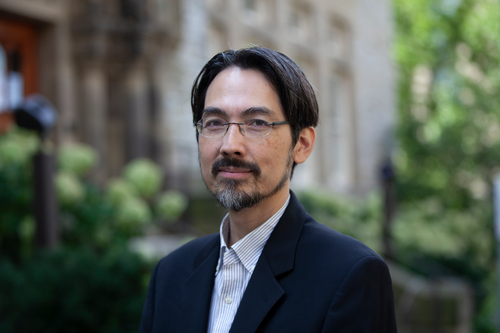
Photo of Phillip Lipscy
Phillip Lipscy is an associate professor of political science at the University of Toronto, the Chair in Japanese Politics and Global Affairs and the Director of the Centre for the Study of Global Japan at the Munk School of Global Affairs & Public Policy.  His research addresses substantive topics such as international cooperation, international organizations, the politics of energy and climate change, international relations of East Asia, and the politics of financial crises.  He has also published extensively on Japanese politics and foreign policy.  Lipscy's book from Cambridge University Press, Renegotiating the World Order: Institutional Change in International Relations, examines how countries seek greater international influence by reforming or creating international organizations.  Before arriving to the University of Toronto, Lipscy was assistant professor of political science and Thomas Rohlen Center Fellow at the Freeman Spogli Institute at Stanford University.  Lipscy obtained his Ph.D. in political science at Harvard University and received his M.A. in international policy studies and B.A. in economics and political science at Stanford University. 


Image
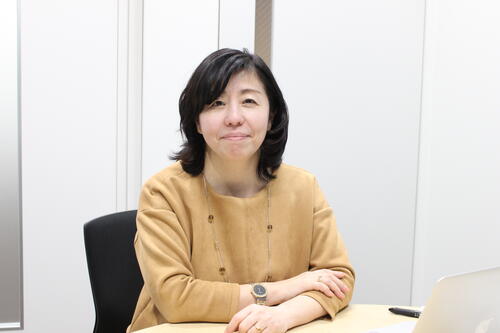
Photo of Mika Ohbayashi
Mika Ohbayashi is the Director at Renewable Energy Institute since its foundation in August 2011.  Before joining the Institute, she worked in Abu Dhabi for the International Renewable Energy Agency (IRENA) as Policy and Project Regional Manager for Asia Oceania. She is one of two founders of the Institute for Sustainable Energy Policies (ISEP) and served as Deputy Director for 8 years following its establishment in 2000. She also worked as Advisor for Climate Change Projects and Policies for UKFCO at the British Embassy to Japan. She started her career in the energy field by joining Citizens' Nuclear Information Center in 1992.  She was awarded the Global Leadership Award in Advancing Solar Energy Policy by the International Sola Energy Society (ISES) in 2017. 


Moderator

Image
Photo of Kiyo Tsutsui
Kiyoteru Tsutsui is the Henri H. and Tomoye Takahashi Professor, Professor of Sociology, Senior Fellow at the Freeman Spogli Institute for International Studies, and Deputy Director of the Walter H. Shorenstein Asia-Pacific Research Center, where he is also Director of the Japan Program. He is the author of Rights Make Might: Global Human Rights and Minority Social Movements in Japan (Oxford University Press, 2018), co-editor of Corporate Responsibility in a Globalizing World (Oxford University Press, 2016) and co-editor of The Courteous Power: Japan and Southeast Asia in the Indo-Pacific Era (University of Michigan Press, forthcoming 2021). 


Logo of Perfect Storm Fall webinar series


This event is part of the 2021 Fall webinar series, Perfect Storm: Climate Change in Asia, sponsored by the Walter H. Shorenstein Asia-Pacific Research Center.

Via Zoom Webinar
Register:  https://bit.ly/2YayEzo


Phillip Lipscy <br>Associate Professor of Political Science at the University of Toronto<br><br>
Mika Ohbayashi <br>Director of Renewable Energy Institute<br><br>
Kiyoteru Tsutsui <br>Director of the Japan Program and Professor of Sociology, Stanford University
Panel Discussions
-

This is a virtual event. Please click here to register and generate a link to the talk. 
The link will be unique to you; please save it and do not share with others.


In September 2020, President Xi Jinping declared that China would achieve carbon neutrality by 2060.  This climate pledge is widely considered the most ambitious of all made to date, especially since the world’s largest carbon-emitting nation is still at a developing stage and has not yet achieved its emissions peak.  With the 26th UN Climate Change Conference of the Parties (COP26) on the horizon, the world is eager to learn about any potential new pledges from the Chinese leadership.  This talk will provide an overview of climate governance under President Xi Jinping and draw on the presenter’s work on local implementation of air pollution policies in China to discuss potential lessons for its ongoing efforts to curb carbon emissions.


Image
Portrait of Shiran Victoria Shen
Shiran Victoria Shen’s research primarily examines the organizational causes of and responses to environmental crises, with particular understanding of how local politics shape air pollution and climate management in China.  Professor Shen graduated Phi Beta Kappa and with high honors from Swarthmore College and holds an M.S. in civil and environmental engineering and a Ph.D. in political science, both from Stanford University.


Image
Perfect Storm: Climate Change in Asia series promo image

This event is part of the 2021 Fall webinar series, Perfect Storm: Climate Change in Asia, sponsored by the Walter H. Shorenstein Asia-Pacific Research Center.


Via Zoom Webinar. Register at: https://bit.ly/2XtnSDE

Shiran Victoria Shen Assistant Professor of Environmental Politics at the University of Virginia and W. Glenn Campbell and Rita Ricardo-Campbell National Fellow at the Hoover Institution
Seminars
-

Fall 2021 Webinar Series Kickoff with Mr. Ban Ki-moon and Prof. Nicole Ardoin

September 28, 5-6 p.m. California time/ September 29, 9-10 a.m. Korea time

This event is held virtually via Zoom. Registration required.


The Asia-Pacific region is the world’s most vulnerable region to climate change risks. With its densely populated low-lying territories and high dependence on natural resources and agriculture sectors, Asia is increasingly susceptible to the impacts of rising sea levels and weather extremes. The impacts of climate change encompass multiple socioeconomic systems across the region, from livability and workability to food systems, physical assets, infrastructure services, and natural capital.

The Shorenstein Asia-Pacific Research Center’s Fall 2021 webinar series, “Perfect Storm: Climate Change in Asia,” explores climate change impacts and risks in the region, adaptation and mitigation strategies, and policy responses.

Join us for the series kickoff event, featuring a keynote address by former UN Secretary-General and former South Korean Foreign Minister Ban Ki-moon, who is known for putting sustainable development and climate change at the top of the UN agenda, and a discussion with Stanford social ecologist Nicole Ardoin, a leading expert in environment, sustainability, and climate change education. Mr. Ban’s keynote will focus on COVID-19 and climate change.


Panelists 

Portrait of Mr. Ban Ki-moonMr. Ban Ki-moon, Chairman of Ban Ki-moon Foundation for a Better Future, 8th Secretary-General of the UN

Ban Ki-moon is a South Korean diplomat who was the 8th Secretary-General of the United Nations and a career diplomat in South Korea’s Ministry of Foreign Affairs and in the UN.

Mr. Ban’s current leadership roles include the Chairman of South Korea’s Presidential National Council on Climate and Air Quality; Chairman of Boao Forum for Asia; Co-Chair of the Ban Ki-moon Centre for Global Citizens, Vienna; Chairman of the International Olympic Committee’s Ethics Committee; Distinguished Chair Professor and Honorary Chairman at the Institute of Global Engagement and Empowerment at Yonsei University in Seoul, Korea; and President of the Assembly and Chair of the Council of Global Green Growth Institute.

Mr. Ban served two consecutive terms as the Secretary General of the UN (2007-2016). Throughout his tenure at the UN, he strove to be a bridge builder, to give voice to the world’s poorest and the most vulnerable people, and to make the organization more transparent and effective. He successfully pressed for action to combat climate change — an effort that culminated in the adoption and rapid entry into the landmark Paris Agreement in 2016. Mr. Ban worked closely with member states of the UN to shape the 2030 Agenda for Sustainable Development and to establish UN Women, which has been advancing the organization’s work for gender equality and women’s empowerment. He also launched major efforts to strengthen UN peace operations, to protect human rights, to improve humanitarian response, and to prevent violent extremism and to revitalize the disarmament agenda.

At the time of his appointment at the UN, Mr. Ban was the Minister of Foreign Affairs and Trade of the Republic of Korea. His 37 years with the Ministry included postings in New Delhi, Washington D.C., and Vienna, and responsibilities for a variety of portfolios, including Foreign Policy Adviser to the President, Chief National Security Adviser to the President, Vice Minister, Deputy Minister for Policy Planning and Director-General for American Affairs. Mr. Ban has also been actively involved in issues relating to inter-Korean relations by serving as Chairman of the Preparatory Commission for the Comprehensive Nuclear Test Ban Treaty Organization.

Mr. Ban earned a master’s degree in public administration from the John F. Kennedy School of Government at Harvard University in 1985 and a bachelor’s degree in international relations from Seoul National University in 1970.
 

Image
Portrait of Nicole Ardoin
Nicole Ardoin, Emmett Family Faculty Scholar, is the Sykes Family Director of the Emmett Interdisciplinary Program in Environment and Resources (E-IPER) in the School of Earth, Energy, and Environmental Sciences at Stanford University. She is a senior fellow with the Stanford Woods Institute for the Environment and an associate professor in the Graduate School of Education.

Founder of the Stanford Social Ecology Lab, Professor Ardoin is an interdisciplinary social scientist who researches individual and collective environmental behavior as influenced by environmental learning and motivated by place-based connections. Professor Ardoin and members of her lab pursue their scholarship with a theoretical grounding and orientation focused on applications for practice. They often work in collaboration with community partners, including public, private, and social sector organizations at a range of scales, to co-design and implement studies that build on a theoretical frame while concurrently addressing questions of interest to the partners. This work occurs primarily in informal settings, such as parks and protected areas, nature-based tourism locales, community gathering spaces, and other everyday-life settings.

Interested in actionable knowledge and notions of co-production, Professor Ardoin and her group collaborate with sustainability, environmental conservation, and philanthropic organizations to study the design, implementation, and effectiveness of a range of social-ecological practices. Through reflective learning, curiosity, and humility, the Social Ecology Lab strives to bring theoretically based insights to sustainability opportunities and challenges.

Professor Ardoin is an associate editor of the journal Environmental Education Research, a trustee of the George B. Storer Foundation, chair of NatureBridge's Education Advisory Council, an advisor to the Student Conservation Association and Teton Science Schools, among other areas of service to the field.


Moderator

Image
Photo of Gi-Wook Shin
Gi-Wook Shin, Director of APARC and the Korea Program

Gi-Wook Shin is the director of the Walter H. Shorenstein Asia-Pacific Research Center; the William J. Perry Professor of Contemporary Korea; the founding director of the Korea Program; a senior fellow of the Freeman Spogli Institute for International Studies; and a professor of sociology, all at Stanford University. As a historical-comparative and political sociologist, his research has concentrated on social movements, nationalism, development, and international relations.

Via Zoom Webinar
Register:  https://bit.ly/3ndgszc


Mr. Ban Ki-moon <br>Chairman of Ban Ki-moon Foundation for a Better Future; 8th Secretary-General of the UN<br><br>
Nicole Ardoin <br>Emmett Family Faculty Scholar and Sykes Family Director of E-IPER, School of Earth, Energy & Environmental Sciences; Associate Professor, Graduate School of Education; Senior Fellow, Woods Institute for the Environment; Stanford University<br><br>
Gi-Wook Shin <br>Director of APARC and the Korea Program
Panel Discussions
Authors
News Type
News
Date
Hero Image
Aerial view of dry brown crop fields
All News button
1
Subtitle

Higher temperatures attributed to climate change caused payouts from the nation’s biggest farm support program to increase by $27 billion between 1991 and 2017, according to new estimates from Stanford researchers. Costs are likely to rise even further with the growing intensity and frequency of heat waves and other severe weather events.

Authors
News Type
News
Date
Hero Image
An orange smokey sky behind a dark bridge over water Christopher Michel via Flickr
All News button
1
Subtitle

Warnings of another severe wildfire season abound, as do efforts to reduce the risk of ignition. Yet few are taking precautions against the smoke. Stanford experts advise on contending with hazardous air quality.

Authors
News Type
News
Date
Paragraphs

Despite important agricultural advancements to feed the world in the last 60 years, a new study shows that global farming productivity is 21% lower than it could have been without climate change. This is the equivalent of losing about seven years of farm productivity increases since the 1960s.

The future potential impacts of climate change on global crop production has been quantified in many scientific reports, but the historic influence of anthropogenic climate change on the agricultural sector had yet to be modeled. Now, a new study published April 1 in Nature Climate Change provides these insights. 

David Lobell, professor of earth system science at Stanford University and coauthor of the study, said that the results show clearly that adaption efforts must look at the whole supply chain, including labor and livestock. “They also show that even as agriculture becomes more mechanized and sophisticated, the sensitivity to weather does not go away,” he said. “This is counter-intuitive for most people, and we need a deeper understanding of why.”

“We find that climate change has basically wiped out about seven years of improvements in agricultural productivity over the past 60 years,” said Ariel Ortiz-Bobea, associate professor in the Charles H. Dyson School of Applied Economics and Management at Cornell University and lead author of the study. “It is equivalent to pressing the pause button on productivity growth back in 2013 and experiencing no improvements since then. Anthropogenic climate change is already slowing us down.”

The scientists and economists developed an all-encompassing econometric model linking year-to-year changes in weather and productivity measures with output from the latest climate models over six decades to quantify the effect of recent human-caused climate change on what economists call “total factor productivity,” a measure capturing overall productivity of the agricultural sector.

Ortiz-Bobea said they considered more than 200 systematic variations of the econometric model, and the results remained largely consistent. “When we zoom into different parts of the world, we find that the historical impacts of climate change have been larger in areas already warmer, including parts of Africa, Latin America and Asia,” he said.

Humans have already altered the climate system, Ortiz-Bobea said, as climate science indicates the globe is about 1 degree Celsius warmer than without atmospheric greenhouse gases.

“Most people perceive climate change as a distant problem,” Ortiz-Bobea said. “But this is something that is already having an effect. We have to address climate change now so that we can avoid further damage for future generations.”

Ortiz-Bobea and Robert G. Chambers, professor of production economics at the University of Maryland, have been pioneering new productivity calculations in agriculture to include weather data that has not been addressed historically, aiming to bring new accuracy to climate models.

“Productivity is essentially a calculation of your inputs compared to your outputs, and in most industries, the only way to get growth is with new inputs,” Chambers said. “Agricultural productivity measurement hasn’t historically incorporated weather data, but we want to see the trends for these inputs that are out of the farmer’s control.” 

“My sense is that we are just getting better at eliminating all the non-weather constraints on production, but we need to scrutinize various possible explanations,” said Lobell, who examines the impact of climate change on crop production and food security. “This study is a big leap beyond the traditional focus on a few major grain crops,” he said. “By looking at the whole system – the animals, the workers, the specialty crops – we can see that the entire agricultural economy is quite sensitive to weather. It seems that in agriculture, practically everything gets harder when it’s hotter.”


In addition to Ortiz-Bobea, Chambers and Lobell, the co-authors are Toby R. Ault, professor of earth and atmospheric sciences in the College of Agriculture and Life Sciences; and Carlos M. Carrillo, research associate in the Department of Earth and Atmospheric Science. 

Funding was provided by USDA National Institute of Food and Agriculture and the National Science Foundation.


Media Contacts: 

Blaine Friedlander, bpf2@cornell.edu, 607-254-8093

Devon Ryan, devonr@stanford.edu, 650-497-0444

Hero Image
Hills of tilled grain in South Africa
All News button
1
News Type
News
Date
Paragraphs

Recent record-breaking heat waves followed by rolling blackouts in California have sparked renewed discussion about the state’s options to address future power outages. Program on Energy and Sustainable Development Director Frank Wolak spoke to Bloomberg about power market reforms as one option where California could open up its electricity to retail competition.  While pricing would better reflect grid supply and demand, it’s unlikely this option would have backing given today’s political climate.   Read more (may require subscription)

Read More

Windmills
News

Wolak weighs in on California blackouts

Wolak weighs in on California blackouts
Hero Image
solar station Linda A. Cicero / Stanford News Service
All News button
1
Paragraphs

Any mention of climate policy was noticeably missing from President Obama's recent state of the union address. This is unfortunate because every day of inaction on climate policy by the United States government is another day that American consumers must pay substantially higher prices for products derived from crude oil, such as gasoline and diesel fuel. Moreover, a substantial fraction of the revenues from these higher prices goes to governments of countries that the US would prefer not to support.

All Publications button
1
Publication Type
Commentary
Publication Date
Journal Publisher
The Guardian
Authors
Frank Wolak
Paragraphs

With the continued successful operation of its greenhouse gas emissions market, California can become a global leader in the design and implementation of regional carbon polices. Moreover, if more regions use the California market as their starting point, then linking these programs together will be more straightforward and the ultimate goal of an effective global climate policy the more likely end result.

All Publications button
1
Publication Type
Commentary
Publication Date
Journal Publisher
San Jose Mercury News
Authors
Frank Wolak
Subscribe to Climate