Islam
Paragraphs
ISIS in Iraq: The Social and Psychological Foundations of Terror

This study follows the human side of ISIS’s amazing rise and fall in Iraq. It does not do this as a battle-by-battle history of the group, but rather explores how common Iraqis viewed the group, interacted with the group, joined the group, fought in the group, and ultimately suffered under its brutal rule. Specifically, we seek to answer the following questions: What factors conditioned public support and opposition toward ISIS in Iraq? Why did some Iraqis move from passive support for the group to actively participating in the group’s activities, including fighting? This study uses a social psychological approach to understand the trajectory of ISIS in Iraq. The book argues that ISIS derived support from how it was perceived to either meet or threaten basic human needs for individual Iraqis. The three basic human needs in question are the physical needs for security and sustenance and the psychological need for a feeling of individual significance. Our analysis is based on a unique array of public opinion data from surveys, focus groups, and in-depth face-to-face interviews with forty detained ISIS foot soldiers and four senior leaders to explain why some Iraqis came to join and acquiesce to ISIS while others opposed it, why ISIS lost the hearts and minds of Iraqi Sunni Arabs, and how this contributed decidedly to its battlefield defeats.

All Publications button
1
Publication Type
Books
Publication Date
Subtitle

This book explores the social and psychological factors behind how ISIS was able to rise in Iraq, control most of it, and why most of that population eventually turned on it.

Authors
Michele Gelfand
Book Publisher
Oxford University Press
Paragraphs
Building resilient inter-ethnic peace: Hindus and Muslims in South Asia

A key challenge that many nations face in the 21st century is to build societies that not only are able to peacefully accommodate increasing ethnic diversity but also to leverage its potential benefits. This is not a straightforward task. Ethnically diverse communities tend to provide fewer public goods to their citizens (e.g. Alesina et al. 2004, Alesina and La Ferrara 2005) and are less likely to voice common priorities (e.g. Ban et al. 2012). With ethnic identities often coordinating political competition as well, it is perhaps not surprising that violent conflict is more likely in ethnically polarised countries and regions (e.g. Montalvo and Reynal-Querol 2005, Esteban et al. 2012, Jha 2023 and Figure 1). With 82.1 million people around the world forcibly displaced due to persecution and conflict in 2020, and widespread economic migration, the challenge of building resilient inter-ethnic peace is one faced not only by societies that have been diverse historically but increasingly in nations and communities with less experience navigating a diverse setting.

What can economic theory, in combination with the historical experiences of these communities, tell us about the necessary conditions for resilient inter-ethnic peace, and how these can be fostered?


This book presents a synthesis of key recent advances in political-economy research on the various approaches and strategies used in the process of building nations throughout modern history. It features chapters written by leading scholars who describe the findings of their quantitative analyses of the risks and benefits of different nation-building policies. The book is comprised of 26 chapters organized into six sections, each focusing on a different aspect of nation-building. The first chapter presents a unified framework for assessing nation-building policies, highlights potential challenges that may arise, provides a summary of each of the other chapters, and draws out the main lessons from them. The following chapters delve into the importance of social interactions for national identification, the role of education, propaganda and leadership, external interventions and wars, and the effects of representation and redistribution. The book offers a nuanced understanding of effective nation-building policies.

All Publications button
1
Publication Type
Book Chapters
Publication Date
Subtitle

Chapter in Nation Building: Big Lessons from Successes and Failures, edited by Dominic Rohner and Ekaterina Zhuravskaya

Authors
Saumitra Jha
Book Publisher
CEPR Press
Authors
News Type
News
Date
Paragraphs

Reza Idria is an Assistant Professor in Social Anthropology at the Universitas Islam Negeri (UIN) Ar-Raniry (Ar-Raniry State Islamic University) in Banda Aceh, Indonesia. He holds an MA and Ph.D. in Social Anthropology from Harvard University as well as an MA in Islamic Studies from Leiden University, The Netherlands. Born and raised in Aceh, the only province adopting Sharia Law in Indonesia, Reza’s research interests are at the intersection of legal anthropology and Islamic law. 

Idria is the Lee Kong Chian NUS-Stanford Fellow on Contemporary Southeast Asia at APARC for the 2023 winter quarter. The fellowship, which is hosted jointly by APARC’s Southeast Asia Program (SeAP) and the Faculty of Arts and Social Sciences at the National University of Singapore, raises the visibility, extent, and quality of scholarship on contemporary Southeast Asia.

During his LKC NUS-Stanford fellowship, he will turn his doctoral dissertation, “Tales of the Unexpected: Contesting Syari’ah Law in Aceh, Indonesia,” into a book manuscript. This work is an anthropological study that examines a wide range of social and political responses that have emerged with the state implementation of Islamic law. The empirical data for this research project has been gathered in Aceh, the only Indonesian province that has adopted Sharia. Dr. Idria is also embarking on a new research project that focuses on the legal and socio-economic consequences of the local regulation on Islamic banking.

This interview originally appeared on the website of the Faculty of Arts and Social Sciences at the National University of Singapore.


What sparked your interest in studying the social and political responses to the state implementation of Sharia law in Aceh, Indonesia?

There are some puzzling conditions in Aceh that sparked my interest to conduct this study. I grew up immersed in Acehnese Muslim culture and have lived through the historical and political transformation of the region since the period of armed conflict. In my view, the government’s efforts to translate Sharia into positive law in Aceh was motivated largely by political needs, rather than the religious ones. Islam has indeed a pronounced role in Aceh society since pre-colonial time, and the province is often called “Verandah of Mecca”, but it was only in 1999 the central government decided to impose Sharia law in the province in an attempt to quell the Free Aceh Movement rebellion.

In fact, it was the tsunami of 2004 that actually helped stop the war and led to the signing of peace agreement. However, it did not prevent the government to apply more aggressive Sharia law in the post-conflict and post-tsunami Aceh. While many Acehnese appeared supportive to the implementation of Sharia, I was also troubled with the impression created by many media outlets that all Acehnese accept Sharia law without question. Despite the aggressive enforcement directed by the state, my study found some elements of Acehnese society have passionately contested and challenged the official understanding of Sharia.

What challenges did you encounter when carrying out your fieldwork in Aceh for your upcoming monograph, Tales of the Unexpected: Contesting Syari’ah Law in Aceh, Indonesia?

I began gathering considerable data for this study in 2011 when I was involved in a joint research project on the Indonesian experience of Islam and politics after the fall of Suharto. Given the sensitivity of this topic conducting fieldwork was challenging. Some people were suspicious of my academic inquiry. People were mostly reluctant to speak on anything related to Sharia Law. Even those who have engaged in activism against Sharia law did not want to be seen as openly antagonistic to it. Many would say that they are not resisting Sharia as such, rather seeking to rescue Sharia from associations with fundamentalism. I think it is because the Acehnese perceived that their identity is deeply entwined with Islam, therefore critical voices to the state-led Sharia implementation are often subdued due to the fear of being labeled anti-Islam. It’s a dangerous stigma and I think no one could survive in Aceh with that stigma. Such condition contributes to people’s ambiguous and ambivalent reactions toward Sharia. To me this also explains why resistance to Sharia has eventually taken many forms and is often performed in unconventional manners. Sometimes so subtle that they might not seem like resistance at all.

How have the diverse range of local groups who have engaged in activism against Sharia law enforcement in Aceh cooperated with each other?

There was some cooperation and mutual support among local groups who share dissenting views concerning the state interpretations of Sharia. For example, in responding to the provisions of Islamic Criminal Code of 2009 (referred locally as Qanun Jinayah), intellectuals from several local universities, cultural activists, and dozens of civil society organizations worked together to criticize many controversial aspects of the proposed law. They formed an advocacy network called Jaringan Masyarakat Sipil Peduli Syariat (the Civil Society’s Network concerning Sharia). JMSPS activists used various strategies, from lobbying to organizing a series of demonstrations. They went to the Aceh Parliament condemning members of the parliament and the governor of Aceh had they not stopped proposing the law. The movement was relatively successful as the Sharia Criminal Code of 2009 was postponed because Governor Irwandi Yusuf eventually refused to sign it. However, conditions have changed in the following years, especially after Irwandi lost the gubernatorial election in 2012. His successor signed the Qanun draft and passed the Sharia criminal law in 2014.

How has Komunitas Tikar Pandan, the cultural organization you co-founded in Aceh in 2002, played a role in the responses to Sharia law implementation?

Komunitas Tikar Pandan continues to organize various culturally oriented activities such as creating writing workshops, painting exhibitions, film screenings and discussions. The organization’s mission from the very beginning is to generate critical awareness, especially for the young, about the dangers of cultural hegemony and structural oppression in the name of identity politics and religion. One example, in responding to the absence of public cinema in Banda Aceh which has been considered by Aceh’s Ulama Council incompatible to the spirit of Sharia, Komunitas Tikar Pandan provides a mini-cinema and hosts a series of film screenings and discussions as a rebuke. Tikar Pandan’s office occasionally became sanctuary for some members of marginalized groups in Banda Aceh.

How do activist groups based outside of Aceh provide assistance to local Aceh activists whose resistance to Sharia law enforcement has met with opposition from local authorities?

For some cases such as the anti-punk crackdown in 2011 and the persecution of Aceh queers in 2018, support and assistance from people outside Aceh were helpful and forceful imposing pressure upon the Sharia authorities to evaluate their actions. Legal Aid Foundation (LBH) from Jakarta offered legal assistance to release the arrested punks. International expressions support for Aceh’s punks also took place across the globe, from Moscow to San Francisco, under the slogan “Punk is Not Crime” condemning the crackdown. Some international human rights organizations also provided aid advocacy and financial support to LGBTQ activists in Aceh.

How has local public opinion of Sharia law changed since it was implemented in Aceh, and what factors have been most influential in shaping this change?

At the beginning, there was a tremendous hope that the Sharia law would restore justice in the region affected by decades of bloody armed conflict. The conflict period was the period of profound lawlessness for the Acehnese. They were killed, tortured, and raped but no perpetrators had been brought to trial. That’s why I think people in Aceh were enthusiasts when the central government offered Sharia law to the province in 1999. Gradually the implementation has given rise to its own issues and resulted in the creation of multiple injustice and many forms of violence too. I think there are two factors that have been most influential in shaping and creating the negative image of the current Sharia implementation in the province, first morality policing through the special unit known as Sharia police. Second, the enactment of spectacle punishment, namely hukum cambuk (public caning). While Sharia promises to be a comprehensive guidance in all aspects of life, the Aceh government has been criticized by many ordinary Acehnese to focus merely on symbolic aspects of Islam, while neglecting what they viewed as more “substantial” concerns.

What developments do you anticipate happening in Aceh’s political and social scene in the near future that could affect the enforcement of Sharia law?

Aceh has been the poorest province in Sumatra within the last five years according to official survey. Despite receiving tremendous financial assistances from international agencies during the tsunami recovery and from the central government (so far more than $7.9 billion) Aceh’s economic growth continues to be the lowest in Sumatra. Following the Helsinki peace accord, the Aceh province is entitled to receive special autonomy funds from its central government for twenty years, from 2008 to 2027. So, it is only a few years left and with the rampant corruption and lack of interest from investors it is hard to imagine any changes for a better condition will occur in Aceh. I think poor and disempowered Acehnese Muslims will likely continue to see more perplexing regulations in the region promulgated in the name of Sharia.

Read More

Sally Zhang
News

Predoctoral Fellow Spotlight: Sally Zhang Examines Intrahousehold Economics of Developing Nations

APARC predoctoral fellow and Ph.D. candidate in Economics Sally Zhang reflects on her fellowship experience at the center and explains how her research into income hiding in the household in lower-middle-income countries helps create policies that reduce poverty and promote gender equality.
Predoctoral Fellow Spotlight: Sally Zhang Examines Intrahousehold Economics of Developing Nations
Hero Image
LKC Fellow Reza Idria
All News button
1
Subtitle

In this interview, Lee Kong Chian NUS-Stanford Fellow on Southeast Asia Reza Idria discusses his research into Syari’ah Law in Aceh, Indonesia, and the forthcoming book manuscript based on his doctoral dissertation.

0
Visiting Scholar at APARC, 2022-23
Lee Kong Chian NUS-Stanford Fellow on Contemporary Southeast Asia, 2022-23
idria_700x700.jpg Ph.D

Reza Idria joined the Walter H. Shorenstein Asia-Pacific Research Center (APARC) as Visiting Scholar and 2022-23 Lee Kong Chian NUS-Stanford Fellow on Contemporary Southeast Asia for the winter and spring quarter of 2023. Idria currently serves as Assistant Professor at the Universitas Islam Negeri Ar-Raniry, Banda Aceh, Indonesia. While at APARC, he conducted research on the wide range of social and political responses that have emerged with the state implementation of Sharia (Islamic Law) in Indonesia.

Date Label
-
Hicham Alaoui Pacted Democracy in the Middle East event

To mark the 20th anniversary of the establishment of CDDRL, Hicham Alaoui joins ARD to discuss his recently released book, Pacted Democracy in the Middle East: Tunisia and Egypt in Comparative Perspective (Palgrave Macmillan, 2022). Click here to order a copy of the book.

Pacted Democracy in the Middle East provides a new theory for how democracy can materialize in the Middle East, and the broader Muslim world. It shows that one pathway to democratization lays not in resolving important, but often irreconcilable, debates about the role of religion in politics. Rather, it requires that Islamists and their secular opponents focus on the concerns of pragmatic survival—that is, compromise through pacting, rather than battling through difficult philosophical issues about faith. This is the only book-length treatment of this topic, and one that aims to redefine the boundaries of an urgent problem that continues to haunt struggles for democracy in the aftermath of the Arab Spring.

ABOUT THE SPEAKER

Image
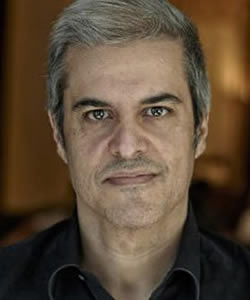
hicham alaoui
Hicham Alaoui is the founder and director of the Hicham Alaoui Foundation, which undertakes innovative social scientific research in the Middle East and North Africa. He is a scholar on the comparative politics of democratization and religion, with a focus on the MENA region.

In the past, he served as a visiting scholar and Consulting Professor at the Center for Democracy, Development and Rule of Law at Stanford University.  He more recently served as postdoctoral fellow and research associate at Harvard University. He was also Regents Lecturer at several campuses of the University of California system. Outside of academia, he has worked with the United Nations in various capacities, such as the peacekeeping mission in Kosovo. He has also worked with the Carter Center in its overseas missions on conflict resolution and democracy advancement. He has served on the MENA Advisory Committee for Human Rights Watch and the Advisory Board of the Carnegie Middle East Center. He served on the board of the Freeman Spogli Institute at Stanford University and has recently joined the Advisory Board of the Weatherhead Center for International Affairs at Harvard.

He holds an A.B. from Princeton University, M.A. from Stanford University, and D.Phil. from the University of Oxford. His latest book is Pacted Democracy in the Middle East: Tunisia and Egypt in Comparative Perspective (Palgrave, 2022). His memoirs, Journal d'un Prince Banni, were published in 2014 by Éditions Grasset, and have since been translated into several languages. He is also co-author with Robert Springborg of The Political Economy of Arab Education (Lynne Rienner, 2021), and co-author with the same colleague on the forthcoming volume Security Assistance in the Middle East: Challenges and the Need for Change (Lynne Rienner, 2023). His academic research has been widely published in various French and English journals, magazines, and newspapers of record.

This event is co-sponsored by ARD, the Abbasi Program in Islamic Studies, and the Center for African Studies at Stanford University.​

Image
ARD and Abbasi Program logos

Image
CAS

Larry Diamond

In-person
Encina Commons Room 123
615 Crothers Way, Stanford, CA

Hicham Alaoui
Lectures
Date Label
0
CDDRL Postdoctoral Fellow, 2022-2023
ahmed_ezzeldin_mohamed_headshot.jpeg

Ahmed Ezzeldin Mohamed is a postdoctoral fellow at the Center for Democracy, Development, and Rule of Law (CDDRL). He holds a Ph.D. (with distinction) in Political Science from Columbia University. He was a research fellow at the Middle East Initiative at Harvard Kennedy School in the academic year (2021-2022). He is a junior fellow of the Association for Analytic Learning about Islam and Muslim Societies (AALIMS).

Mohamed’s research focuses on the role of religion in political and economic development, with a special focus on the Middle East and the Muslim World. He utilizes a diverse set of tools for data collection and rigorous analysis. His work received several awards, including APSA 2022 Weber Best Conference Paper Award and MPSA 2019 Kellogg/Notre Dame Award for Best Paper in Comparative Politics. 

-
Rethinking Modern Sunni-Shii Relations: The State, Revolution, and Foreign Intervention

What explains the turn towards more politically relevant Sunni and Shii identities in the modern period? How do we account for a shift from Sunni-Shii cooperation against colonialism, for example, or in defense of the Ottoman Caliphate, towards polarisation? This lecture will look especially at the role of the modern state in regulating religion more broadly, coopting certain cultural groups and alienating others, and fostering sharpened sectarian identities. It will also look at the impact of the 1979 revolution in Iran, and reactions towards it, and of foreign intervention, especially the Iraq war of 2003 in sectarianizing the Middle Eastern regional system.

This event is sponsored by the Abbasi Program in Islamic Studies in partnership with the Center for International Security and Cooperation (CISAC) and the Program on Arab Reform and Democracy at CDDRL.

ABOUT THE SPEAKER

Image
Toby Matthieson
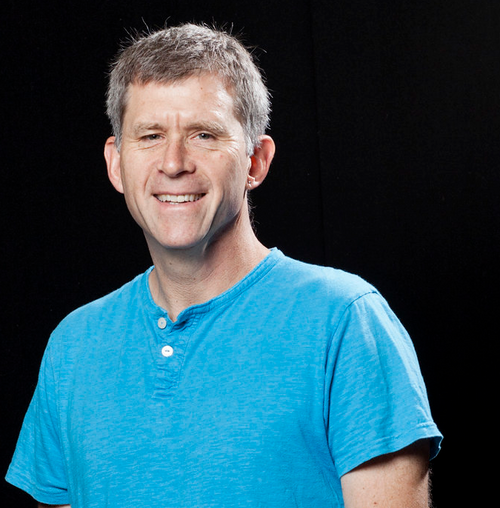
Toby Matthiesen is a scholar of Comparative Politics and International Relations with a focus on the Middle East. He is currently a Marie Curie Global Fellow at Stanford University and Ca’ Foscari University in Venice, leading a project on Sunni-Shii Relations in the Middle East.

Toby's aim in research and teaching is to study the Middle East in a global context. His research is characterized by the use of primary sources, archives, fieldwork, and engagement with social science and historiographical debates. He is the author of Sectarian Gulf: Bahrain, Saudi Arabia, and the Arab Spring That Wasn’t (Stanford University Press, 2013), a book on the impact of the Arab Spring on the Gulf States. His second book, The Other Saudis: Shiism, Dissent and Sectarianism (Cambridge University Press, 2015) dealt with the relationship between the Shii community in the Eastern Province and the Saudi state, and with transnational movements and Iran. It is based on fieldwork in Saudi Arabia and the wider region, and hitherto unused Arabic archives.

His forthcoming book, The Caliph and the Imam: The Making of Sunnism and Shiism, is a global history of Sunni-Shii relations and is published by Oxford University Press. Toby's work has also been translated into Arabic and Persian and apart from English, he publishes in German. His other research interests relate to the history of Leftist movements and the use of Islam as anti-Communism during the Cold War.

Encina Commons 123 or online via Zoom

Toby Matthiesen
Lectures
-

This is a virtual event. Please click here to register and generate a link to the talk. 
The link will be unique to you; please save it and do not share with others.


Policies implemented by the CCP in Xinjiang since c. 2016 have become a central issue in PRC international relations, leading to international determinations that those policies constitute genocide; scrutiny of global supply chains for Xinjiang cotton, textiles and polysilicon; US sanctions on companies and individuals and Congressional inquiries directed at Airbnb and other multinationals operating in Xinjiang; and diplomatic boycotts of the Olympics. The assimilationist policies, if most extreme in Xinjiang, are related to the broader Zhonghua-izing campaign against religion and non-Mandarin language and perhaps even to intensified control over Hong Kong and efforts to intimidate Taiwan—an aggressive intolerance of cultural and political diversity that is emerging as a central feature of Xi Jinping’s tenure. This talk will review the Xinjiang crisis to date and suggest how we should understand these events and trends.


Image
Portrait of James Millward
James Millward is Professor of Inter-societal History at the Walsh School of Foreign Service, Georgetown University, teaching Chinese, Central Asian and world history. He joins the Walter H. Shorenstein Asia-Pacific Research Center (APARC) as visiting scholar with the China Program for the 2022 winter quarter. He is also an affiliated professor in the Máster Oficial en Estudios de Asia Oriental at the University of Granada, Spain. His specialties include Qing empire; the silk road; Eurasian lutes and music in history; and historical and contemporary Xinjiang. He follows and comments on current issues regarding the Uyghurs and PRC ethnicity policy. Millward has served on the boards of the Association for Asian Studies (China and Inner Asia Council) and the Central Eurasian Studies Society, and was president of the Central Eurasian Studies Society in 2010. He edits the ''Silk Roads'' series for University of Chicago Press. His publications include The Silk Road: A Very Short Introduction (2013), Eurasian Crossroads: A History of Xinjiang (2007), New Qing Imperial History: The Making of Inner Asian Empire at Qing Chengde (2004), and Beyond the Pass: Economy, Ethnicity and Empire in Qing Central Asia (1998). His articles and op-eds on contemporary China appear in The New York Times, The Los Angeles Review of Books, The New York Review of Books and other media.  

Via Zoom Webinar. Register at: https://bit.ly/3zX2GoF

James Millward Visiting Scholar, APARC, Stanford University; Professor of Inter-societal History, Walsh School of Foreign Service, Georgetown University
Seminars
Authors
News Type
Q&As
Date
Paragraphs

This Q&A with Allen S. Weiner was originally published on the Stanford Law School website.

As the Taliban’s forces closed in on Kabul on Sunday, August 15, 2021, the Afghan President Ashraf Ghani left his country, the acting U.S. ambassador was evacuated, the American flag on the embassy in the country’s capital lowered—and the Biden administration’s plans for an orderly withdrawal of troops, diplomats, and Afghan aids and translators by the anniversary of 9/11 dashed as a scramble for the door becomes more chaotic. After twenty years, 2 trillion dollars, and the lives of almost 2,500 American personnel lost, President Biden said it was time to let the Afghan government and military stand on its own. Here, Stanford Law national security law expert Allen Weiner, who is a research affiliate at FSI’s Center for Democracy, Development and the Rule of Law, and the Center for International Security and Cooperation, discusses the U.S. mission to Afghanistan, its withdrawal, and potential consequences.

What was the American/NATO objective when we invaded Afghanistan almost twenty years ago?

The immediate United States objective at the time of the 2001 invasion was to destroy Al Qaeda’s base of operations in Afghanistan and to kill or capture senior Al Qaeda leaders there.  As those of us who are old enough to remember will recall, the invasion (“Operation Enduring Freedom”) was the U.S.-led response to the 9/11 attacks against World Trade Center twin towers and the Pentagon that were carried out by Al Qaeda. Because the Taliban regime in Afghanistan had a symbiotic relationship with—and provided a safe haven to—Al Qaeda on Afghanistan’s territory, the U.S. and its NATO allies also sought to drive the Taliban from power. At the time, the Taliban was fighting a civil war in Afghanistan and by October 2001 had achieved effective control over most of the country. President Bush and others quickly began to emphasize an additional objective for overthrowing the Taliban— to liberate the Afghan people from the regime’s repressive practices. We sought to promote basic human rights and to end the Taliban’s oppression of women.

Were those objectives met?

The U.S. and its NATO allies largely met those initial goals. Al Qaeda’s training camps in Afghanistan were destroyed, many of its leaders were killed and captured (although some, including Osama bin Laden, managed to escape at least initially), and its ability to plan, finance, and execute major global terrorist operations was severely diminished. U.S. and NATO forces drove the Taliban from power, and after a transitional period, a new government led by Hamid Karzai was established. Women and girls resumed participation in public life in Afghanistan, including education.

But those successes were fleeting?

As we know, the successes did not last. Although Al Qaeda never resumed significant operations in Afghanistan, the organization metastasized, and lethal variants of the organization arose in Yemen, Iraq and Syria, and the Maghreb, among other places. Other terrorist groups, such as the Islamic State and al Shabaab, either grew out of or have affiliations of varying degrees of intensity with Al Qaeda. We have also seen attacks carried out by homegrown terrorist organizations with only loose affiliations to Al Qaeda, sometimes only ideological affinities. So, while Operation Enduring Freedom significantly disrupted terrorist operations originating from Afghanistan, it cannot be said to have eliminated the threat of transnational terrorism.

And the Taliban continued to be a simmering problem in Afghanistan, didn’t it?

The goal of eradicating the Taliban, obviously, also was unmet. Although then Secretary of Defense Donald Rumsfeld declared an end to major combat operations against Al Qaeda and the Taliban in May 2003, a revitalized Taliban renewed an intense civil war in the summer of  2006. That civil war against the Afghanistan government—which appears now to have been won by the Taliban—continued with varying degrees of intensity until the past few days. And if another of the goals of the invasion was to improve the protection of human rights in Afghanistan, we must recognize that civilians suffered terribly during the civil war.

Are there any (hopefully) enduring successes from the twenty-year investment by the U.S. and NATO?

Afghanistan did make significant progress in terms of economic development and the realization of at least some civil and political rights. Per capita GDP rose dramatically in the decades after the U.S. invasion. The status of women and girls improved along many dimensions, including health, life expectancy, education levels, and participation in government institutions. The Taliban’s victory clearly imperils these gains.

The Trump Administration negotiated an agreement with Taliban in 2020 providing for the withdrawal of U.S. Forces from Afghanistan by May 2021, as part of which the Taliban promised not to deliberatively attack U.S. troops during the withdrawal period.  Since then, the Taliban has been steadily gaining control over provinces in the county, and civilian casualties have been rising. Was it pure fantasy that the US was maintaining the peace?

The Trump Administration’s February 2020 agreement with Taliban, in which the U.S. promised to withdraw its forces from Afghanistan in a little over a year, even though the Taliban did not agree to even a ceasefire, much less reach any political agreements with the government about ending the civil war, was the beginning of the end. It clearly signaled to both the Taliban and the government that the U.S. was now concerned only with the security of its own forces, and that the Afghan government was on its own. Given that the Taliban was making progress in gaining territory, at least in the countryside, even with U.S. troops present, many analysts—including the U.S. intelligence community—forecast the eventual overthrow of the Afghan government. It is only the shocking speed with which that happened that is a real surprise.

The fall of the Afghan government has taken many, including apparently some in the Biden administration, by surprise. Why did the collapse of the Afghan military happen so swiftly?  And what role did the Afghan police force and corruption play?

Many commentators who have been critical of the U.S. effort to build up the Afghan military have long expressed doubts about the effectiveness of the Afghanistan National Defense and Security Forces (ANDSF), and many analysts predicted that the Taliban would ultimately prevail against the government after the U.S. and its NATO allies withdrew from Afghanistan. That said, I don’t think anyone predicted it would happen as swiftly as it did.

Multiple factors have been cited to explain how the Taliban—a force estimated to comprise some 75,000 fighters—defeated the 300,000-member strong ANDSF. First, despite the seeming superiority of the government forces, conditions for ANDSF soldiers were quite abysmal. Many reportedly went months without being paid. They lacked ammunition and even food. There are reports of incompetent leadership within the armed forces, leaving Afghan soldiers exposed in the middle of pitch battles, without reinforcements.

A second factor is the pervasive and corrosive corruption among Afghan government actors.  This helps explain why—despite the U.S. infusion of billions of dollars in military assistance— Afghan soldiers went without pay and lacked adequate ammunition.  It also explains why in some cases, after Afghan forces fighting alongside U.S. forces succeeded in clearing territory of Taliban insurgents, the Afghan government would fail to hold it. The notoriously corrupt and unprofessional Afghanistan police forces—who were in charge of security after territory had been cleared of Taliban fighters by the ANDSF—reportedly engaged in predatory practices targeting the local community or could be bought off by the insurgency to cede ground back.

Third, some critics of the U.S. effort to modernize the Afghan army have long argued that the ANDSF lacked resolve to aggressively engage the Taliban insurgency in the absence of active support from U.S. soldiers. Although there are many stories of Afghan soldiers fighting fiercely, there are anecdotal accounts of Afghan armed forces engaging in “mini non-aggression deals” with Taliban fighters in their area of responsibility in an effort to avoid armed engagement.

Fourth, the lack of motivation of Afghan armed forces was exacerbated in recent years by the unpopularity and perceived fecklessness of the Afghan government led by President Ashraf Ghani. Re-elected in 2019 after an election with sharply disputed results, in which voter turnout was less than 20 percent, the Ghani government was widely seen as ineffective in addressing corruption, effectively managing the country, or confronting the growing security threat posed by the Taliban. It became a common refrain among Afghan soldiers that the Ghani government was not one worth fighting for.

Fifth, it appears that in at least some provinces in Afghanistan, the Taliban, in essence, offered government forces negotiated settlements to cede control of territory. In some cases, this involved offering payments to government soldiers to switch sides—a particularly attractive offer for soldiers who had not been paid in months. It is likely that the Taliban offered broader commitments, e.g., not to engage in retribution against government soldiers who abandoned the fight, although I have not yet seen reports of such deals.

Sixth, there a seasonal calendar to armed conflict in Afghanistan, and the Taliban has typically engaged in its major military operations during the spring and summer.  Delaying the U.S. withdrawal by six months, so that U.S. forces did not leave during the height of what is known in Afghanistan as “fighting season,” might have given the ANDSF more time to prepare to defend Afghanistan’s cities. Although given how swiftly Afghan government forces were swept aside, this now seems doubtful to me.

Finally, from an operational standpoint, the U.S. has invested billions of dollars in Afghanistan to attempt to build up a military that functions in ways that resemble how a NATO army operates, with air power and advanced weaponry. Such a military depends on extremely complex behind-the-scenes logistics arrangements. In Afghanistan, these logistics systems depended heavily on U.S. contractors, who also began withdrawing from the country after President Biden announced the U.S. withdrawal. Many of the aircraft in Afghanistan’s air force, for instance, were grounded because they lacked parts needed for repairs or routine servicing. One of the lessons of the defeat of the ANDSF is that building a foreign country’s military also requires developing indigenous logistics capacity.

Troops had been drawn down to about 3,000 and negotiations that excluded the Afghan gov’t were conducted with the Taliban during the Trump administration. Could Biden, realistically, have rewound the clock–bringing more troops back? Was Biden pushed into a tough corner?

Although the withdrawal agreement the Trump Administration concluded with the Taliban in February 2020 may not have initiated the death spiral for the Afghanistan government and military, it certainly catalyzed it, as I noted above. It did put the Biden Administration in a tough position; the only option would have been to renege on the agreement, leave U.S. troops in Afghanistan, and to seek to renegotiate the agreement. That said, although that may have been a tough position, it was not an impossible one, as evidenced by the fact that the Biden Administration unilaterally changed the agreed upon date by which U.S. forces would withdraw from Afghanistan from May to August.

I’m not a military strategist, so I can’t say whether maintaining a force of 3,000 U.S. troops in Afghanistan would have changed the military situation on the ground. But I think if the U.S. had said that it would not withdraw the U.S. military presence until there was a ceasefire and the Taliban and the Afghan government have negotiated a power sharing agreement/end to the civil war, that might have changed the Taliban’s political assessment about how to proceed. I stress that this only “might” have changed the Taliban’s thinking. The fact that the Taliban has been fighting for twenty years suggests that the group was very determined to regain control of Afghanistan and re-establish its vision of life for the Afghan people.

I understand that Russia and other countries have negotiated agreements to ensure the safety of their embassies and diplomatic staff so that they can continue operations in Kabul. Have the Americans done the same? If not, how significant will that be for the future safety of the U.S and the threat of terrorism? Will we have “eyes on the ground” and intelligence sources?

The United States is currently withdrawing all of its diplomatic personnel from Afghanistan and will presumably once again shutter its embassy in Kabul. The U.S. will face a difficult question about whether to recognize the new Taliban regime that will be installed in Afghanistan, and if so, whether to resume diplomatic relations and re-open its embassy. If the Taliban regime pursues the policies that characterized its period of rule in the late 1990s, particularly the severe repression of women and girls, I doubt the U.S. will re-establish relations. Even if the U.S. did re-establish diplomatic relations, it is inconceivable that the Taliban would permit the United States to maintain the large intelligence and security presence we have had in Afghanistan over the past two decades. So, we will not have the ability gather intelligence on the ground or to conduct military operations against any terrorist threats that emerge in Afghanistan.

The Taliban has pledged that it will not allow Afghanistan’s territory to be used by terrorist groups that seek to conduct hostile operations against foreign countries. Although the Taliban learned in 2001 about the potential costs to it of harboring such groups on Afghanistan’s territory—namely, being overthrown by the U.S. and its NATO allies—there are obviously reasons to question the Taliban’s promise.

Is there anything Biden can do now to minimize the damage?

The Biden administration does not have much leverage at this point. The administration will presumably signal to the Taliban that it will closely monitor its conduct with respect to preventing its territory from being used by terrorist groups and its performance on human rights issues, including the treatment of women and girls. Should the Taliban perform poorly on these issues, the U.S. could try to secure sanctions against the Taliban regime through the Security Council; after all, the Council had imposed sanctions on the Taliban in the 1990s in response to its providing a safe haven to Osama bin Laden and its violation of human rights, particularly discrimination against women and girls. Today, however, it is unclear whether Russia and China, which are likely to seek stable relations with the Taliban government, would support such sanctions. That means the U.S. would probably be limited to unilateral sanctions as a way of signaling disapproval of, and seeking to change the behavior of, a prospective Taliban government.

Allen S. Weiner

Allen S. Weiner

Affiliate at CDDRL and CISAC
FULL PROFILE

Read More

Helicopter crew members in Afghanistan.
Commentary

Biden's Afghanistan Decision

President Biden has inherited America’s longest war—the war in Afghanistan—at a critical moment. Under the Trump administration’s deal with the Taliban, the US government is supposed to withdraw forces from the country by May 2021. But the Taliban hasn’t taken the steps required in the deal against international terrorists, like Al Qaeda.
Biden's Afghanistan Decision
picture of man with American flag in the background
Q&As

There's no reason' for Trump's move to pull troops from Afghanistan

Brett McGurk, former presidential envoy for the global coalition to defeat ISIS, joins Andrea Mitchell to discuss the last minute foreign policy moves, including the decision to draw down the number of troops in Afghanistan, that President Trump is saddling the incoming Biden administration with.
There's no reason' for Trump's move to pull troops from Afghanistan
chayes
News

Sarah Chayes discusses life in Taliban-resurgent Afghanistan

Sarah Chayes discusses life in Taliban-resurgent Afghanistan
Hero Image
Displaced Afghans are seen at a makeshift IDP camp in Kabul.
Getty Images
All News button
1
Subtitle

National security law expert Allen Weiner, a research affiliate at CDDRL and CISAC, discusses the U.S. mission to Afghanistan, its withdrawal and consequences moving forward.

Subscribe to Islam