
Federal Judge Appoints SHP's Paul Wise to Monitor Children in Immigration Detention
Federal Judge Appoints SHP's Paul Wise to Monitor Children in Immigration Detention
A federal court taps Paul Wise to serve as independent monitor of immigration detention facilities following claims that detained children face squalid, unsafe conditions and detention periods exceeding limits set by a court settlement.

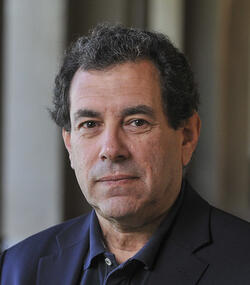
Stanford Health Policy’s Paul Wise, MD, MPH, has been appointed by a federal judge as an independent monitor of immigration detention centers amid allegations that children are being held in unsafe and unsanitary conditions—and for far longer than a court settlement allows.
Dolly M. Gee, chief judge for the U.S. District Court for the Central District of California, called on Wise, a professor of pediatrics and health policy, to provide oversight of the children being detained at Immigration and Customs Enforcement (ICE) and Customs and Border Protection (CPB) facilities in Texas and California. Gee also appointed former U.S. Attorney Andrea Sheridan Ordin, as a special master alongside Wise.
The federal judge mandated that the two monitor children in three CBP sections: the Rio Grande Valley, El Paso and San Diego, large areas that account for most of the migrants who have been encountered at the Southwest border.
“My role as the independent monitor is to ensure that Customs and Border Protection and ICE are providing children in custody with a safe and sanitary environment,” said Wise, the Richard E. Behrman Professor of Child Health and Society at Stanford Medicine, a senior fellow at the Freeman Spogli Institute for International Studies and a core faculty member at the Center on Democracy, Development and the Rule of Law.
“This includes food, sleep conditions, medical care, hygiene and sanitation, temperature, and a relatively short time in custody,” Wise said, adding that he is restricted from publicly commenting on his findings, though the judge may eventually release his reports.
The Flores Agreement
In her court order, Gee said the treatment of children in these facilities have not met the requirements of the Flores Settlement Agreement (FSA), a 1997 court-approved settlement that set minimum standards for how immigration authorities treat children in custody. It requires that anyone under 18 be released without unnecessary delay and held in “safe and sanitary” conditions with adequate food, water, and medical care. It also calls on federal immigration officials to treat children with “dignity, respect and special concern for their particular vulnerability as minors.”
Flores is not a law, but a settlement reached to end a lawsuit filed in 1985 on behalf of a 15-year-old Salvadoran girl held in an adult detention facility. Courts have read the agreement to bar the government from holding immigrant children in unlicensed facilities for more than 20 days—a limit the government itself proposed in 2015 and is now arguing does not exist.
The Trump administration has twice tried to end Flores, most recently in a motion Gee denied last August. That appeal was argued before the Ninth Circuit in June and remains undecided. In the meantime, the CBP and ICE are bound by the settlement.
There have been numerous reports in the last 18 months about children being separated from their parents, detained for months on end without adequate food and sanitary conditions. Lawyers for the children say their cells are “iceboxes” and lights are left on all night, disrupting their sleep.
Gee noted in her court order that children were held at ICE’s Dilley Immigration Processing Center for averages of 23 to 47.5 days across five straight months; 66 children for over 80 days in February, and four were held for more than 100 days.
In this video, Wise talks about his work in global hotspots in an effort to protect children in conflict.
Detainment Trauma
“Prior studies have shown that prolonged time in custody can be traumatic for children,” said Wise, an expert on children in conflict who has traveled to many hotspots around the world to advocate on their behalf.
He said the severity of the trauma depends on age, detention without family members, the time in custody and the conditions of detention.
Therefore, he said, “the detention of children should be avoided; however, if policy mandates detention, the time in custody should be short and the conditions appropriate for high-quality care of children."
Gee notes in her order, however, that parents and child advocates, have filed 64 medical grievances at Dilley over 10 months—none resolved in the detainee’s favor.
“Families commonly report ineffective medical care such as children only receiving Tylenol or Ibuprofen in response to various medical needs,” Gee wrote, adding that the parents of a 2-year-old reported that their daughter had a respiratory issues for months, was vomiting and had diarrhea, but all she was given was Tylenol and allergy medication.
A 10-year-old with a heart murmur waited nearly 60 days for a cardiologist; a child who needed an emergency appendectomy was left crying in pain.
Defendants contend that ICE is compliant with the FSA requirements for medical care at Dilley. But Gee countered: "At a minimum, the evidence regarding medical care is conflicting and the reported differences in reality are stark.”
Earlier this year, the American Academy of Pediatrics joined 16 other groups in filing an amicus brief calling for the protections of children outlined in the Flores settlement.
The AAP last year honored Wise with its highest recognition, the 2025 Clifford G. Grulee Award, to acknowledge his exceptional service to the AAP and its mission to promote the health and well-being of children.
“It’s discouraging that this monitor role is necessary,” Wise said.” But if one is necessary, it is a privilege to once again fill this role.”
It’s the third time that Gee has called on Wise for his expertise. In 2019, the judge appointed him as a special expert and, in 2022 as the juvenile care monitor, to conduct an independent investigation into health conditions for migrant children at CBP facilities.
Although his role for the court draws upon his academic work, Wise has stressed that his monitor efforts are separate from his position at Stanford.


