
The Lasting Effects of Deliberation on Civic Engagement
The Lasting Effects of Deliberation on Civic Engagement
CDDRL Research-in-Brief [4-minute read]

Introduction and Contribution
Democracies face a host of ongoing challenges, including the rise of elected autocrats, income inequality, mainstreamed forms of xenophobic nationalism, and political apathy. All of these challenges pose threats to democratic participation — elected autocrats restrict it, inequality makes it easier for oligarchs to sway election outcomes, and xenophobia can discourage cultural outsiders from voting.
Apart from practical threats to democratic participation, an established intellectual tradition has viewed participation with deep skepticism. In this view, democracy is good simply because it ensures peaceful transfers of power and protects individual rights. Collective decisions, however, cannot be meaningfully viewed as representing the “will of the people” owing to manipulation, apathy, and the high costs of acquiring political knowledge. Is this “realist” vision the best one can hope for in democratic life?
In “Can deliberation have lasting effects?,” James Fishkin, Valentin Bolotnyy, Joshua Lerner, Alice Siu, and Norman Bradburn show how a three-day deliberative experiment in late 2019 had large and long-term effects on turnout and voting behavior. Those most likely to exhibit these civic behaviors nearly a year later had come to follow politics more closely and see their political opinions as valuable. At the same time, the experiment’s effects on participants’ policy views were significant only in the short term — most deliberators eventually reverted to their previously held policy positions.
That three days of deliberation had such lasting civic effects suggests that efforts to create more inclusive forms of democratic participation are both possible and scalable. Moreover, it suggests that academic skepticism about democratic participation is not an argument against citizens’ capacities for reasonable decision-making; rather, it is an argument against our imperfect contexts of participation. Deliberative experiments may offer hope for improving these contexts.
The Deliberative Experiment and Its Effects on Policy Views
In September 2019 — one week prior to the experiment — a treatment group (i.e., those who would deliberate) of 523 registered voters from around the US and a control group of 844 voters were surveyed on their political attitudes. Members of the treatment group then deliberated on five issue domains (the economy, environment, immigration, health care, foreign policy) in small groups and on 47 policy proposals (e.g., redistributing wealth in some way). 26 of these proposals were characterized by extreme partisan polarization, meaning significant numbers of those who identified as Democrats or Republicans held the most extreme views. After the deliberations ended, both the treatment and control groups were surveyed. Then, three subsequent surveys were conducted in late 2020.
Among the treatment group, deliberation produced significant, short-term depolarization on 20 of the 26 (polarized) policy proposals. In other words, the averages for participants who identified with each party moved closer together (though not necessarily toward the center). These changes were large, sometimes 40 percentage points, as in the case of Republicans abandoning extreme positions on immigration. Meanwhile, the control group’s policy positions changed hardly at all — pointing to the key role played by deliberation. Within the five issue areas, averages among deliberators shifted leftward on all but the economy.
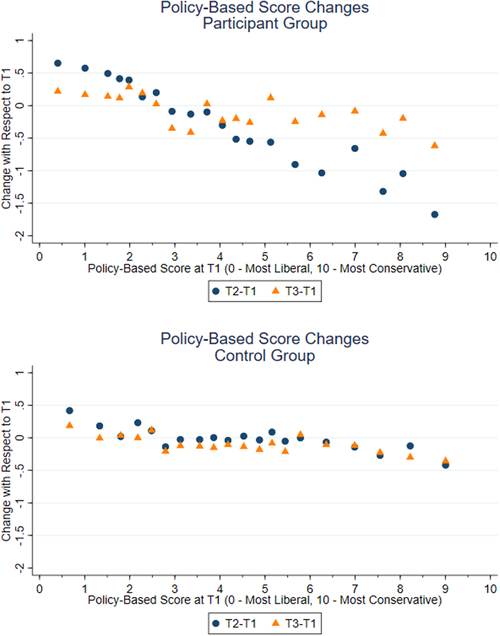
Figure 1. Policy-Based Score (PBS) Changes over Time
Note: Policy-based score (PBS) is constructed for each individual based on responses to 26 questions identified as the most polarizing. The upper chart shows the participant group, and the lower chart shows the control group. T1 is the survey wave prior to the deliberations, T2 is right after the deliberations, and T3 is 10 months after, in July 2020.
By late 2020, however, the treatment group’s policy positions mostly reverted to their pre-deliberation levels. The differences between these two points in time were still significant compared with the control group, yet relatively small in absolute terms. These policy reversions are perhaps unsurprising: deliberators returned to an environment of heightened polarization and aggressive campaigning during the 2020 election cycle. (To be sure, and from the standpoint of finding solutions to collective problems, policy reversion is not especially concerning — the aim of deliberation is to bring citizens together to reason and compromise, which the experiment accomplished.)
A Civic Awakening?
The lack of long-term policy effects suggests that three-day deliberations may be limited in their ability to create a more encompassing, participatory society. However, the treatment group demonstrated large and persistent changes in their intention to vote (i.e., turnout) and their candidate of choice. Among the control group, Joe Biden was favored over Donald Trump by about four percentage points — very close to Biden’s actual margin in the popular vote. Among the treatment group, however, Biden was favored by 28 percentage points. The gaps in turnout were similarly large. (Note that these are intentions, not reports of actual decisions. However, Tables 6 and 7 in the article show similar effects for recollected votes after the election.)
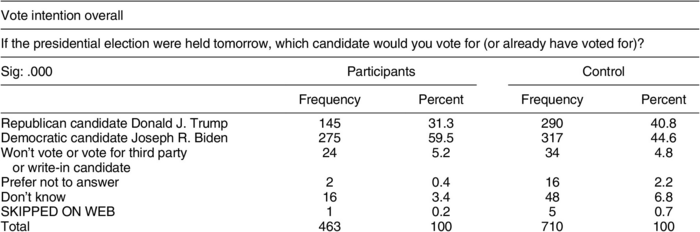
Table 2. Voting Intention for Participant and Control Groups, Time 4
These civic outcomes are especially surprising because (a) voting behavior is thought to be stable and deeply rooted in one’s psychology and social context, and (b) experimental efforts to increase turnout have been most successful when undertaken shortly before elections, as opposed to one whole year prior. The effects were most pronounced among political moderates and those without college degrees — perhaps pointing to the educative effects of deliberation.
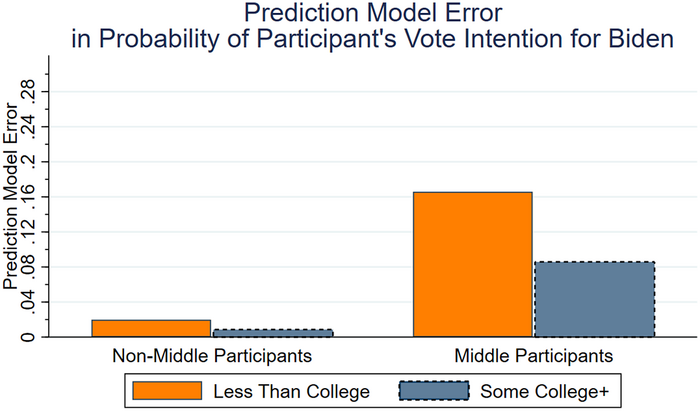
Figure 5. Effects on Vote Intention Captured by Predictive Modeling, by Education
Note: Middle are those participants who have Policy-Based Scores between 3 and 5 (inclusive) at Time 1. Non-middle participants are all other participants. Positive prediction error shows that, on average, participants were more likely to vote for Biden than predicted by the model. Vote intention data are collected at Time 4, in October, 2020. Full calibrated model used to construct this figure can be found in the APSR Dataverse.
Why did deliberation produce only short-term policy effects but long-term effects on voting behavior? The authors posit that deliberation caused an “awakening of civic capacities.” They reason that deliberation was a transformative experience in terms of stimulating political engagement and a sense of efficacy. And indeed, the treatment group was, in the long term, more likely than the control group to follow the 2020 election campaign, believe their political opinions mattered, and acquire general information about American politics. (The latter is measured in terms of knowing which party controlled the House and Senate.)
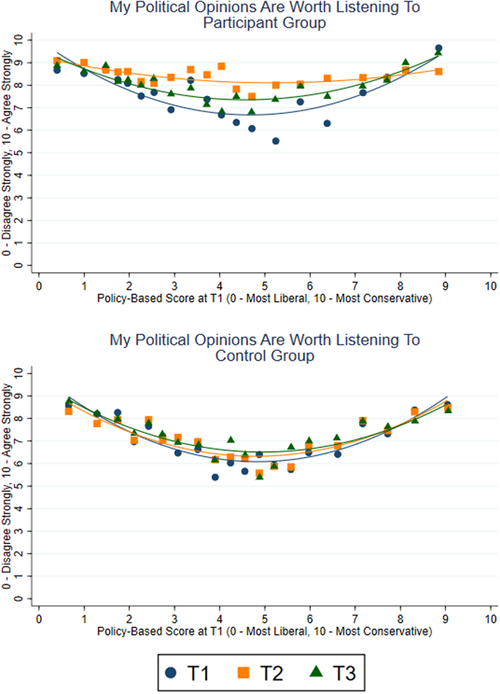
Figure 9. Having “Political Opinions Worth Listening to”
Note: Policy-based score is constructed for each individual based on responses to 26 questions identified as the most polarizing. Responses to the question “How strongly would you disagree or agree with the following statement?”[I have opinions about politics that are worth listening to.] were collected at T1 (just before deliberations), T2 (just after), and T3 (10 months later, July 2020).
The authors close by discussing efforts to scale up civic engagement, such as the Stanford Online Deliberation Platform. In all, “Can deliberation have lasting effects?” provides a rigorous case for the value of deliberation in strengthening democratic participation.
*Brief prepared by Adam Fefer.