
US Life Expectancy Lags—But It’s Worse for the Aging `Forgotten Middle’
US Life Expectancy Lags—But It’s Worse for the Aging `Forgotten Middle’
A new study finds lower-middle-class Americans are experiencing a sharp decline in health and well-being—especially those approaching retirement.

U.S. life expectancy is significantly shorter than other industrialized nations, likely due to chronic diseases, health disparities and the high cost of U.S. healthcare. But for lower-middle-class Americans approaching retirement, the picture is even bleaker.
According to a new study by Stanford Health Policy faculty and the Research Network on an Aging Society, there has been a 20-year decline in well-being and health for the lower-middle-income population whose household income is between $30,000 and $75,000. And the strongest downward trend is among those between the ages of 50 to 59.
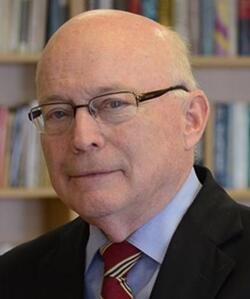
“By the `forgotten middle,’ we refer to those folks who have too much income to be eligible for social benefits—such as Medicaid, low income housing and food stamps—but not enough income to get by,” said Jack Rowe, MD, the Julius B. Richmond Professor of Health Policy and Aging at Columbia university and a visiting professor at Stanford Health Policy.
Rowe and Stanford colleague, David Rehkopf, MPH, ScD, an associate professor of epidemiology and population health at Stanford Medicine, note in their study published in Health Affairs Scholar that these older, lower-middle-class Americans approaching retirement are even worse off than those aged 60 to 74. They have hit a perfect storm of chronic disease, stress, declining wages and high health insurance costs.
“We think of the middle class as a large, homogeneous group, but this is not the case,” Rehkopf said. “Many in the lower half of the middle class are under chronic financial stress.”
The study researchers—including Stanford Medicine data research analyst Christian Jackson and the University of Pennsylvania’s Frank Furstenberg—believe their findings carry adverse policy implications, as this “forgotten middle” will increasingly rely on Medicare and Social Security.
Earning More Means Getting Less
While American generations throughout our nation’s history have done better than their parents’ generation, that all began to change toward the end of the last century, when the structure of our social welfare policy began to neglect the lower-middle class. Since the welfare-to-work labor reforms of the 1990s, the researchers note, the most effective poverty reduction policy has been the Earned Income Tax Credit. But it only benefits households with adults who can work and have dependent children, and many
lower-middle class workers earn just above the eligibility threshold and no longer have dependent children at home. Once again, they miss out.
“Primarily researchers have looked at health by income in two ways, either among those living in poverty, or as a continuous gradient whereby one dollar at anywhere in the income distribution buys you better health,” said Rehkopf. “We thought this concept of the ‘forgotten middle’ was important because this may be a group that is struggling financially but does not qualify for social benefit programs that are mostly focused on the poor or near poor.”
The researchers note that a healthy and productive aging society benefits from the concept of “compression of morbidity,” which is the idea that people should live longer lives with fewer years of poor health at the end of their lives. But if people are getting sick faster than they are living longer, they’ll spend more years in poor health. This has major consequences for social policy, especially Medicare expenditures.
“It’s an important concept for our study because it is unclear whether groups are getting healthier as they are living longer, or whether they are living for more years with health problems,” said Rehkopf. “The policy implications of this are myriad.”
Data Reveal Stark Reality
The researchers examined data on trends in health and well-being from the Centers for Disease Control and Prevention’s Behavioral Risk Factor Surveillance System, a nationally representative yearly cross-section of the U.S. population with a large sample size of 5.3 million people from 2003 to 2022. Controlling for race and ethnicity, obesity and smoking, they looked at trends in self-reported physical well-being, mental well-being, and overall functional well-being by household income categories from those two decades.
“Our findings dispute the optimistic scenario of the compression of morbidity, at least for the `forgotten middle,’” Rowe said. “If current trends persist, the current 50-59-year-old population will be entering retirement ages with substantially worse health than previous generations.”

They looked at health measures related to everyday function as opposed to lists or diseases or conditions, such as: How many days in the last month were you unable to do your usual activities because of issues related to physical limitations or mental issue such as anxiety or depression? How would you rate your general health?
“We found dramatic and consistent differences in health by income category,” the authors wrote. “While there was worsening well-being over the last 20 years for all ages, there were the most dramatic declines for the poorest and the lower-middle groups, with declining trends being greatest for lower-middle-income households.”
Furthermore, they found all racial and ethnic groups are impacted by these trends equally, except for individuals who identify as Asians.
“The accumulating evidence indicates that the trajectories of today’s middle-aged people are very much related to socio-economic status,” Rowe said. “Those that are well off, or even `comfortable,’ are aging well and will likely enter old age in good shape. But poor and near poor pre-retirees are trending to enter late life much worse off physically and mentally than their parents’ generation.”
The researchers said policymakers need to get away from the prevalent view that if we take care of the poor, everyone else will be fine.
“One program that takes this more enlightened approach is Obamacare, where there is a sliding scale of subsidies so that individuals with income as high as four times the federal poverty level receive some assistant,” Rowe said.


