
Beyond a New Cold War: Political Messaging and Public Perceptions on China
Beyond a New Cold War: Political Messaging and Public Perceptions on China
Thursday, August 14, 202511:40 AM - 5:00 PM (Pacific)
Okimoto Conference Room, Encina Hall, 3rd Floor
616 Jane Stanford way, Stanford University
By invitation only
Contact: xinruma@stanford.edu
This conference is hosted by Stanford Next Asia Policy Lab (SNAPL) at Shorenstein Asia-Pacific Research Center (APARC) with support from the Freeman Spogli Institute for International Studies (FSI).
The conference, “Beyond a New Cold War: Political Messaging and Public Perceptions on China”, aims to present and discuss new research findings on how U.S. political leaders and the media shape narratives around China, and how those narratives are perceived by citizens in the Asia-Pacific region.
11:40am - 12:25pm Lunch
12:25pm - 12:30pm Welcome Remarks
Gi-Wook Shin, Director of Shorenstein APARC; Director of SNAPL; Professor of Sociology, Stanford University
12:30pm - 1:50pm Panel 1
Who’s Leading Whom? Measuring Issue Attention and Rivalry Framing of China by Legislators, Presidents, and the Media
This panel examines how issue attention and framing related to China have evolved across Congress, the executive branch, and major U.S. media outlets, using social media posts from 2009 to 2024. By analyzing the direction and dynamics of influence among these actors, the research offers new insights into how U.S. foreign policy narratives on China are shaped and circulated.
Presenter: Xinru Ma, Research Scholar at SNAPL, APARC, Stanford University
Discussant: Thomas Christensen, James T. Shotwell Professor of International Relations; Director of the China and the World Program, Columbia University
1:50pm - 2:00pm Break
2:00pm - 3:20pm Panel 2
Democracy versus Autocracy in Foreign Policy: Public Attitudes toward China in Young Democracies
This panel discusses the role of democracy in forming public opinion on China. By focusing on citizens in young democratic countries, the study examines how public understanding of democracy in such countries shape their perception of China’s threat to democracy and thus exhibit anti-China sentiments. Using survey data analyses and an original survey experiment, the study demonstrates that China’s threats to electoral institutions—rather than liberal values—more strongly generate unfavorable attitudes toward China.
Presenter: Gidong Kim, Visiting Scholar and SNAPL Fellow at APARC; Assistant Professor of Political Science, Hankuk University of Foreign Studies
Discussant: Susan Hyde, Robson Professor of Political Science, University of California, Berkeley
3:20pm - 3:30pm Break
3:30pm - 5:00pm Roundtable (closed door discussion)
Where Do We Go From Here? Policy Implications and Future Research
This closed-door roundtable brings together policymakers, scholars, and practitioners to discuss the policy implications of the day’s research findings. Participants will explore how insights on elite discourse and public perceptions can inform future U.S. foreign policy toward China and identify priorities for further research.
Moderator: Paul Chang, Deputy Director of Korea Program; Senior Fellow at APARC; Professor by courtesy, East Asian Languages and Cultures, Stanford University
Discussants:
Piero Tozzi, Deputy Staff Director of the Congressional-Executive Commission on China
David Arulanantham, former Robert and Marion Oster National Security Affairs Fellow at the Hoover Institution, Stanford University
5:00pm - 5:05pm Closing Remarks
Gi-Wook Shin, Director of Shorenstein APARC; Director of SNAPL; Professor of Sociology, Stanford University
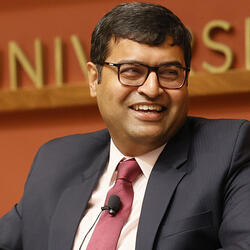
David Arulanantham, a Stanford alumnus, was a Robert and Marion Oster National Security Affairs Fellow at the Hoover Institution from 2023-2024. A career Foreign Service Officer with the U.S. Department of State since 2005, David has more than two decades of experience living in and working on the countries of the Indo-Pacific region. During his time at the Department of State, he has also served on the Secretary's Policy Planning Staff. David has a Masters in International Relations from Oxford University, and a Bachelor's in International Relations and Political Science from Stanford University where he published articles on Indian foreign policy. David is involved in several public service and mentoring initiatives and can speak French, Hindi, Tamil and Bengali.
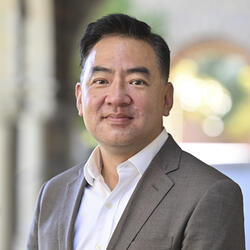
Paul Y. Chang is the Tong Yang, Korea Foundation, and Korea Stanford Alumni Association Senior Fellow at Shorenstein APARC; Senior Fellow at FSI; and Professor by courtesy in the Department of East Asian Languages and Cultures at Stanford University. Chang also serves as the Deputy Director of the Korea Program at Shorenstein APARC and the President of the Association of Korean Sociologists in America. He is the author of Protest Dialectics: State Repression and South Korea’s Democracy Movement, 1970-1979 (Stanford University Press) and co-editor of South Korean Social Movements: From Democracy to Civil Society (Routledge). His current work examines the diversification of family structures in South Korea. Before joining Stanford, Chang served on the faculty at Harvard University, Yonsei University, and the Singapore Management University.
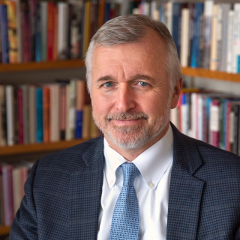
Thomas J. Christensen is James T. Shotwell Professor of International Relations and Director of the China and the World Program at Columbia University’s School of International and Public Affairs and the Pritzker Chair at the Center for Strategic and International Studies in Washington, DC. He was previously William P. Boswell Professor of World Politics at Princeton University. From 2006-2008 he served as Deputy Assistant Secretary of State for East Asian and Pacific Affairs with responsibility for relations with China, Taiwan, and Mongolia. His research and teaching focus on China’s foreign relations, the international relations of East Asia, and international security. He has also taught at Cornell University and MIT. He received his B.A. from Haverford College, M.A. from the University of Pennsylvania, and Ph.D. from Columbia University. He was presented with a Distinguished Public Service Award by the United States Department of State.
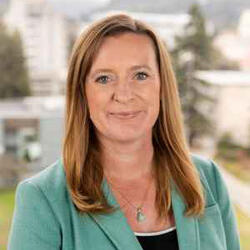
Susan D. Hyde, an expert on democracy promotion and international political institutions, is the Robson Professor of Political Science at University of California, Berkeley, where she served as Chair of the Department of Political Science (AY 2021-2024) and is currently Co-director of the Institute of International Studies (2021-present). Her research focuses on threats to democracy, the role of regime type in international affairs, and international influences on the domestic politics of sovereign states. Hyde is a political scientist whose research examines threats to democracy, the role of regime type in international affairs, and international influences on the domestic politics of sovereign states, particularly in authoritarian regimes and transitional democracies. She has served on editorial boards of leading political science journals and has been a residential scholar at the Brookings Institution and Princeton's Niehaus Center for Globalization and Governance.

Gidong Kim currently serves as Associate Professor at Hankuk University of Foreign Studies' Department of Political Science and Diplomacy, and he joins as Visiting Scholar, SNAPLFellow for the summer of 2025. Previously, he was Korea Program Postdoctoral Fellow at APARC beginning August 2023 until February 2025. He holds a Ph.D. in Political Science from University of Missouri, as well as both a M.A. and a B.A. in Political Science from Hankuk University of Foreign Studies. He studies comparative political behavior and economy in East Asia, with particular focus on nationalism and identity politics, inequality and redistribution, and migration in South Korea and East Asia. His work is published or forthcoming in journals including Journal of East Asian Studies, Journal of Ethnic and Migration Studies, Asian Perspective, Korea Observer, and Social Science Quarterly. His dissertation, “Nationalism and Redistribution in New Democracies: Nationalist Legacies of Authoritarian Regimes,” investigates the micro-level underpinnings that sustain weak welfare system in developmental states.
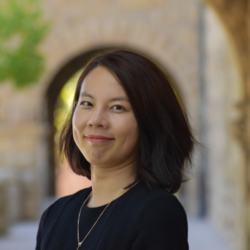
Xinru Ma's research focuses on nationalism, great power politics, and East Asian security with a methodological focus on formal and computational methods. More broadly, Xinru’s research encompasses three main objectives: Substantively, she aims to better theorize and enhance cross-country perspectives on critical phenomena such as nationalism and its impact on international security; Methodologically, she strives to improve measurement and causal inference based on careful methodologies, including formal modeling and computational methods like natural language processing; Empirically, she challenges prevailing assumptions that inflate the perceived risk of militarized conflicts in East Asia, by providing original data and analysis rooted in local knowledge and regional perceptions. Her work has been published in the Journal of East Asian Studies, The Washington Quarterly, the Journal of Global Security Studies, and the Journal of European Public Policy, and in edited volumes through Palgrave. Her book, Beyond Power Transitions: The Lessons of East Asian History and the Future of U.S.-China Relations, was recently published by Columbia University Press. At SNAPL, Xinru leads the research track in collaborative projects focused on U.S.–Asia relations
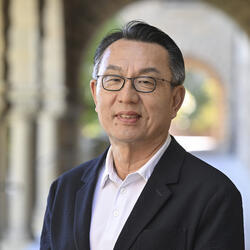
Gi-Wook Shin is the William J. Perry Professor of Contemporary Korea in the Department of Sociology; senior fellow at the Freeman Spogli Institute for International Studies; the director of the Walter H. Shorenstein Asia-Pacific Research Center (APARC) since 2005; and the founding director of the Korea Program since 2001, all at Stanford University. In May 2024, Shin also launched the new Taiwan Program at APARC. As a historical-comparative and political sociologist, his research has concentrated on social movements, nationalism, development, democracy, migration, and international relations. In Summer 2023, Shin launched the Stanford Next Asia Policy Lab (SNAPL), which is a new research initiative committed to addressing emergent social, cultural, economic, and political challenges in Asia. Across four research themes– “Talent Flows and Development,” “Nationalism and Racism,” “U.S.-Asia Relations,” and “Democratic Crisis and Reform”–the lab brings scholars and students to produce interdisciplinary, problem-oriented, policy-relevant, and comparative studies and publications. Shin’s latest book, The Four Talent Giants, a comparative study of talent strategies of Japan, Australia, China, and published by Stanford University Press in June 2025, is an outcome of SNAPL.
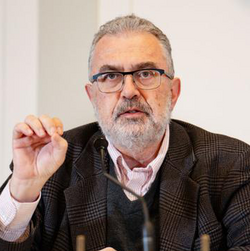
Piero A. Tozzi is currently the Deputy Staff Director of the Congressional-Executive Commission on China, having served as Staff Director in the 118th Congress. His previous positions include Republican Staff Director of the bipartisan Tom Lantos Human Rights Commission and Staff Director and Counsel for the House Foreign Affairs Subcommittee on Africa, Global Health, Global Human Rights, and International Organizations. He has also served as Senior Foreign Policy Advisor and Counsel to Representative Christopher H. Smith (R-NJ). Mr. Tozzi received his J.D. from Fordham University School of Law and his B.A. from Columbia University. Mr. Tozzi speaks Mandarin Chinese, and is the author of several works on international law and comparative constitutional law, including Constitutional Reform on Taiwan: Fulfilling a Chinese Notion of Democratic Sovereignty.