
2026 Shorenstein Journalism Award: Shibani Mahtani on Attacks Against the Free Press and Democratic Backsliding in Southeast Asia
2026 Shorenstein Journalism Award: Shibani Mahtani on Attacks Against the Free Press and Democratic Backsliding in Southeast Asia
Tuesday, October 20, 202612:00 PM - 1:30 PM (Pacific)
Bechtel Conference Center
Encina Hall Central (First Floor)
616 Jane Stanford Way, Stanford, CA 94305

“What’s Your Agenda?”: Attacks Against the Free Press and Democratic Backsliding in Southeast Asia
The 2026 Shorenstein Journalism Award Honors Singapore-Based Investigative Journalist Shibani Mahtani
In her 15 years reporting on Southeast Asia and Hong Kong, Shibani Mahtani has witnessed the region’s once-vibrant press corps dwindle in size, as journalists are jailed, harassed, and sued by governments. This pressure, along with an industry-wide strain on the business of journalism, has forced many outlets to shutter. In her keynote address, she will discuss how this diminished media environment has had a profound impact on regional democracy at a time of seismic global instability and consider the challenges of navigating this reality.
Join APARC as we recognize Mahtani, winner of the 2026 Shorenstein Journalism Award, for her exemplary reporting that has brought critical attention to the erosion of democracy and human rights across Asia, particularly in Southeast Asia.
Mahtani's keynote will be followed by a conversation with two experts: Anna Fifield, a New Zealand journalist, foreign affairs analyst, and winner of the 2018 Shorenstein Journalism Award, and Oren Samet, assistant professor of political science at Rice University. The event will conclude with an audience Q&A session.
Panel Chair: James Hamilton, vice provost for undergraduate education, Hearst Professor of Communication, and director of the Stanford Journalism Program.
Lunch is included for registered attendees.
Speakers
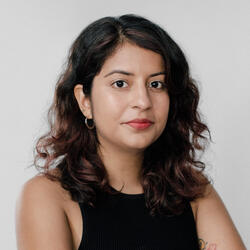
Shibani Mahtani a Singapore-based investigative journalist. Until February 2026, she was an international investigative correspondent for the Washington Post. She focuses on accountability-driven investigations across the Asia-Pacific region. She joined The Post's foreign desk in 2018 as the Southeast Asia and Hong Kong Bureau Chief, and was honored with awards including a Human Rights Press Award for her reporting on the 2019 Hong Kong protests. Prior to joining The Post, Shibani was a correspondent for the Wall Street Journal based in Singapore, Myanmar, and Chicago. She is an author of Among the Braves, a narrative non-fiction history of Hong Kong's pro-democracy movement.

Anna Fifield, a New Zealand journalist and foreign affairs analyst, writes a newsletter on New Zealand’s role in global affairs. She is also a non-resident fellow at the Center for Strategic and International Studies, contributing to their work on New Zealand geopolitics and the U.S.-New Zealand partnership. She spent more than 20 years as a foreign correspondent for the Washington Post and Financial Times, reporting from Asia, the Middle East, and the United States, and later served as the Washington Post’s Asia-Pacific editor, overseeing coverage of China and the wider region. From 2020 to 2022, she was editor of the Dominion Post in Wellington, New Zealand’s capital city. Fifield was a Nieman Journalism Fellow at Harvard University, where she studied political change in closed societies, and won Stanford University’s 2018 Shorenstein Journalism Award for excellence in reporting on Asia. Her book on North Korean leader Kim Jong Un, The Great Successor, has been translated into 24 languages.
Fifield serves on the Shorenstein Journalism Award judging committee.
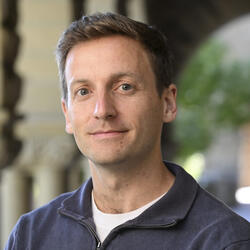
Oren Samet is an assistant professor of political science at Rice University. His research centers on the international dimensions of authoritarian politics and democratization, with a particular emphasis on how opposition actors engage both at home and abroad. Bridging international relations and comparative politics, his work explores the dynamics of autocratization, how opposition parties compete in unfair elections, and how non-state actors shape foreign policy across borders. Further research examines innovations to confront democratic backsliding and the challenges of external support for democratic governance. Samet’s research draws on extensive fieldwork in Southeast Asia, his primary regional focus, complemented by analysis spanning a broad range of autocratic and backsliding contexts. His academic work has been published in the American Journal of Political Science, Comparative Political Studies, and Political Communication, and his other writing has been published in outlets including Foreign Policy, Slate, and World Politics Review. Before entering academia, Samet was based in Bangkok, Thailand, and worked on democracy and human rights initiatives across Southeast Asia, engaging with politicians and civil society. He holds a Ph.D. from the University of California, Berkeley, and was previously a Postdoctoral Fellow at Stanford's Center on Democracy, Development, and the Rule of Law.
Panel Chair
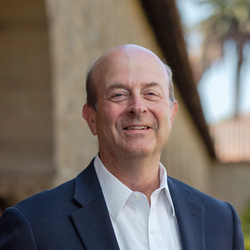
James Hamilton is the Freeman-Thornton Vice Provost for Undergraduate Education, Hearst Professor of Communication, and director of the Stanford Journalism Program. His most recent book is You Got In! Now What? 100 Insights into Finding Your Best Life in College (Radius Book Group, 2025). His books on media markets and information provision include All the News That’s Fit to Sell: How the Market Transforms Information into News (Princeton, 2004), Regulation Through Revelation: The Origin, Politics, and Impacts of the Toxics Release Inventory Program (Cambridge, 2005), and Channeling Violence: The Economic Market for Violent Television Programming (Princeton, 1998). His book Democracy's Detectives: The Economics of Investigative Journalism (Harvard, 2016) focuses on the market for investigative reporting. Through research in the field of computational journalism, he is exploring how the costs of story discovery can be lowered through better use of data and algorithms. He is co-founder of the Stanford Computational Journalism Lab, Senior Fellow at the Stanford Institute for Economic Policy Research, affiliated faculty at the Brown Institute for Media Innovation, and member of the JSK Fellowships Board of Visitors.
Hamilton serves on the Shorenstein Journalism Award judging committee.