
In The Field - Stanford-PKU Volunteer Migrant School Teaching Program
In The Field - Stanford-PKU Volunteer Migrant School Teaching Program
Program Overview |
|
|
|
|
|
In a new service learning program organized by REAP, Stanford and Peking University students teamed up to teach English classes to several poor migrant schools around Beijing. As the volunteer teachers got a glimpse of the unseen Beijing, they learned as much as the migrant children they were teaching. |
|
Program Evaluation |
|
| Image
|
|
Volunteer Reflections |
|
| Kids Will Be Kids | By Molly Thomas |
| Image
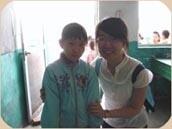
During an ill-conceived lesson on "Body Parts," one sixth-grade boy added a little too much graphic detail to the stick figure he was supposed to be labeling with English names. When I taught the fifth-graders to sing "It's raining, it's pouring, the old man is snoring," they asked me to sing it over and over, laughing at the sight of an adult performing nursery rhymes. As a nanny and a tutor, I can say that privileged, Western kids would have identical reactions. |
|
| The Gap Between Dreams and Means | By Colton Margus |
| Image

|
|
| Prosperous Elementary School | By Christina Ho |
| Image
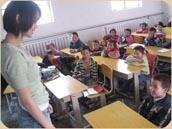
At first, I tried teaching the preschoolers the way I've seen preschool teachers teach in the United States-using lots of creative hands-on activities to stimulate the mind and the imagination. I bought play-doh to pass out to each student for learning letters-my plan was to write the letter A on the board, for instance, and then have them mold an A out of the play-doh, and thus learn how to recognize the letter. But in the process of doing this, I realized two things: 1) that this way of teaching is completely impractical in a Chinese migrant school and 2) that it is impractical because there simply aren't enough resources. The play-doh activity quickly devolved into chaos because half of the class began clamoring to show off their A's to my teaching partner and I, while the other half began asking for help. |
|
| A Merrier World | By Natalie Lynch |
| Image
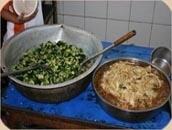
I could always tell it was time for lunch because of the putrid smell that would waft through the hallways towards the end of our second class. As we would leave the school, we would walk through hoards of students crammed into the tiny courtyard eating a small bowl of rice, soggy green and a single ball of meat. No matter which day we came to teach, they always ate the same thing. "Delicious?" I asked them. Most of them said yes. |
|
| Hello | By Eric Younge |
| Image
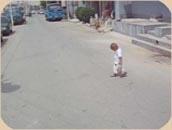
As a spoiled American, the thought of semi-public defecation is more than terrifying, and I was already easily flustered by even the attention I get simply crossing the courtyard. This was not going to happen. I sighed and dejectedly placed my toilet paper back into my backpack. The boys exchanged a few quiet words as they continued to squat and stare at me before continuing the bombardment, "Hello?" "Hello," I answered back as I stepped up to at least urinate. Why the hell was this bathroom designed to support conversation? The holes where cut facing each other! |
|
| The Warmest of Welcomes | By Tony Cun |
| Image
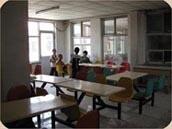
When I walked into the third 6th grade class I had never taught before, they all had an astonished look on their face when I introduced myself as an American. Throughout the lesson they were all paying attention and smiling. I love it when I see people smile, especially in this impoverished area with beat-down buildings and negative-1.5 star restrooms. After the lesson the class leader and her friend wanted to walk us to the bus station. We told her that they shouldn't since they would be using up their lunch hour, but they were persistent and wanted to properly see me off. They explained that they never had seen a foreigner come into their school to teach English before. They felt lucky to be in one of the classes I teach, and planned on giving me the warmest of welcomes each time I came. |
|
| No Way Out | By Yang Bin |
| Image
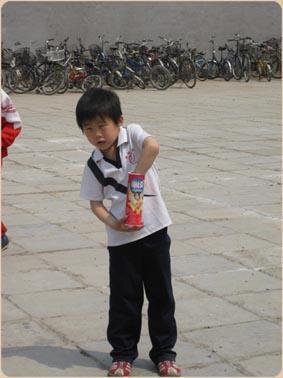
I originally thought the migrant children would be highly motivated because the neighborhood was only about two km away from subway line 13. They are mobile enough to go to the parks, bookstores, department stores and historical sites that any Beijing kid attends on holidays, and they see how city life can be nice and even luxurious. The differences they see between here and their hometown can surely motivate them to aim high and climb up. They might want to be able to buy those nice clothes, hardcover books, and go to the movies and amusement parks as often as they would like in future. The first step towards all these is to work hard at school so they can find well-paying jobs. |
|
| Outer City Inspiration | By Hoameng Ung |
| Image
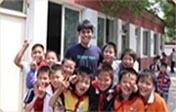
When asked about hopes and dreams, most migrant children were interested in occupations such as teacher and policeman-no astronauts or presidents here. Because of this, I don't think English is the main problem in migrant schools: it's inspiration. With parents working as merchants on the street and unlicensed taxi drivers, what makes the children think they can be more than their parents? In one of the class projects, the types of occupations these children hoped to hold were not very ambitious, although the children recognized the importance of education and were optimistic about high school. |
|
| Migrant Kids These Days | By Athena Sheih |
| Image
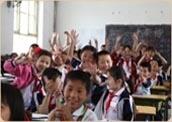
Whenever Tony and I were waiting outside the classroom, students would come up to us and ask "Are you going to teach our class today?" If the answer was "Yes," they would clap their hands and run away happily. We felt proud of our teaching when one of the classes sang Bingo song loudly together. Just a song, but the eagerness to learn more English was quite obvious from the enthusiastic eyes of the young students. |
|
| Are The Boys Helping Themselves Out? | By Adam |
| Image
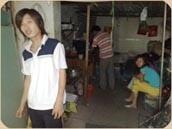
Boys are generally ambitious and full of a passion to explore, so I was expecting to be warmly welcomed by the boys, thinking we could easily astonish them by giving and them a valuable English learning experience-they get to learn from Christina, a nice and pretty American student. The chance we were offering is so valuable. Most students have to pay at least hundreds of yuan per hour to hire American students to teach them English. The students welcomed us, but they did not take English learning seriously. |
|
| What My Eyes Have Seen | By Samantha Zhu |
| Image
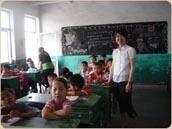
I used to think a lot about the future of these migrant offspring. Would they go back home where their toiling parents hail from, or would they enter the migrant work force in Beijing, replicating their parents' path of life and hoping to become a regular resident? The answer is never an easy one to figure out, nor does it come to mind when my heart burns with what my eyes have seen. |
|
| Angel or Devil, Which Way Shall They Go? | By George |
| Image
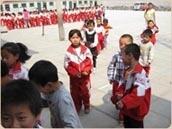
The first time when Daniel and I went to teach in the migrant school, I prepared some candy to bribe the children after class. However, it turned out to be a mess when the class lost the control. Everyone came to the front to ask for candy because some of the kids had to leave quickly to catch the school bus. There was a boy who kept asking for candy by pretending that he had not got one. He felt no shame when everyone found out his lie and denounced him. |
|
| A Deep Impression | By Liu Yi |
| Image
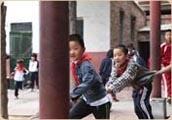
The migrant children who have been brought to Beijing gain an edge over their left-behind rural brothers and sisters. They get to enjoy the support of their migrant-worker parents and get used to the way people live in a metropolitan city. However these benefits do not come for nothing: migrant children have to forego the privilege of attending public school for free. Unlike their brothers and sisters in rural villages, they cannot the local public school, where curriculums are more formal and systematic, which enhances chances of receiving an even higher education. |
|